Boris Eifman
Directing
Biography
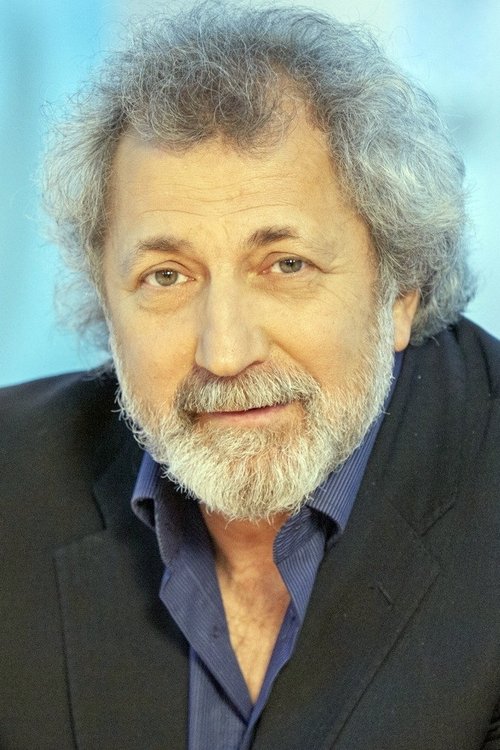
Boris Eifman (Борис Яковлевич Эйфман; born 22 July 1946) is a Russian choreographer and artistic director. He has done more than fifty ballet productions. Eifman was born in Rubtsovsk, Siberia, where his engineer father had been assigned to work in a tank factory. In 1953, the family moved to Kishinev, Moldavia. Eifman graduated from the Kishinev Ballet School in 1964. He performed as a dancer with the Kishinev Opera and Ballet Theatre; and went on to study choreography at the Leningrad Conservatory, where his teacher was choreographer Georgi Aleksidze. Eifman graduated from the Leningrad Conservatory in 1972. He then became a ballet master at the Vaganova Academy of Russian Ballet, from 1972-1977. In 1977, he received permission to found his own company, originally known as Leningrad Theatre of Contemporary Ballet. The troupe was known by various names, but today its official title is St. Petersburg State Ballet Theatre of Boris Eifman, or simply Eifman Ballet of St. Petersburg when on tour. In addition to choreographing for his own company, Eifman has created ballets for the Maly Theatre of Opera and Ballet, the Kirov Ballet, the Bolshoi Ballet, Les Ballets de Monte Carlo, and New York City Ballet, among others. He has also made dances for film and television. Eifman's family was required to move from Kharkov to Siberia during World War II. Though conditions in Siberia were hard, the move saved their lives. The Eifmans are Jewish; and the Nazis killed his father's family in Kharkov and Kiev. In Siberia, they lived in a "pit" with six rooms that housed six-ten families. "If the Government did not build real housing it was not because of money, but because people were not treated like people, but like cattle," Eifman says. After the family moved to Moldavia, Eifman began studying ballet and folk dance, from the age of seven, with the Young Pioneers. His parents initially opposed his desire for a dance career, but he began to experiment with choreography as a teenager. Eifman's interest in dramatic subjects for his choreography places his work in a long-standing Russian tradition. This tradition dates back to the 18th century, and the foundation of the Russian school of ballet by disciples of Jean-Georges Noverre. Eifman has said, "the type of philosophical theater that I am working to create was not born in the Soviet Union...That's an idea that belongs to Noverre." ... Source: Article "Boris Eifman" from Wikipedia in English, licensed under CC-BY-SA 3.0.