Art
Aleksandar Denić is a production designer.
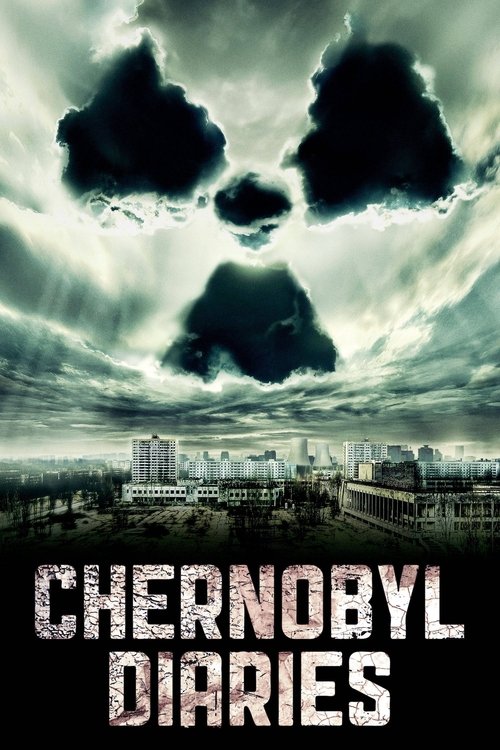
A group of six tourists looking to go off the beaten path, hire an 'extreme tour guide' who, ignoring warnings, takes them into the city of Pripyat, the former home to the workers of the Chernobyl nuclear reactor, but now a deserted town since the disaster more than 25 years earlier. After a brief exploration of the abandoned city, the group members find themselves stranded, only to discover that they are not alone.
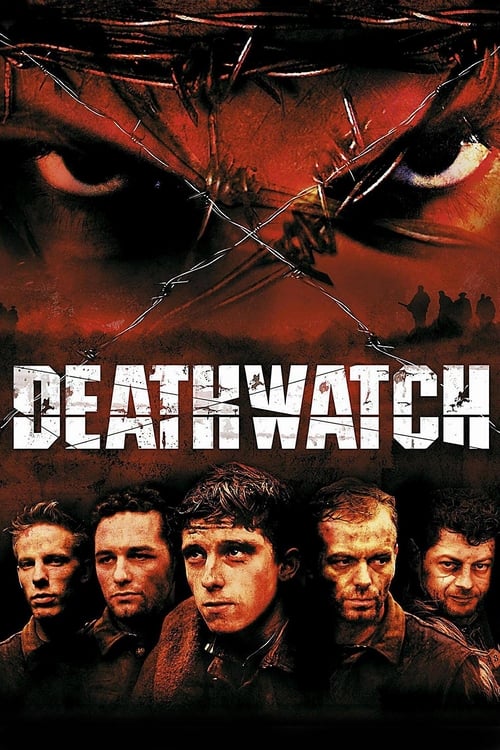
In the brutal trench fighting of the First World War, a British Infantry Company is separated from their regiment after a fierce battle. Attempting to return to their lines, the British soldiers discover what appears to be a bombed out German trench, abandoned except for a few dazed German soldiers. After killing most of the Germans, and taking one prisoner, the British company fortifies to hold the trench until reinforcements can arrive. Soon, however, strange things being to happen as a sense of evil descends on the trench and the British begin turn on each other.
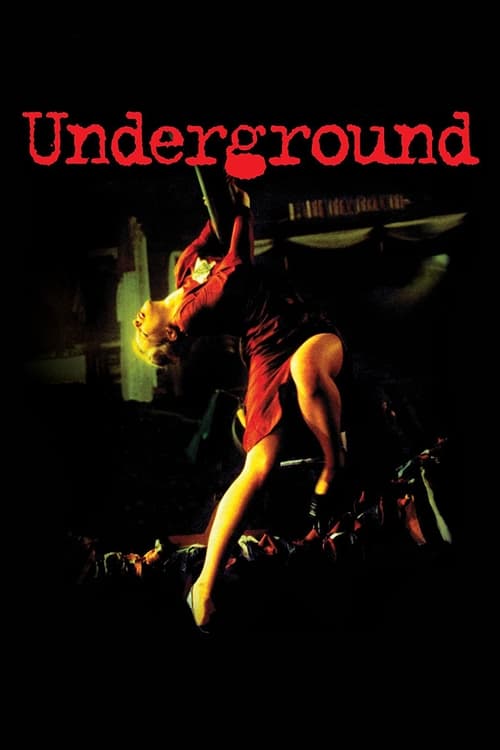
Black marketeers Marko and Blacky manufacture and sell weapons to the Communist resistance in WWII Belgrade, living the good life along the way. Marko's surreal duplicity propels him up the ranks of the Communist Party, and he eventually abandons Blacky and steals his girlfriend. After a lengthy stay in a below-ground shelter, the couple reemerges during the Yugoslav Civil War of the 1990s as Marko sees the opportunity to exploit the situation.
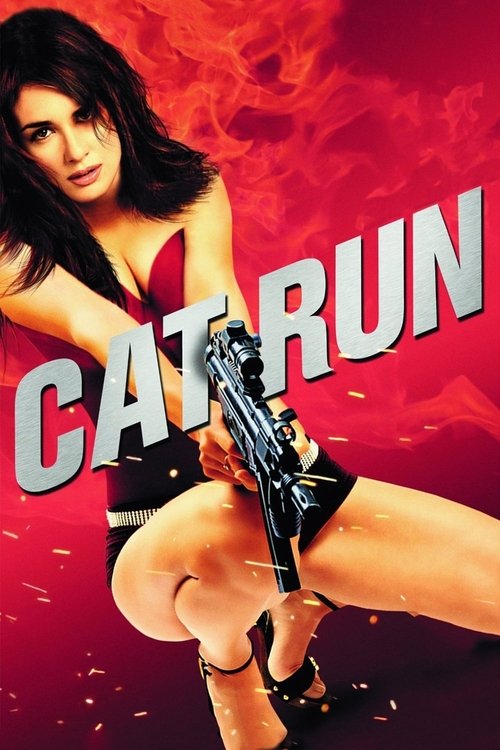
When a sexy, high-end escort holds the key evidence to a scandalous government cover-up, two bumbling young detectives become her unlikely protectors from a ruthless assassin hired to silence her.
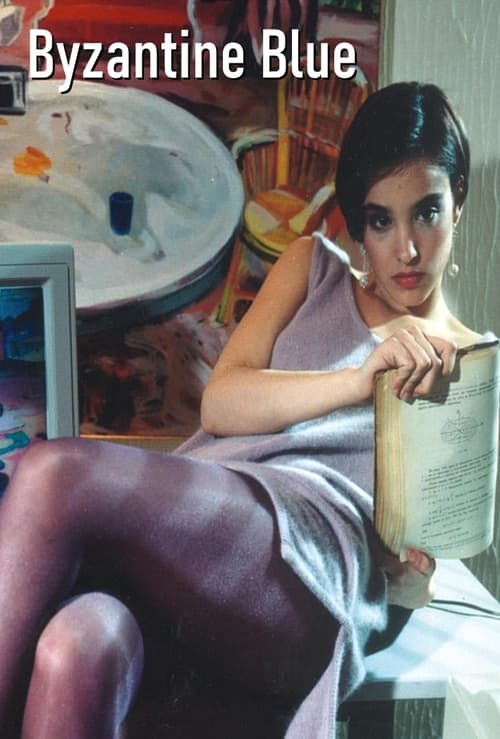
The search for the everlasting blue paint from Byzantine church murals turn into a sensual love story in which Europe meets the Balkans.
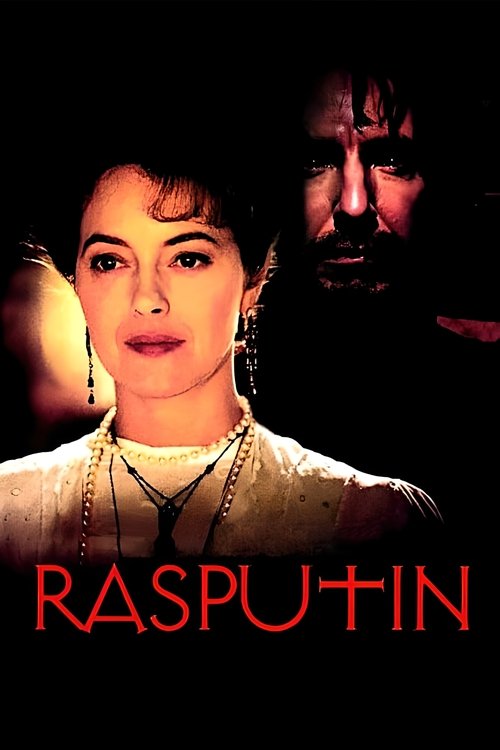
Into an era seething with war and revolution, a man comes with an incredible power to heal a nation...or destroy it. Based on the true story of one of the most powerful and mysterious figures in Russian history.
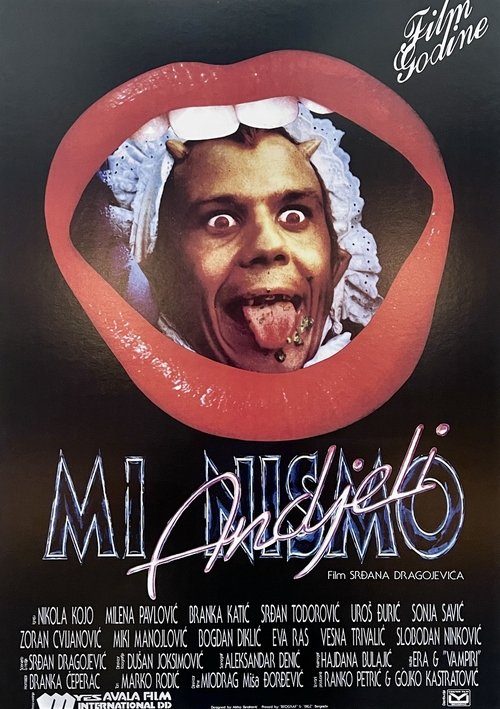
Angel and the devil fight for the soul of a Belgrade playboy who made a young girl pregnant.
A police-escorted prisoner transport supervised by Interpol sets off to Belgrade. The route leads the transport through Pančevo, where they encounter an ecological disaster and infected people who are trying to kill them. Interpol agents Mortimer Reyes and Mina Milius soon realize that their only chance for escape from the zombie hordes lies in allying with the dangerous, mysterious prisoner.
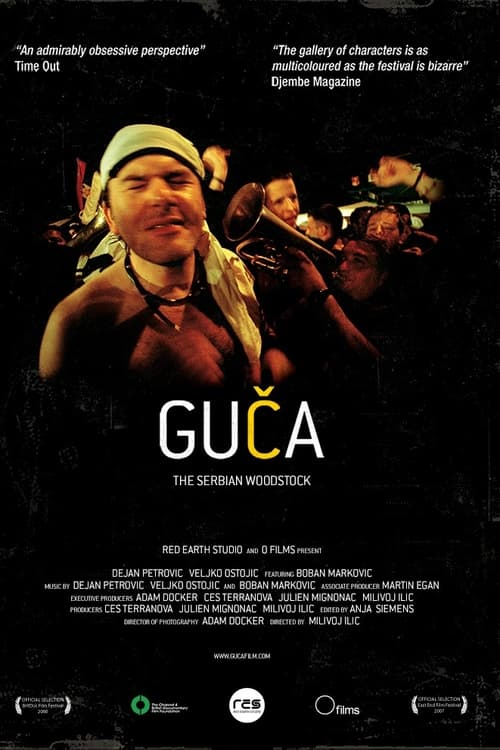
Juliet, a white girl, falls in love with a dark-skinned romeo, a divine trumpet player from the Roma orchestra. But her father Satchmo doesn't accept Romeo. Romeo needs to fight for Juliet at the legendary Festival of the trumpeters in Gucha.
After losing his dog, an eccentric artist from Belgrade embarks on a journey to look for his pet. Throughout his quest, we will get to know a number of strange characters. The filmmaker’s humorous approach opens up a dialogue about different philosophical questions related to art, representation, identity, nature, history, ethics and politics.
In this sun soaked adventure for the entire family, a group of five orphaned children form their own makeshift family while attempting to operate outside the rules of society. Though they must sometimes steal to survive, their loyalty to one another means that they will always have a brother or sister to count on.
This film follows two Belgrade youths on their rise to gangster legends in a decaying society.
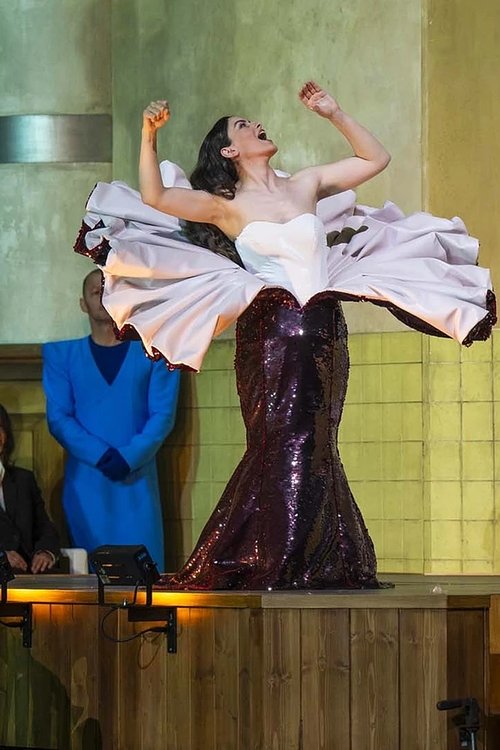
Taking a classic opera and turning it on its head, Karin Henkel, a leading director in contemporary German theatre, offers a new interpretation of Verdi's masterpiece. In a world dominated by men, where women are exploited and history repeats itself, she explores the fate and sacrifice of a 19th-century heroine through a contemporary female perspective.
Caffe 'Boomerang' is one of Belgrade's many cafes. Seemingly just a backdrop for our cast of crazy characters, but in reality much more than that.
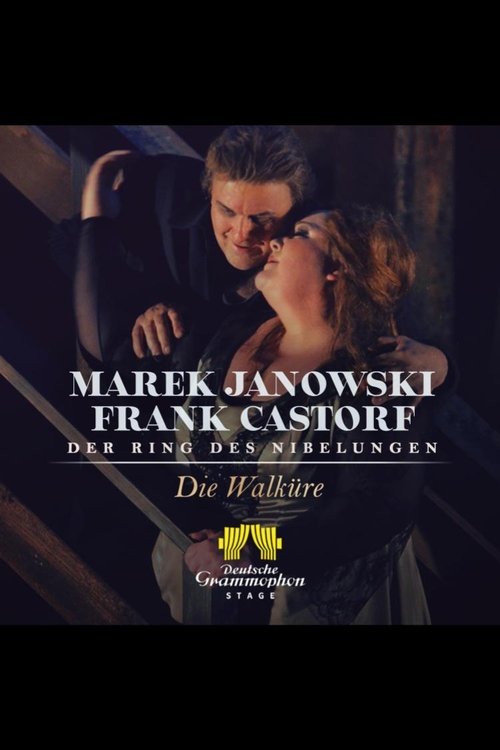
The new Bayreuth production of the Ring Cycle that premiered in 2013 offered spectacular sets, courtesy of Aleksandar Denić. As is regularly the case in Frank Castorf's productions, live video recordings add an extra dimension and in this performance Die Walküre is set at the beginning in the 19th century and then moves ahead to the Stalin era. The geographic setting is Baku, Azerbaijan, so in addition to Wild West capitalism, Castorf also takes aim at Soviet communism. The leading roles are also strongly cast in this third revival of Castorf's production, with Christopher Ventris, Heidi Melton, Catherine Foster and John Lundgren.
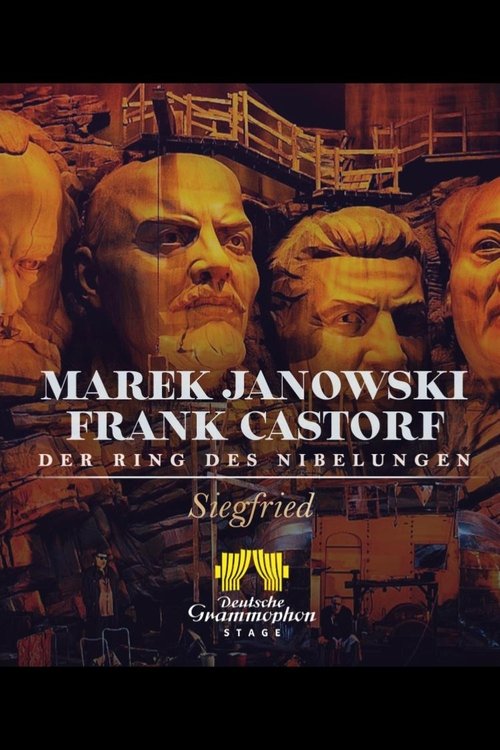
Frank Castorf's Ring makes a feature of unexpected settings and striking images, and here in Siegfried he shows the discussions between the young hero and his foster father Mime in Act I against a background featuring giant heads of Marx, Lenin, Stalin and Mao on a replica of Mount Rushmore. The typical mythical nature and forest world of the second act is replaced in this production by Berlin's Alexanderplatz. The Nothung sword is also replaced, in this production becoming a machine gun. While the direction elicited both approval and disapproval, the vocal performances received wide acclaim.
Frank Castorf revolutionised German-language theatre in the post-Berlin Wall era, bringing to the stage intellectual and political acuteness, brash references and a not infrequent use of crude humour. He brought these qualities to the Bayreuth Festival where his production of the Ring ran from 2013 to 2017. This 2016 recording of Das Rheingold captures Marek Janowski's festival debut as conductor of this unique production, in which Castorf replaces the Rheingold with oil as the central commodity in a pre-capitalist society. The first night of the Ring cycle begins at a gas station off of Route 66, the main road connecting the East and West coasts of the USA, that played an important role in commerce in the 1920s.
Frank Castorf has adapted Racine and combined this material with texts by Artaud. His art of theatrical and vital immoderation explores how, when it comes to this classical French author, the tragedy of existence is born from collusions between private passions and power.
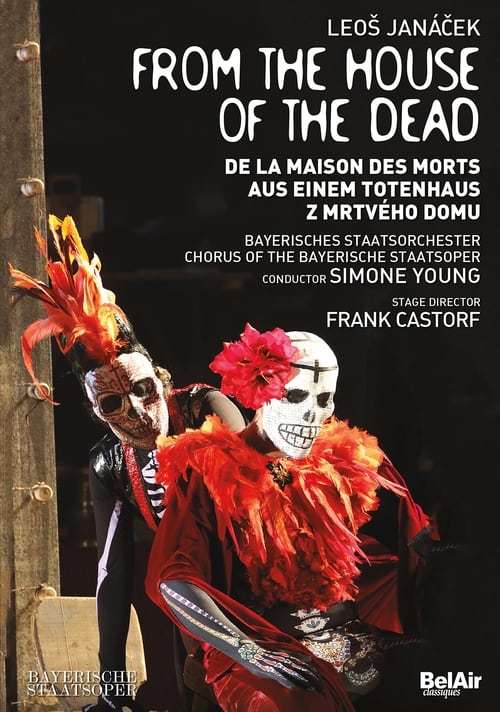
Stage director Frank Castorf “might have been born to direct From the House of the Dead” (Opera Today). His gritty, visually striking adaptation brings bold modern and postmodern touches to Janáček’s masterwork without ever overshadowing the intense forward momentum of the music, conducted to dramatic perfection by Simone Young and sung by an all-star cast in Munich. Janáček adapted Dostoevsky for this powerfully compelling opera set in a Siberian prison camp, full of starkly contrasting moods and motifs, unusual in its episodic structure. The last opera Janáček ever composed, its third act was on his desk when he died in 1928; attempts by his students to “complete” his orchestration have largely fallen away over the decades in favor of the original version. Despite the grimness of the setting and the brutality of several characters, the composer’s compassion shines through in tender moments, movingly illustrating his motto for the work: “in every creature, a spark of God.”
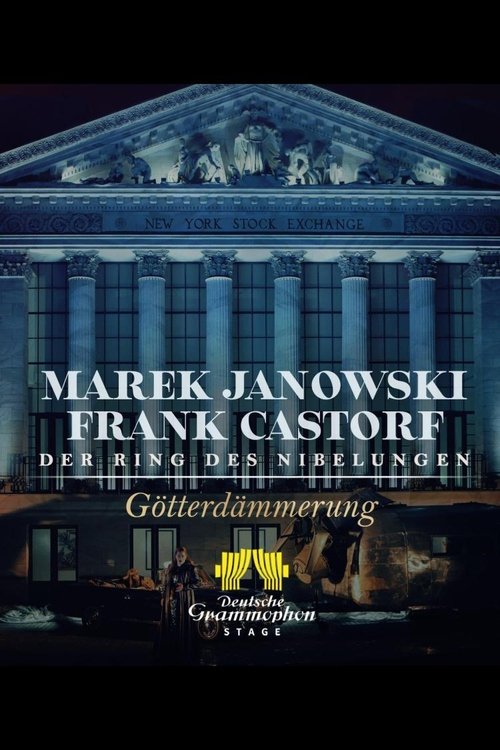
"Oil is the equivalent of what used to be gold. A luxury that we cannot eat," explained director Frank Castorf in an interview, outlining one of the key ideas behind his production of the Ring at Bayreuth. In the final part of the tetralogy, the wild journey ventures to the Buna chemical plants in Schkopau and to New York's Wall Street, among other places. Inspired by the aesthetic of Hollywood B movies, the production was first met with disapproval but grew to gain many supporters over the years.