Acting
Battle of the Psychics (Bitva Extrasenov) is a Russian-language TNT TV show based on Britain’s Psychic Challenge. Each season starts with 8-13 participants selected for their superior psychic abilities, but tries to expose them as frauds. Tasks in the beginning of the series are relatively simple, such as revealing the contents of a sealed box or what lies behind an impenetrable screen, and progressively become more difficult. One participant judged to be worst is eliminated each week, but all participants advance to the next round if the panel is unable to come to a decision.
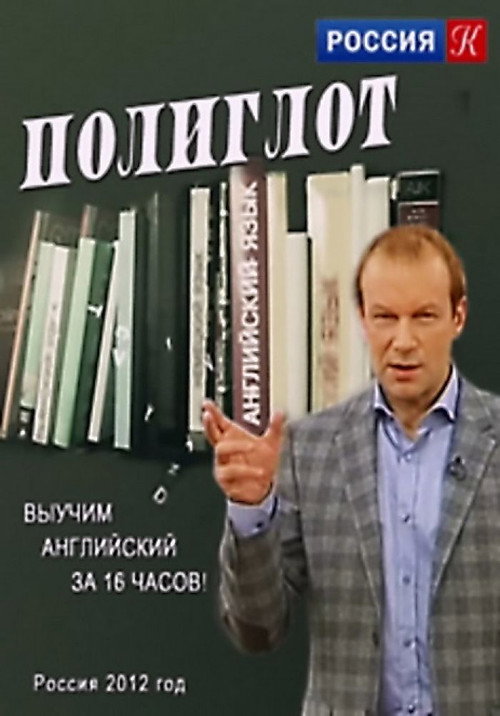
“Polyglot” is an educational program on the television channel “Kultura” that presents an intensive foreign-language learning course led by polyglot and translator D. Yu. Petrov. Students are offered the opportunity to master communication skills in a foreign language within 16 lessons.
Tide powder detergent salesman visits people's homes to advertise his product. Problem is that he won't take easy their refusal to buy it.
Georgy, who unsuccessfully tried to enter the conservatory twice and was left without family support, ran away from a prestigious job, not knowing how to live, and soon received a draft notice for the army.
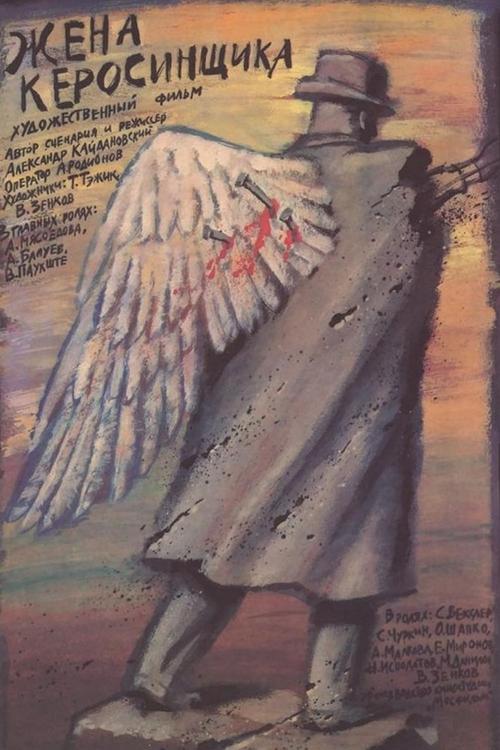
A fatal surgical mistake involving the wrong blood type splits the lives of twin brothers. One, the guilt-ridden surgeon, embraces anonymity as a kerosene salesman, while his sibling ascends to become the powerful Chairman of the City Council. When a government investigation into bribery begins, the brothers are finally forced to confront the dark secret that binds them.
An animations is based on Sulkhan-Saba Orbeliani’s fable and tells a story of a rooster who makes friend with a dog. Together they decide to build the village but soon are joined by a cunning fox.
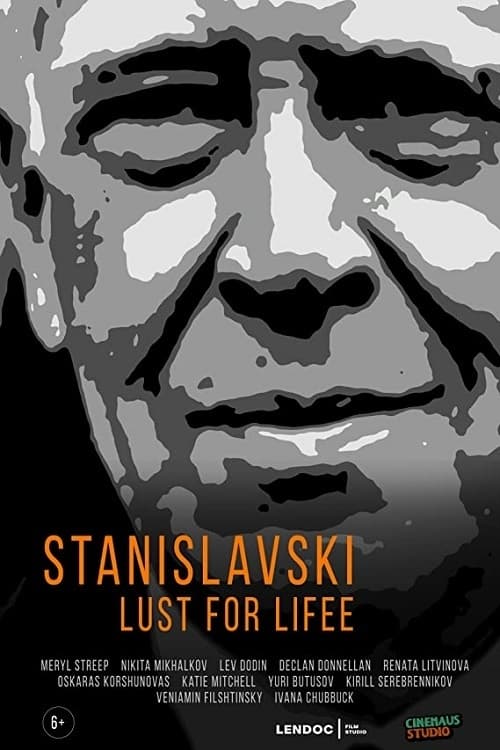
A story about Konstantin Sergeievich Stanislavski, a twentieth-century theatre genius. Owing to his powerful extraordinary talent he managed to stay a true artist and a free spirit within the harsh Soviet system. In the film contemporary theater and film directors (Kirill Serebrennikov, Katie Mitchell, Lev Dodin and others) show how Stanislavski's method affects their everyday work. Each of the directors finds his or her own reflection in the mirror of his genius. In search of an answer to the question whether modern theatre really needs Stanislavski they discover that art lacks its most essential part – the human being.