Marcel Aymé
Writing
Biography
Marcel Aymé (29 March 1902 – 14 October 1967) was a French novelist and playwright, who also wrote screenplays and works for children. Marcel André Aymé was born in Joigny, in the Burgundy region of France, the youngest of six children. His father, Joseph, was a blacksmith, and his mother, Emma Monamy, died when he was two years old, after the family had moved to Tours. Marcel was sent to live with his maternal grandparents in the village of Villers-Robert, a place where he would spend the next eight years, and which would serve as the model for the fictitious village of Claquebue in what is perhaps the most well-known of his novels, La Jument verte. In 1906 Marcel entered the local primary school. Because his grandfather was a staunch anti-clerical republican, he was looked down upon by his classmates, many of whose parents held more traditional views. Accordingly, Marcel was not baptized before reaching the age of eight, nearly two years after the death of his grandfather in 1908. Orphaned once more when his grandmother died two years later, he briefly lived with other family members before moving to Dole, a small town of the Franche-Comte region, to stay with an aunt and attend the Collège de l'Arc, where he demonstrated more ability in mathematics than in literature. His years at school there were an unpleasant experience he would never look back on fondly. Despite ongoing issues with his health that had begun when he was a child, Aymé was able to perform his military service, which began in 1919, as part of an artillery unit in the occupied Rhineland. In 1923 he moved to Paris where he worked unsuccessfully at a bank, an insurance company, and as a journalist. Though he failed in his career as a reporter, his stint at the newspaper allowed him to discover his love of writing. His first published novel was Brûlebois (1926), and in 1929 his La Table aux crevés won the Prix Renaudot. After the great success of his novel La Jument verte (1933), translated into English as The Green Mare, he concentrated mostly on writing and published children's stories, novels, and collections of stories. In 1935 he also started writing movie scripts. In theater, Marcel Aymé found success with his plays Lucienne et le boucher, Clérambard (1949), a farce, and Tête des autres (1952), which criticized the death penalty. He died in 1967 and was buried in the Cimetière Saint-Vincent in the Montmartre Quarter of Paris. One of Aymé's most famous short stories is Le passe-muraille or "The Walker-Through-Walls". At the age of 42, Dutilleul suddenly discovers that he has "the remarkable gift of being able to pass through walls with perfect ease". What begins as a novelty that gives him pleasure ends up pushing Dutilleul toward ever more sinister pursuits. Visitors to Paris can see a monument in his honor at Place Marcel-Aymé, in the Montmartre Quarter. The statue is based upon his short story "Le passe-muraille" ("The Walker through Walls"). Source: Article "Marcel Aymé" from Wikipedia in English, licensed under CC-BY-SA 3.0.
Known For

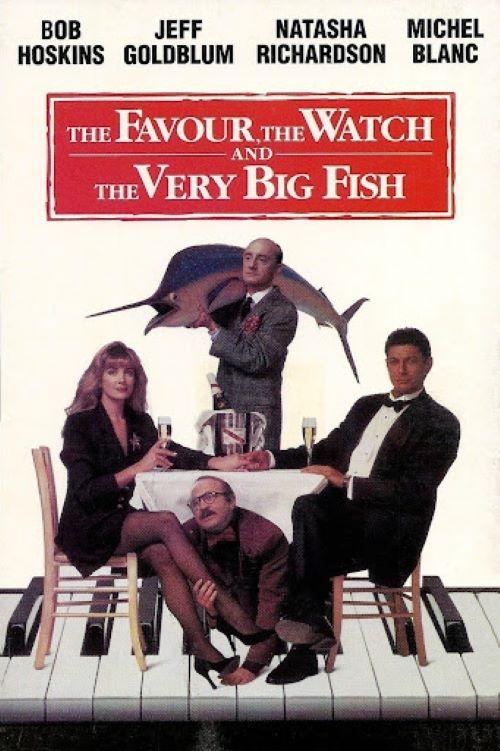
A farce, Hoskins plays a photographer who specializes in religious pictures who searches for a model for Jesus. He does a favor for a friend and finds himself doing a voice track for a porno movie with Natasha Richardson. Hoskins finds his model for Jesus in Jeff Goldblum and a romantic triangle begins in which Goldblum finds adoring crowds believing him to be Jesus and then begins to believe it himself.
The Favour, the Watch and the Very Big Fish

No description available.
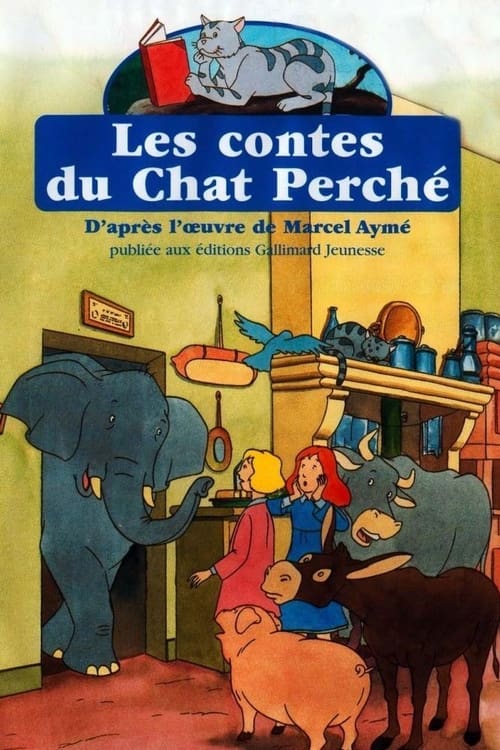
The Tales of the Perched Cat

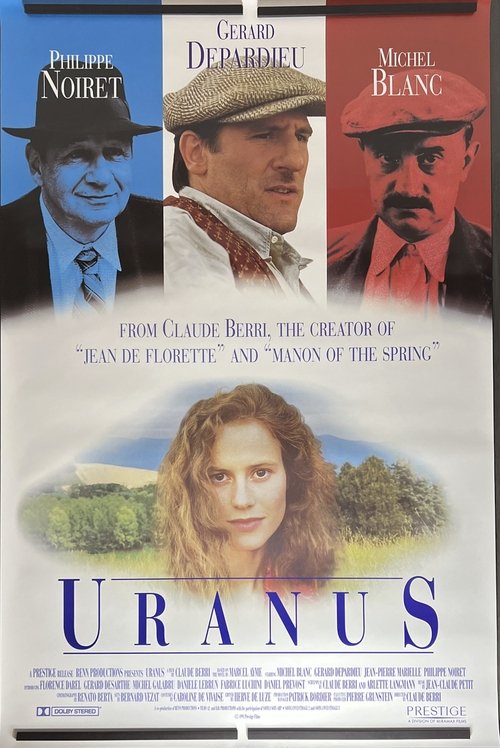
After World War II, a small French village struggles to put the war behind as the controlling Communist Party tries to flush out Petain loyalists. The local bar owner, a simple man who likes to write poetry, who only wants to be left alone to do his job, becomes a target for Communist harassment as they try and locate a particular loyalist, and he pushes back.
Uranus

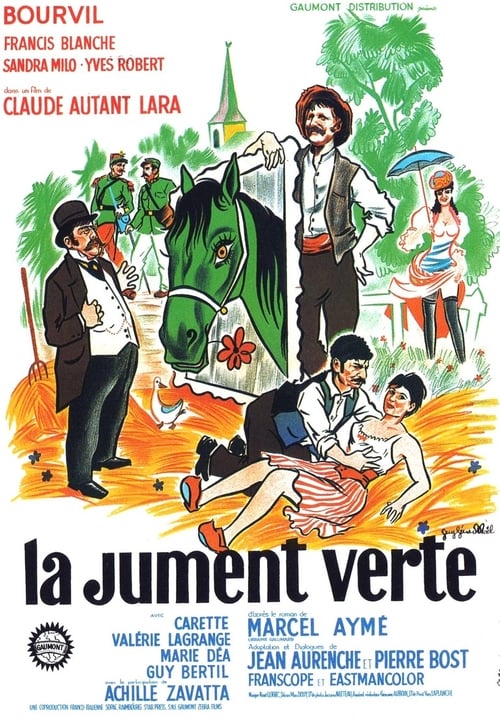
A green mare makes the fortune of her owner, the horse dealer Haudouin. Shortly after his death, war broke out in 1870. One day, his neighbor Zèphe Maloret denounces Honoré, Haudouin's son, a maverick, to the Prussians. Following this denunciation, their non-commissioned officer enters the Haudouin home and rapes the mother while Honoré is hidden under the bed. The resentment already existing between the Haudouin and Maloret families turns to hatred... A letter recalling the events is lost, which doesn't help matters.
The Green Mare

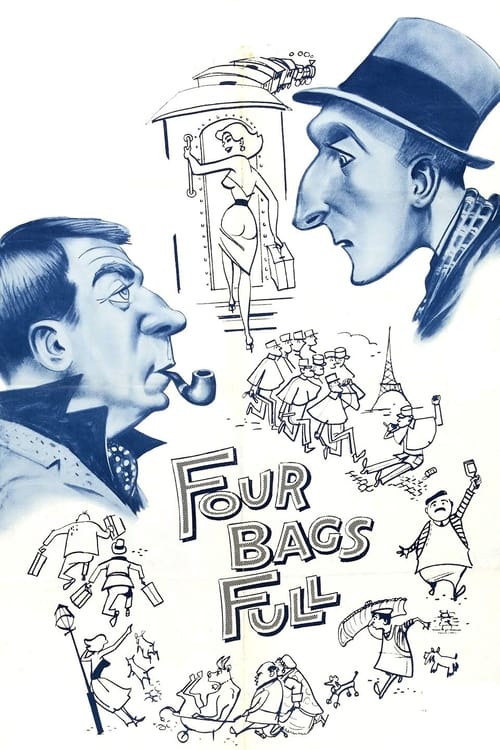
Two unlikely companions must smuggle four suitcases filled with contraband pork across Nazi-occupied Paris.
La Traversée de Paris

When a cruel man is visited by Saint Francis and convinced to change his ways, his family believes him to be insane and locks him away in order to sell his beloved castle
Clerambard

Valentin, the general supervisor of a sub-prefecture cram school, has a strange power: all he has to do is wish for a certain person to turn into a bird, and the metamorphosis takes place and his victims grow wings. He's in love with Sylvie, the young lady coveted by all the local males. This is how an entire small population loses its human appearance.
Les Oiseaux de la lune

Arsène Muselier returns to his home village at the end of the First World War. His only injury is a head wound, which sometimes provokes periods of delirium and fury. As he renews his acquaintance with the people he left behind - his mother, the old farmhand who brought him up after his father's death, his former girlfriend, and many others - he becomes fascinated by the legend of La Vouivre, a creature with the body of a woman who lives in the marsh, surrounded by vipers. One day, Arsène sees the strange woman - she is naked, beautiful, alluring, and he is instantly enchanted by her. Can she be real, or is she merely a creation of his damaged mind...?
La Vouivre

Pétepan learns that his money has been lost by Robinhoude brothers.He asks his assistants to withdraw his amount from the bank.
Your Money or Your Life

In the not-too distant future, 17 year-old Tye and his family move to the burgeoning metropolis of Real City, where, bored with classes, he spends his time daydreaming until one day he finds a magic stone that allows him to pass through walls. On a field trip to a museum, Tye meets NoNo, a deaf girl with bionic ears who is working as a museum docent. The two grow closer, until Tye discovers she has a boyfriend and demands she chooses between them. NoNo tells him to come and see her again in twenty years and then disappears from his life, leaving him only with a photo of her in front of a signpost saying Elsewhere. Tye uses the magic stone to go to Elsewhere, but he discovers a desolate world full of discarded things, among them an attractive blind girl, Ya-hung. Two worlds, two realities, two girls, what will Tye’s choice be ?
The Wall-Passer

Three stories about the impact of three God's miracles in the medieval sense that happen to the film's heroes living in a post-communist society that, after half a century of atheism, re-learns about Christianity.
Heavens Above

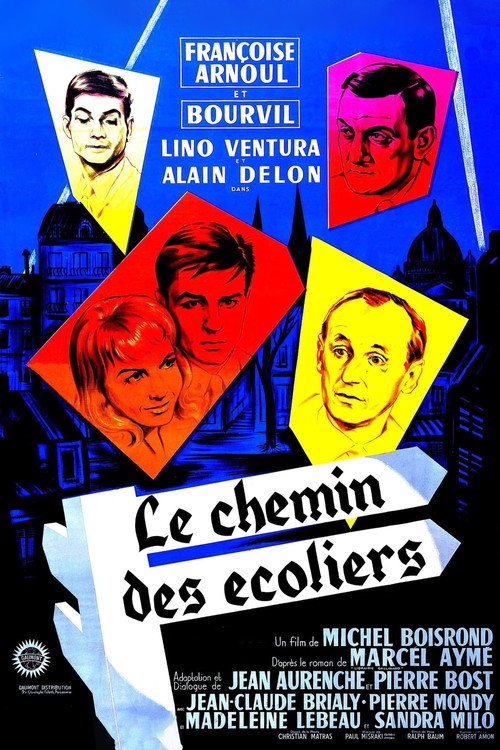
This movie is a Marcel Aymé adaptation and it deals with the not-so-glorious side of the Occupation: black market, war profiteers, cracking open bottles of Champagne while most of the Parisians are almost starving.
Way of Youth

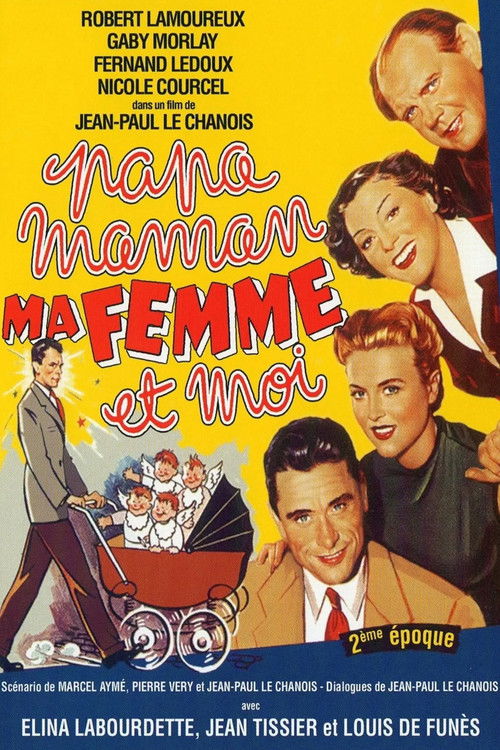
Robert Langlois is now married to Catherine, the former housemaid. And they would live happily ever after if the housing crisis did not force them to live together with Gabrielle and Fernand, Robert's parents. For, despite the good will on either side, tension soon arises. What else to expect when there is too little space in their Montmartre apartment for four people (then for six then eight, the couple having... two pairs of twins!) ; the continued presence there of Fernand (who loves peace and quiet) after he is driven to retirement ; the difficult beginnings of Robert as a lawyer in a room of the apartment, etc... Other troubles follow and the harried family is on the verge of implosion...
Papa, Mama, My Wife and Me

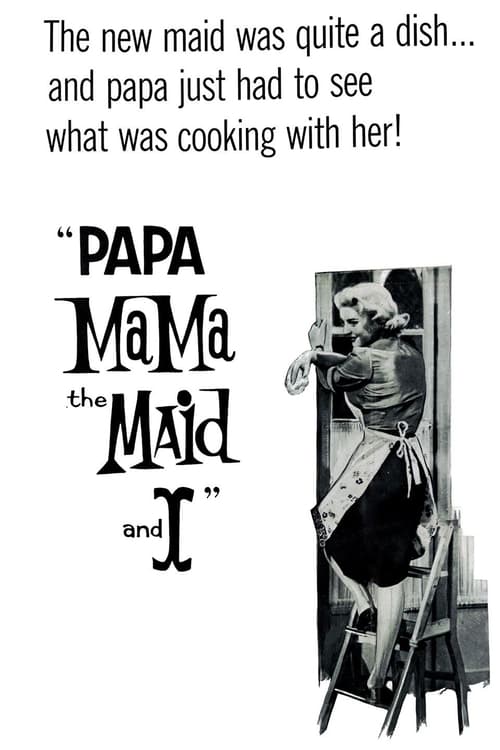
The residents of the apartment building on Rue Montmartre are a motley crew of oddballs and eccentrics. The daring son of a professor couple is in love with a sexy student who supplements her pocket money by working as an au pair. And then there's Monsieur Calomel, the crazy but helpful neighbor who's always ready with a funny face...
Papa, Mama, the Maid and I

Jean-Marie Bigard plays Clérambard, a ruined squire, his family's slavery slave, cat taster, parish priest eater. Converted after an appearance of Saint Francis of Assisi, he becomes as violent in good as he was in evil. A tailor-made role! He no longer touches animals, even if they are insignificant, he finds purity in girls of joy, pleasure in destitution and he will preach this message on the roads, in a caravan, taking his family on its crusade of love .
Clérambard

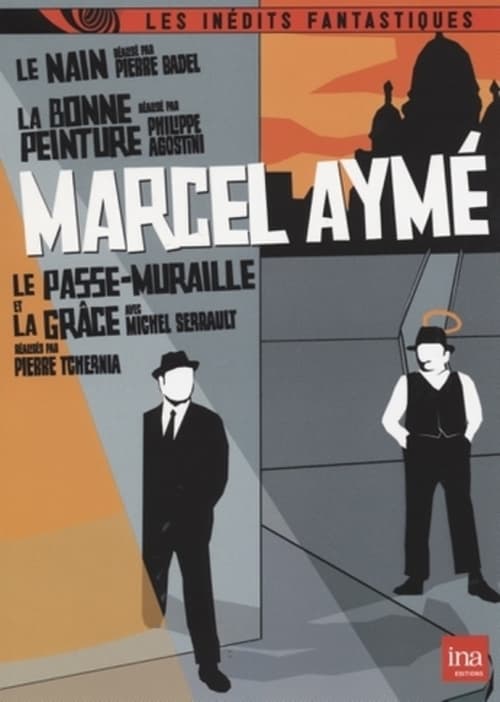
Emile Dutilleul, 47 years old, lives a quiet and withdrawn life in Montmartre and works as an employee in an open-plan office with an insurance company. When he meets his new, lively colleague Ariane, Emile discovers not only his inner life, but also something monstrous. He has a superpower of which he had no idea: he can walk through walls ...
Le passe-muraille

The seven stages in the life of the modern Frenchwomen are disclosed by seven directors in a witty way: 1 - Childhood, 2 - Adolescence, 3 - Virginity, 4 - Marriage, 5 - Adultery, 6 - Divorce, 7 - The Single Woman.
Love and the Frenchwoman
No description available.
Nouvelles de Marcel Aymé

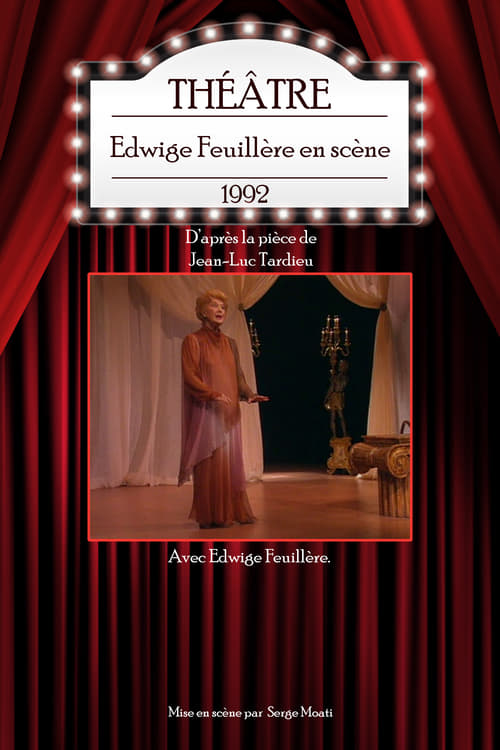
On stage, the actress talks about her life in the 20th-century French theatre, the great authors she played and the famous stage directors of the time who directed her.
Edwige Feuillère en scène

A person who had usurped the identity of a famous writer of detective stories was killed in the train. Why and by whom?