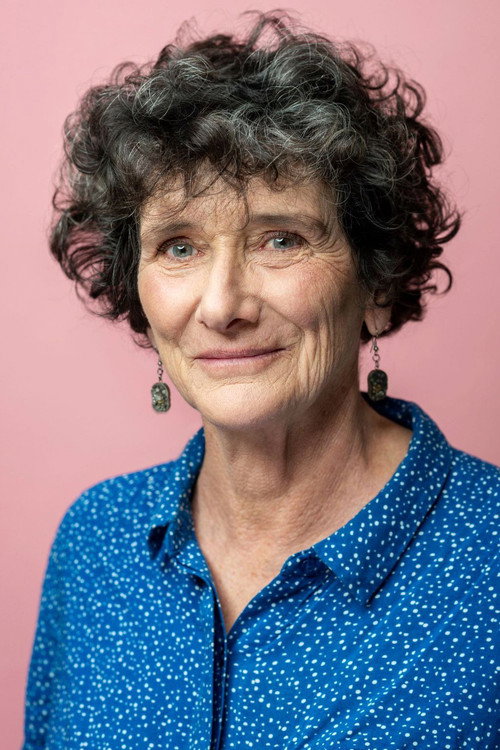
Isabelle Autissier
Acting
Biography
Isabelle Autissier (born 18 October 1956) is a French sailor, navigator, writer, and broadcaster. She is celebrated for being the first woman to have completed a solo world navigation in competition (BOC Challenge 1990–91). Based in La Rochelle since 1980, she is also a writer and honorary president of WWF-France. Isabelle Autissier was born in the 12th arrondissement of Paris and later moved to the suburb of Saint-Maur-les-Fossés. She discovered sailing in Brittany from the age of six when her father, architect Jean Autissier, taught her and her sisters how to sail. She later graduated from the National Agronomy School of Rennes (École nationale supérieure agronomique de Rennes) with a degree in fisheries. In 1980, she carried out research on langoustines and large crustaceans. This research activity continued in La Rochelle under the aegis of IFREMER ('French Research Institute for Exploitation of the Sea'), where she studied the fisheries of the Bay of Biscay. From 1984 to 1990, she taught at the Maritime and Aquaculture School of La Rochelle. In 1991, she founded the International Monohull Open Class Association (IMOCA) with Christophe Auguin, Alain Gautier and Jean-Luc Van Den Heede, to bring together the skippers of 60-foot monohulls. Also in 1991, she finished 7th in The BOC Challenge, thereby becoming the first woman to race competitively around-the-world solo. It was this success that prompted her to give up teaching to devote herself entirely to racing. While competing in the 1994–95 BOC Challenge, Autissier's boat Ecureuil Poitou Charentes II was dismasted and severely damaged approximately 900 nautical miles (1,700 km) south of Adelaide, Australia. Autissier was rescued on 1 January 1995 by a Seahawk helicopter launched from the Royal Australian Navy frigate, HMAS Darwin. On her return, her newly acquired reputation enabled her to obtain the financial support of the Vendée company PRB (“Building Coatings Products”) and to hire the architect Jean-Marie Finot and the builder Marc Pinta to build her a new "IMOCA Open 60" boat. This means the boat design is regulated by measurement and safety rules, but, as long as those rules are respected, designers have considerable freedom. With her new boat – the PRB, launched in July 1996 – she took part in the Vendée Globe 1996-1997, a non-stop race during which she was disqualified after stopping in Cape Town to repair a damaged rudder. However, she set off again to finish the course out of the competition. With competitors facing extremely difficult conditions, Autissier turned around in the middle of a storm, along with other competitors, to try to find Gerry Roufs, whose Argos beacon had stopped emitting. The searchers were unable to find him and Roufs disappeared at sea in his boat, Groupe LG 2 in January 1997. Autissier resumed the course, fighting against extreme conditions which capsized her boat on several occasions. She arrived 4 days after the winner. ... Source: Article "Isabelle Autissier" from Wikipedia in English, licensed under CC-BY-SA 3.0.
Known For

No description available.
Vivement dimanche

Télématin is a French breakfast television news show, broadcast on France 2 since January 7, 1985. It is broadcast in Metropolitan France weekdays from 6:30 to 9:00 am CET. TV5 broadcast the show in Canada in its entirety until September 2011: it now shows a 90 minute version between 6:30 and 8:00 am Eastern Time, when the French original version is now 2h30 long. Télématin is hosted by William Leymergie. The show is daily seen by around 40% of the French morning audience, a very high percentage for French TV. In Metropolitan France, the newscasts are presented at 7:00, 7:30 and 8:00, with newsflashes at 6:30 and 8:50, and two press reviews at 7:20 and 8:30. The 6:30, 7:30 and 8:50 newscasts are usually presented by a female reader and the hourly newscasts by a male. The usual readers are Nathanaël de Rinquesen, Sophie Le Saint, Julien Benedetto, Sophie Gastrain, Patrice Romedenne and Frédéric Vion.
Télématin
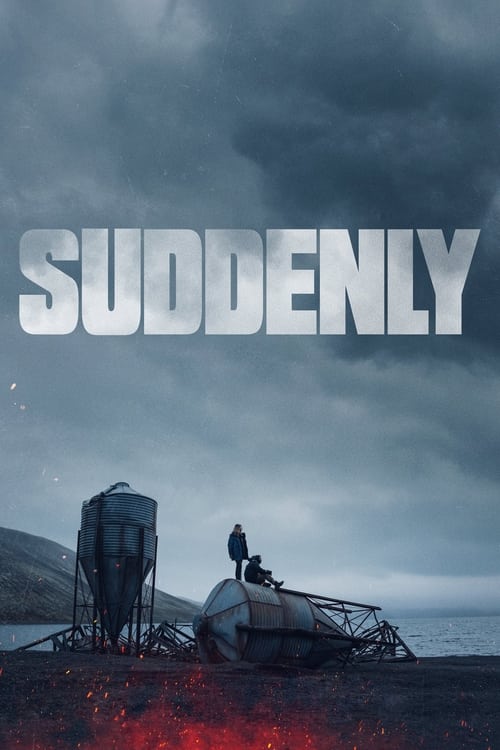
Ben and Laura are a passionate but volatile couple who embark on a round-the-world sailing adventure to give their relationship a new start. During their trip, they decide to explore a vast deserted island which they discover off the coast of Chile. Caught in a violent storm, they shelter in an abandoned whaling station for the night but wake up the next morning to find their boat has disappeared. Stranded in a hostile environment with no means of communication, dwindling supplies and winter approaching they must work together in a life and death battle for survival, that will challenge their feelings and change their relationship forever.
Suddenly
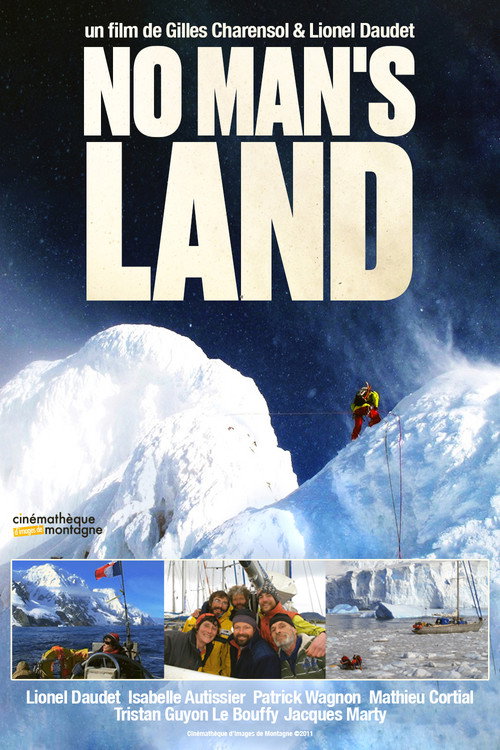
Lionel Daudet and Isabelle Autissier are renewing their collaboration for a combined sailing and mountaineering expedition to the Antarctic Peninsula. The crew consists of three sailors and three mountaineers, whose skills complement each other perfectly. Departing from Ushuaia, their goal is to reach summits that have rarely, if ever, been climbed. Isabelle's boat, "Ada Dos," will serve as their mobile base camp. Ice, wind, and fog are just some of the obstacles that make both sea and land routes difficult, making access to the continent complex and unpredictable. The ascents are technical and require meticulous planning. Their only regret will be not being able to climb Pierre Premier, as the risks involved are simply too great.
No Man's Land
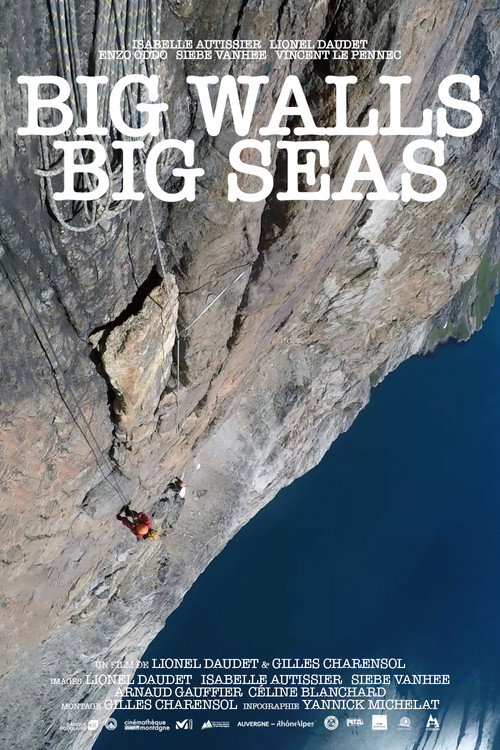
After South Georgia in 2008 and Antarctica in 2010, Isabelle Autissier, Lionel Daudet, and their crew set off on a new adventure to Greenland. This non-motorized sporting, environmental, and scientific expedition began on June 10th and concluded in mid-September 2016. Aboard a sailboat with an aluminum hull capable of navigating Arctic ice, the crew sailed to southwest Greenland. Lionel Daudet, Enzo Odo, and Siebe Vanhee embarked on a journey to explore this land of discovery, aiming to open new and breathtaking routes on big walls. An adventure between sea and mountains, crew and climbing team.