Puhipau
Directing
Biography
Abraham “Puhipau” Ahmad was a Hawaiian Kingdom patriot and documentary filmmaker who dedicated his life to enlightening himself, his people and the world about Hawaiian history, sovereignty and aloha ‘āina. He was born in Hilo to Caroline Aku of Kealia, Kona, and Abraham Ahmad, formerly of Palestine. Raised in Keaukaha and on O‘ahu, he attended the Kamehameha Schools (Class of ’55) and was awarded a football scholarship to the University of Oregon. He worked in the Merchant Marine for 10 years, sailing around South America, and to the North Pacific and Asia, while raising three sons in California with his wife Vivian Aulani (Fish) Ahmad. Returning to Hawai‘i, he eventually found himself in the middle of a land rights struggle at Sand Island in Honolulu Harbor, where a group of Hawaiians, unable to afford the high cost of living, had established a community in an area used as a rubbish dump. They subsisted off the sea, living the lifestyle of their ancestors in one of the most productive fisheries on O‘ahu, Mokauea. In 1980, Puhipau and others were evicted and arrested by the Department of Land and Natural Resources, an event that was documented by Victoria Keith and Jerry Rochford in “The Sand Island Story” and broadcast on PBS stations throughout the United States. During the subsequent trials, Puhipau read Hawaii’s Story by Hawaii’s Queen. Determined to document the history of Hawai‘i and its culture under threat, he formed a video production team with Joan Lander called Nā Maka o ka ‘Āina (“The Eyes of the Land”).
Known For
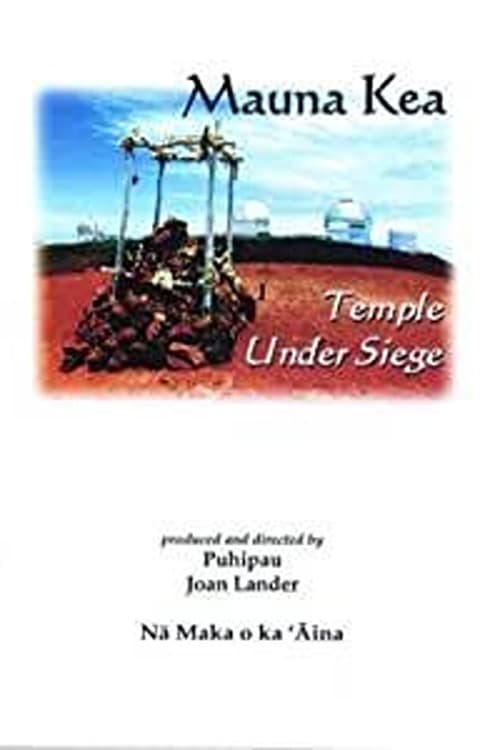
Although the mountain volcano Mauna Kea last erupted around 4,000 years ago, it is still hot today, the center of a burning controversy over whether its summit should be used for astronomical observatories or preserved as a cultural landscape sacred to the Hawaiian people. For five years the documentary production team Nā Maka o ka 'Āina ("the eyes of the land") captured on video the seasonal moods of Mauna Kea's unique 14,000-foot summit, the richly varied ecosystems that extend from sea level to alpine zone, the legends and stories that reveal the mountain's geologic and cultural history, and the political turbulence surrounding the efforts to protect the most significant temple in the islands: the mountain itself.
Mauna Kea: Temple Under Siege
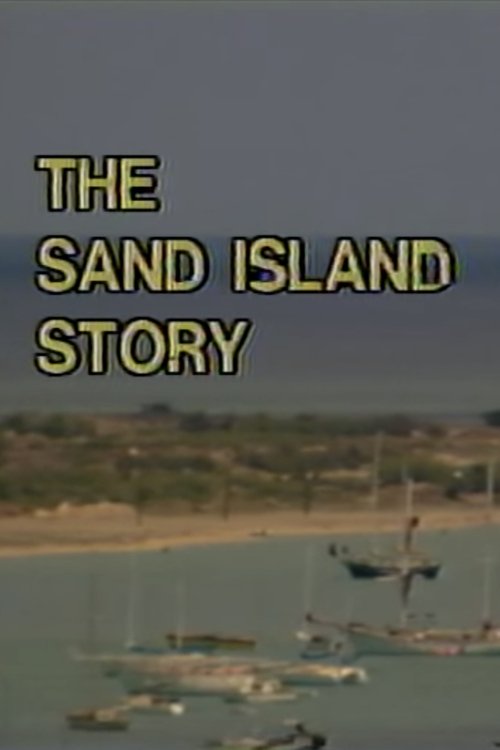
This short documentary chronicles a four-month period between 1979 and 1980 when residents of Hawaii's Sand Island "squatter" community attempted to resist eviction from the Honolulu shoreline - resulting in displacement, arrests, and the destruction of a community.
The Sand Island Story
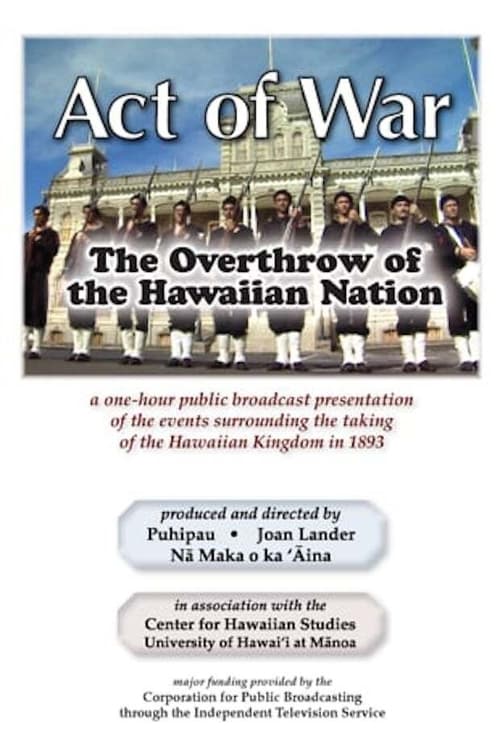
This hour-long documentary is a provocative look at a historical event of which few Americans are aware. In mid-January, 1893, armed troops from the U.S.S Boston landed at Honolulu in support of a treasonous coup d’état against the constitutional sovereign of the Hawaiian Kingdom, Queen Lili‘uokalani. The event was described by U.S. President Grover Cleveland as an "act of war."
Act of War: The Overthrow of the Hawaiian Nation
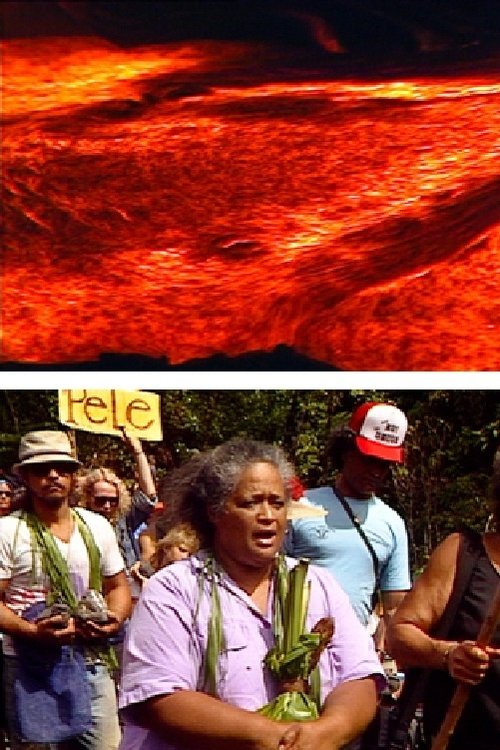
In the swirling volcanic steam and misty rain forest of Kilauea volcano’s east rift zone on the island of Hawai’i, two forces meet head on. Geothermal development interests, seeking to clear the rain forest for drilling operations, are opposed by native Hawaiians seeking to stop the desecration of the fire goddess, Pele. Pele is a living deity fundamental to Hawaiian spiritual belief. She is the eruption, with its heat, lava and steam. Her family takes the form of forest plants, animals and other natural forces. But geothermal development interests see Pele as simply a source of electricity. When Hawaiians take the issue to court, they find that nature-based religions are not respected by U.S. law.
Pele's Appeal
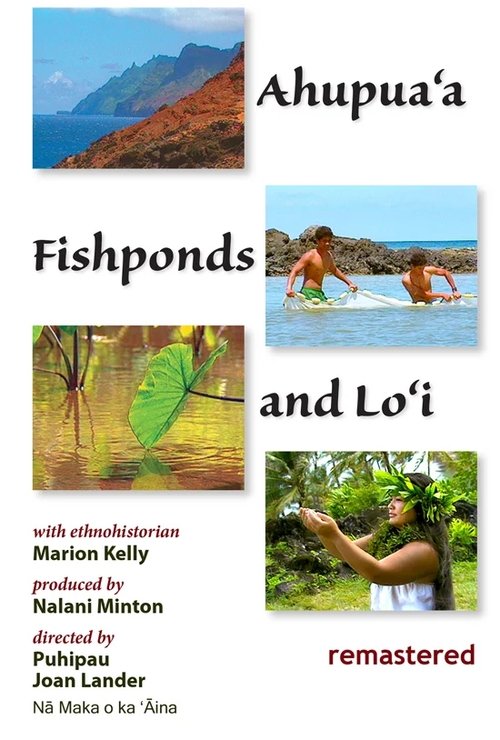
The Hawaiian system of land use allowed access to all resources in the ahupua‘a, a land division that stretched from mountain to sea. Within the ahupua‘a, highly specialized technologies such as fishponds and lo‘i kalo (taro gardens) ensured an abundance of food. Our Kanaka Maoli (Native Hawaiian) ancestors achieved a rare balance between meeting their needs and enhancing the productivity of the land and sea. Their social system ensured survival from generation to generation.
Ahupua‘a, Fishponds and Lo‘i
From the age of five, Henry Auwae learned the art of lāʻau lapaʻau (herbal medicine) from his grandmother, a woman whose knowledge extended back to nineteenth century Hawaiʻi. In this documentary series, "Papa" Auwae shares this traditional knowledge. At a workshop, he demonstrates the preparation of healing herbs and mineral rock (ʻalaea). And in a visit to the Wao Kele o Puna rainforest, he identifies rare medicinal plants and speaks to the importance of preserving them in their natural habitat. This digitally remastered DVD replaces the original 33-minute program from 1991. The expanded documentary and bonus features contain virtually all of the footage recorded of Henry Auwae at the Hawaiian Health Fair held in Hilo, Hawaiʻi on May 5, 1990 along with footage recorded at this residence in Keaukaha, and during a drive to and hike through the Wao Kele o Puna rainforest on September 27, 1989.
The Hawaiian Art of Healing
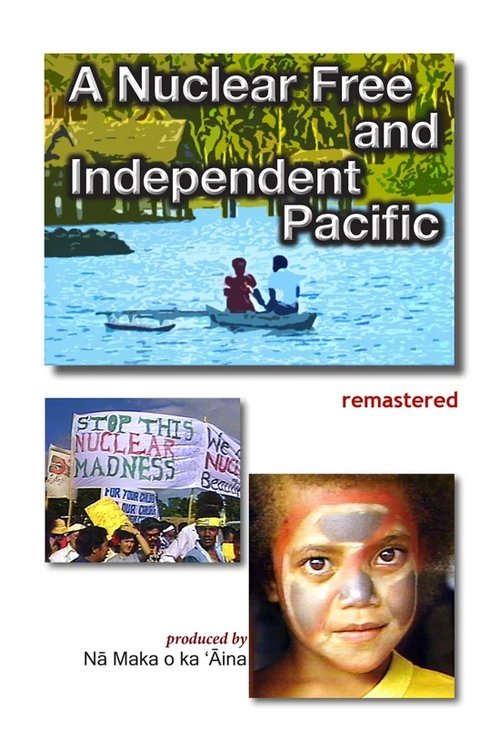
Recorded in 1983 during a ten-day gathering in Vanuatu, a newly independent island nation in the south Pacific that had recently declared itself a nuclear-free zone, this program takes a look at the Pacific-wide movement towards independence and de-nuclearization. Testimony is presented by Pacific islanders and Pacific Rim representatives who experience various aspects of the nuclear cycle, from uranium mining in Australia and Canada to nuclear testing in the Marshall Islands and Tahiti. Health, social, economic, military and political effects of the nuclear presence in the Pacific are the subject of the conference and the focus of a march through downtown Port Vila to the French consulate on Bastille Day.
A Nuclear Free and Independent Pacific
Kānaka Maoli (native Hawaiians) living at Mākua beach in 1983 take a stand to resist eviction by police and government agents.
Mākua Homecoming
Taro grower and Native Hawaiian practitioner Jerry Konanui works to propagate and save from extinction the numerous varieties of kalo (taro), a staple of the Hawaiian diet. Jerry’s mission is also to protect kalo, revered as the elder sibling (Haloa) of the Hawaiian people, from the risks of genetic engineering.
Malama Haloa - Protecting the Taro

From an ancient burial site at Honokahua, Maui, to the streets of Honolulu, the issue of protecting ancestral remains from development is brought passionately to the public’s attention by Hawaiian descendants. A few days before Christmas, 1988, a 24-hour vigil is held at the state capitol to protest the excavation of almost 900 ancient burials from the sands of Maui’s Honokahua bay by archeologists contracted to clear the area for construction of a new Ritz Carlton resort. The effort to stop the desecration is met with overwhelming support from the community and soon an agreement is reached between the state government and the developer to move the hotel site and reinter the bones. This collective action eventually resulted in legislation to repatriate ancestral remains from universities and museums throughout the world and protect burial sites throughout Hawai‘i.
Na Wai E Ho'ōla I Nā Iwi - Who Will Save the Bones?
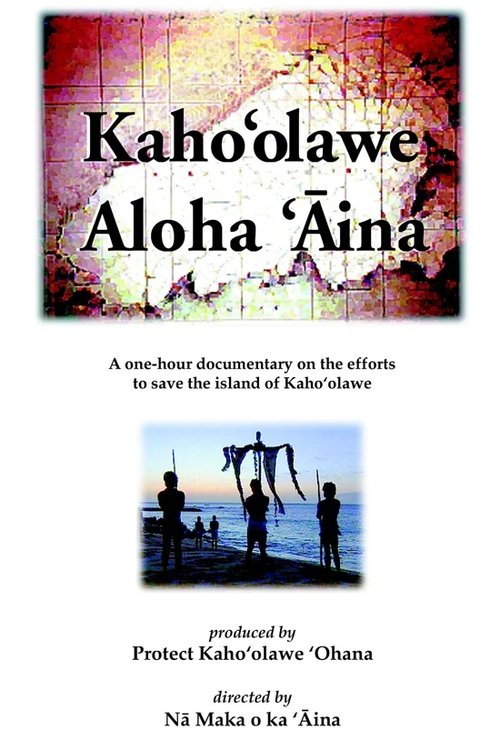
Kahoʻolawe Aloha ʻĀina focuses on the cultural, political and military significance of the "target island" of Kaho‘olawe in the Hawaiian archipelago.