Tiffany Sia
Directing
Biography
Tiffany Sia is an artist, filmmaker, and writer living in New York. Her work explores the politics and relations of media circulation and considers how material cultures, particularly print and film/video, trace and enable power, governance, and perception, and how such forces play out and construct imaginaries of place, especially Hong Kong. Sia has directed several short films, including Never Rest/Unrest (2020), Do Not Circulate (2021), and What Rules the Invisible (2022), which have screened at New York Film Festival, Toronto International Film Festival, MoMA Doc Fortnight, Flaherty Film Seminar, and elsewhere. She has exhibited work at venues including Artists Space, New York; the Museum of Modern Art, New York; Seoul Museum of Art; FELIX GAUDLITZ, Vienna; and Kunstverein für die Rheinlande und Westfalen, Düsseldorf. Her books include Too Salty Too Wet (Speculative Place, 2020) and Salty Wet (Inpatient Press, 2019), and her essays have appeared in Film Quarterly, October, Artforum, and LUX Moving Image.
Known For
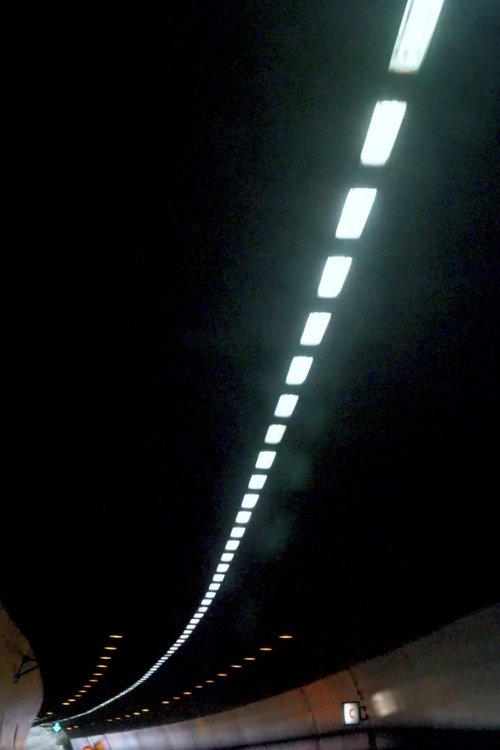
Directed by artist and filmmaker Tiffany Sia, The Sojourn (2023) imagines a restless landscape film in Taiwan. Visiting scenic locations shot by King Hu, the short experiments with the road movie genre and its intersection with the martial arts epic. Sia meets actor Shih Chun, who played the protagonist in Hu’s Dragon Inn, Touch of Zen and other wuxia films, as he guides the quest to re-encounter the iconic landscapes where Dragon Inn was shot. He advises on the perfect conditions of mist and weather. Yet, in the journey through the mountains of Hehuanshan, the sublime landscape of King Hu remains ever elusive. She later visits the elementary school of Indigenous filmmaker and principal Pilin Yapu of the Atayal tribe. Absent of conventional subtitles, the essay film employs text burned into the center of the frame as a mode of translation, sometimes refusing total disclosure. – tiffanysia.com/glossary/the-sojourn
The Sojourn
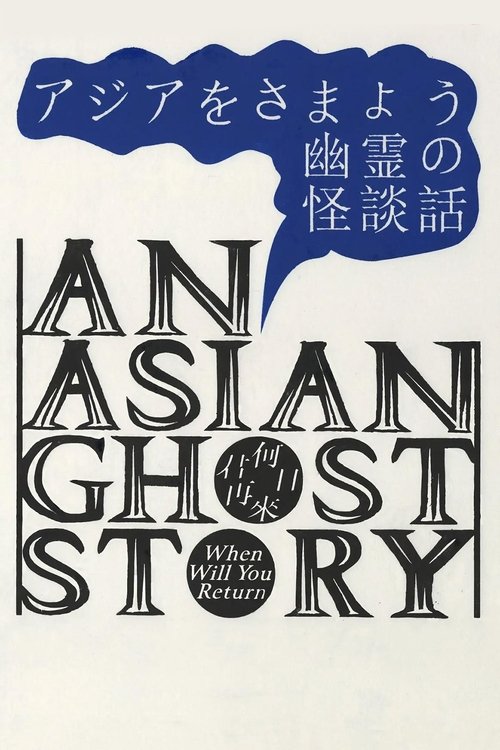
A cinematic and conceptually inventive film that explores the haunting memories of Asia’s late 20th-century modernization through the large-scale export of wigs during the Cold War. Yet, in every wig resides a ghost from the imperial past.
An Asian Ghost Story

Adam Khalil and Bayley Sweitzer’s first feature as co-directors, Empty Metal takes place in a world similar to ours—one of mass surveillance, pervasive policing, and increasing individual apathy. The lives of several people, each inhabiting extreme poles of American social and political consciousness, weave together as each attempts to achieve some kind of forward motion, sometimes in contradiction, and always under the eye of far more controlling powers.
Empty Metal
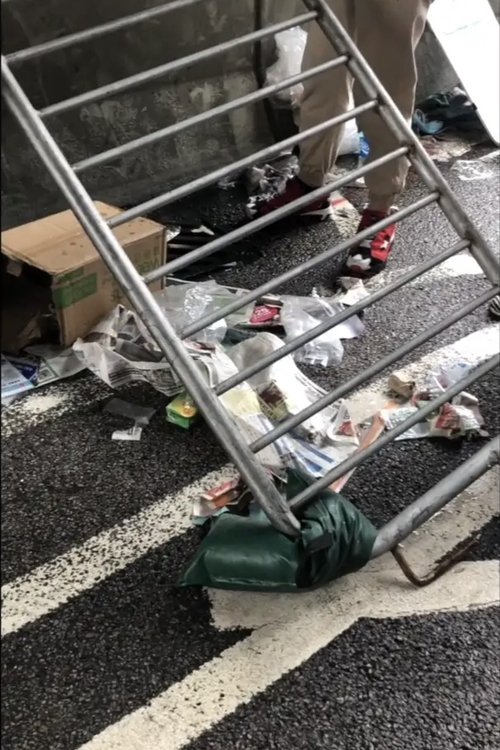
Never Rest/Unrest is a hand-held short film by Tiffany Sia about the relentless political actions in Hong Kong, spanning early summer to late 2019. The experimental short is an adaptation of the artist’s practice of scaling oral history, of showing political crisis in Hong Kong as ephemeral stories on Instagram for the past year.
Never Rest/Unrest
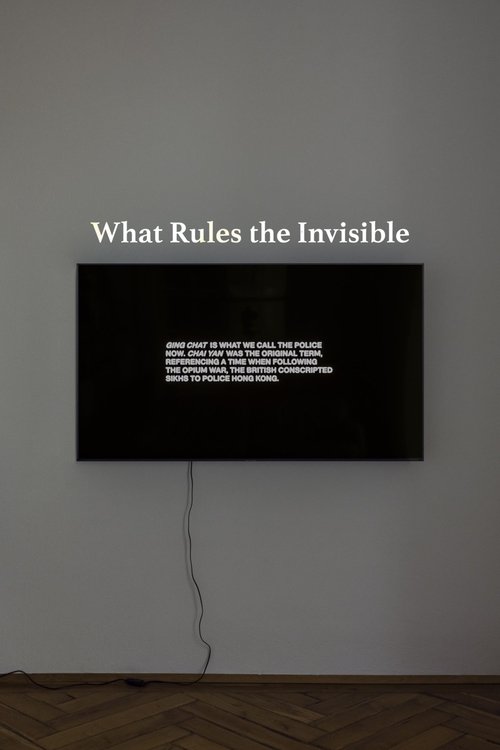
What Rules The Invisible is a short film that upturns archival travelogue footage shot in Hong Kong. Spanning reappropriated amateur footage across the 20th century, the sojourner’s gaze—distanced, distorted and even voyeuristic—shows tropes and patterns. The same shots repeat across decades, from landscape to cityscape to street scenes. Sometimes the footage reveals more about the traveler himself, such as a sequence where the camera curiously tracks the hips and bare legs of women wearing cheongsam crossing a busy intersection. Sia’s essay film studies these travelogues to find indignant subjects glaring back at the camera, or figures on the edges of the frame who appear pixelated and phantasmic, showing the patina of the footage’s circulation. Meanwhile, intertitles intermittently punctuate this footage with an oral history of Hong Kong, as told by Sia’s mother who describes colonial police, excrement and hauntings in Kowloon of the postwar era.
What Rules the Invisible

The timeline and vertical aspect ratio of social media set the formal parameters for Tiffany Sia’s essay film, which follows the image trail of a single event in Hong Kong from the 2019 protests. Reckoning with this event, a relentless voiceover reframes archival media salvaged in the midst of disappearance and erasure, drawing upon a traumatic media memory, summoning ghosts and occult forces alongside disinformation and rumor.
Do Not Circulate

A child’s retelling of an escape from Shanghai disguised as a family vacation through the south. Half-remembered scenes of a historical cusp are recalled alongside a montage of appropriated early Mao-era children’s animations of the same period. The work assembles fragmentary memories and images that must be conjured through the mind, in lieu of historical reenactments too costly to make. The child becomes increasingly aware of the world of adult secrets. A television is flickering. Train sounds whir. — Anthology Film Archives
A Child Already Knows

How do we reckon with our attachments to place, and their knotted historical relations? A meditation on maritime trade routes, Sea – Shipping – Sun is a short film directed by Tiffany Sia (b. Hong Kong) and Yuri Pattison (b. Dublin) shot over the span of two years to render a simulated duration of a day, beginning at twilight and closing with sunset. The film is set against shipping forecasts from archival BBC radio broadcasts. The sea contains a submerged history. Currents trace trade routes, and also draw a means of escape. While the sea binds communities together, it also disappears and drowns them. An ambient archival broadcast roils over footage of the sea channel traffic, and the sun emerges and disappears, again and again. Inspired by audio and visual media, from lullabies to ASMR videos, created with the intention of inducing sleep or relaxation, Sea – Shipping – Sun gathers a vision of entanglement. We are left with history’s residue: A gentle, rocking waltz over the sea.