Forensic Architecture
Directing
Biography
Forensic Architecture (FA) is a research agency, based at Goldsmiths, University of London, investigating human rights violations including violence committed by states, police forces, militaries, and corporations. FA works in partnership with institutions across civil society, from grassroots activists, to legal teams, to international NGOs and media organisations, to carry out investigations with and on behalf of communities and individuals affected by conflict, police brutality, border regimes and environmental violence.
Known For

Return to al-Ma’in chronicles the multiyear collaboration between Forensic Architecture (FA) and Palestinian historian and Nakba survivor Salman Abu Sitta on the reconstruction of his birthplace, the lost village of Ma’in Abu Sitta (or al-Ma’in). Guided by the work and memories of Abu Sitta, FA-researchers reconstructed al-Ma’in’s occupation by Israeli forces on 14 May 1948, its subsequent demolition, and the settlements constructed on its ruins. The movie looks to the present moment and the connections between Israeli military’s conduct and appropriation of Palestinian land during and after 1948, and today in Gaza. The project looks back at the sophistication and sensitivity with which the Abu Sitta family cultivated their land, and the rich agricultural diversity that was lost when Israeli settlements were subsequently constructed over this landscape.
Return to al-Ma’in

When US border agents fired tear gas grenades at civilians in November 2018, photographs showed that many of those grenades were manufactured by the Safariland Group, one of the world’s major manufacturers of so-called ‘less-lethal munitions’. The Safariland Group is owned by Warren B. Kanders, the vice chair of the board of trustees of the Whitney Museum of American Art.
Triple-Chaser

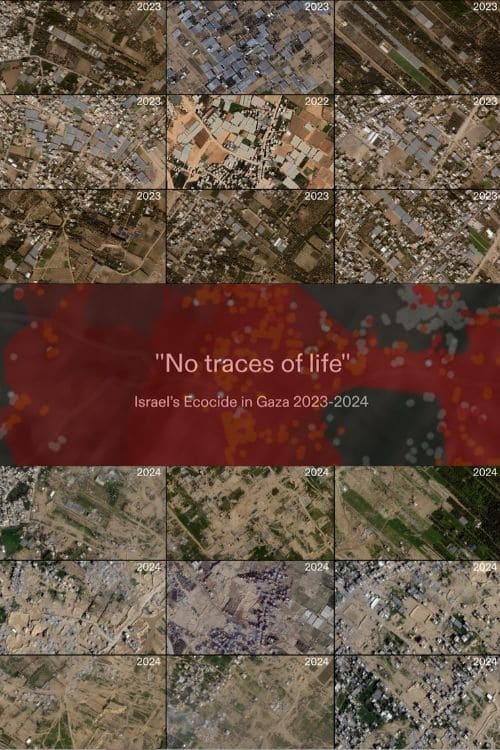
Building on Forensic Architecture’s previous investigation into herbicidal warfare and its effects on Palestinian farmers along the eastern perimeter of the occupied Gaza Strip, this investigation marks Land Day in Palestine by examining the systematic targeting of orchards and greenhouses by Israeli forces since October 2023. Our analysis reveals that this destruction is a widespread and deliberate act of ecocide that has exacerbated the ongoing catastrophic famine in Gaza and is part of a wider pattern of deliberately depriving Palestinians of critical resources for survival.
No Traces of Life

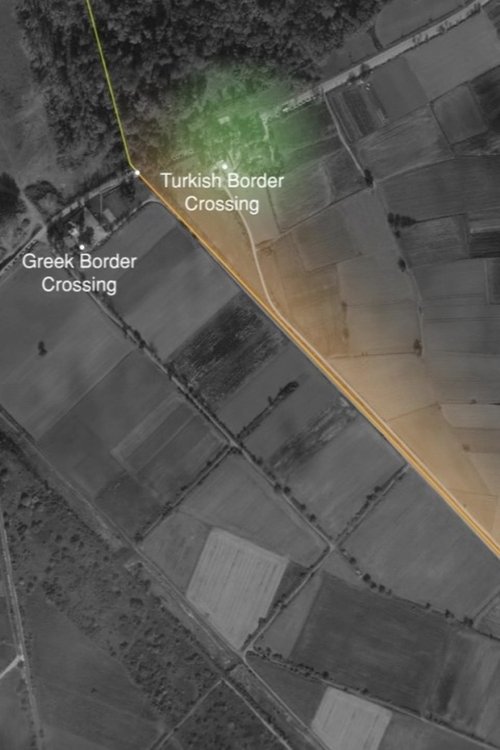
On 27 February 2020, the Turkish government opened its borders with Greece in an attempt to exert political pressure on the EU over Syria. Thousands of migrants and refugees were funneled to a single point on the land border between the two countries, the border fence near Kastanies/Pazarkule, with the promise of an open route to Europe. The Greek government responded by deploying its police and military to the region. It warned migrants not to cross, and suspended its asylum system. On 4 March, violence escalated near the border crossing. Reports emerged of shootings, and casualties. Our analysis shows that it is highly probable that the shots that killed Gulzar and, in all likelihood, wounded the remaining six casualties were fired from the Greek side of the border. -FA
The Killing of Muhammad Gulzar

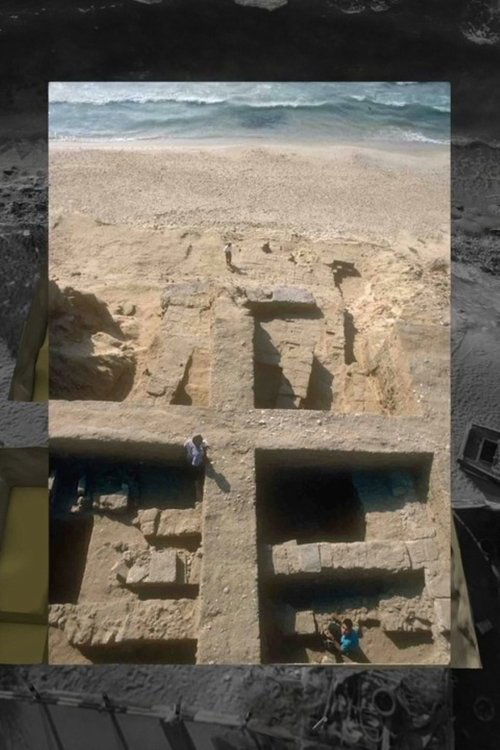
On 23 March 2025 in Tel al-Sultan, Gaza, Israeli forces massacred fifteen Palestinian aid workers travelling in clearly marked humanitarian vehicles, later burying their bodies and vehicles in a shallow mass grave. Earshot and Forensic Architecture worked with the Palestine Red Crescent Society and survivors of the massacre to reconstruct the incident with unprecedented precision. The Last Responders is an investigative documentary about this massacre. Anchored in the situated testimonies of two survivors, the film draws on firsthand video and voice recordings captured during the night of the attack by the Palestine Red Crescent Society. Through these materials, the film probes acts of execution and concealment, while reconstructing a fuller account of what unfolded in Tel al-Sultan in the hours and days that followed.
The Last Responders

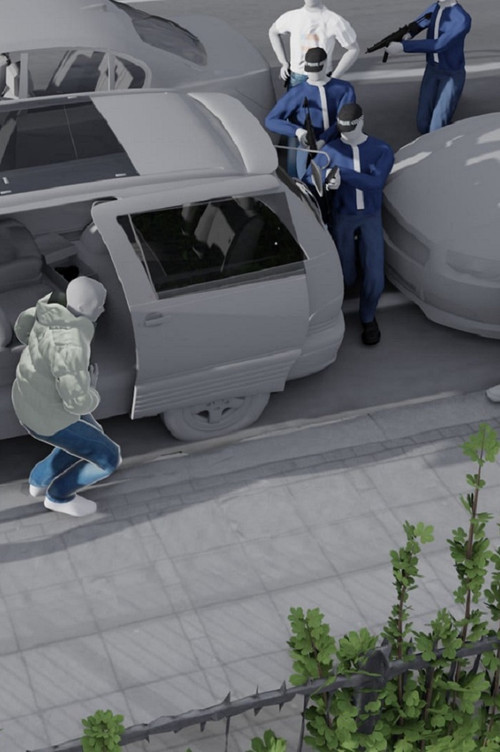
On 1 December 2018, on the margins of a gilets jaunes protest in Marseille, 80-year-old Zineb Redouane was struck in the face by a tear gas grenade as she was standing at the window of her fourth-floor apartment. The following day, she died in hospital. In May 2020, a new element was added to judicial investigation that was ongoing: the report of a ballistics expert, intended to establish whether the officer who fired the shot, a member of France’s CRS riot police, had followed procedure. The report clears the officer, who has still not been identified. Using elements of that report, and a detailed 3D model of the scene, Disclose and Forensic Architecture re-examined the case, reconstructing the precise sequence of events before, during, and after the killing.
The Killing of Zineb Redouane

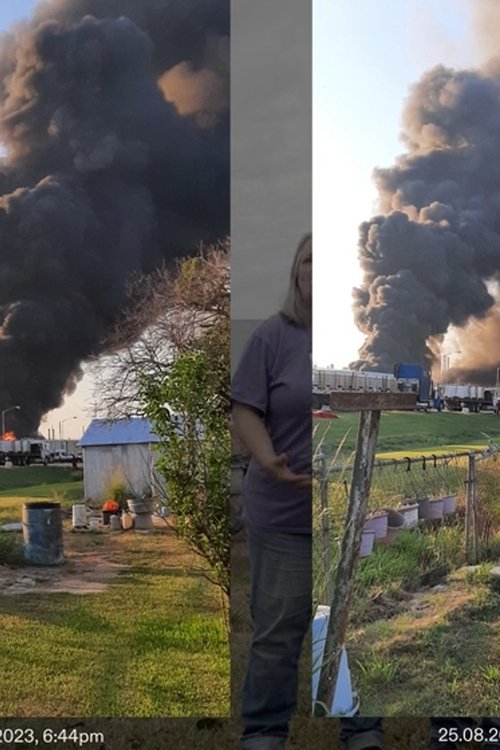
A stretch of the Mississippi River once called "Plantation Country" is now the "Petrochemical Corridor", known to those who breathe its toxic air as "Death Valley". Using advanced cartography and fluid dynamics techniques, we work to support local demands for liability and repair.
If toxic air is a monument to slavery, how do we take it down?

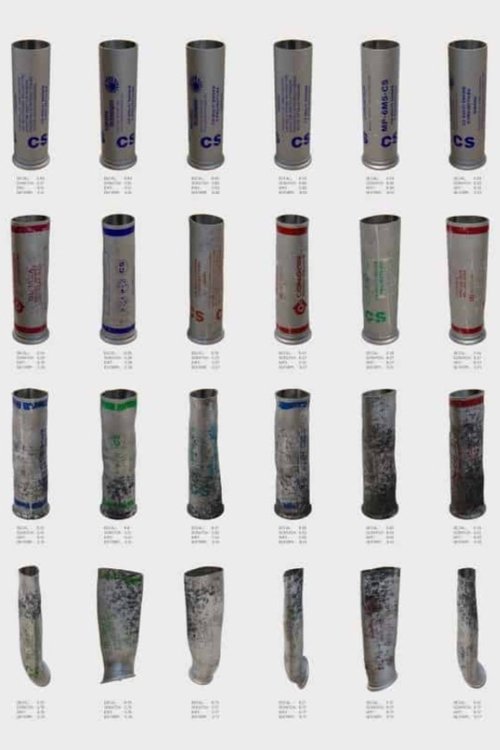
Since 2018, Forensic Architecture has been working with ‘synthetic images’-photorealistic digital renderings of 3D models-to train machine learning classifiers. Model Zoo includes a growing collection of 3D models of munitions and weapons, as well as the different classifiers trained to identify them making a catalogue of some of the most horrific weapons used in conflict today.
Model Zoo

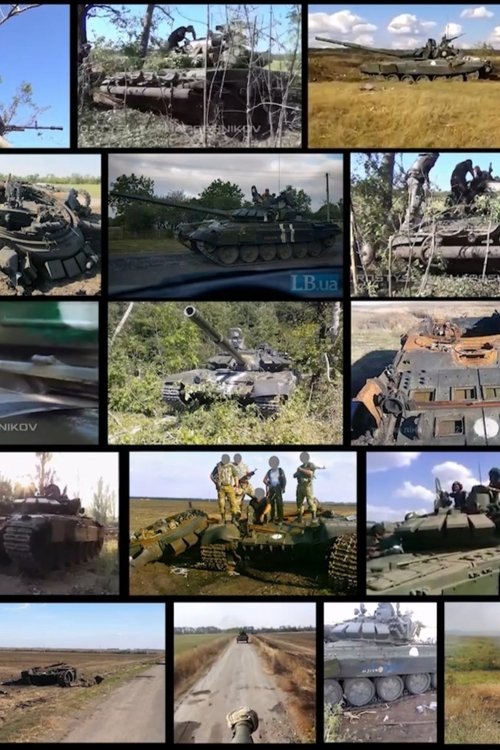
Since Jair Bolsonaro assumed the presidency of Brazil in 2019, vast tracts of the Amazon rainforest and the indigenous communities that live in and care for it have been subjected to increasing violence and a rapid increase in illegal gold mining, encouraged by his administration's rhetoric and policies. The research had three interrelated dimensions: the policies adopted by the Bolsonaro administration, the violent attacks against Yanomami villages, and the destruction of the environment. The evidence strongly suggested that the policies and rhetoric of the Bolsonaro administration before and during his presidential term correspond with the rapid increase in environmental destruction and violence against indigenous peoples throughout the Amazon.
Gold Mining and Violence in the Amazon Rainforest

On 6 November 1985, a guerrilla group known as M19 stormed the Palace of Justice in Bogotá, taking state officials and members of the Colombian Supreme Court hostage. Security forces initiated a counter-siege that lasted two days, leaving over a hundred dead and large parts of the building burned. Instead of focusing on what happened inside the Palace between the guerrillas and the military, a new visual investigation by FA and the Truth Commission examines the logistics of the military in their counterinsurgency operation and what happened to certain individuals once they left the building. -FA
Cajas Negras

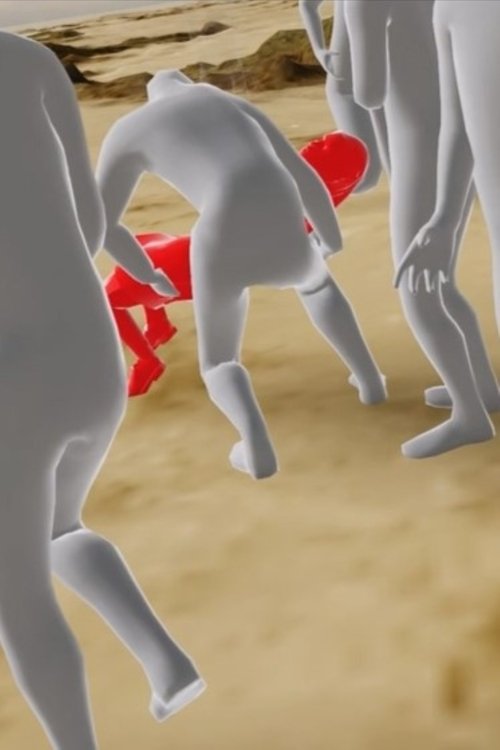
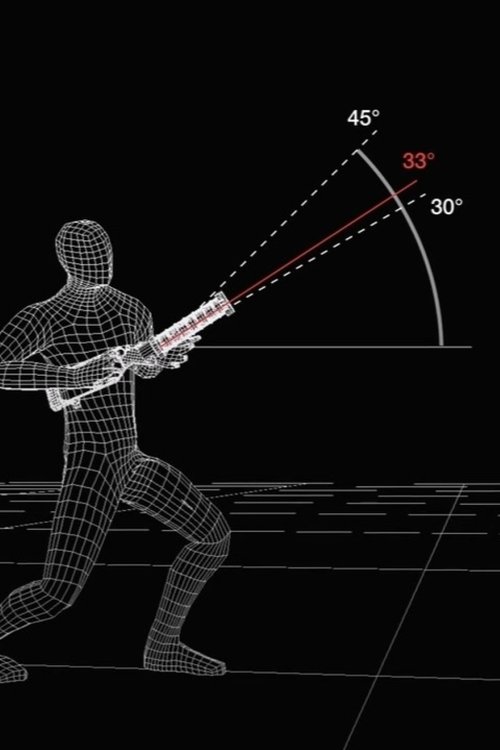
On the evening of 1 June 2018, a large group of Palestinian protesters gathered at one of the five principal protest sites, near the village of Khuzaa. At 6:31pm, a shot was fired from beyond the border fence into the crowd. The bullet killed Rouzan al-Najjar, 21, a volunteer medic. Two of her fellow medics, Mohammed Shafee and Rami Abo Jazar, were wounded at the same time. The death of al-Najjar, who was widely revered among the protesters, sent shockwaves throughout Palestine. Forensic Architecture was commissioned by the New York Times to undertake spatial analysis of the scene of al-Najjar’s death. By digitally recreating the protest site from video evidence, we used the precise location of the three gunshot victims as a means to derive the trajectory of the bullet, and trace its ‘cone of fire’ back to its origin, a sniper’s berm at the border fence. -FA
The Killing of Rouzan al-Najjar

Following the EU-Turkey agreement of March 2016, Turkey had contained inside its territory refugees and migrants trying to reach Greece and the EU. However, on 27 February 2020, the Turkish government encouraged and mobilized thousands of migrants and refugees to cross into Greece at the Evros/Meriç region in order to exert political pressure on the EU to comply with Turkish interest in Syria. On 2 March, after several days of tension, violence escalated at the border. Reports emerged of shootings, and a casualty near the river delta. The victim was identified as Muhammad al Arab, a young man from Aleppo, Syria. We established that rounds were fired along that stretch of the border on that day and Muhammad al-Arab was killed in Turkish soil within 15-135m from a group of armed Greek soldiers standing right on the border. Our analysis supports the testimony of several witnesses who claim that al-Arab was shot by this group of Greek soldiers. -FA
The Killing of Muhammad al-Arab

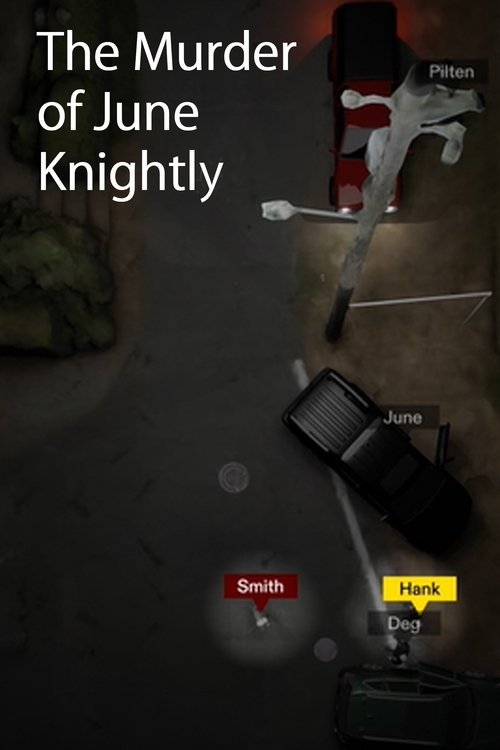
On 19 February 2022, June Knightly and other members of an anti-fascist affinity group in Portland, Oregon were attacked by a right-wing extremist. June was murdered and four of her friends seriously injured. Despite knowing the attack was unprovoked, the Portland Police Bureau released an inaccurate statement suggesting the incident had been a confrontation between an 'armed homeowner' and 'armed protesters'. Forensic Architecture (FA) interviewed witnesses and survivors of the Normandale Park attack using a navigable digital 3D model of the scene, built from previously unpublished video of the attack recorded by one of the victims, drone images and video of the police response posted on social media.
The Murder of June Knightly

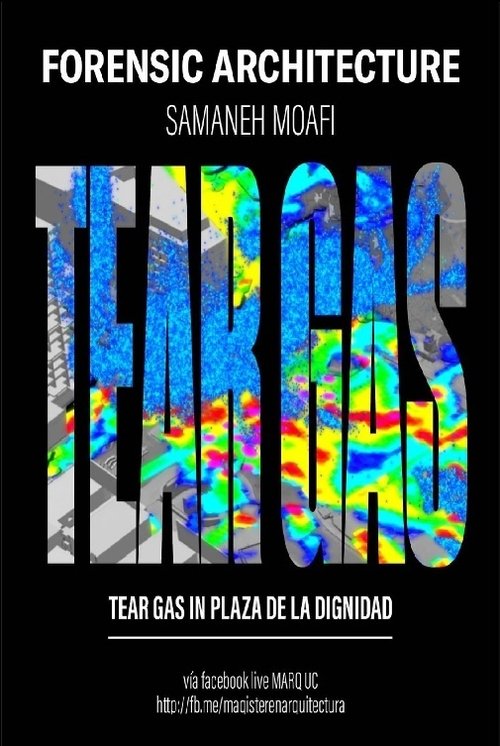
On December 20, 2019, Chilean security forces used unprecedented amounts of tear gas within a relatively small area against people participating in a peaceful and unarmed demonstration. Using open source analysis and fluid dynamic simulations, we measured the concentration of tear gas in the air in that territory to estimate the scale of health risks inflicted on civilians that day.
Tear gas in Plaza de la Dignidad, Chile

Amnesty International and Forensic Architecture (FA) were denied entry into the Gaza strip, and as such our investigation into the bombardment of Rafah relied on thousands of images and videos shared online, or sent directly to FA, by citizens and journalists. Through a process of locating cameras and incidents within a digital model, and subsequent analysis of satellite and ground-level images, smoke clouds, shadows and impact craters, we mapped hundreds of air-to-surface and artillery strikes that hit the city of Rafah on 1 August. -FA
Rafah: al Tannur Neighbourhood Strike Methodology

On Monday 15 January 2018, Venezuelan security forces raided a house on the outskirts of El Junquito, 20 kilometers west of Caracas. The target of what came to be known as ‘Operation Gideon’ was Óscar Pérez, the leader of a small rebel group acting against the government of President Nicolás Maduro. Nine people were killed, including Pérez and six other members of his group. All but one were found to have injuries consistent with being shot in the head. Two members of the Venezuelan armed forces were also killed. In order to understand the events that took place that day, FA and Bellingcat analysed material recorded by citizens, security forces, and by Pérez himself, as well as official statements, and leaked audio of police communications. -FA
Standoff in El Junquito

On the morning of 16 March 2011, a jirga was convened at Datta Khel in North Waziristan, to debate the ownership of a local chromite mine. A jirga is a traditional community gathering that meets to resolve disputes—in this case, the dispute was over payment for mining rights. The meeting took place in an open field near the Datta Khel bazaar, and lasted two days. It consisted of two adjacent circles of men seated on the ground. On the first day of the meeting, a missile fired from a US drone killed 4 or 5 people elsewhere in the vicinity of Datta Khel. -FA
Drone Strikes on a Jirga in Datta Khel

On 28 November 2015, Tahir Elçi, a prominent Kurdish human rights lawyer, was shot and killed during a press conference in the city of Diyarbakır, Turkey. Elçi’s death came during a time of rising tensions in the country, against the backdrop of the decades-long conflict between Turkish security forces and the Kurdistan Workers’ Party, or PKK, a militant political movement dedicated to achieving Kurdish autonomy in Turkey’s southeast. In 2016, the Diyarbakır Bar Association, of which Elçi was chairman at the time of his death, asked Forensic Architecture to examine the evidence in their possession, and to independently investigate the circumstances of his death. As Elçi was killed during a press conference, multiple cameras captured the moments leading up to his death. -FA
The Killing of Tahir Elçi

We examined videos from the 2008–2009 Gaza conflict, and from Fallujah, Iraq, where US forces had deployed against the Iraqi army in white phosphorus in 2004. Within a parametric model, we simulated projectiles detonating over various configurations of a generic urban environment. We concluded that in Gaza, white phosphorus was likely used to harass and terrorise citizens in order to clear neighbourhoods, rather than as a ‘smoke screen’, as the Israeli military had claimed. -FA
The Use of White Phosphorus in Urban Environments

Since 2014, the clearing and bulldozing of agricultural and residential lands by the Israel military close to the eastern border of Gaza has been complemented by the unannounced aerial spraying of crop-killing herbicides. Our investigation sought to answer the following questions: how do airborne herbicides travel into Gaza? How far into Gaza does it enter? What is the concentration of the herbicide that drifts into Gaza? And what is the damage to the farmland on the Gazan side of the border? -FA