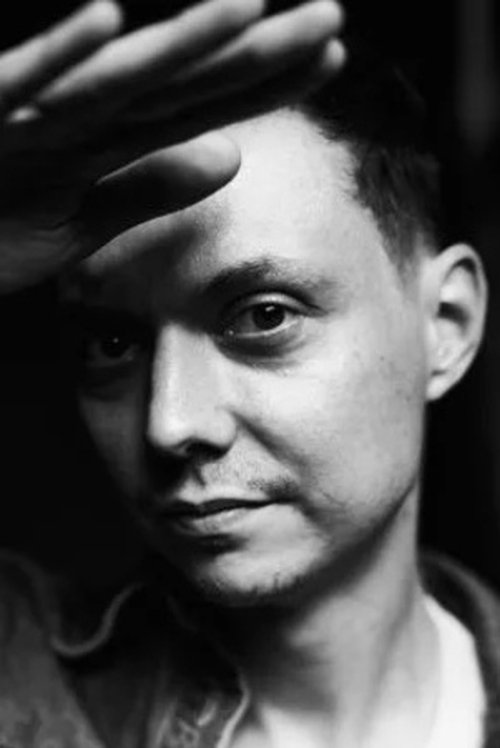
Mykola Ridnyi
Directing
Biography
Mykola Ridnyi was born 1985 in Kharkiv, Ukraine. He lives and works in Berlin where he holds a guest professorship in the Lensbased class at the Berlin University of the Arts (UdK). Ridnyi graduated from Kharkiv National Academy of Design and Arts in 2008. Since 2005, he has been a founding member of the SOSka group, an art collective based in Kharkiv. The same year he cofounded the SOSka gallery-lab, an artist-run-space in Kharkiv. Under his lead, the gallery-lab was instrumental in the developing the artistic scene in the region before it was closed in 2012. Starting from his curatorial project Armed and Dangerous (2017 – 2021), Ridnyi begone to develop a platform for collaboration between Ukrainian moving image artists and filmmakers. In 2022 he curated several screening programs of Ukrainian film and video art in DAAD gallery in Berlin, MAXXI Rome, Museum Folkwang Essen, National Gallery in Sofia. Ridnyi works across media ranging from early collective actions in public space to the amalgam of site-specific installations. Photography and moving image constitute the current focus of his practice. In recent films and images, he experiments with nonlinear montage, collage of documentary and fiction. His way of reflection social and political reality draws on the contrast between fragility and resilience of individual stories and collective histories. The body of his work created withing the last decade address the question of how to talk about violence and war but not multiply its brutality in the visual language.
Known For
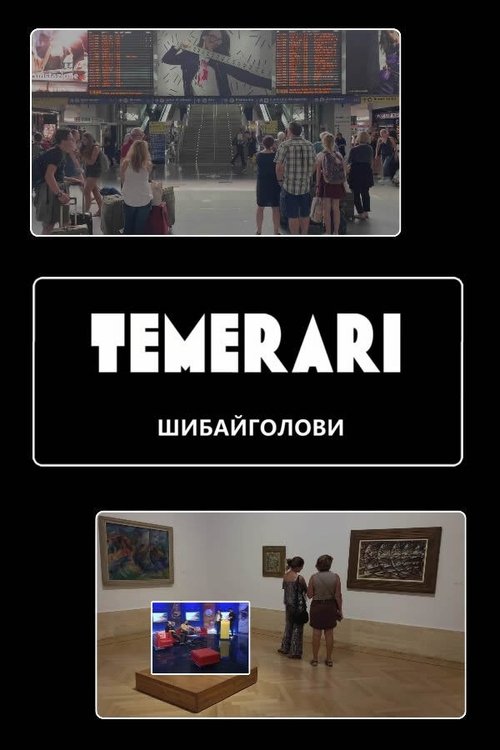
The film explores unobvious connections between the cultural and political phenomena of Italy and Ukraine. Suddenly, fans of Italian futurism and fascism appear among the Ukrainian far-right community. At the same time, conservative ideas are spreading in Italy and Europe. There are its own heroes, villains and victims including Ukrainian soldier Vitalii Markiv, far-right publishing house Iron Dad, former Italian Deputy Prime Minister Matteo Salvini, a group of pro-Russian recruits for the war in Donbas, and others.
Daredevils

The film was made in 2015, shortly after Russia annexed Crimea and ignited the war in Donbas. The confrontation between supporters of an independent Ukraine and European integration on the one hand and «separatists» who wanted to join Russia on the other strongly affected the city of Kharkiv. In the film, the sounds of violence from the past break into scenes of the relatively peaceful life that followed. The public places in the city center of Kharkiv where activists fought some years ago were destroyed by Russian artillery in this year. The film was extended to include images of this destruction because the current war is a continuation of the outbreaks from the past and will forever change our future.
Regular Places
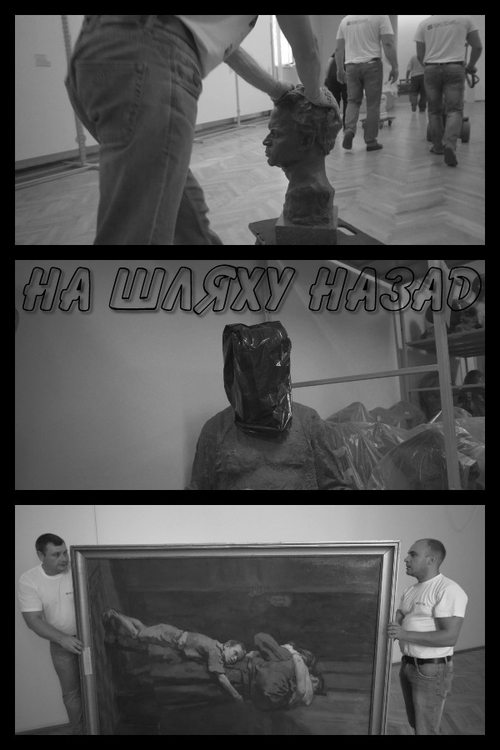
Because of the decommunization laws, paintings and sculpturesof socialist realism at the National Art Museum of Ukraine aretrapped in complicated political circumstances. Will those works be brought back to the museum after its reconstruction?
On a Way Back
According to legend, the Ukrainian hetman Ivan Mazepa was punished for a secret affair by being tied naked to the back of a wild horse. Over time, this story underwent a gender shift, culminating in the 19th century when the British actress Ada Menken played the role on stage.
Mazepa's Ride
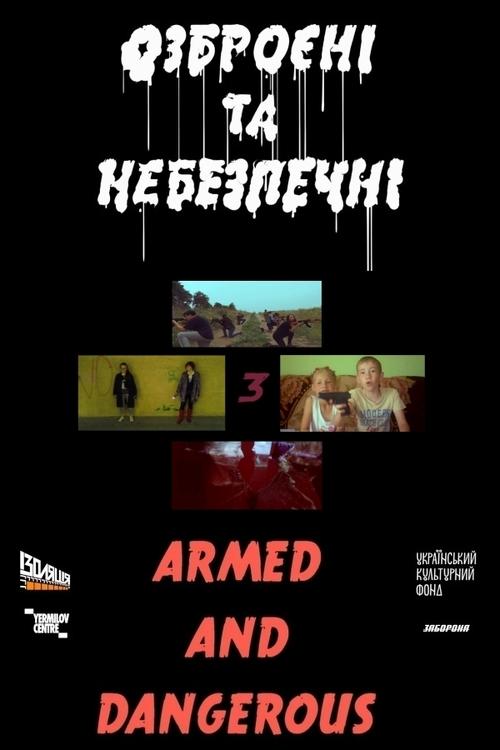
Imagine that Conservatives came to power and established authoritarian regimes all over Europe. Ukraine was no exception. Paramilitary groups of kids started patrolling the streets. Queer-Anarcha-Feminists went underground and began preparations for the resistance.
Armed and Dangerous 3
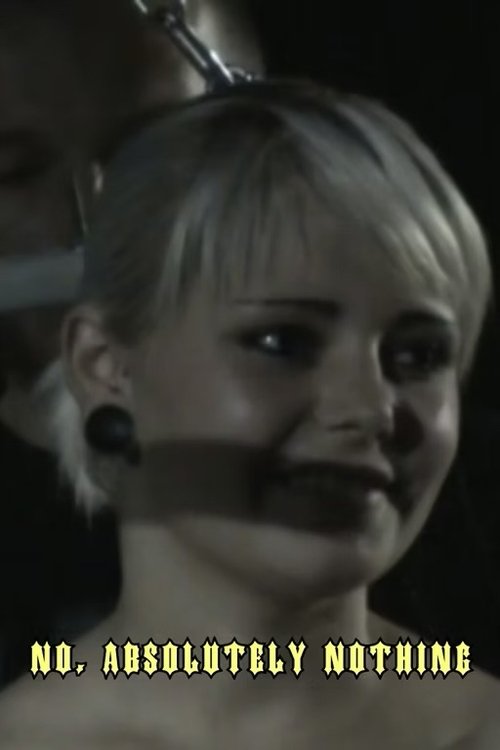
The film captures suspension performances in a Kharkiv nightclub, a subculture involving body suspension through piercings. Participants, often teenagers interested in heavy music and body art, use this practice as a protest against societal norms and a form of youth radicalism. Unlike political activism, it symbolizes a desire to escape social ties through pain. Five years later, Ukraine’s war shifted pain’s symbolism from escape to a new normality, as many young people joined military and volunteer efforts.
No Regrets
The main object in this film is an underground shelter repurposed for a kind of school that delivers pre-service training. The main character, an elderly teacher, also an archetype of Soviet ideology, does not seem to care about the contemporary political situation, instead opting to stay true to his own principles that have been inculcated into him through military service. His students couldn’t care less about the patriotism promoted in the schoolbooks from their teenage years; instead, they reserve their passions for the shooting ranges, inspired by computer games and Hollywood action movies. During the Cold war the political propaganda of the USSR and US produced a social phobia connected to the threat of nuclear war and the cult of defense. In modern Ukraine, many fallout shelters from the past have since been sealed. A few have been converted to serve new functions, adapted to different needs through individual creativity, spurred on by an overall lack of facilities.
Shelter

Based on the investigation records and the stories of relatives of a little-known Ukrainian anarchist Ivan Krupsky, who is the great-grandfather of the film's director. The documentary dramatizations are dedicated to the paradoxical periods of the protagonist's life: his leadership in a rebel unit, participation in the civil war of the early 1920s, his hiding from persecution under the guise of a Soviet police officer, his job as a factory construction worker. The stories about situations in the past are reproduced using the actions of contemporary characters: contemporary anarchists, officers of the New Police, students and workers. The filming took place at the locations of particular historical events, in Poltava, Hadiach, Kharkiv and Bohodukhiv.
Grey Horses

In 2022, a neighborhood of Northern Saltivka in Kharkiv has become the frontier of the Russian invasion and has suffered significant destruction. A walk through the "ghost district" forging ahead of coexistence of past and present, outward and inward landscapes, facts and recollections. Voiceover recites the artist’s memories of places of his childhood and youth that no longer exist.
The District

The main heroes of the film are the young people from Kharkiv, a city located in the Eastern part of Ukraine. Reaching their early twenties coincided with the breakout of the war in the neighboring region of Donbass. An LGBT activist and poet, a fashion model, a group of street artists, a creator of a computer game - all of them are artists or working in the creative industries, typical for a peaceful life of a big city. However, the proximity to the war affects each of the characters and their activities. Heroes react and reflect political events through their specific relationships with the urban space and the reality of the social media.
No! No! No!

The film conceptualises the historical significance and contemporary perception of Ivan Mazepa, a political and military leader of the Zaporizhian Sich and Left-bank Ukraine in the late-17th and early-18th century. Addressing codes of hip-hop culture, Ridnyi borrows the popular form of a rap battle to collide two great works of world literature associated with this historical figure: Mazeppa by Lord Byron in 1819 and Poltava by Alexander Pushkin in 1828–29. While Byron envisions Mazepa as a romantic hero, seized by love, Pushkin portrays him as a traitor in accordance with the colonial attitude of the Russian Empire. Highlighting the confrontation of these two texts, Ridnyi invited four rappers from different national and cultural backgrounds to write and perform their response to the poets’ lyrics.
The Battle Over Mazepa
This video work was filmed on a coast of the Black Sea and shows a static horizon dotted with figures of fishermen. The calm surface of the image is periodically punctured by scenes of jellyfish splattering on the ground. The association with the sound of bombs dropping is achieved with recordings of frequencies produced by a jet plane. The video conveys the unsteadiness and relativity of calmness – how quickly and easily military aggression can escalate in the modern world. This work was made in response to the conflict between Georgia, Abkhazia and Russia that took place 6 years before the invasion of Ukraine and annexation of Crimea.
Seacoast
The film focuses on the emotionality of social media and its role in the militarization of Ukrainian society. The ability of social media to capture emotions and retranslate them, turn emotional contagion into a closed collective practice, and the community — into a single organism capable of achieving real change. This form of collectivity, which develops on the basis of digital interaction, can have very different consequences. Where exactly is the line between solidarity and radicalization? How can empathy turn into hatred?