Jyotish Bandyopadhyay
Directing
Biography
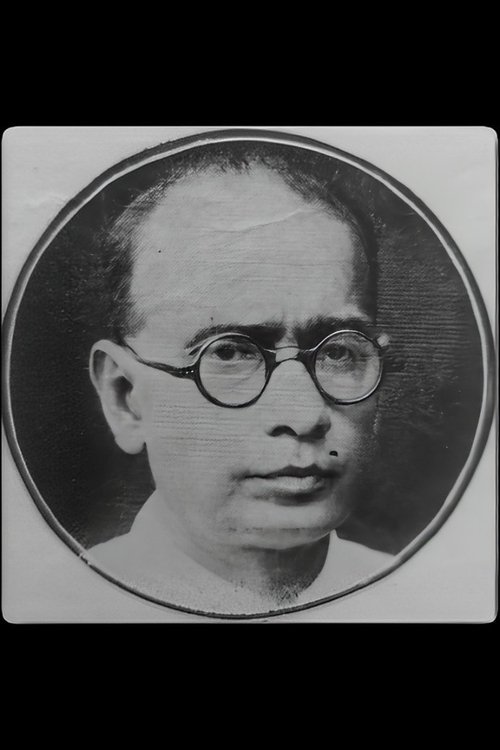
Bengali and Hindi director born in Bihar. He started as a typist at Madan Theatres; and later became the studio’s main film-maker in the silent era. Part of a film-making team with Priyanath Ganguly, Jyotish Mukherjee, Amar Choudhury, B.J. Rajhans, Abdur Rehman Kabuli (later star of Indra Sabha, 1932) and cameramen Jyotish Sarkar and T. Marconi. Initially worked with Eugenio De Liguoro (Dhruva Charitra, Nala Damayanti, both 1921; Ramayana, 1922) and C. Legrand (Vishnu Avatar, 1921). Early films mainly adapted stage spectaculars from the Elphinstone and Corinthian companies. In his late 20s Silents, he adapted several novels by Bankimchandra Chattopadhyay owned by Madan Theatres. Also filmed are plays by Girish Ghosh and Rabindra Mohan Moitra and a novel by Romesh Chandra Dutt (Madhabi Kankan). These were early examples of the Bengali literary film genre later incarnated into a formula by New Theatres. Went on to make one of the most successful stage adaptations in the Bengali cinema, Manmoyee Girls’ School. Worked at Madan until 1933, then freelanced, notably at Radha Films, at Madan’s successors Bharatlaxmi Pics, and the Indrapuri Studio.
Known For

Haralal arranges a fake will and makes Rohini, an orphaned widow, agree to change the original will for the fake one.
Krishnakanter Will

Dakshayagna is a pivotal tale in Hindu mythology. It recounts the grand sacrifice ritual organized by Daksha, where his daughter Sati, wife of Lord Shiva, tragically immolates herself due to her father's insult to her husband. Enraged by this, Shiva destroys the sacrifice, leading to the creation of the Shakti Pithas. This event also sets the stage for the reincarnation of Sati as Parvati, who later marries Shiva. The story is central to understanding the complexities of Hindu deities and their interactions.
Dakshayagna

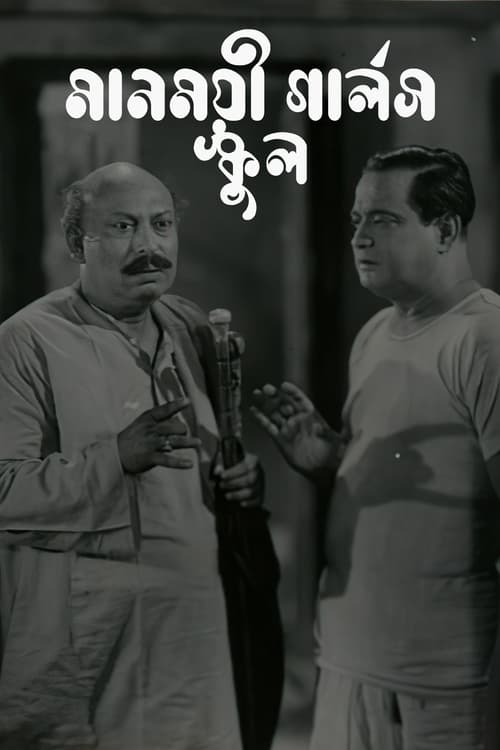
A comedy adapted from a successful play. The zamindar Damodar Chakraborty (Chakraborty) starts a school named after his wife and recruits a married couple as teachers. Manas (Ganguly in the role which had made him a stage star) and Niharika (Kanan Devi) pretend to be married in order to get the jobs. Their imposture, together with the fact that he is Hindu while she is Christian, produces complications.
Manmoyee Girl's School
Mythological story based on the Puranic legend of the boy Dhruva. His quest for eternal salvation was rewarded when he became the brightest star in the heavens. The pole star is known as Dhruvatara.
Triumph of Devotion

Lord Krishna visits Suryapith with his friend Akrur, where they meet Satyabhama, the daughter of Satrajeet. Akrur proposes to Satyabhama, but she addresses him as a brother, leading him to resent Krishna. Satyabhama, however, falls in love with Krishna. Unaware, Satrajeet arranges Satyabhama’s marriage with Kritabarma. Meanwhile, Jarasandha, the king of Magadh, desires the Syamantak gem to win Jambavati’s hand in marriage. His ally, Satadhanya, also covets Satyabhama. When Satadhanya attacks Satrajeet to seize the gem, Krishna intervenes, defeating him and protecting Satrajeet and Satyabhama. However, Satrajeet distrusts Krishna, hiding the gem with his brother, Prasan. When Prasan is killed by Jarasandha’s spy, who is then slain by Jambavan, Krishna retrieves the gem from Jambavan after defeating him. Later, during Krishna and Satyabhama's wedding, Satyabhama and Akrur kill Satrajeet to seize the gem but are ultimately defeated by Krishna.
Nara Narayana

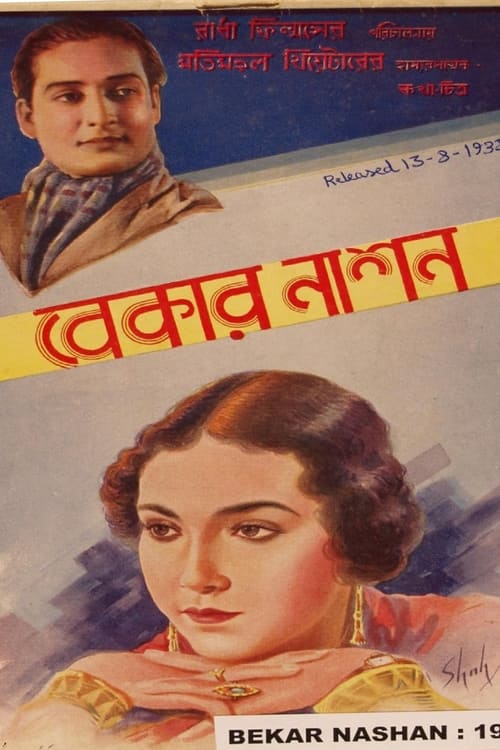
A 1938 Bengali Drama Film directed by Jyotish Bandyopadhyay.
Bekar Nashan

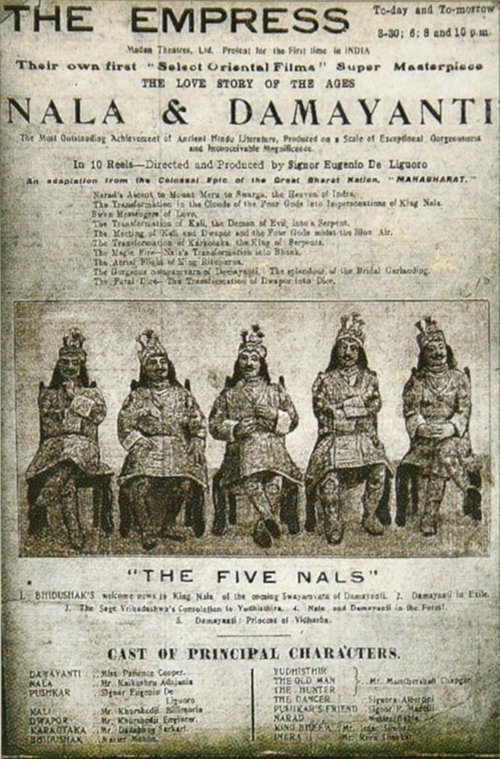
This big-budget film depicts a famous episode from the 'Mahabharata', starting with Narada's ascent of Mount Meru. It shows Swarga, the Heaven of Indra, the Transformation in the Clouds of the Four Gods into impersonations of King Nala, Swan Messengers of Love, the Transformation of Kali (the Demon of Evil) into a Serpent, the Meeting of Kali and Dwapor and the Four Gods amidst the Blue Air.
Nala & Damayanti

A 1935 Bengali Film directed by Jyotish Bandyopadhyay.