Anna Bella Geiger
Acting
Biography
Since the 1950s, Anna Bella Geiger has integrated maps and elements of natural history into much of her videos, collages, paintings, sculptures, and prints. In such works, she reconsiders notions of territory and identity, particularly in her native Brazil. Geiger’s 2018 installation for Rio de Janeiro’s Solar dos Abacaxis, for example, resembled a series of museum dioramas of pyramids, Babylonian gardens, and an Israeli mikvah (a ritual bath). Geiger has made distorted maps of the globe and various countries from embroidery, wax-filled filing cabinets, and copper plate engravings. Such work questions the geographical structures and systems that we take for granted.
Known For
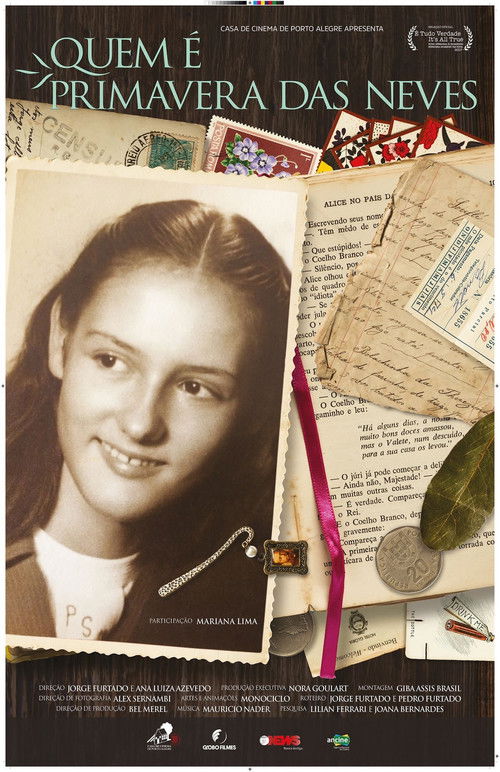
The starting point is an unlikely name, Primavera das Neves, a translator of Lewis Carroll, Daniel Defoe and Julio Verne, who disappeared without a trace in the 1960s. Could it be a pseudonym? The search for a name found an extraordinary woman and a life dedicated to beauty and truth. And then a letter arrived warning that the story was only just beginning.
Quem É Primavera das Neves
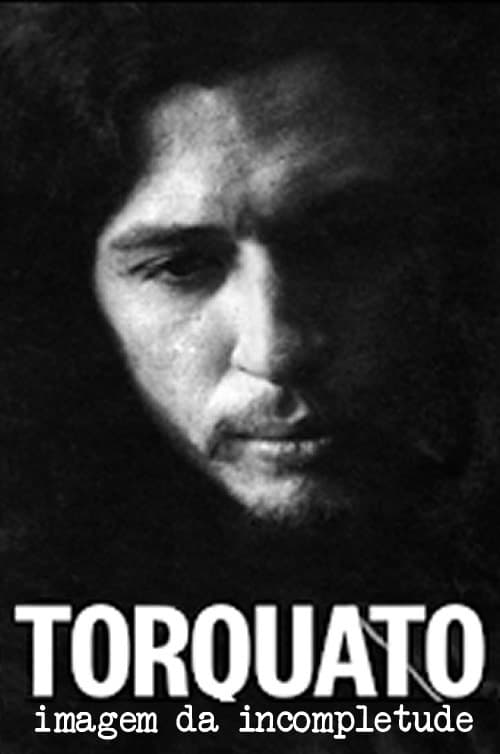
A reflection on the works and thinking of the last years of production by Torquato. Such as the magazine "Navilouca", the film "Terror da Vermelha", the column "Geleia Geral" and the controversial Cinema Novo X Marginal, among other passages important aspects of Brazilian culture in the 60s and 70s.
Torquato, Imagem da Incompletude
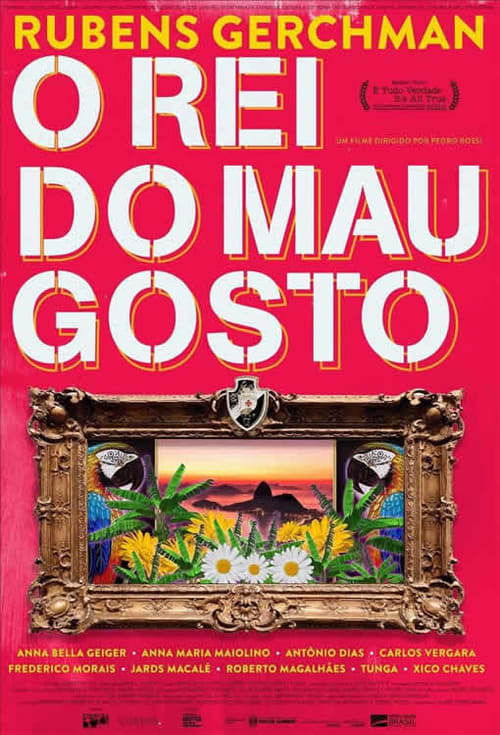
Discover the trajectory of the artist Rubens Gerchman between 1963 and 1978. Learn more about the artistic creation and activism of a generation that was experiencing the hardest years of its political life
Rubens Gerchman: O Rei do Mau Gosto
No description available.
Declaração em Retrato I
No description available.
Local da Ação
A being without a face goes through infinite stairsteps.
Passagens II
No description available.
Mapas Elementares I
No description available.
Centerminal
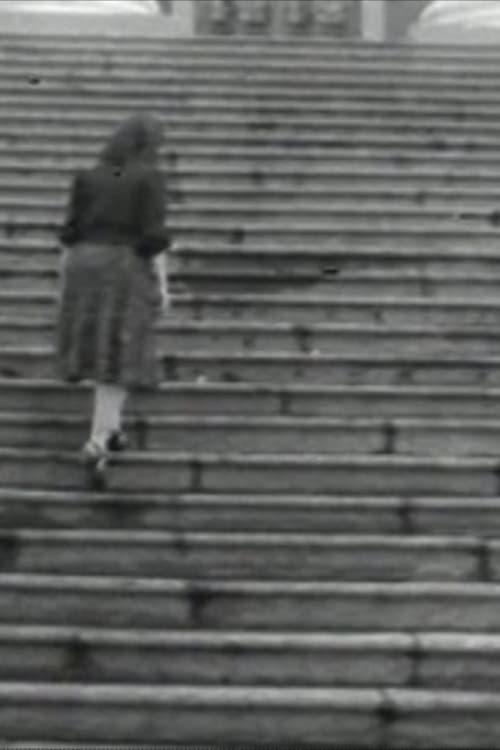
A woman is followed as she walks through a building and up sets of stairs.
Passagens I
Mapas elementares nº 3 (Elementary Maps No. 3) is a visual poem in which Anna Bella Geiger alludes to the stereotypes and myths attributed to cultures from Latin America through the relationship between the anthropomorphic character of the South Cone’s topography and semantic games, between the formal and the metaphorical, which she establishes with words.
Elementary Maps no. 3
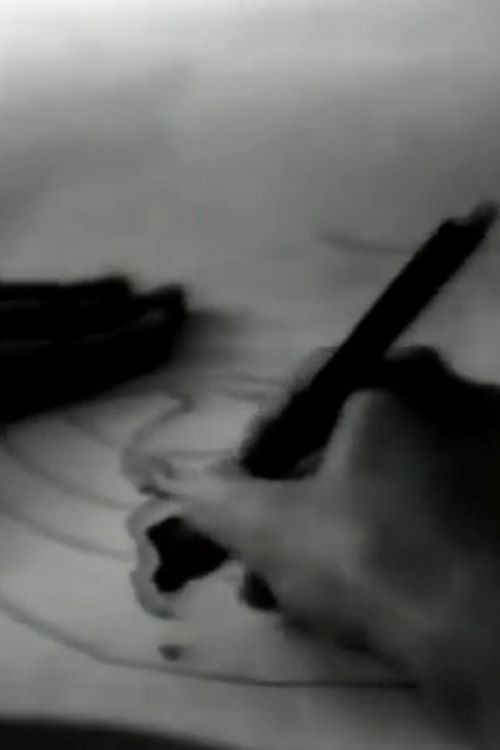
Much of Anna Bella Geiger’s work engages with geography. She begins the video “Mapas elementares no. 1” by drawing the outline of a world map on paper. In the background, Brazilian musician Chico Buarque’s well-known song “Meu caro amigo,” released the same year, accompanies her activity. Though it sounds cheerful, Buarque’s song is written as a letter to a friend in exile. It mixes references to everyday life (soccer, samba, music, rain, and sun) with statements such as, “What I really want to tell you is that things here are black,” an allusion to the dark circumstances surrounding the heightened violence and censorship under Brazil’s military regime. Buarque’s refrain prompts Geiger to begin blackening the outline of Brazil on her map. Geiger includes herself to demonstrate that the drawing of maps depends heavily on the mapmaker’s vision, or “the artist’s hand.” Her use of video to record the process further emphasizes that mapping is always contingent and in-progress.