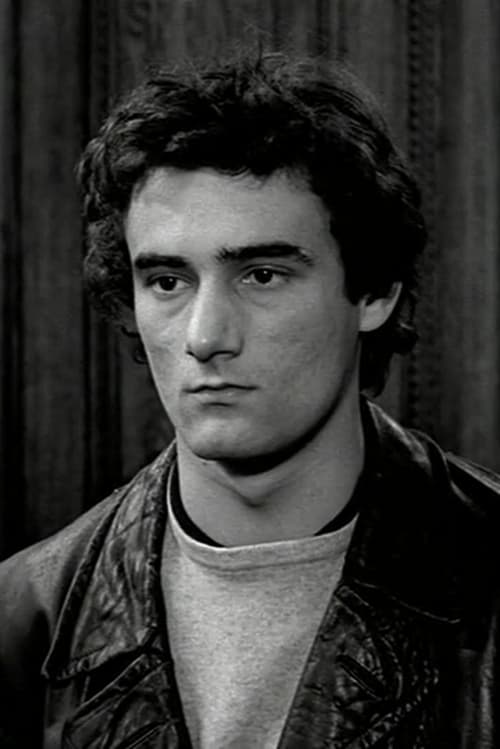
Gábor Bódy
Directing
Biography
Gábor Bódy (30 August 1946 – 24 October 1985) was a Hungarian film director, screenwriter, theoretic, and occasional actor. A pioneer of experimental filmmaking and film language, Bódy is one of the most important figures of Hungarian cinema. Bódy was born in Budapest, in an urban middle-class family. He studied history and philosophy at Loránd Eötvös University and later filmmaking at the Academy for Theater and Film Arts. During his university days he became an influential member of the Béla Balázs Stúdió (BBS). He made his first film A Harmadik (The Third) (a documentary about students preparing an adaptation of Faust on stage) in 1971. He established various experimental and avantgarde projects at BBS including the Film Language Series in 1973 and the K/3 experimental film group in 1976, reshaping the postwar Hungarian avantgarde film's path. In 1975 he completed his debut feature at BBS, which was also his graduation thesis film at the university. Amerikai Anzix (American Torso) won the Grand Prize for best new filmmaker at International Filmfestival Mannheim-Heidelberg and the Hungarian Film Critics prize for best first film. The film which depicts the lives of Hungarian 1848 Revolution veterans in the American Civil War features Bódy's experimentalism at the fullest. The whole film was re-edited using his own method called "light editing" in order to make it resemble a wracked silent film from the late 19th century. His next feature Nárcisz és Psyché was the largest-scale Hungarian production of its era. This epic production based on Sándor Weöres's poetic work Psyché starred Patricia Adriani, Udo Kier and György Cserhalmi and exists in three versions: an original 210min two part version, a 136min version for foreign distribution and a 270min three part television version. In 1980 Bódy began to work on the first international video magazine INFERMENTAL and managed to publish the first of 10 issues (plus one special issue) while on a residency at DAAD Berliner Küunstlerprogram in 1982. The series published featured a range of guest editors and in total included work from over 1500 artists from 36 countries and was published up to 1991. After many frustrated projects Bódy managed to complete what was to become his final feature film Kutya éji dala (Dog's Night Song). Bódy cast himself as the lead in this ambitious and influential feature which incorporated Super8 and video footage as well as a range of Hungarian underground punk bands (Galloping Coroners, Trabant) of the time in order to a film "deeply rooted in the fundamentals of today's reality." In 1985 Bódy died under sketchy circumstances. A later published information (2001) hints his earlier collaboration (1973–1983) with the Hungarian Secret Police, the III/III. Authorities of the time (Hungary was then considered a 'satellite' country of the Soviet Union) stated that he had killed himself. His widow instead preferred a charge of murder against certain unidentified parties. No official investigation followed and Bódy's fate remains a mystery to this day. Description above from the Wikipedia article Gábor Bódy, licensed under CC-BY-SA, full list of contributors on Wikipedia.
Known For

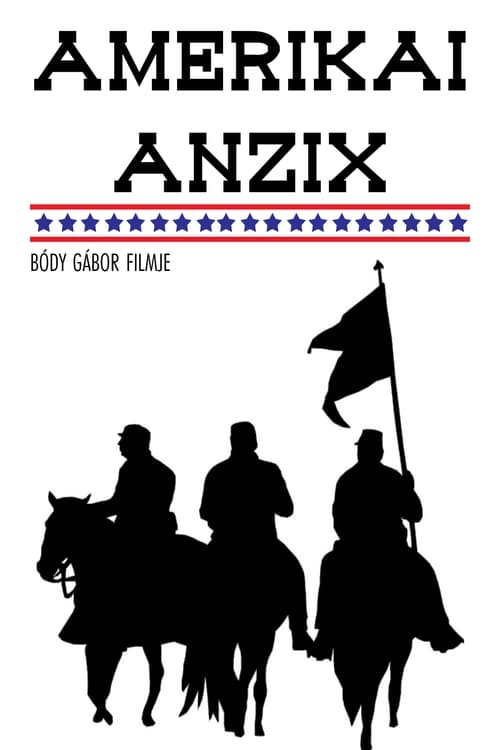
In the final days of the American Civil War, an emigre Hungarian military officer attempts to map the situation of the enemy. Many veterans of the 1848 War of Independence in Hungary fought on the northern side. Experienced Fiala, Boldogh who struggles with homesickness and the reckless Vereczky all experience their enforced emigration in different ways and news of impending peace elicits different reactions from them all.
American Torso

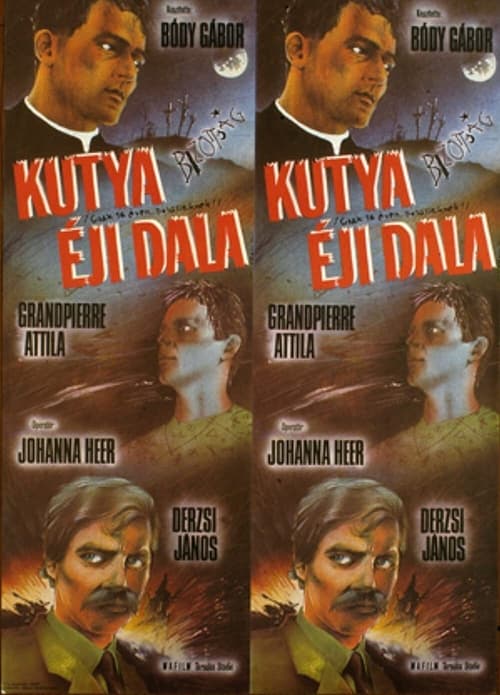
A priest arrives in a village and give advice and comfort to different people. He meets a wheelchair-bound former representative of the Communist party, a woman who is dying of tuberculosis and an astronomer who sings in a punk band.
Dog's Night Song

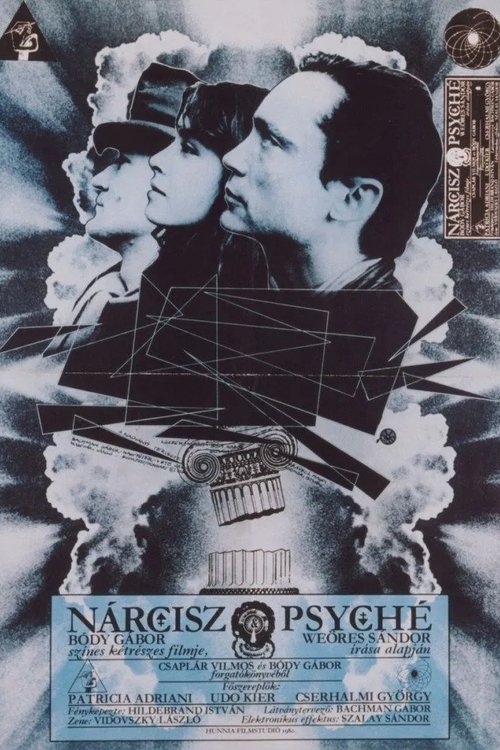
Narcisus and Psyche is based on a novel by Sandor Weores which was adapted by Vilmos Csaplar and director Gabor Body for a feature-length film. Borrowing the character of Psyche from mythology and placing her in Europe in the 19th century, the authors give her a "modern" life. She is an attractive young woman - and remains so throughout the film, in spite of one hardship after another. Psyche is libidinous, and her prurient interests shock her staid contemporaries.
Narcissus and Psyche

Gera, a successful Romani painter rejects his token status by dramatically burning his own artwork. He returns to his marginalized community intending to implement social reforms and improve their lives. However, his modern ideas are rejected and misunderstood by his own people.
The Legend About the Death and Resurrection of Two Young Men

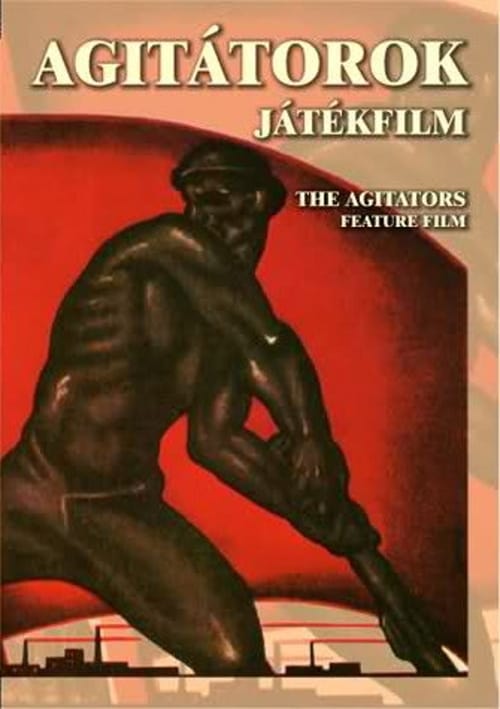
After the World War I, enthusiastic young people found the intellectual group of Hungarian Communist Party. Their aim is to propagate the communist ideology to the people and get the workers on their side. They have fierce discussions on the new ideas, though their movement is not very successful. They clash with their opposition, attempt to lead people to the Red Army, but without success.
The Agitators
No description available.
Siblings
Experimental film by Gábor Bódy. A woman sings in German on the left as text flashes on a separate frame on the right-hand side of the screen.
Aldrin Opera
This documentary feature film is set in a two-storey villa, where three generations live together representing four different scales of values and views of life.
Point of Departure
No description available.
A harmadik

According to Peter Brook, all that is needed for an act of theatre to be engaged is for a man to walk across an empty space whilst someone else is watching him. Thus, an empty space becomes a bare stage. However, this raises countless questions about the relationship between reality, everyday presence and role-playing, something experimental filmmakers coming from the 1970s world of theatre dealt with in detail. Tibor Hajas explored the topic in a short experimental film made at BBS.
Self-Fashion Show

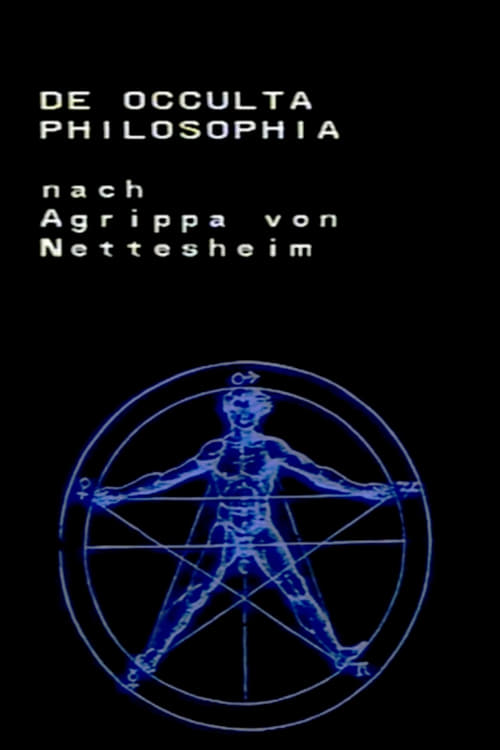
An attempt to visualize a secret knowledge about the nature of man —a philo-clip—, through the use of structures of dissociated geometry and laser beams, with direct references to the Renaissance, Leonardo da Vinci and the work of Agrippa von Nettesheim.
The Occult Philosophy
Set in the 18th century, this tragicomedy depicts the debauchery of aristocratic officers condemned to celibacy, in the fate of a bourgeois girl reduced to a street slum. Marie, the beautiful young daughter of the decorative arts merchant Wesener, already has a fiancé, the poster merchant Stolzius, but Desportes, an officer in the French army, has his eye on her. At first, Wesener does everything he can to keep the beauty away from his daughter. But Marie convinces her father that the Baron's intentions are honourable. The father thinks it's his chance to marry the girl above his station. But his calculations are wrong.
Katonák

The classic Faustian tale transposed to the realm of the digital.
Der Dämon in Berlin
There is also dancing in this tape but this time it's about the lyric dance of youth and is depicted by Bódy in an unconventional way. Walzer is a poem written by Novalis, the German romantic poet (1772-1801) to mark the premature death of his fiancée Sophie von Kühn. The text of Walzer is recited and appears in a spiral - the spiral of life? Lyric-Clip reflects the transience of youth as borne out by the macabre, dancing skeleton that appears on screen.
Novalis - Walzer
Either/Or in Chinatown was commissioned by Video Inn and shot in part at the Western Front during Bódy’s 1984 residency. Based on Danish philosopher Søren Kierkega’s Diary of a Seducer, Either/Or in Chinatown speaks to the impossibility of choice as it follows the narrator’s through days spent in attempts to attain the love of ‘Cordelia’.
Either/Or In Chinatown
The first real video work of Gábor Bódy is about a highly exciting psychological situation from the 1970s, the era of the iron curtain. Bódy and Marcel Odenbach, his friend from Cologne, communicate silently in front of the camera by blowing soap bubbles. The mood is very dramatic, yet the dramaturgy is rather simple. It is a pioneering work in the new narrative direction Bódy initiated.
Conversation Between East and West
The black and white short Private History (1978) by Gábor Bódy is made up of amateur recordings. So what would the presumably well-off people owning their own cameras direct the lens at before the Second World War? On the one hand, their own families, and on the other, their everyday lives, their pride-and-joy cars, Lake Balaton holidays, happily smiling family members. History, which slowly washes away this idyllic world as the rain effaces paint from paper, initially only appears as ‘background noise’, parts of newsreels and an occasional speech by Hitler. The pictures become more sombre as the age also grows darker: marching soldiers and columns of civilians wearing the yellow star pass in front of the camera. Péter Tímár reconstructed the audio on the basis of lip-reading, noises and rattles reflective of the period. This film is the forerunner to Péter Forgács’s landmark series Private Hungary.
Private History

He Saw Her Burning, which is based on a 1983 performance, is a provocative narrative collage, a surreal juxtaposition of two narrated texts. A man and a woman begin their respective tales: He saw a woman burst into flames on the street; she saw an American soldier go berserk and drive a tank into a crowd. Produced while Jonas was living in Berlin on an artist's fellowship, the disjunctive narratives are pervaded with a sense of cultural dislocation and alienation. The man and woman occupy separate narrative spaces as they tell their stories, which are intercut with a pastiche of word games, narrative reenactments, filmed sequences, isolated gestures and objects. Memory — elusive and ephemeral, personal and collective — is the catalyst for this complex work.
He Saw Her Burning
A video that deals with perspectives; that of a hostage, and that of the hostage takers. The video ends with a philosophical analogy of the capabilities of seeing through video through 2 or more sources.
The Hostage
Bódy Gábor made his experimental film-language series Négy bagatell (Four bagatelles) between 1972 and 1975. Egy bagatell (One bagatelle) is the third part of this series which is a unique experiment to show the film frame's meaning-altering nature. The etude can be divided into two parts. In the first part, we see the dance of a drunk man. The second shows a sociologist's lecture.