Sound
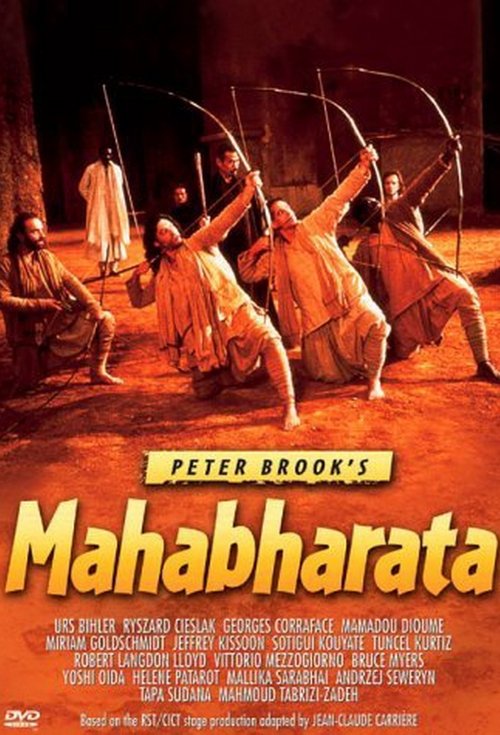
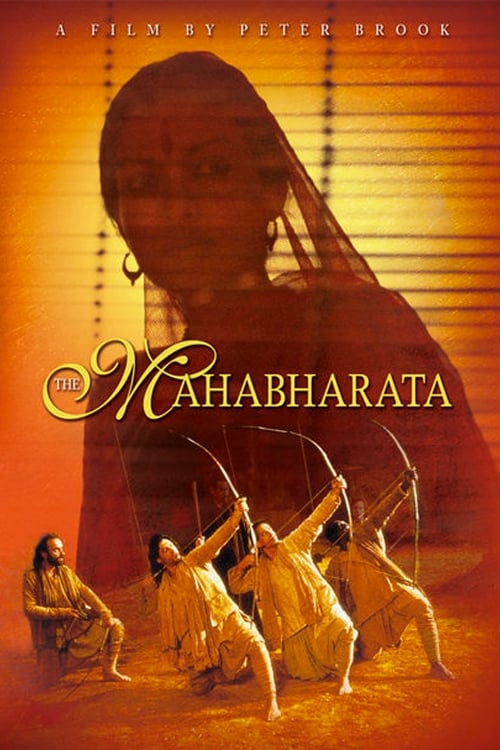
The Mahabharata is a 1989 film version of the Indian epic based on the history of India, Mahabharata directed by Peter Brook. Brook's original 1985 stage play was 9 hours long, and toured around the world for four years. In 1989, it was reduced to under 6 hours for television. Later it was also reduced to about 3 hours for theatrical and DVD release. The screenplay was the result of eight years' work by Peter Brook, Jean-Claude Carrière and Marie-Hélène Estienne. For the casting an international selection of actors was intentionally chosen, to show that the nature of the Indian epic is the story of all humanity.
Jealousy and hatred is what separates the Pandavas and Kauravas. The Kauravas fear the Pandavas are after the throne of their father. Yudhishthira of the Pandavas gets told by the deity, Krishna, that he will become king. A war is inevitable.
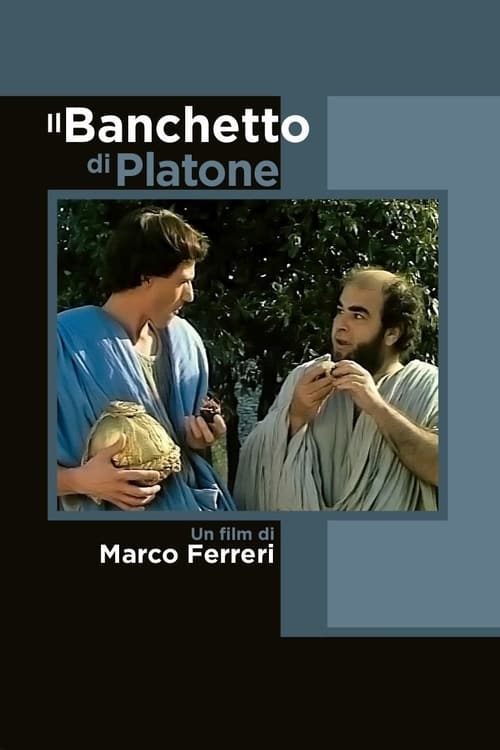
At house of Agathon get together many intellectuals and philosophers, including Socrates, to discuss the theme of love and sex: each of them intervenes to support its argument dialogical rules, within the context symposial.
The film intends to substantiate into images and sounds the feeling of an underground analogy, no doubt partly subjective, based on Portuguese and Turkish topography and culture, while also calling upon the silent continuity of Muslim culture within Portuguese culture. By triggering encounters between members of the two cultures, one reveals what weaves the bonds between two universes so seemingly distant from one another, aside from historical facts.
Sedina, Jasmina and Senada, three young village girls whose world collapsed one day of war in Bosnia.
Filmed over five years, this documentary charts the progress of several veterans dealing with post-traumatic stress disorder at a California clinic.
Initiatory journey of a soprano and an ethnologist in Africa, Asia and South America, in search of music from other cultures.