FEEL IT.STREAM
Daphné Baiwir

Daphné Baiwir

Directing

Biography

Daphné Baiwir (born 18 July 1992) is a Belgian documentarist, actress, screenwriter, and former model. Baiwir started her career as a model at just 3 years old; as a model, her collaborations include Christian Lacroix and Sonia Rykiel. She made her acting debut on stage at 7 years old. After appearing in several films and TV-series, she made her directorial debut with Devant les barreaux, a documentary about the everyday life of the officers at the Lantin prison. Her documentary The Rebellious Olivia de Havilland was screened at the 2021 Cannes Film Festival. In 2022, she directed a documentary about film and television adaptations of Stephen King's works, King on Screen. Her 2023 film Le Film pro nazi d'Hitchcock premiered at the 80th edition of the Venice Film Festival. Source: Article "Daphné Baiwir" from Wikipedia in English, licensed under CC-BY-SA.

Known For

King on Screen
7.0

1976, Brian de Palma directs Carrie, the first novel by Stephen King. Since, more than 50 directors adapted the master of horror's books, in more than 80 films and series, making him now, the most adapted author still alive in the world.

King on Screen

2023
Monsieur Batignole
7.0

In 1942, in an occupied Paris, the apolitical grocer Edmond Batignole lives with his wife and daughter in a small apartment in the building of his grocery. When his future son-in-law and collaborator of the German Pierre-Jean Lamour calls the Nazis to arrest the Jewish Bernstein family, they move to the confiscated apartment. Some days later, the young Simon Bernstein escapes from the Germans and comes to his former home. When Batignole finds him, he feels sorry for the boy and lodges him, hiding Simon from Pierre-Jean and also from his wife. Later, two cousins of Simon meet him in the cellar of the grocery. When Pierre-Jean finds the children, Batignole decides to travel with the children to Switzerland.

Monsieur Batignole

2002
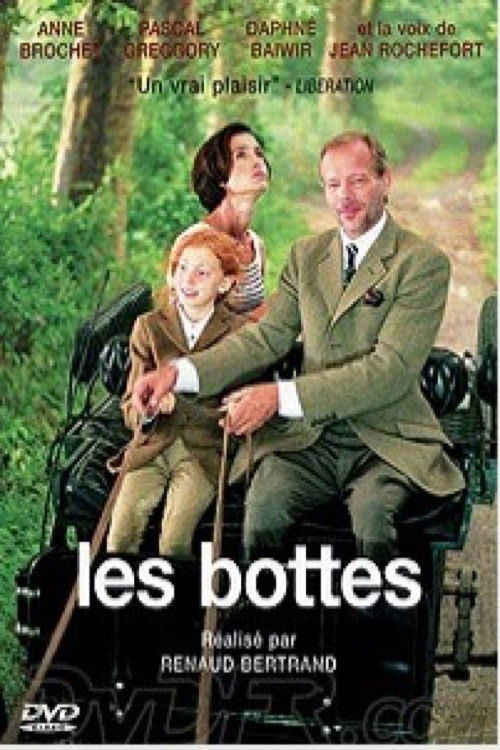
Les bottes
7.5

The events of May '68 seen through the eyes of a little girl exiled to the countryside with her mother, who falls in love with her riding instructor. He wears magnificent leather boots that give him a heroic stride...

Les bottes

2004
Abuse of Weakness
5.2

A stroke-afflicted filmmaker is manipulated by a notorious con man.

Abuse of Weakness

2013
Ordo
4.8

Ordo Tupikos, a french sailor with greek origins, discover that his first wife, Estelle, with whom he had remained married a few months only 16 years earlier, is now a famous movie star called Louise Sandoli. But, more than her name, everything about Louise seems to have changed. Ordo decides to meet Estelle again, after all these years, to know what it's all about...

Ordo

2004
Bluebeard
5.6

Anne reads her younger sister, Marie-Catherine, the story of Bluebeard. In 17th-century France, another set of sisters — also named Anne and Marie-Catherine — are left impoverished by their father's death. Marie-Catherine dreams of marrying into money, and soon falls for wealthy divorcé Bluebeard. Grateful for the chance at a life of comfort, Marie-Catherine marries Bluebeard — in spite of rumors that he has made a hobby of murdering his wives.

Bluebeard

2010
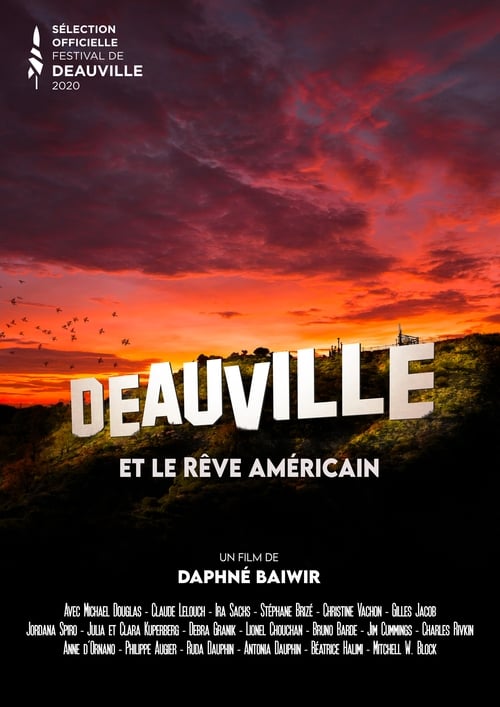
Deauville et le rêve américain
N/A

Reflec­tion of the soci­ety and vec­tor of the occi­den­tal cul­ture, Amer­i­can cin­e­ma influ­ences the entire world since its debuts.

Deauville et le rêve américain

2020
The Rebellious Olivia de Havilland
7.3

The legendary British-American actress Olivia de Havilland (1916-2020), who conquered Hollywood in the thirties, challenged the film industry when, in 1943, she took on the all-powerful producer Jack Warner in court, forever changing the ruthless working conditions that restricted the essential rights and freedom of artists.

The Rebellious Olivia de Havilland

2021
Hitchcock's Pro-Nazi Film?
6.0

During the Second World War in the United States, cinema was extensively used as a propaganda vehicle. All the great filmmakers were involved: Capra, Ford, Huston, and Hollywood's new master of suspense, Alfred Hitchcock. After making several films advocating American entry into the war alongside the British, in direct violation of the Neutrality Act, Hitchcock took advantage of Zanuck's departure from 20th Century Fox to launch a major new propaganda project: Lifeboat. He asked John Steinbeck to write the basic story. This great American literary figure, author of The Grapes of Wrath, whose adaptation was one of Fox's biggest successes, was himself very committed to the war effort. When Lifeboat was released, success quickly turned to controversy. What if Hitchcock's film had completely missed the mark? What if, instead of providing anti-Nazi propaganda, the film actually defended the thesis that the German people were superior to the Allies and the union of democracies?

Hitchcock's Pro-Nazi Film?

2023
No image
7.5

It's 1944. Since she's Jewish, young Lisa needs desperate measures to survive. Her parents send her to a childless couple's mansion, who protect Jewish children whose parents were sent or about to be sent to German camps. Twelve years later, Lisa is joined at her "French Catholic Home" by another Jewish girl, Claire. Claire comes to live with the French family, after her parents who did escape deportation and the death camps, are psychological wrecks, unable to raise her. The two girls begin a a close friendship, now 11 years after the end of World War II. But their friendship will bring old phantoms and secrets out of the closet, and will change their lives forever, revealing the truth about each one of them, and about the adoptive family.

Une vie en retour

2005
Homo Faber (Trois femmes)
N/A

A man turning 50 (Walter Faber) narrates his liaisons with three women: Hanna, who was pregnant and left him many years ago in Zurich; Ivy, who broke up with him recently in New York; Sabeth who is 20 and whom he just met on a boat to Europe. Sabeth and the narrator travel to France, Italy and Greece. But who is Sabeth? What does she feel towards the narrator? What does he feel towards her? The entire movie is shot in subjective view (we only see what the narrator sees); there are no dialogues, just his post-synchronised voice.

Homo Faber (Trois femmes)

2015