Acting
Tatort is a long-running German/Austrian/Swiss crime television series set in various parts of these countries. The show is broadcast on the channels of ARD in Germany, ORF in Austria and SF1 in Switzerland.
Annual awarding of the Grimme Awards.
No description available.
Paul Winkelmann is the CEO of a successful business in Hamburg that he took over after the death of his father eight years ago. But he is still strongly dominated by his 78 year old mother who cares for him as a child, and who cannot understand why he took an apartment on his own after all these years. The real "problem" starts when Paul gets to know psychologist Margarethe Tietze whose relationship to her parents is also not so easy after all.
Documentary about the Comedian Harmonists, a German vocal ensemble in the 20s and 30s.
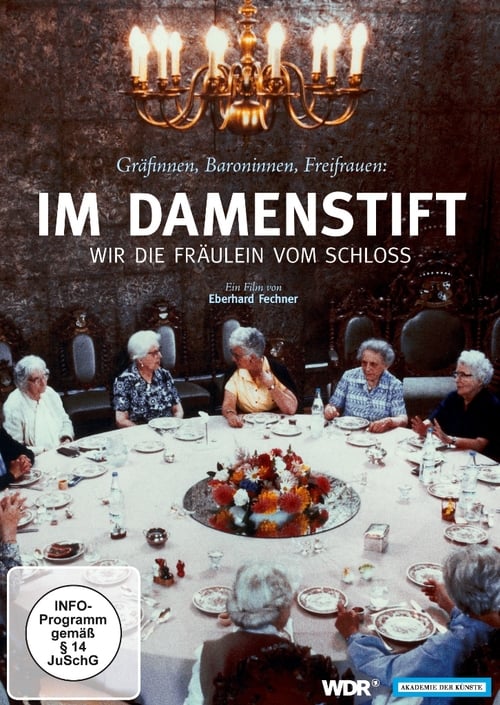
Ehreshoven Castle - half an hour from Cologne - is home to 16 countesses, baronesses and baronesses aged between 76 and 88. The moated castle with its old park was bequeathed as a foundation by the last heiress in 1920. Impecunious, unmarried, noble ladies of the Catholic faith are given the opportunity to spend a quiet, dignified retirement there, provided their families are listed in the Gotha.
The tax officials Thiel and Kalübbe try to confiscate two oxen, but are prevented from doing so by protesting farmers led by the community leader Reimers. The assistant editor Tredup, who takes photos of the incident, is also in the thick of things.
The film depicts the life of the middle-class Kempowski family in Rostock between 1939 and 1945 in great detail and closely following the novel on which it is based. In addition to describing the special events in Walter's life and in the family, there are also repeated depictions of everyday life, such as walks with his father through Rostock, at school and in youth groups, with friends and swing music, at family meals and Christmas celebrations, at church or at the cinema. Father Karl loves cigars from the company "Loeser & Wolff," which always prompts him to say "impeccable, more impeccable, Tadellöser and Wolff" when praising them.
In this two-part documentary, Eberhard Fechner reconstructs the story of a class of pupils who passed their A-levels at Berlin's Lessing-Gymnasium in 1937. The starting point for the research is the class photo that gives the film its title. The conversations with the men, which revolve around their lives, bring back memories. However, it becomes clear how many of them have repressed the events of the Nazi era. Apologies, excuses and trivialization of the violence and crimes come out of many mouths.
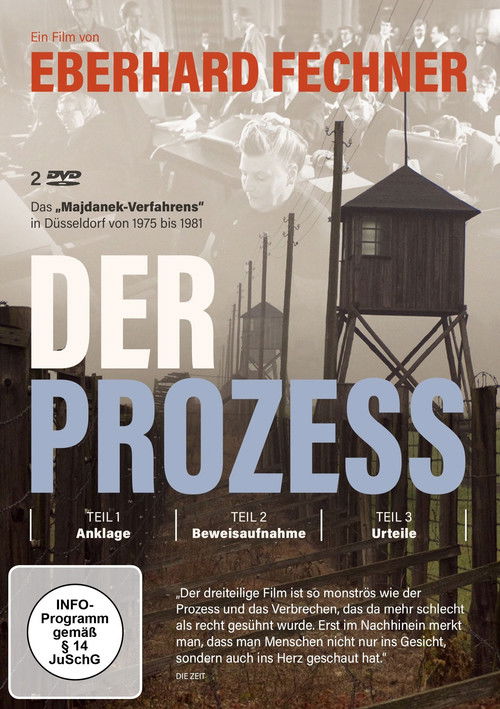
In over eight years of research, "Der Prozess" follows the longest criminal proceedings in Germany′s legal history - the "Majdanek Trial". In interviews with judges, the accused, victims and eye witnesses, and with the use of documentary footage and reports, the film recounts (in three parts) the legal trials against the workers and perpetrators of the Lublin/Majdanek concentration camp from the first day to the pronouncement of the judgment.
Rostock at the turn of 1945/46. Following the death of shipowner Karl Kempowski, the next generation must step up, supported by grandfather de Bonsac and Eduard Corneli, an old friend of the family. Robert Kempowski has returned from captivity as a prisoner of war and is attempting to rebuild the family's shipbrokerage business. This requires considerable perseverance.
Documentary research on the traces of a female pensioner, who committed suicide in Berlin in winter 1968.
Die Knapp-Familie is a German television series.
A classical who-dunnit-detective-story in an unusual setting: In the retirement-home for aging stage-artists "Ewige Rampe", an overly engaged doctor discovers what seems to be a murder by poison. The victim is the only inhabitant of the home who was not on stage, but a reporter of a gossip magazine. The two investigating police inspectors soon find out that the deceased lady blackmailed most of the inhabitants with little secrets she found out in her time as a reporter - nasty, but harmless things like a little shoplifting, alcoholism, a corrected date of birth, a success one never had... but are these little old secrets reason enough to kill someone? Or is there someone with a more important dark spot in the past? And
The Rise and Fall of the Magazine "Der Sozialaristokrat".
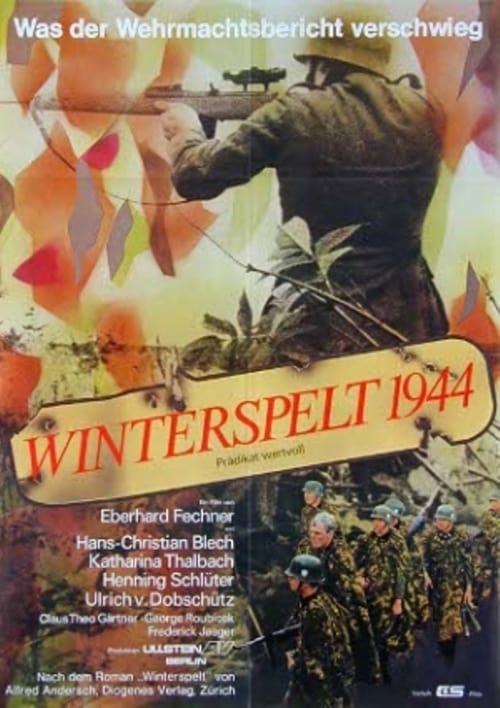
In the Second World War, spring 1944: shortly before the planned Ardennes offensive, Germans and Americans stand waiting on the German-Belgian border. The small Eifel village of Winterspelt threatens to become the scene of a bloody battle. A German officer comes up with a plan to hand over his battalion to the Americans without a fight. He finds support from three inhabitants of the small village, who help him to present his offer of surrender to the Americans, which they ultimately reject.
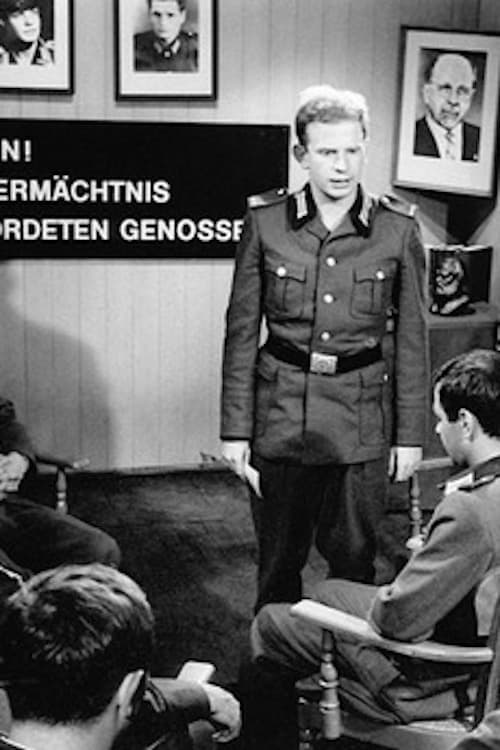
24 hours on the border between East and West Germany. In an outlying West Berlin district, police officers chat about their personal lives, take care of petty offence and at most, warn the odd rubbernecker away from the border to the “Soviet zone”. Meanwhile their East German counterparts are under enormous pressure. The day begins with disciplinary action after one of the border guards was found sleeping on duty. The supervisors demand utmost vigilance and a solid ideological bent, and suspicion and mistrust are the rule within the ranks of these soldiers of the National People’s Army (NVA). Unnoticed by the soldiers, four East Berlin students are preparing to flee to the west. But in the morning mists, only their accomplice, an NVA private, succeeds …