Acting
Heritage Minutes, also known officially as Historica Minutes: History by the Minute, are a series of sixty-second short films, each illustrating an important moment in Canadian history. They appear frequently on Canadian television and in cinemas before movies and are now also sold on DVD. The Minutes were first introduced on March 31, 1991 as part of a one-off heavily-promoted history quiz show hosted by Rex Murphy. The thirteen original short films were broken up and run between shows on CBC Television and CTV Network. The continued broadcast of the Minutes and the production of new ones was pioneered by Charles Bronfman's CRB Foundation, Canada Post Power Broadcasting, and the National Film Board. They were devised, developed and largely narrated by noted Canadian broadcaster Patrick Watson, while the producer of the series was Robert Guy Scully. In 2009 Historica merged with The Dominion Institute to become The Historica-Dominion Institute. While the foundations have not paid networks to air Minutes, they have made them freely available, and in the early years paid to have them run in cinemas across the country. The Canadian Radio-television and Telecommunications Commission has ruled that Heritage Minutes are an "on-going dramatic series" thus each minute counts as ninety-seconds of a station's Canadian content requirements.
When the president of Russia suddenly dies, a man whose politics are virtually unknown succeeds him. The change in political leaders sparks paranoia among American CIA officials, so CIA director Bill Cabot recruits a young analyst to supply insight and advice on the situation. Then the unthinkable happens: a nuclear bomb explodes in a U.S. city, and America is quick to blame the Russians.
A word for word depiction of the life of Jesus Christ from the Good News Translation Bible as recorded in the Gospel of John.
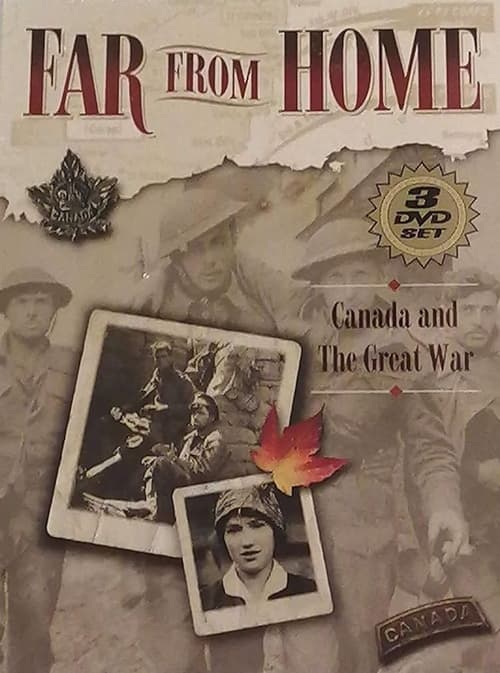
A two-hour documentary which recreates for the viewer one of the greatest battles in Canadian military history. The film was made to show that Canadian character at its best, forging an identity for a country that before the First World War had been seen only as a British colony - an identity and a character that became recognized and respected throughout Europe.
Canada was led to war by a bigoted, ignorant, self-obsessed Minister of Militia, who may well have been clinically insane, but the importance of Canada's contribution in that war owes a great deal to him. The man of course, was Colonel - later made Lieutenant General by his own hand - Sam Hughes. Sam's Army is a compelling portrait of a complex man and the formidable military he built. Sam Hughes was not your standard-issue military leader. Canada's World War I Minister of Militia and Defence concentrated power in his own hands, insisted that the Canadian military use the ill-conceived Ross rifle and liberally promoted his cronies. But there was no denying Hughes was a visionary. He assembled the world's largest-ever volunteer army and bucked superiors to keep his ferocious fighting force together in one Canadian Corps.
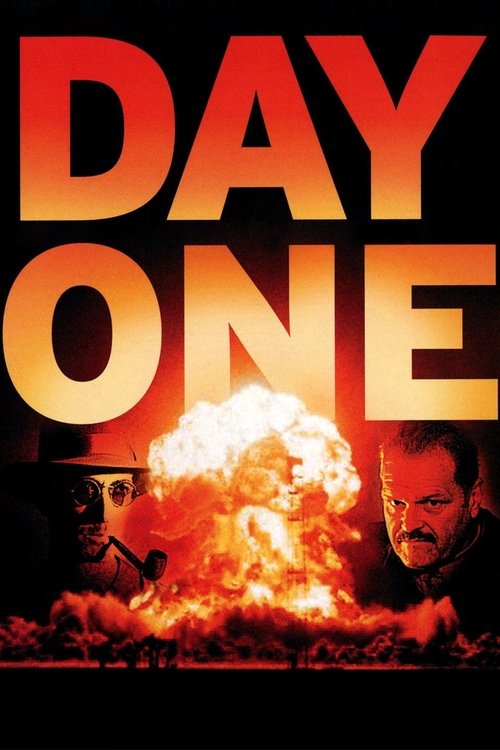
Hungarian physicist Leo Szilard leaves Europe, eventually arriving in the United States. With the help of Einstein, he persuades the government to build an atomic bomb. The project is given to no-nonsense Gen. Leslie Groves who selects physicist J. Robert Oppenheimer to head the Los Alamos Laboratory in New Mexico, where the bomb is built. As World War II draws to a close, Szilard has second thoughts about atomic weapons, and policy makers debate how and when to use the bomb.
Six stories about Montreal. 1: A young housewife from Toronto samples the nightlife using basic French. 2: The tale of a painting of Montreal's first mayor, Jacques Viger. 3: During a hockey game, Madeleine tries to tell Roger she wants a divorce after forty years of marriage. 4: A visitor to a conference on pictographs arrives at the airport, where the female customs officer steals a momento from each person. 5: As she is being driven to the hospital in an ambulance after an auto accident, Sarah recalls her life. 6: At a diplomatic reception, an older woman reminisces about her grand love in Montreal.
A young medical student travels to Berlin to investigate the apparent death of his brother and discovers a secret life of espionage, betrayal and murder at the highest levels.
Canadian military accomplishments in the last hundred days of World War I, when the German Army was destroyed, surpassed those of any other army. The Canadian success was, in no small measure, due to Arthur Currie, whom a recent British historian describes as "the most successful Allied General and one of the least well known."
Mona Parsons, a partisan World War II Allied agent in the Netherlands escapes execution and later imprisonment by the Nazis.
Facing financial challenges and constant risks of injury, an innovative ballet company strives to bring the iconic Canadian story of Anne of Green Gables to new diverse audiences.
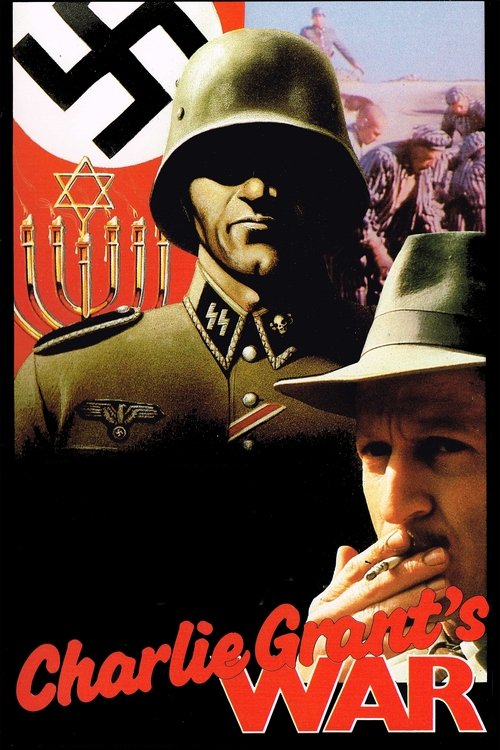
A Canadian artist turned diamond merchant in Vienna, Austria risks his life to smuggle Jews out of the Third Reich.