Roman Khimei
Directing
Biography
Roman Khimei, together with Yarema Malashchuk, has been working as a filmmaker and visual artist since 2016, exploring the intersections of documentary and fiction to engage with Ukraine’s recent history and present. The work of the duo examines the lingering structures of post-imperial power and their impact on a new generation of Ukrainians, caught between historical trauma and an uncertain future. Through multi-channel video installations and cinematic narratives, they capture the fractured nature of reality, where collective memory and personal experience intertwine. The duo’s practice reflects on the role of the extra, the unseen figures of history, and the ways in which individuals navigate shifting political and social landscapes. They received the main award of the PinchukArtCentre Prize (2020) and the VISIO Young Talent Acquisition Prize (2021). Their recent short film Additional Scenes won the main awards at Tallinn Black Nights IFF 2024 and the Ukrainian Film Critics Award. The duo has participated in the Future Generation Art Prize 2021, Baltic Triennial 14, Gothenburg Biennial, and Kyiv Biennial, as well as group exhibitions at Haus der Kunst, Castello di Rivoli, and Albertinum. They have also presented solo exhibitions at Kunstverein Hannover and Galeria Arsenał, Białystok. Their video works are part of collections at Fondazione In Between Art Film, Kunstmuseum Liechtenstein, Kontakt, TBA21, Frac Bretagne, Museum of Contemporary Art Kiasma, and Museum of Contemporary Art Antwerp, among others. Their most recent installation was presented at Dare to Dream, a Collateral Event of the 60th La Biennale di Venezia 2024. Yarema and Roman are members of the Prykarpattian Theater, an art group that recently established the project Theater of Hopes and Expectations, which was presented at the Ukrainian Pavilion during Venice Biennale Architettura 2023. Yarema Malashchuk, together with Roman Khimei, have been working as filmmakers and visual artists since 2016, exploring the intersections of documentary and fiction to engage with Ukraine’s recent history and present. Their work examines the lingering structures of post-imperial power and their impact on a new generation of Ukrainians, caught between historical trauma and an uncertain future. Through multi-channel video installations and cinematic narratives, they capture the fractured nature of reality, where collective memory and personal experience intertwine. The duo’s practice reflects on the role of the extra, the unseen figures of history, and the ways in which individuals navigate shifting political and social landscapes. They received the main award of the PinchukArtCentre Prize (2020) and the VISIO Young Talent Acquisition Prize (2021). Their recent short film Additional Scenes won the main awards at Tallinn Black Nights IFF 2024 and the Ukrainian Film Critics Award. The duo has participated in the Future Generation Art Prize 2021, Baltic Triennial 14, Gothenburg Biennial, and Kyiv Biennial, as well as group exhibitions at Haus der Kunst, Castello di Rivoli, and Albertinum. They have also presented solo exhibitions at Kunstverein Hannover and Galeria Arsenał, Białystok.
Known For

Yarema Malashchuk and Roman Khimei work with staged images that show their own bodies in the landscape of the Carpathian Mountains. Lying still in unnatural positions, dressed in trekking clothes, they seem to ask us: who is depicted on the screen?
The Wanderer

Every year, thousands of Ukrainian Christians undertake a pilgrimage to Zarvanytsia, a sacred place. Between prayers they share news, brag about their wealth, take pictures of chapels, give interviews, witness miracles. Witness miracles?
New Jerusalem

Lena and Vitya, both in their early 20s, are two kids who now have a kid of their own. In the postnatal hospital room, like in limbo, their first team project is to wake their son for a feed. As the new parents repeatedly fail, they have to deal with the irreversible changes in their lives and with each other. Meanwhile, the diaper cake silently sits in the room, like a time bomb.
The Diaper Cake

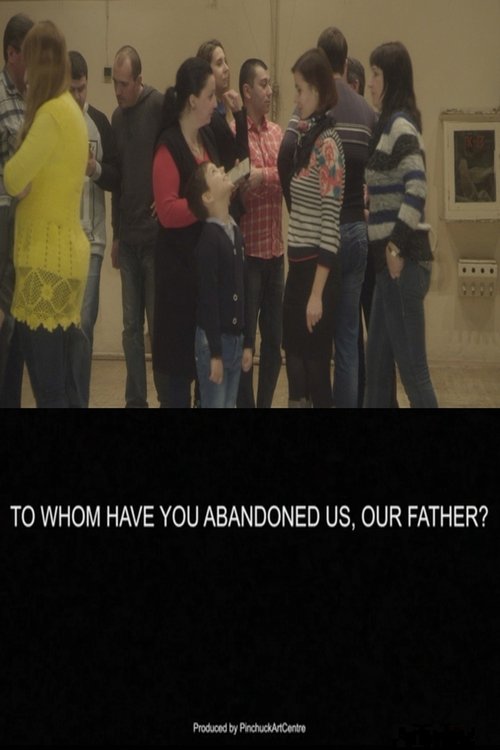
A docufiction about professional choristers singing sacred songs in the local opera. Lamentation of the ukrainian working class on-stage and behind.
To Whom Have You Abandoned Us, Our Father?

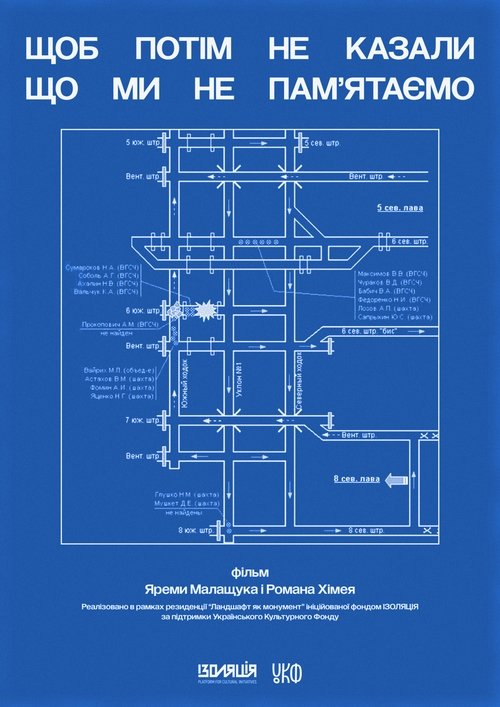
The short film is based on events surrounding a 1977 mining accident in the Donbas region that ultimately led to the mine’s closure. In the film, locals, artists, and curators traverse the surface, paralleling one of the underground routes of the Novator mine. The procession ends at the monument to the dead miners, which is located just above the site of the underground accident that led to the death of the workers. Participants walk across the postindustrial landscape of Donbas, over the plowed fields, by bushes and courtyards, connecting the ground and the underground spaces through the choreography of their bodies.
So They Won't Say We Don't Remember

Valentina works in Lichtenstein. She lived in Kyiv until the age of 13. In 1996, during a hard transitive economic period in Ukraine, Valentina emigrated to Switzerland with her mother and stepfather. 20 years have passed.
Nail

A short meditation on youth and history shot in Kyiv.
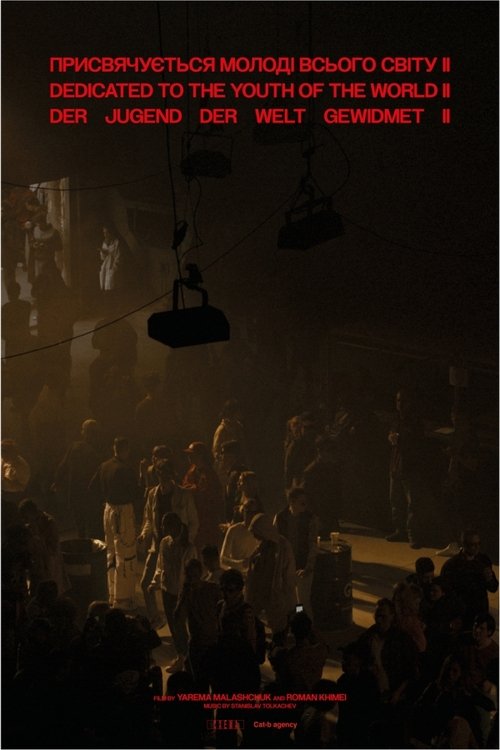
Dedicated To The Youth Of The World

Camera observes the biggest rave in Ukraine called Cxema and leads us from the image of a crowd to intimate experience of each dancer.
Dedicated To The Youth Of The World II

No description available.
Hometown

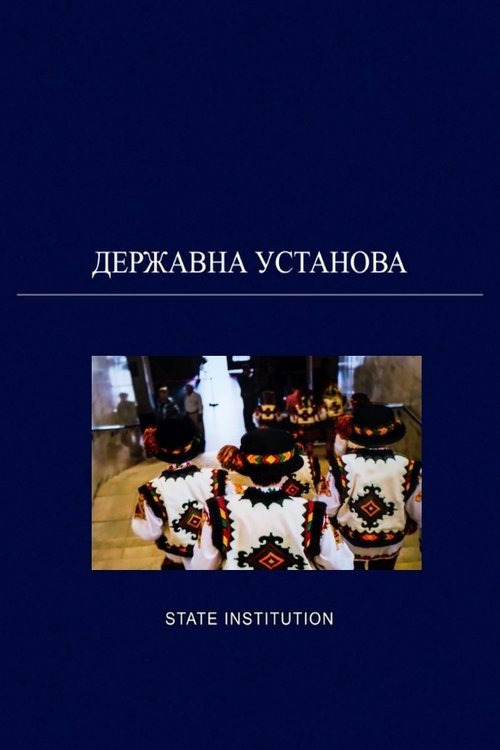
The stuff and visitors of one of the state institutions going through their daily routine. This buildings is full of mystery and secrets. Nobody can understand the issues they are trying to solve or to find the final destination of their corridor marathons. We can only trust and wonder how everything is organized here.
State Institution

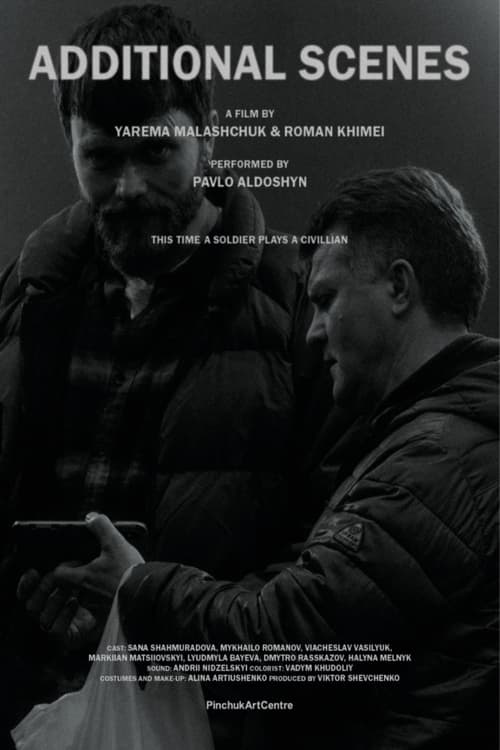
Ukrainian actor Pavlo Aldoshyn played the lead role in the movie "Sniper. White Raven" based on the real events of the Russian-Ukrainian war in 2014. At the beginning of the full-scale invasion, Pavlo joined the Armed Forces. At the authors' request, the soldier returned from the frontline to Kyiv for the first time in order to play a civilian.
Additional Scenes

The film, adapted from a script by Kyiv playwright Oleksandr Steshenko, who has Down syndrome, critiques society’s norms through the lens of Ukrainian and Russian family dramas. Steshenko, active with Kyiv’s Parostky Theatre, uses TV drama conventions in his play to expose societal dysfunction. The film retains Steshenko’s unique language and employs soap opera aesthetics, including local TV stars, to convey estrangement, portraying society as a chaotic conflict.
In Memory Antonina Mykolaivna on Lost Love

The story of a boy who, after being forced to leave Ukraine due to the Russian invasion, returns home to Zaporizhzhia through his mechanical avatar — a robotic dog he controls from his room in Poland.
Homecoming

Kyiv’s Youth Leaving a Grocery Store is an homage to the Lumiere brothers’ classic “Workers leaving the Lumiere Factory”. Reconsidering the world’s first cinematic works, the artists address the redefining of labor and change of socio-economic formation. Thus, a producing factory turns into a consuming factory, and leisure turns into exhausting toil on the dance floor.
Kyiv’s Youth Leaving a Grocery Store

While cruising through the nocturnal streets of Kyiv, Anna, a woman who stops and films passing men, unexpectedly encounters a soldier. They start to discuss the men she observed.
Prelude

A few years after the Russian invasion of Ukraine, a boy who once fled the country returns through a robotic dog. His mechanical avatar wanders through his old neighborhood, visiting relatives, friends, and his childhood home. During this remote journey, he immerses himself in childhood memories and reconnects with his past. The work explores how children forced to leave their homeland maintain an emotional bond with it, and how technology, both a tool of war, reshapes their sense of belonging and resilience.
Homecoming

The elite Kyiv Naval Political College operates in a city without access to the sea. The first Soviet aircraft carrier, the Kyiv, became the flagship of the Northern Fleet. The school's students, future political officers of the Soviet navy, go on a long navigation voyage; meanwhile, at their alma mater the Kyiv-Mohyla Academy opens. Focusing on the history of the institution's changing ideological functions, Under the Sign of Anchor explores the complex and sometimes paradoxical connections between war and culture, the Soviet past and the present. The film is based on materials from film archives from the time of the collapse of the USSR and the first years of Ukraine's independence.
Under the Sign of Anchor
An upcoming erotic drama inspired by oral folk art.
Shchekavytsia

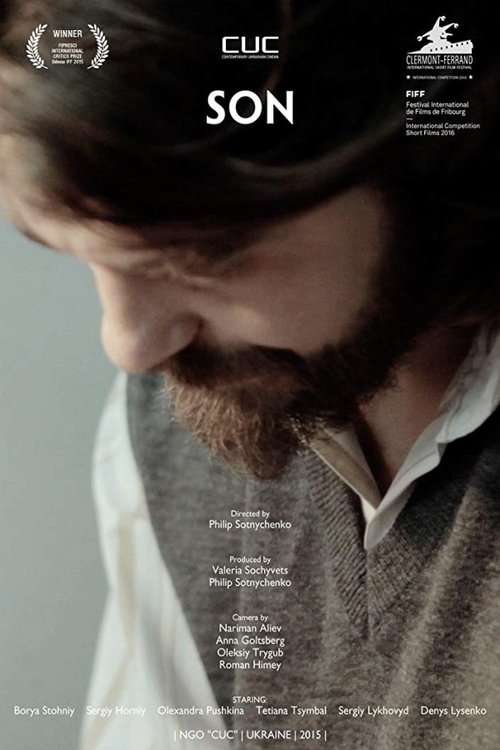
During the political crisis in the Ukraine, young parents are going through a tough divorce. The mother wishes to emigrate with her child, but the father can't imagine living without his son.
Son

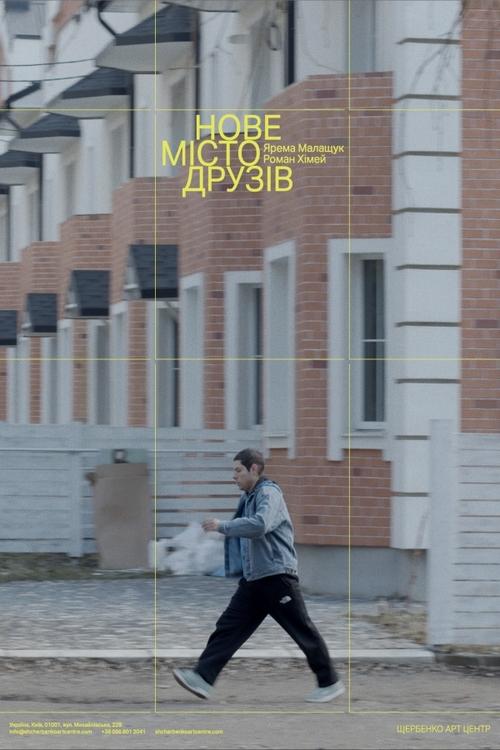
The documentary short depicts modern Kolomyia, where the cult of Austria-Hungary coexists with the post-Soviet reality: the developer hires a team of builders who, with thrift, brick by brick, dismantle old and uninhabitable real estate. Meanwhile, the artists invite fifteen-year-old Maksym to draw a walking route in Kolomyia: through the guide’s narration, the map of the city is transformed into a multi-layered historical palimpsest, where Soviet names are mixed with modern urban folklore and traditional Western Ukrainian piety, and “dog paths” are manifested by official intonation.