Pierre Clément
Camera
Biography
Pierre Clément is a French director and cinematographer, born October 3, 1927 in Le Mans and died October 8, 2007 in La Rochelle. After his studies at IDHEC, Pierre Clément went to Tunis in 1957 at the same time as René Vautier to film independent Tunisia. He was integrated into the FLN cinema team and shot “Sakiet Sidi Youcef” in 1958, contributing to the birth of independent Algerian cinema. He was arrested in October of the same year by the French army on the territory of Algeria and narrowly escaped summary execution. His camera and film were seized and will never be returned to him. Sentenced to 10 years in prison for endangering the external security of the State, he was amnestied in October 1962. He then worked in Algeria to participate in the training of filmmakers, then as director of photography for several films by René Vautier . In 2004, he testified with René Vautier, Olga Poliakoff and Yann Le Masson in the documentary "Algérie, d'autres egards", by Raphaël Pillosio, on the conditions of his commitment to the independence of Algeria and on the methods of production and distribution of films made at that time in this country.
Known For
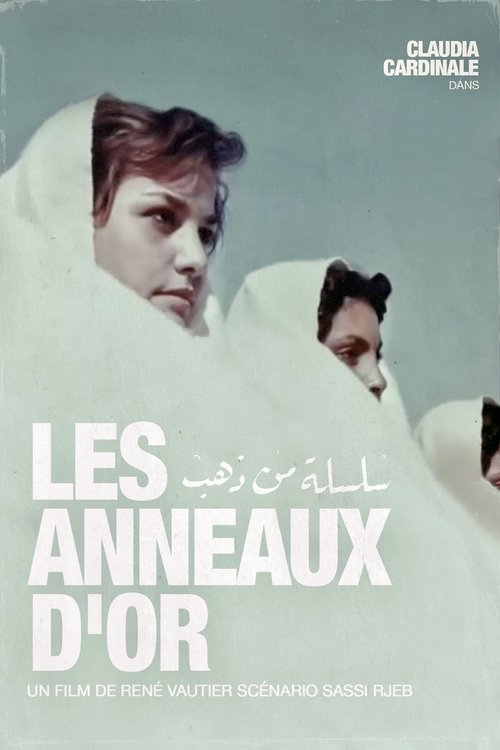
At the time of Tunisian independence, owners of large boats decide to sell, while many small fishermen soon find themselves without work. Their wives then decide to pool their gold rings to sell them and thus buy boats.
Les Anneaux d'Or
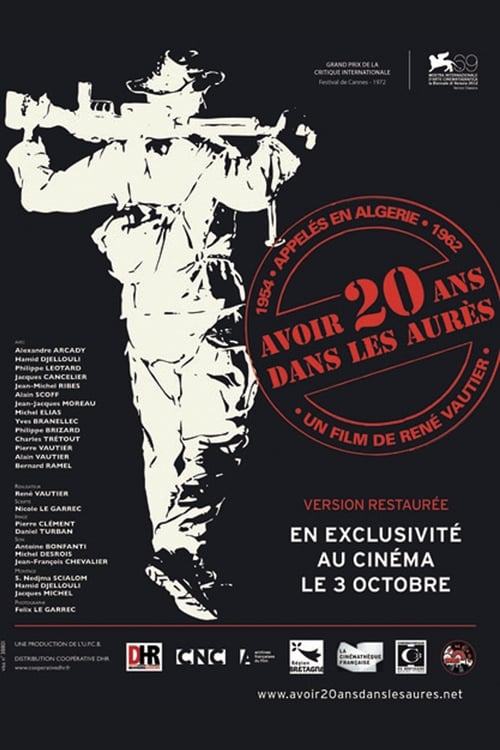
A group of refractory and pacifist Bretons is sent to Algeria. These beings confronted with the horrors of war gradually become killing machines. One of them did not accept it and deserted, taking with him an FLN prisoner who was to be executed the next day.
To Be Twenty in the Aures
No description available.
Entretien avec Pierre Clément
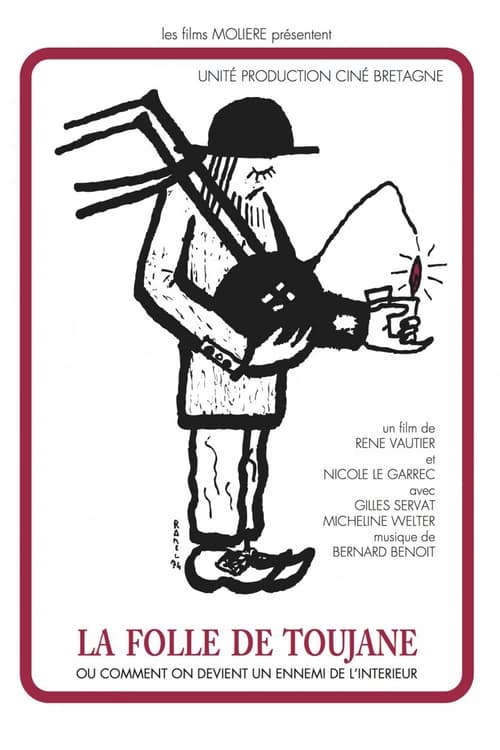
This rambling political melodrama tells the story of a French Breton who learns about colonialism while teaching native students in France's colonies of Tunisia and Algeria and returns to his native Brittany to see that the same conditions prevail there.
The Madwoman of Toujane
A military junta, led by the tyrannical colonel Tcheroff, reigns terror.
Le transfuge

Directed by Pierre Clément and Djamel-Eddine Chanderli, produced by the FLN Information Service in 1958, this film is a rare document. Pierre Clément is considered one of the founders of Algerian cinema. In this film he shows images of Algerian refugee camps in Tunisia and their living conditions. A restored DVD version released in 2016, from the 35 mm original donated by Pierre Clément to the Contemporary International Documentation Library (BDIC).
Algerian Refugees

Pierre Clément, student and photographer of René Vauthier, first accompanied him to Tunisia to make a film on the country's independence in 1957. Destiny led him to Algeria and his presence in February 1958 at the Tunisian-Algerian border changed his life. . Forever. He took his camera and photographed the attacks on Sakia Sidi Youssef before committing himself body and soul to the Algerian cause. Shortly after, he directed the film “Algerian Refugees” before being arrested, tortured and imprisoned, while his third film, “The National Liberation Army in Almaki”, was not finished. Abdel Nour Zahzah, a director who commemorates Pierre Clément, the director who risked his life, the brother of the Algerian resistance, who disappeared in 2007.
Pierre Clément, Cinéma et Révolution
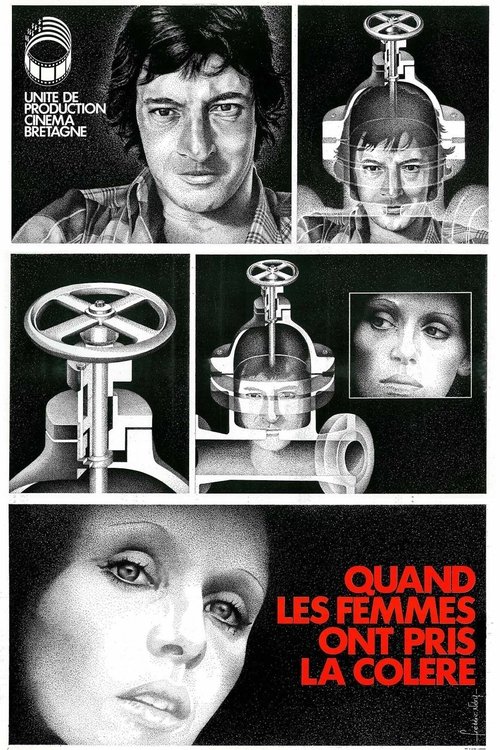
The action takes place in a metallurgical factory which was part of the Pechiney-Ugine-Külhman trust in Couëron, Loire-Atlantique, in 1975. To show their solidarity with their husbands on strike, workers' wives invaded the director's office and obtained in two hours what was refused to them for months. But the management complained and sued. Twelve wives were charged with forcible confinement. The mobilization then widened. The women called on the Bretagne Cinema Production Unit (UPCB) to make a film about their struggle. Narrating the courageous action of solidarity of women with the strikers of the factory and the emergence of a collective awareness, both feminist and working-class, the film is also an echo chamber sensitive to the aspirations of the twelve women who were charged.
Quand les femmes ont pris la colère
In this film produced in 1958 by the FLN Information Service, Pierre Clément shows the damage caused by the French Army following the bombing of the Tunisian village of Sakiet Sidi Youssef on February 8, 1958. The toll varies between 72 and 75 dead and 148 injured, including a dozen primary school students and Algerian refugees grouped by a Red Cross mission.
Sakiet Sidi Youssef
No description available.