Carrie Mae Weems
Directing
Biography
Carrie Mae Weems is considered one of the most important contemporary artists working in text, fabric, audio, digital images and installation video, and is best known for her work in the field of photography. She achieved prominence through her early 1990s photographic project The Kitchen Table Series.
Known For

An introduction to the work of some of the foremost Black visual artists working today, inspired by the late David Driskell's landmark 1976 exhibition, "Two Centuries of Black American Art."
Black Art: In the Absence of Light

"A great many conundrums." An assemblage of found footage.
The Madding Crowd

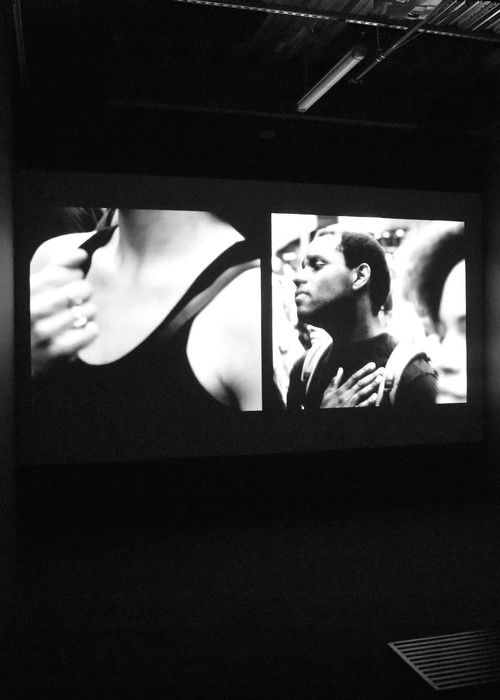
People of a Darker Hue, 2016 Video, 14 minutes, 58 seconds © Carrie Mae Weems. Courtesy of the artist and Jack Shainman Gallery, New York.
People of a Darker Hue

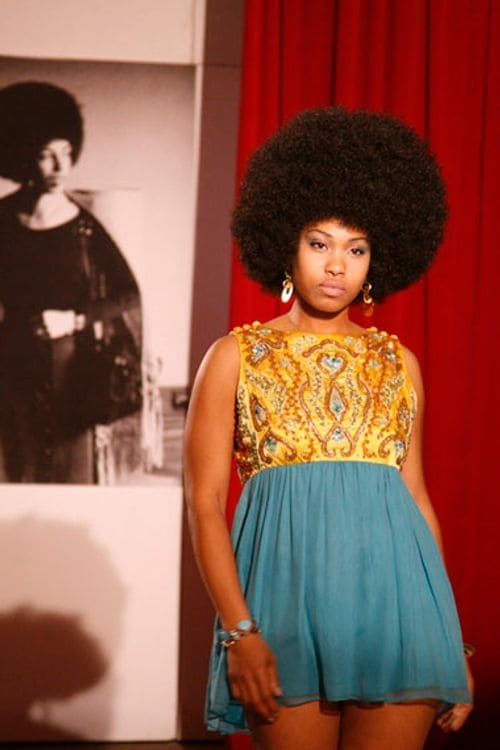
Afro-Chic explores the construction of identity through the presentation of several women wearing exaggerated Afro hairstyles and sassy attire as they strut down an illuminated runway.
Afro Chic

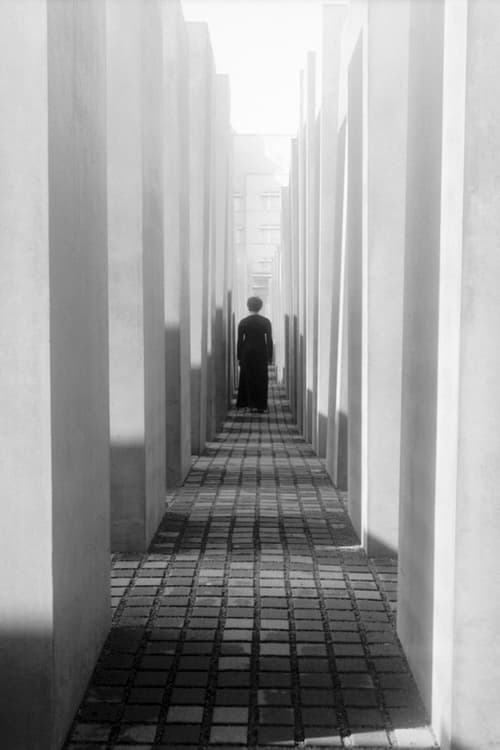
In this performance for camera, Weems creates a ritual dance through the pillars of Peter Eisenmann’s ‘Memorial to the Murdered Jews of Europe’, completed in Berlin in 2005. Accompanied by the music of American composer Gregory Wanamaker, Weems appears and disappears, her fluid movement punctuated by short, sharp claps.
Holocaust Memorial

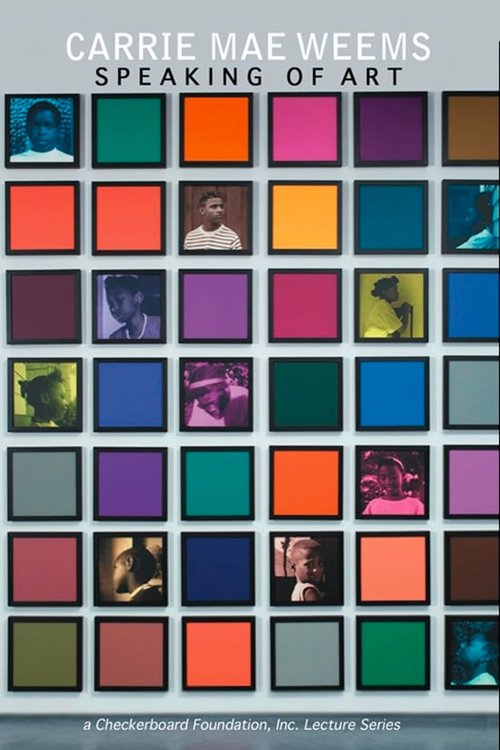
In 2004 Checkerboard had the privilege of filming Carrie Mae Weems discussing her body of work, comprised of 17 projects spanning more than two decades (1981-2004). This dynamic presentation was accompanied by slides of the artist's photographs and excerpts from her video art. The result is a chaptered lecture guided by Weems's seductive voice and passionate presence. The viewer is transported into her world as she details what she is trying to uncover, illuminate, investigate and provoke through her lens.
Carrie Mae Weems: Speaking of Art
Carrie Mae Weems draws on narrative formats such as self-portraiture, social documentary and oral history to scrutinize notions of subjectivity in terms of gender, race and class. Her video installation Lincoln, Lonnie, and me is a meditation on the exclusionary mechanisms of the American dream. In one sequence, Weems intones a portion of Abraham Lincoln’s Gettysburg Address while spectres of Lincoln, a crying woman and a reenactment of the John F. Kennedy assassination flit across the screen. In another, segments of speeches by her fellow artist and activist Lonnie Graham alternate with images of race riots and bus boycotts. Between these scenes, Weems intersperses ghostlike appearances of athletes, performers and tricksters, thus commenting on how white culture has traditionally reduced Black identity to certain societally sanctioned roles and provoking viewers to confront their own complicity in the perpetuation of systemic racism. (Fine Arts Museums of San Francisco).
Lincoln, Lonnie, and Me

A short film connecting contemporary state surveillance to histories of Black insurgency.
Surveillance

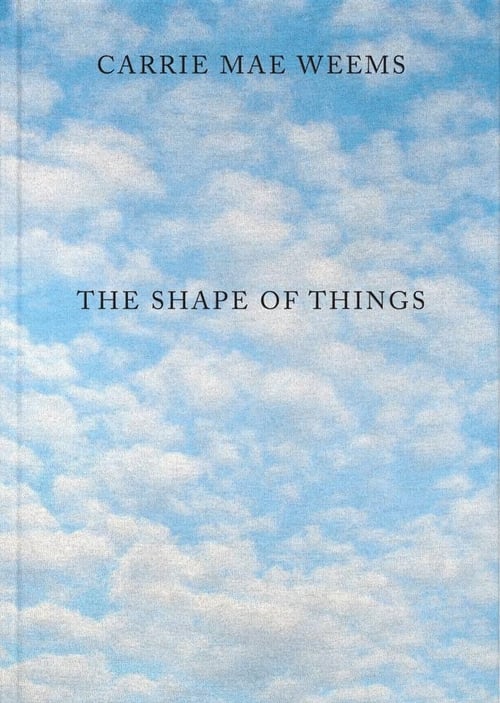
A cyclorama installation where artist Carrie Mae Weems addresses conditions of race in the United States. 'The Shape of Things: A Film in Seven Parts' includes old and new footage projected on a 180 degree curve, reminiscent of 19th-century theatre and spectacle to comment on the “pageantry” and “circus-like” quality of contemporary American political life.
The Shape of Things
In one scene in Italian Dreams, we see a close-cropped view of Weems’s face juxtaposed with the visages of two young black women. She caresses their faces gently; a haunting melodic sound track plays. In another sequence, Weems— again dressed in black, but now in combat boots—walks through Rome’s Cinecittà. There, she meets a white man wearing a suit. He talks; she listens closely, then enfolds him in an embrace and engages in a slow, semi-erotic grind. But he is dull and stiff in her arms. It is clear Weems holds the power in this exchange; she shifts the paradigm of the seducer from male to female. From this scene she moves on, ascending staircases and wandering through corridors.
Italian Dreams

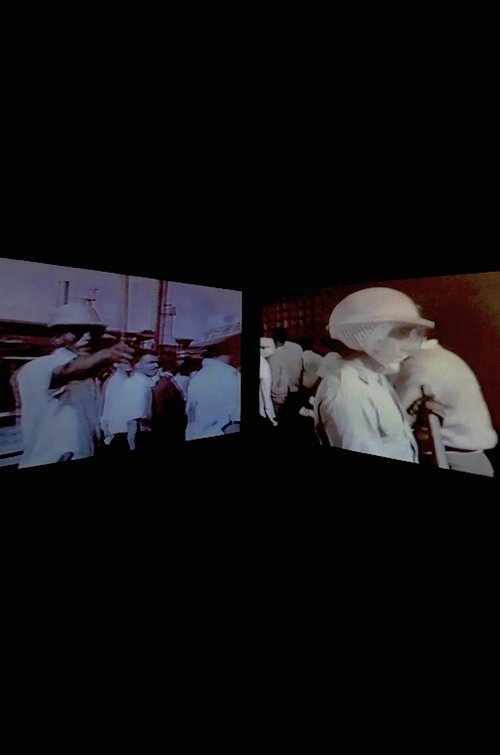
An installation utilizing two adjoining screens mounted in a corner. On the opposing sides, groups of people protest for and against desegregation during the 1965 Boston riots, the looped news footage slowed to match the tempo of Samuel Barber’s “Adagio for Strings,” the only sound.
Cornered

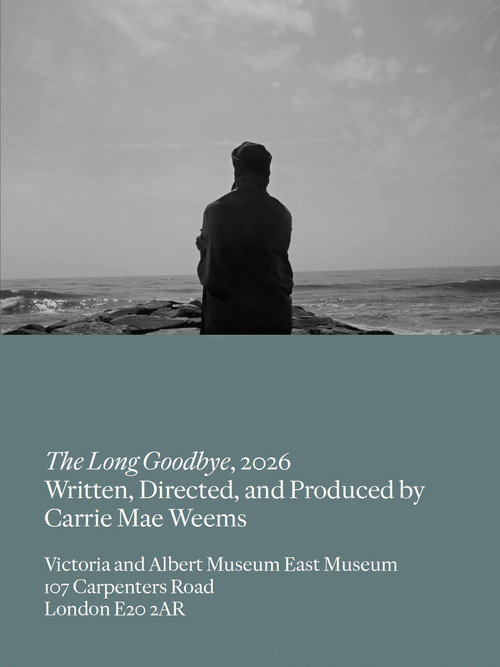
The film traces how bodies of water, from their sweeping currents to soft tides, have shaped us, enabling transatlantic migration and continuing to impact communities in east London and beyond. The work explores the creation of new identities and artistic forms by the immigrants who have relocated across oceans, both voluntarily and by force.