
Lap-See Lam
Directing
Known For
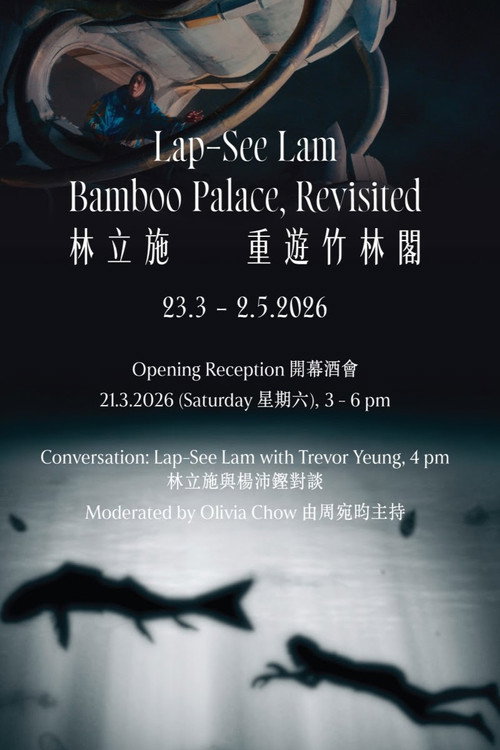
In Floating Sea Palace (2024), Lam draws on the folklore tale of Lo Ting, a mythical human-fish hybrid, who is believed to be the ancestor of the Hong Kong people. In Lam’s story, Lo Ting exists both in past and future form, played by pop singer Bruno Hibombo and artist Ivan Cheng, respectively. Past Lo Ting longs to return to his former home Fragrant Harbour, the phonetic translation of Hong Kong. He unknowingly summons a dragon ship, performed by vocalist and improviser Sofia Jernberg, based on a real three-story ship named the Floating Restaurant Sea Palace.
Floating See Palace
Three virtual Chinese restaurants in Stockholm provide the setting for stories from three generations of owners and their families in the years between 1978 and 2058. The cross-media work 'Mother's Tongue' is a collaboration between artist Lap-See Lam and filmmaker Wingyee Wu. The film version is created with a spatial scanner that has produced the three-dimensional architectural animations which a weightless camera floats around in, while we in three short episodes listen to the personal stories about language, identity and life as a Chinese person in Sweden.
Mother’s Tongue

A 360-degree immersive moving-image shadow play of over five acts, following the young girl A'Yan, who enters a mirror in her mother's Chinese restaurant and moves through a dream world across centuries and between different mediated images of China.
Dreamers' Quay
Inspired by the ruins of a dragon-shaped ship that Lam could see from her studio window in art school. In 1990 the ship sailed from Shanghai to Gothenburg, Sweden, with the intention of serving Chinese food to European customers across ports in the North and Baltic Seas. The ruins of this historic vessel serve as a jumping-off point for Lam’s dreamlike story of loss, memory, and resilience.