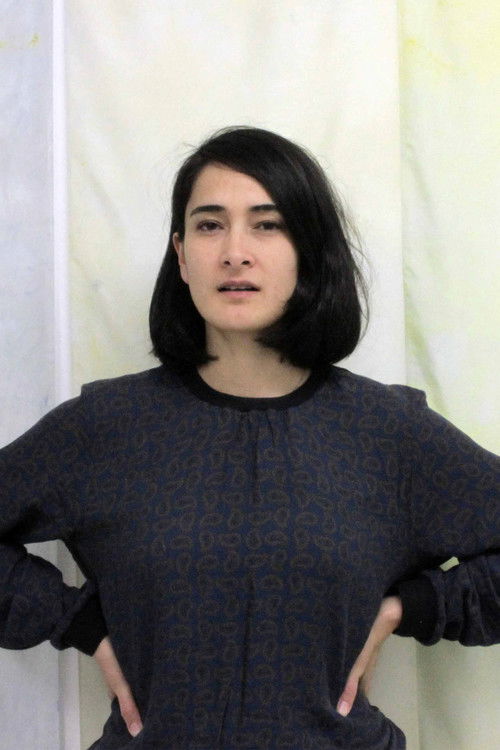
Sriwhana Spong
Directing
Biography
Sriwhana Spong (born 1979) graduated from Elam School of Fine Arts with a BFA in 2001. Her earliest public exhibitions were in artist-run and not-for-profit spaces throughout New Zealand, in Australia and Germany. In 2003 she started working with a new commercial gallery, the Anna Miles Gallery, and had her first solo show there in 2003. Following this was the success of her solo exhibition Muttnik in 2005 and its subsequent review. Muttnik’s follow-up work Nightfall was awarded the Contemporary Art Award at Waikato Museum in 2005. Whilst continuing to maintain an active presence in project galleries, 2006 was an active year for Spong who participated in the Container Project in Melbourne, the 2006 Busan Biennale, Korea, the 2006 SCAPE Biennial, and an invitation for inclusion in the 2007 Auckland Triennial. While Spong had shown an interest in exploring her Balinese heritage through her work since early experiments after graduating, Muttnik marked a shift in her aesthetic altogether. From explorations of sci-fi in her earliest video work, these new works cleverly fused the language of ritual assemblage, sculpture and time-based media home to the popular language of Science Fiction. Muttnik then became the springboard for several new projects that use a similar technique: constructing Balinese ritual form in found and ephemeral materials and using the camera to distort their context and location. The effect is similarly disorientating to the sci-fi editor, who charges the camera lens with a point of view, which makes all objects, and characters feel unfamiliar and disorientating.
Known For

Sriwhana Spong filmed having-seen-snake in Pittsburgh. In the moment of encountering the snake, Spong's body responded by intuitively entering into a state of stillness and hyper-sensing—as one creature responding to another. In the first part of the film, a more surreal imprint of place and sensory experience is juxtaposed with the interior of the alcohol house at the Carnegie Museum of Natural History. This part centres around a new species of snake recently discovered by herpetologist José Pardial in the Amazon. Spong interviews Pardial, who describes the process of designating a name, and reflects on what it means to transfer something from the unspoken into the realm of the spoken. having-seen-snake ends with the song of the Rothschild's mynah recorded at the National Aviary in Pittsburgh. The bird, endemic to Bali, where the artist's father is from, is currently on the brink of extinction due to poaching.
having-seen-snake
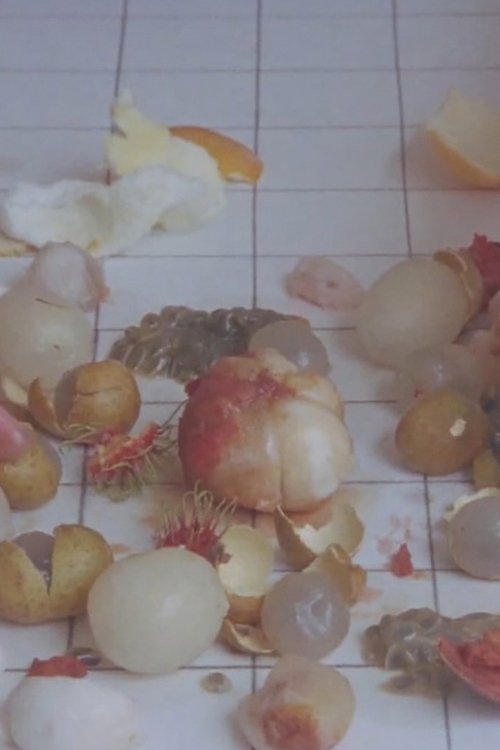
An interpretation of the writing of St Teresa of Ávila (1515–1582), who wrote an early conception of interior life titled "The Interior Castle" in 1577. Her castle of the soul was made of clear diamond or crystal and famously contained seven mansions through which one takes journeys of faith. Spong uses Teresa's text to explore the transition between apparent opposites. The central piece of Spong's installation art-work, "Now Spectral, Now Animal"
Castle-Crystal

This film animates the insects found in the last painting by the artist’s grandfather, the Balinese painter I Gusti Made Rundu. The swarm imagines ancestry not as linear succession but as an accumulation of energy “charged with potentiality.”
And the creeper keeps on reaching for the flame tree
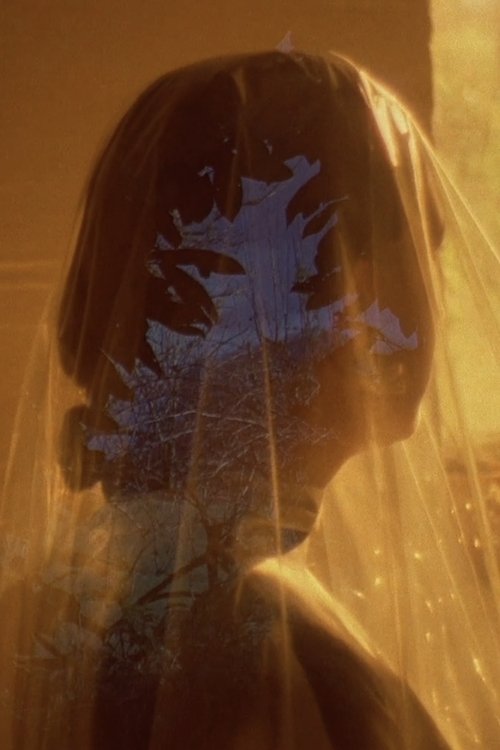
a hook but no fish explores the lingua ignota (unknown language) received by the twelfth-century German mystic Hildegard von Bingen. The film begins at Disibodenberg in Germany, the site of the monastery where the child Von Bingen was given as a tithe and interned with two other women. The film moves from Hildegard’s place of internment, where she first began to write, to the desktop of an unknown narrator, to the living room of a flat, to a farmhouse, to scenes of birds swarming and roaming through streets in London and Rotterdam. This vertiginous time-travel is accompanied by a score composed by Aotearoa musician Frances Duncan. a hook but no fish speculates whether the lingua ignota is a prophetic language for an arid time such as our own, where rivers run dry, mammals no longer exist, and only technology and tools survive, and asks what Von Bingen’s act of renaming things with a green-sampling word might bring about.