Editing
Young - beautiful - married, fulfilled, Martha is bored. Passive in an active society, she took a first step by serving as a "guinea pig" to her brother researcher who undertook a comparative study on animal behavior and human behavior.
The premise of four young men out to celebrate the end of their school exams has great promise as comedy material, a promise that is far from realized in this banal, unevenly paced, run-of-the-mill attempt at a supposedly funny story.
In a deserted quarry where “the stone is without a world,” a naked man and a woman in black await the apocalypse.
To be closer to his children following his divorce, Laurent Monier, a history and geography teacher in a peaceful provincial high school, accepts a position in a sensitive college in the Paris suburbs. He is assigned the hardest class, the fourth techno, and he finds an apartment in the Cité des Muriers, a particularly difficult district.
A car dealer, well-to-do and with a beautiful wife, finds himself attracted to his rather plain new temporary secretary. Despite her own commitments she feels the same and the two soon embark on an affair. Though it would seem it has happened before his wife finds this particular entanglement of her husband's very difficult to accept.
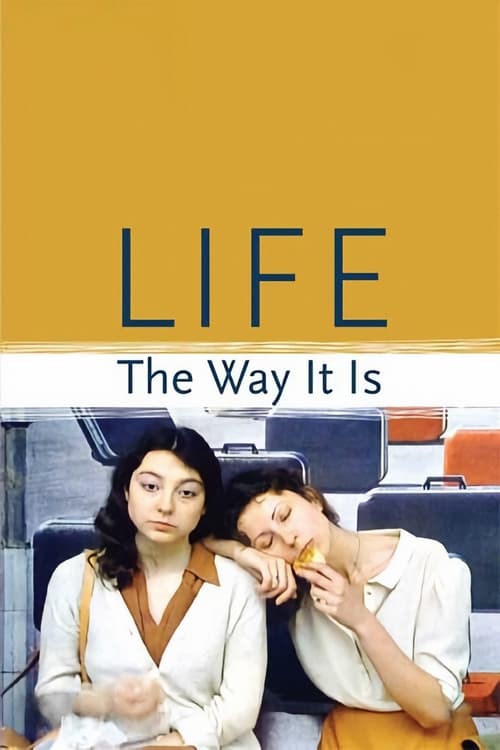
Agnes leaves school and moves with a friend to a housing project in Bagnolet. Engaged as a clerk, she becomes associate staff after the dismissal of a colleague.
A Latin palindrome is the title of Guy Debord's last film, in which he, as narrator, explains that he will make neither concessions to the tastes of his viewers nor to the dominant ideas of his day. After extensively insulting the audience that goes to the cinema to forget its heteronomous life, the film becomes autobiographical, using images from the world of spectacle: advertising brochures, clips from feature films (Les enfants du paradis), comics, aerial footage of Paris, tracking shots through Venice, photographs of friends – all commented on by Debord, with an at times melancholy undertone: "This Paris no longer exists." His assessment is that one of the great pleasures of his life has been the sensation of the passage of time, and as a witness to the disintegration of social order, he has loved his epoch.
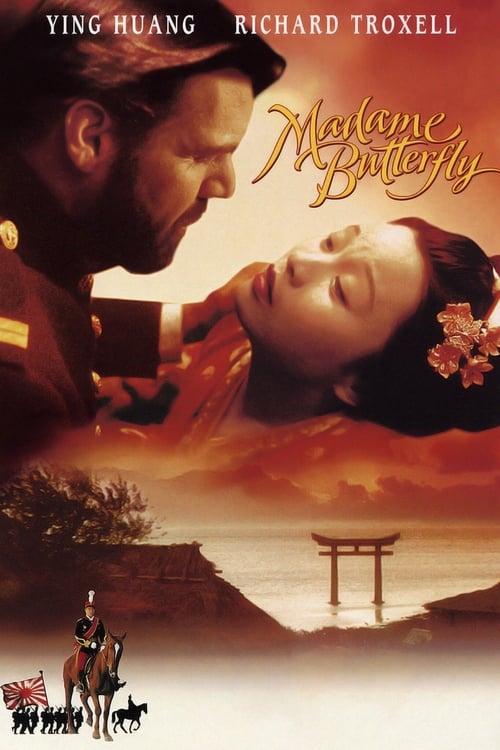
Cio-Cio-San, a young Japanese geisha, seeks to fulfill her dreams through marriage to an American naval officer. Her faith in their future is shattered by his empty vows and the loss she endures touches something deep within us all.
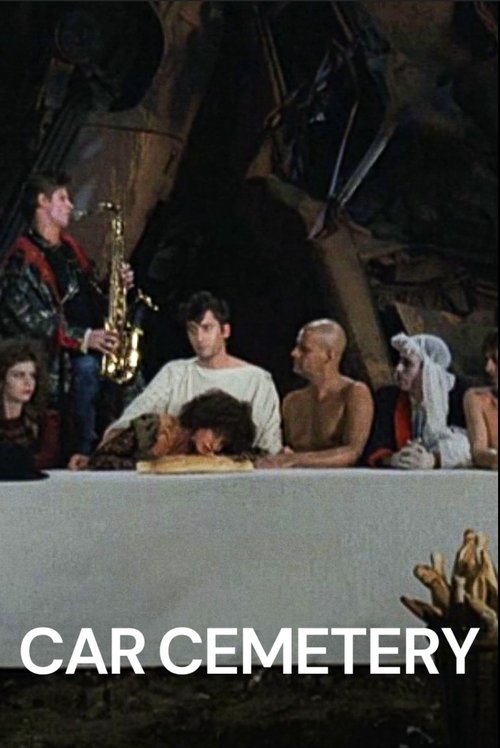
The plot is set in a post apocalyptic Junkyard where people take refuge from authority and are able to practice their fantasies and fetishes without being stopped by the police. These people are led by Emanou who is a sort of Messiah, who promises music rather than salvation.