Serge Sandberg
Production
Known For

On the islet Bannec, off the coast of Brittany, four fishermen have set up camp for three months to harvest seaweed. If processed correctly, the ash of the seaweed can be sold for high prices. It is therefore burnt in several large piles on the island. Problems arise when one of them gets an infected thumb.
Finis Terræ

Désiré is hired by Odette Cléry as a valet. She is the mistress of Félix Montignac, Minister of Posts, Telegraphs and Telephones. Désiré is assisted by Adèle, the cook, and Madeleine, ‘Madame’s’ maid. The summer holidays take this little group to Deauville, to a holiday villa. But here’s the thing, Désiré is a man whose appearance, self-assurance and profession—which is, in fact, hereditary—are not entirely in keeping with his tastes and mindset. As the son, grandson and great-grandson of a servant, he derives genuine pleasure from obeying—and indeed, Désiré says so himself: ‘Serving is a marvellous thing. It means having the right to be without a will...’ But, alas! Every coin has two sides, and his only real taste lies in his mistresses. Adapted from the play of the same name by Sacha Guitry, premiered at the Théâtre Édouard VII (Théâtre de Sacha Guitry) in Paris’s 9th arrondissement on 27 April 1927.
Désiré

Life story of a charming scoundrel, with little dialogue other than the star/director's witty narration. As a boy, only he survives a family tragedy when he's deprived of supper (poisonous mushrooms!) for stealing...concluding that dishonesty pays. Through years of dabbling in crime and amusing adventures, two women appear and reappear in his life, a dazzling blonde jewel thief and a stunning brunette gambler. Finally, he meets the mysterious Charbonnier who had saved his life in World War I, leading to the surprising next phase in his career...
The Story of a Cheat

The history of one of France's most famous streets is retold, featuring multiple performances from Guitry himself.
Let’s Go Up the Champs-Élysées
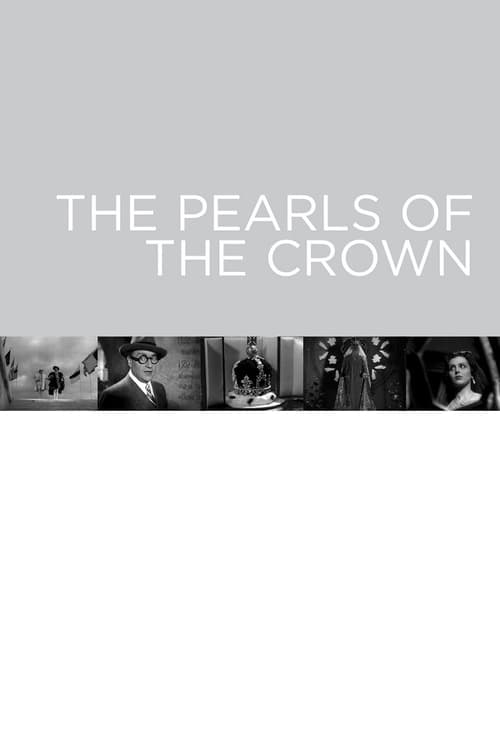
The story of the seven pearls of the English Crown, from Henry VIII to 1937 – three of them missing.
The Pearls of the Crown

A husband who has just cheated on his wife returns home in the early morning, puzzled. He finds there, without knowing it, the lover of his wife, to whom he confesses his infidelity.
Let's Make a Dream
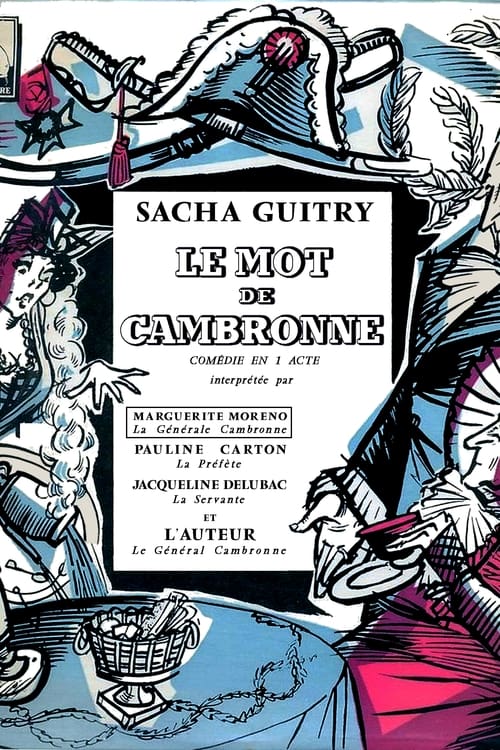
Mrs Cambronne, of British origin, to whom the famous ‘remark’ made by her husband, General Pierre Cambronne, has been much recounted, presses her husband with questions in an attempt to discover its meaning. But the general refuses to offer any explanation and remains silent. An adaptation of Sacha Guitry’s play of the same name, also written in 1936. Released in cinemas on 26 March 1937 at the Cinéma Normandie in Paris’s 8th arrondissement. The film was shot in a single afternoon on November 19, 1936, featuring the four actors who had originally performed the play on stage. The props came from the theater and were returned there that same evening. As Guitry explains at the beginning of his film, this production is dedicated to the memory of Edmond Rostand, who suggested the subject of the play—on which the film is based—to the author of “Mot de Cambronne.”
Le Mot de Cambronne
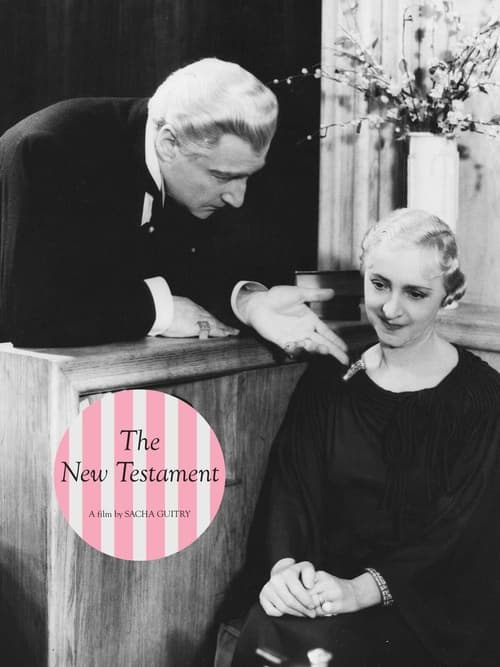
Husbands and wives, lovers and gigolos, all break a sweat when Dr. Marcelin’s newly-revised last will and testament is prematurely exposed.
The New Testament

After being left for another man by his wife, Charles Bellanger raises his only son to fear and suspect women. Years later, such an education is bearing fruit.
My Father Was Right
Napoleon at Saint Helena (German: Napoleon auf Sankt Helena) is a 1929 German silent historical film directed by Lupu Pick and starring Werner Krauss, Hanna Ralph and Albert Bassermann. The film depicts the final years of Napoleon between 1815 and 1821 during his period of exile on the British Atlantic island of Saint Helena following his defeat at Waterloo.
Napoleon at St. Helena
Documentary about French playwright and film director Sacha Guitry.
Cinéastes de notre temps : Sacha Guitry

Coveted by two different men, a woman turns to a third man instead.
Spanish Fiesta
No description available.