Marthe Keller
Acting
Biography
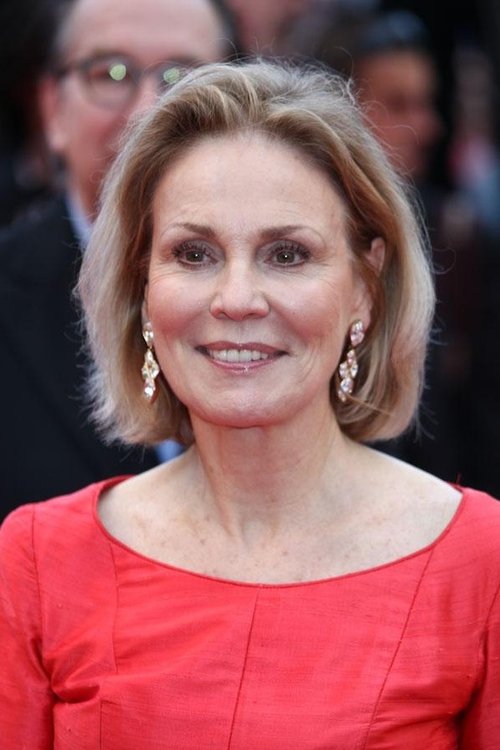
Marthe Keller (born 28 January 1945; Basel, Switzerland) is a Swiss actress and opera director. She studied ballet as a child, but stopped after a skiing accident at age 16. She changed to acting, and worked in Berlin at the Schiller Theatre and the Berliner Ensemble. Keller's earliest film appearances were in Funeral in Berlin (1966, uncredited) and the German film Wilder Reiter GmbH (1967). She appeared in a series of French films in the 1970s, including Un cave (1971), La raison du plus fou (1973) and Toute une vie (And Now My Love, 1974). Her most famous American film appearances are her Golden Globe-nominated performance as Dustin Hoffman's girlfriend in Marathon Man and her performance as a femme fatale Arab terrorist who leads an attack on the Super Bowl in Black Sunday, both of them were ill-fated characters at the climax of each film. Keller also acted with William Holden in the 1978 Billy Wilder film Fedora. She appeared alongside Al Pacino in the auto racing film Bobby Deerfield, and subsequently the two of them were involved in a relationship. Since then, Keller has worked more steadily in European cinema compared to American movies. Her later films include Dark Eyes, with Marcello Mastroianni. In 2001, Keller appeared in a Broadway adaptation of Abby Mann's play Judgment at Nuremberg as Mrs. Bertholt (the role played by Marlene Dietrich in the 1961 Stanley Kramer film version). She was nominated for a Tony Award as Best Featured Actress for this performance. In addition to her work in film and theatre, Keller has developed a career in classical music as a speaker and opera director. She has performed the speaking role of Joan of Arc in the oratorio Jeanne d'Arc au Bûcher of Arthur Honegger on several occasions, with conductors such as Seiji Ozawa and Kurt Masur. She has recorded the role for Deutsche Grammophon with Ozawa (DG 429 412-2). Keller has also recited the spoken part in Igor Stravinsky's Perséphone. She has performed classical music melodramas for speaker and piano in recital. The Swiss composer Michael Jarrell wrote the melodrama Cassandre, after the novel of Christa Wolf, for Keller, who gave the world premiere in 1994. Keller's first production as an opera director was Dialogues des Carmélites, for Opéra National du Rhin, in 1999. This production subsequently received a semi-staged performance in London that year. She has also directed Lucia di Lammermoor for Washington National Opera and for Los Angeles Opera. Her directorial debut at the Metropolitan Opera was in a 2004 production of Don Giovanni. Keller has a son, Alexandre (born 1971), from her relationship with Philippe de Broca. Description above from the Wikipedia article Marthe Keller, licensed under CC-BY-SA, full list of contributors on Wikipedia.

Known For

No description available.
Champs-Elysées

The Bambi, often called the Bambi Award and stylised as BAMBI, is a German award presented annually by Hubert Burda Media to recognize excellence in international media and television to personalities in the media, arts, culture, sports, and other fields "with vision and creativity who affected and inspired the German public that year", both domestic and foreign. First held in 1948, it is the oldest media award in Germany. The trophy is named after Felix Salten's book Bambi, A Life in the Woods and its statuettes are in the shape of the novel's titular fawn character. They were originally made of porcelain until 1958, when the organizers switched to using gold, with the casting done by the art casting workshop of Ernst Strassacker in Süßen.
Bambi

Marcello Mastroianni, Isabelle Adjani, Alain Delon, Martin Scorsese, Woody Allen... the biggest stars in cinema were welcomed by Christian Defaye on his show Spécial cinéma. Between intimate confessions from actors and immersion in the world of the greatest filmmakers, Christian Defaye took viewers on a journey into the fascinating world of cinema for nearly thirty years.
Spécial cinéma

An annual American awards ceremony honoring cinematic achievements in the film industry. The various category winners are awarded a copy of a statuette, officially the Academy Award of Merit, that is better known by its nickname Oscar.
The Oscars

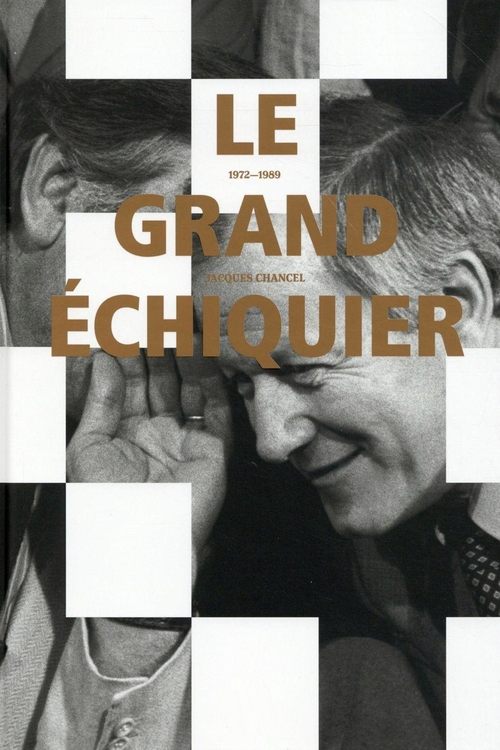
Le Grand Échiquier is a French variety television program created and presented by Jacques Chancel. It aired at 8:30 pm on the first channel of the ORTF from January 12, 1972 to July 12, 1972, then on the second color channel of the ORTF from September 1972 to December 1974, and finally on Antenne 2 from January 1975 to December 21, 1989. The program returned to France 2 on December 20, 2018 and is hosted by Anne-Sophie Lapix.
Le Grand Échiquier
No description available.
Midi trente
No description available.
G&G – Gesichter und Geschichten

After his life is turned upside down when his wife is killed in a London terrorist attack, a brilliant but introverted CIA decoder takes matters into his own hands when his supervisors refuse to take action.
The Amateur
No description available.
Samedi soir

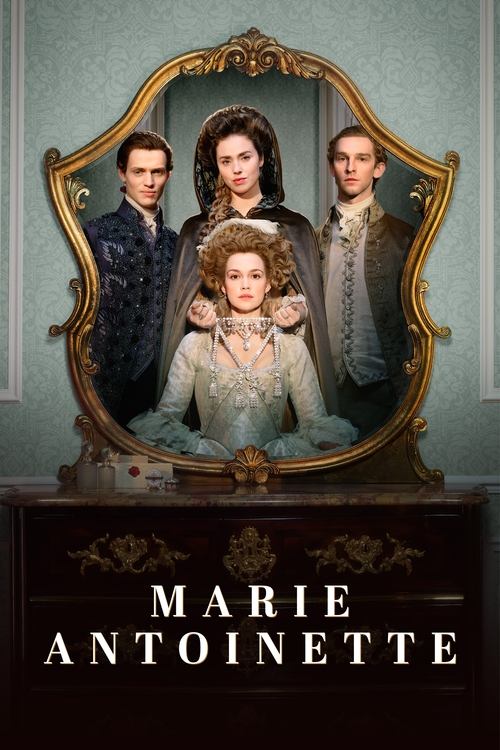
Marie Antoinette is just a teenager when she leaves Austria to marry the Dauphin of France. At Versailles, under the complex rules of the French court, she suffers from not being able to live her life the way she wants, under pressure to continue the Bourbon line and secure the Franco-Austrian alliance.
Marie Antoinette

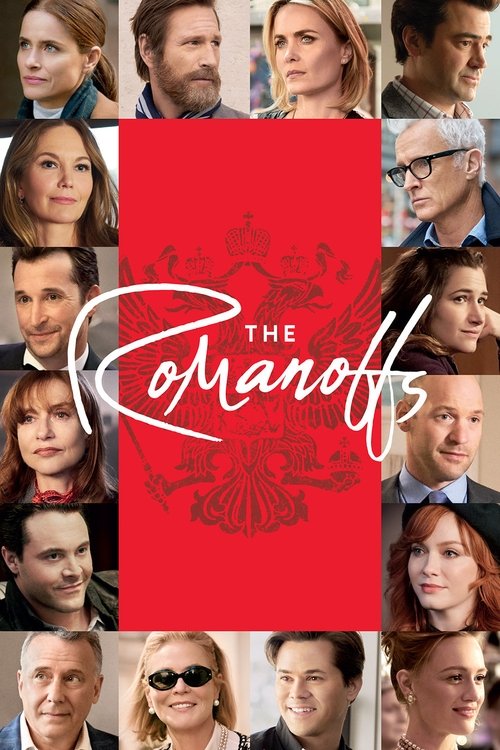
An anthology series centered around people who believe themselves to be the modern-day descendants of the Romanov family.
The Romanoffs

No description available.
Beau geste

Arsène Lupin is a French TV show which was co-produced with German, Canadian, Belgian, Dutch, Swiss, Italian and Austrian TV stations. It was only loosely based on Maurice Leblancs novels. Georges Descrières' portrayal of Arsène Lupin showed more similarity to Graf Yoster than to Maurice Leblanc's original. He behaved in the first place as a perfect gentleman who never got angry. He was always relaxed, because whatever could possibly had bothered him in daily life was taken care of by his butler. It wasn't questioned how he had come to his financial independence although the series sometimes discreetly implied that he was a professional criminal. Besides rescuing damsels in distress Lupin took on criminals, competing with their wit and intelligence. Either he stole paintings from rich people who had to be considered white-collar criminals or he acted as a detective who derailed criminal schemes. However, when he was attacked, he could defend himself effortlessly by using elegant jujutsu methods. Among the guest stars were German actors such as Günter Strack and Sky du Mont. Jean-Paul Salomé said in his commentary on the DVD version of his film Arsène Lupin he had like this series as a child. German TV, one the investors, would broadcast the show eventually between 18:00-20:00 o'clock because it was only allowed to show commercials within that very timeslot. For them to get a financial return on investment the show had to be appropriate for families and also for children who would watch it alone. Subsequently it was nearby to ask to defuse and flatten some of Leblanc's plots in order to avoid possible complaints that could force the station to broadcast the show beyond the "Vorabendprogramm".
Arsène Lupin

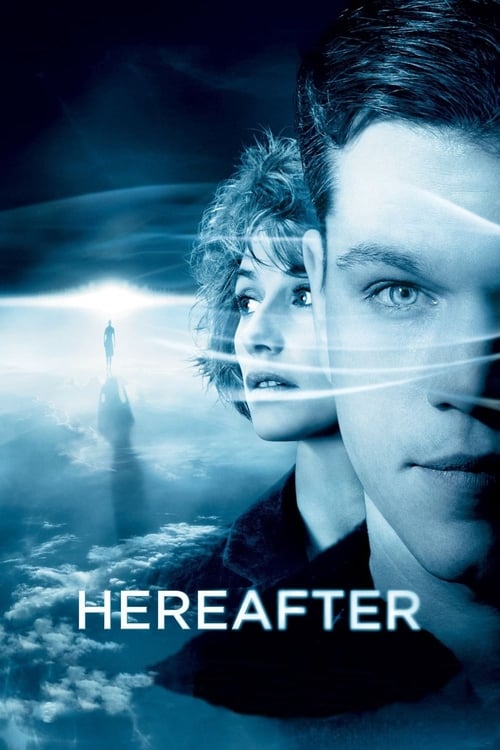
Three people — a blue-collar American, a French journalist and a London school boy — are touched by death in different ways.
Hereafter

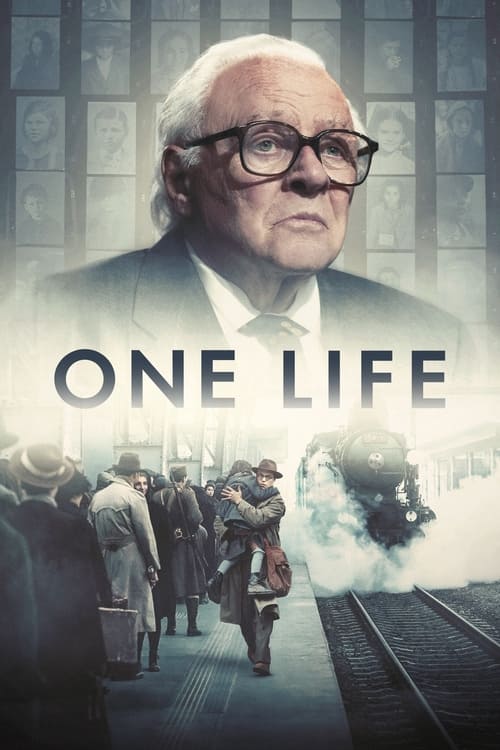
British stockbroker Nicholas Winton visits Czechoslovakia in the 1930s and forms plans to assist in the rescue of Jewish children before the onset of World War II, in an operation that came to be known as the Kindertransport.
One Life

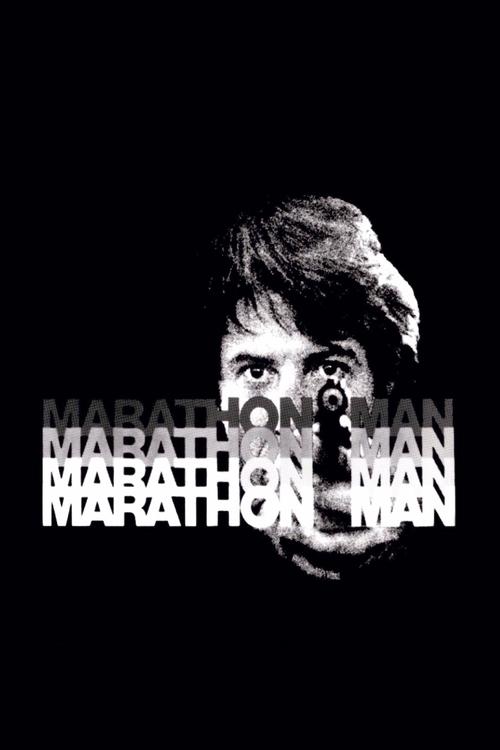
A graduate student and obsessive runner in New York is drawn into a mysterious plot involving his brother, a member of the secretive Division.
Marathon Man

In 2200, private detective Aline Ruby and her android partner Carlos Rivera are hired by a wealthy businessman to track down a notorious hacker. On Mars, they descend deep into the underbelly of the planet's capital city where they uncover a darker story of brain farms, political corruption, and a missing girl who holds a secret about the robots that threatens to change the face of the universe.
Mars Express

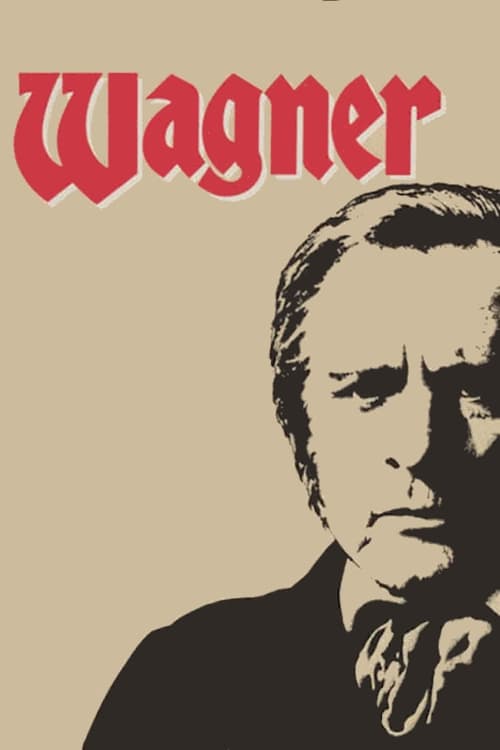
A huge panorama of Wagner's life and work, from before the 1848 Revolution, through his exile in Switzerland, his rescue by the besotted King Ludwig II of Bavaria to the final triumph at Bayreuth.
Wagner

Johnny is a long-serving MI5 officer. His boss dies suddenly, leaving behind an inexplicable file which threatens the stability of the organisation.
Page Eight

An Israeli anti-terrorist agent must stop a disgruntled Vietnam vet cooperating in a Black September PLO plot to commit a terrorist attack at the Super Bowl.