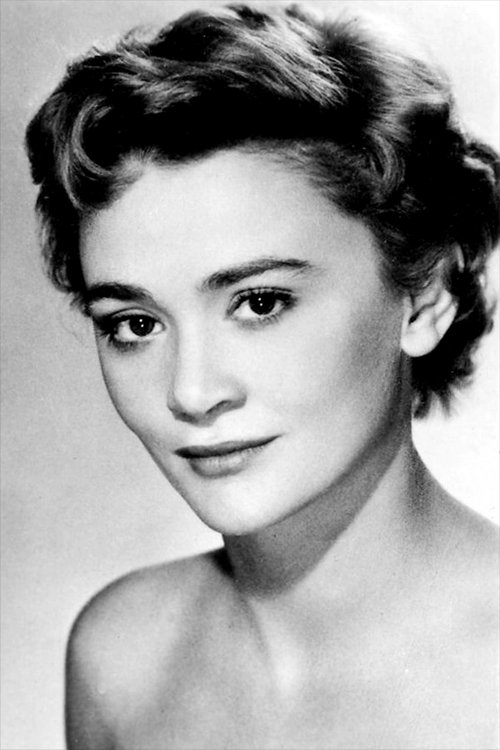
Danièle Delorme
Acting
Biography
Gabrielle Danièle Marguerite Andrée Girard (9 October 1926 – 17 October 2015), known by her stage name Danièle Delorme, was a French actress and film producer, famous for her roles in films directed by Marc Allégret, Julien Duvivier or Yves Robert. Delorme was born in Levallois-Perret, Hauts-de-Seine, one of four children to the well-known painter, poster-maker and theater-designer André Girard and his wife Andrée (nee Jouan). Girard maintained a studio in Venice in 1936–37 and in Manhattan in 1938. Back in France he was not called up in 1939. After the Battle of France, M. Girard removed to Antibes, then a free-zone and set up a network which provided recruiting and spying work for the French resistance. It was during this time that young Delorme began her acting career. In 1940 at the age of 14 Delorme began acting and played a series of minor roles before she began acting in film. Two years later, owing to her father's contacts, she was able at 16 years old (at the time using the name Danièle Girard) to secure a bit part in The Beautiful Adventure (La Belle aventure (1942)). Two years later director Marc Allégret again used Delorme, this time in a large role. This time she performed on the stage name she would use for the rest of her career, Danièl Delorme. One story developed that she took the name in order to hide from the Gestapo her relationship to her father. But the suggestion came from character actor Bernard Blier, who performed with her in her second film to take the name from the heroine of Victor Hugo's play Marion Delorme. (Delorme would co-star with Blier two decades later in the philosophical courtroom criminal drama, The Seventh Juror (Le septième juré (1962)). During the first decade of her career Delorme played delicate, demure, bright young women, roles for which she was physically fitted. Her first husband Daniel Gélin, who also performed in The Beautiful Adventure, said she had "the face of a little girl, an upturned nose with passionate nostrils, the lips of a child, the body of a woman and a certain way about her that turns heads." Richard W. Seaver of the New York Times described her as "a winsome wisp of an actress, with her soft smile and grey eyes." These features landed her a breakthrough role in Miquette et sa mère (1949). In 1949, she also played the title role in Gigi (1949 film), before Leslie Caron's success in the same role in the American (musical) version (Gigi (1958 film)) . Also notable was her performance as femme fatale in Julien Duvivier's Voici le temps des assassin (1956) (Deadlier Than the Male in the US and Twelve Hours to Live in the UK), co-starring with Jean Gabin. In 1960 Delorme joined more than 140 intellectuals, teachers, writers and celebrities in signing a manifesto supporting the right of French conscripts to refuse military service in Algeria. As a result, the French government on 28 September issued a ban against all signatories from appearing on state-run radio or television or in state-run theaters. At the same time the information minister said that another cabinet order was in preparation that would deny government funding to any film project in which any signatory appeared. ... Source: Article "Danièle Delorme" from Wikipedia in English, licensed under CC-BY-SA.

Known For

No description available.
Vivement dimanche

Marcello Mastroianni, Isabelle Adjani, Alain Delon, Martin Scorsese, Woody Allen... the biggest stars in cinema were welcomed by Christian Defaye on his show Spécial cinéma. Between intimate confessions from actors and immersion in the world of the greatest filmmakers, Christian Defaye took viewers on a journey into the fascinating world of cinema for nearly thirty years.
Spécial cinéma

Le Grand Échiquier is a French variety television program created and presented by Jacques Chancel. It aired at 8:30 pm on the first channel of the ORTF from January 12, 1972 to July 12, 1972, then on the second color channel of the ORTF from September 1972 to December 1974, and finally on Antenne 2 from January 1975 to December 21, 1989. The program returned to France 2 on December 20, 2018 and is hosted by Anne-Sophie Lapix.
Le Grand Échiquier
No description available.
Midi trente

No description available.
Cinépanorama

By the will of her dead uncle who was murdered Sandra Paoli is propelled to the head of a powerful mafia clan. She becomes a respected, but also hated, woman in a world of men, murder and criminality.
Mafiosa

Agnès Varda eloquently captures Paris in the sixties with this real-time portrait of a singer set adrift in the city as she awaits test results of a biopsy. A chronicle of the minutes of one woman’s life, Cléo from 5 to 7 is a spirited mix of vivid vérité and melodrama, featuring a score by Michel Legrand and cameos by Jean-Luc Godard and Anna Karina.
Cléo from 5 to 7

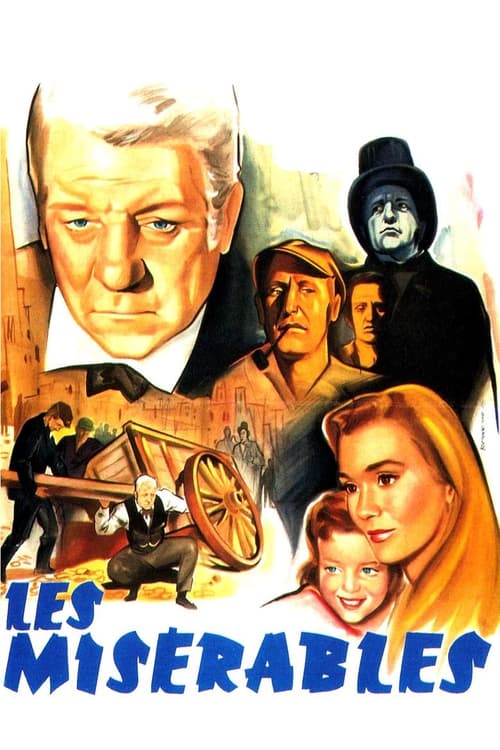
In 19th century France, Jean Valjean, a man imprisoned for stealing bread, must flee a relentless policeman named Javert. The pursuit consumes both men's lives, and soon Valjean finds himself in the midst of the student revolutions in France.
Les Misérables

In the beautiful area of Paris, Maria and José Ribeiro lived for almost thirty years on the ground floor of a Haussmann building, in their dear little lodge.
The Gilded Cage

On an otherwise normal day, Étienne, a happily married man and a good father, sees something that stops him dead in his tracks: a gorgeous woman in a billowing red dress. Long after she has left his vision, her memory continues to haunt his mind. He falls instantly in love with her and tries everything to get to know her better. Helping Étienne snare his elusive lady in red are his three bumbling buddies, which all have secret affairs and/or cheat on their wives.
Pardon Mon Affaire

In a small French village, everything would be quiet if the local wildlife cop was not being ridiculed by a smart poacher.
Neither Seen Nor Recognized

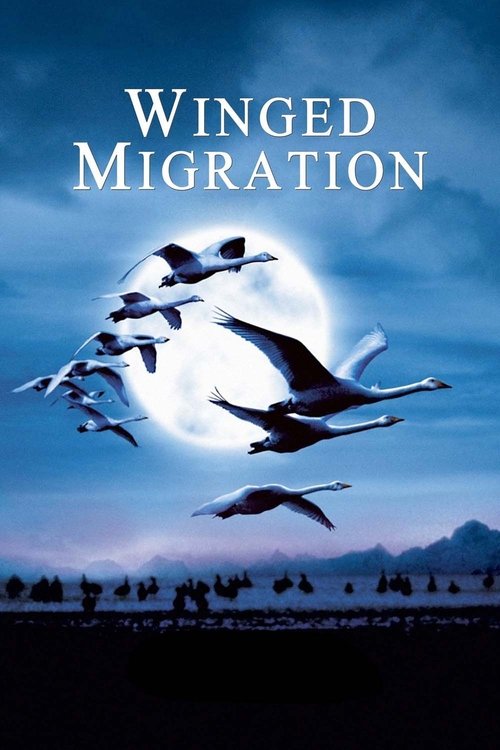
This documentary follows various migratory bird species on their long journeys from their summer homes to the equator and back, covering thousands of miles and navigating by the stars. These arduous treks are crucial for survival, seeking hospitable climates and food sources. Birds face numerous challenges, including crossing oceans and evading predators, illness, and injury. Although migrations are undertaken as a community, birds disperse into family units once they reach their destinations, and every continent is affected by these migrations, hosting migratory bird species at least part of the year.
Winged Migration

The film covers a hundred years in the lives of the Ricordi family, the Milan publishing house of the title, and the various composers and other historic personalities, whose careers intersected with the growth of the Ricordi house. It beautifully draws the parallel between the great music of the composers, the historic and social upheavals of their times, as well as the "smaller stories" of the successive generations of Ricordi.
House of Ricordi

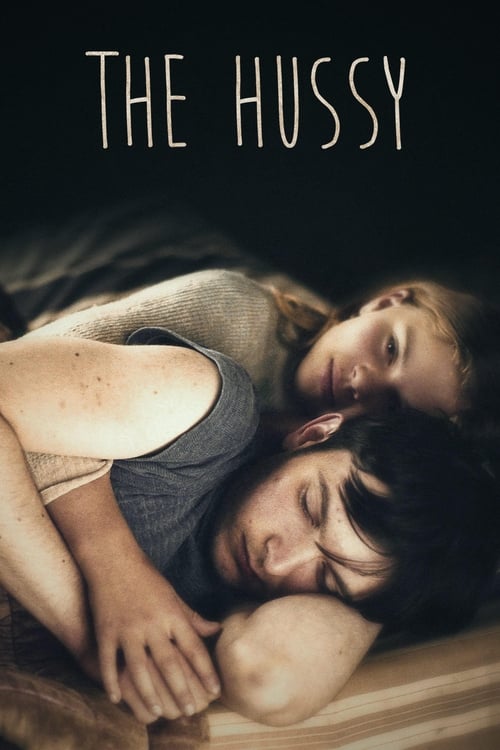
Twenty-year old misfit François earns his living by gathering boxes and bottles to resell to local shopkeepers. He lives with his grossly insensitive mother and stepfather. Mado is a gawky 11-year old, who is neglected by her family because of the oddness of the way she expresses her affection. For reasons which never become clear, François kidnaps Mado, and takes her to live with him in the attic of his parents' home. Instead of feeling fear, Mado enters into the spirit of the abduction, and they joust with one another, increasingly finding love and comfort in their relationship. When the police come upon them, however, they put an entirely different interpretation on their behavior.
The Hussy

In this experimental film, Isidore Isou, the leader of the lettrist movement, lashes out at conventional cinema and offers a revolutionary form of movie-making: through scratching and bleaching the film, through desynchronizing the soundtrack and the visual track, through deconstructing the story, he aims to renew the seventh art the same way he tried to revolutionize the literary world.
Venom and Eternity

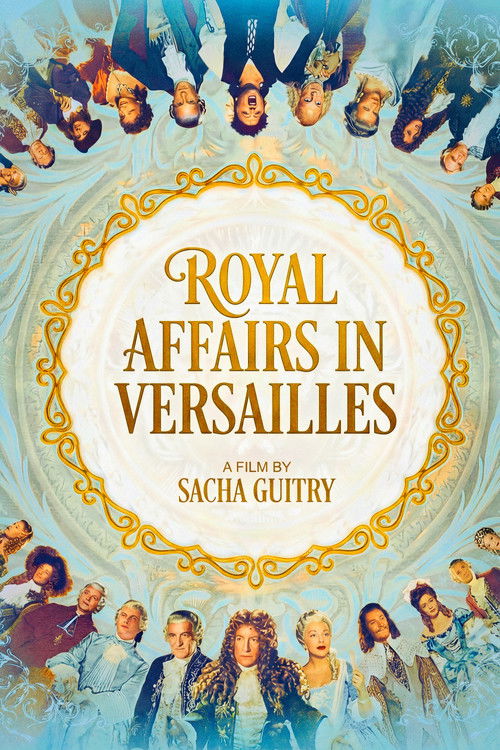
Witty narration follows the history of Versailles Palace; founded by Louis XIII, enlarged by autocratic Louis XIV, whose personal affairs and amours, and those of his two successors, are followed in more detail to the start of the Revolution, after which the story is brought rapidly up to date. A huge cast plays mainly historical persons who appear briefly.
Royal Affairs in Versailles

A young woman in a deep depression leaves her husband and returns to her parents. She discovers her father is having an affair, becomes jealous of his mistress and tries to turn his feelings in her direction.
The Prodigal Daughter

For generations, two rival French villages, Longueverne and Velrans, have been at war. But this is no ordinary conflict, for the on-going hostilities are between two armies of young schoolboys. When he is beaten by his father for having lost his buttons, the leader of the Longueverne army, Lebrac, has an idea which will give his side the advantage: next time, he and his brave soldiers will go in battle without their clothes...
War of the Buttons

In a moment of madness a middle-aged, married and respectable pharmacist kills a young woman who is sun-bathing by a lake. Unable to take in what he has done, he flees from the scene of the crime and behaves as if nothing has happened. Eventually her boyfriend is charged with the crime and, in a strange twist of fate, the killer finds himself serving on the jury.
The Seventh Juror

Alexandre, a young and honest farmer, is oppressed by an authoritarian wife, who makes him work like a dog. When she dies in a car crash, he decides to stay in bed, absolutely free and inactive. Just a dog is occupied to carry food and newspapers to him.