Tereza Kesovija
Acting
Biography
Tereza Ana Kesovija (born 3 October 1938) is an internationally acclaimed Croatian recording artist. She was one of the most recognizable figures on the music scene in former Yugoslavia, and is renowned for her wide vocal range and operatic style. She also had a successful career in France. She has held many concerts around the world, being one of the few Yugoslav musicians to have sold out shows in The Royal Albert Hall, L'Olympia and Carnegie Hall. Kesovija was born in Dubrovnik and grew up in Konavle and Dubrovnik, where she got her early music education. She won a federal young musicians competition in Ljubljana, Slovenia. Afterwards, she graduated from the flute program at the Zagreb Music Academy, and as a student began appearing in amateur music events. In 1962, shortly after the start of her professional career, she won her first international contest at Saint-Vincent, Italy. After this success, Tereza had a tour in USSR and she recorded there one EP with Italian songs for the biggest Russian music company – Melodiya. She spent 1963 and 1964 touring USSR, Poland, Finland, Denmark, Germany, Switzerland, Norway and Sweden. She also had a lot of TV appearances in these countries. In 1965, she moved to France, although she did not speak French. There she became a famous star. At the beginning she was singing in cabarets; she was mostly singing in Carević cabaret. She said: "Six tough months, I used to remain in smoke until early in the morning. Waiting for my performances I didn’t know what to do. I was sitting all alone smoking cigarette after cigarette." In 1967, she made the first recording of "La chanson de Lara" (Lara's Theme) from the film Doctor Zhivago. It was her first big French success sold out in more than 50,000 copies. After album La chanson de Lara she recorded her second French album C’est ma chanson with song "Je l'aime, je l'aime". It was sold out in more than 160,000 copies. With the song "Bien plus fort", Tereza was chosen by Grace Kelly to represent Monaco in the Eurovision 1966. She was frequently called as La bête de scène or Super-Dalida by French press. In 1968, Kesovija performed with Enrico Macias at the L'Olympia in Paris. It was her second Olympia after 1966. She had toured France. During the 1970s, Tereza became world-known star representing Yugoslav and French song worldwide. In Yugoslavia, her song "Nono, moj dobri Nono" (Grandpa, My Dear Grandpa) was popular. Claudio Villa recorded "Il tuo mondo", an Italian version of Tereza's "Nono" and Mireille Mathieu recorded the French version, "Pour deux coeurs qui s'aiment". She performed on many famous festivals (in Mexico City, Rio de Janeiro, Sopot, Palma de Majorca, Sofia, Istanbul etc.). In Yugoslavia, she was honored with Best Female Singer of the Year Award six years in a row (1974–79). ... Source: Article "Tereza Kesovija" from Wikipedia in English, licensed under CC-BY-SA 3.0.

Known For

No description available.
Champs-Elysées

The Eurovision Song Contest is an international song competition, organised annually by the European Broadcasting Union (EBU) and featuring participants representing primarily European countries. Each participating country submits an original song to be performed on live television and radio, transmitted to national broadcasters via the EBU's Eurovision and Euroradio networks, with competing countries then casting votes for the other countries' songs to determine the winner.
Eurovision Song Contest

Midi Première is a French variety show presented by Danièle Gilbert, directed by Jacques Pierre and broadcast from January 6, 1975 until January 1, 1982 on TF1. The program was generally broadcast between 12:15 p.m. and 12:55 p.m., then giving way to the 1:00 p.m. TV news. However, the broadcast schedule could change, depending on the guests, and the setting where the recording of the program was shot. Certain performances by artists who have become cult like the one where Ringo jostles with a demonstrator in interpretation (1977), that of Dalida with the title There is always a song with the soundtrack that does not start, twice, at the right speed (1978), Claude François and his Clodettes, who, in the provinces, are unable to join "the set" in order to interpret his song, the latter being taken by the crowd of delirious fans (summer 1977) . The group Supertramp performed there with the title "Dreamer" on March 8, 1975.
Midi Première

No description available.
Sacrée soirée

A talk show presented by Michel Drucker
Les Rendez-vous du dimanche
The show was meant to compete with those on West German television. To this end it was fairly successful even attracting a following in parts of West Germany which could receive Eastern TV. Its production values were high. Apart from song and dance numbers and appearances from East German celebrities, almost every broadcast featured well-known stars from the west, often after their popularity had peaked in their home countries.
Ein Kessel Buntes

No description available.
Cadet Rousselle

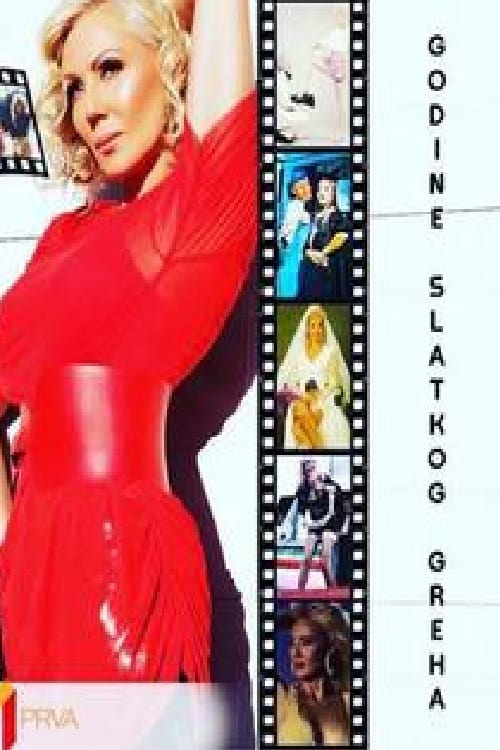
The biggest Balkan star Lepa Brena in the documentary speaks about the fame but also reveals and yet unknown details from her biography. From childhood in Brcko, growing up in the working family to the achievement of the most successful career in the former Yugoslavia. How she built the brand, what was the role of her manager Raka Djokic, in the success of Lepa Brena and "Slatki greh" and how it looked like a tour that lasted for 9 years. The film is featured by prominent artists and public workers of a time brought by artists like Lepa Brena today.
The Years of the Sweet Sin

Mr. Djelo Jusic (1939 – 2019) was a composer, musician, conductor, arranger and lyricist. He founded the choir Mali raspjevani Dubrovnik, which has been active for 50 years. He has written music for theater, ballet, movies, TV series and shows.
A Gentleman from the City

Documentary about Krunoslav ‘Kićo’ Slabinac, Croatian popular musician.
Kico

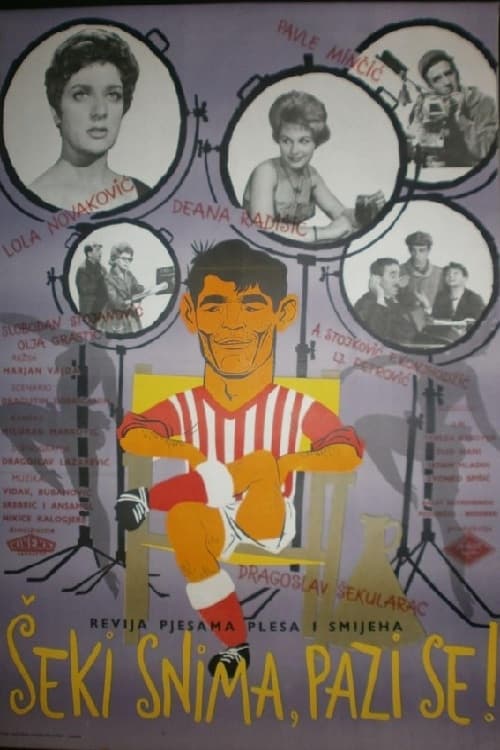
A group of young men suggest to the local tinsmith to make a movie, but he agrees only if its director would be his cousin Šeki, a Red Star FC soccer legend. Šeki, though, thinks that the movie-making is the same thing as a soccer match, which causes many argues amongst the members of the film crew.
Šeki's Rolling, Watch Out!

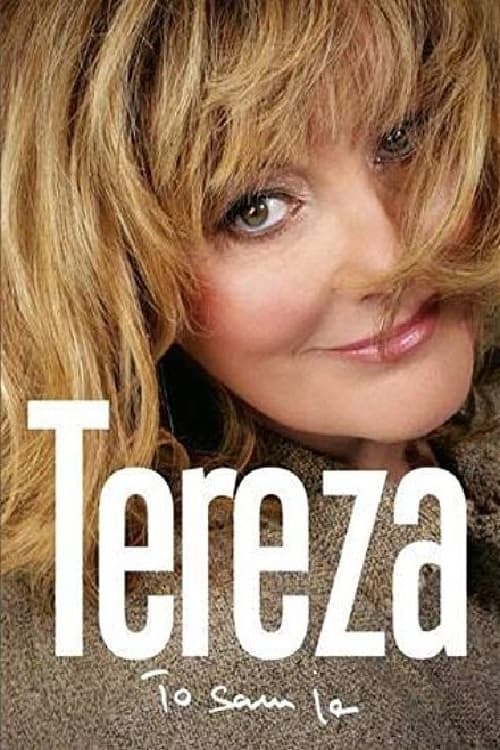
Tereza Kesovija, an internationally acclaimed recording artist from Dubrovnik (Croatia), speaks about her life and career.