FEEL IT.STREAM
Jean-Louis Barrault

Jean-Louis Barrault

Acting

Biography

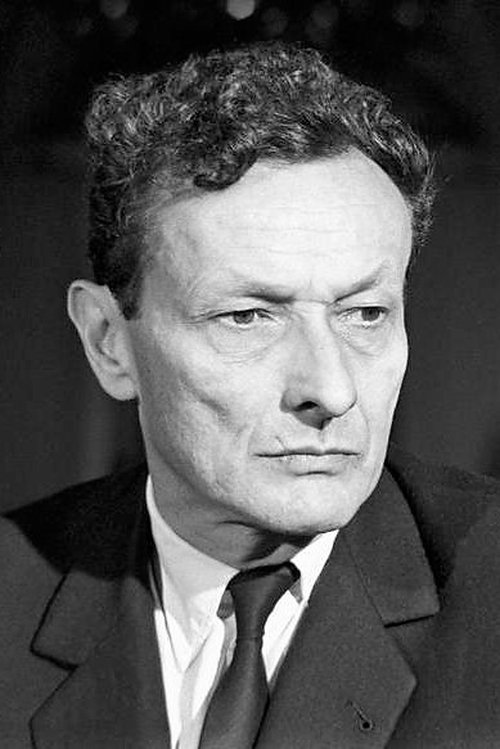
Jean-Louis Barrault (8 September 1910, Le Vésinet, Yvelines – 22 January 1994) was a French actor, director and mime artist, training that served him well when he portrayed the 19th-century mime Jean-Gaspard Deburau (Baptiste Debureau) in Marcel Carné's 1945 film Les Enfants du Paradis (Children of Paradise). Jean-Louis Barrault studied with Charles Dullin in whose troupe he acted from 1933 to 1935. At 25 years of age, he met and studied with the mime Étienne Decroux. From 1940 to 1946 he was a member of the Comédie-Française, where he directed productions of Paul Claudel's Le Soulier de satin and Jean Racine's Phèdre, two plays that made his reputation. Over his career, he acted in nearly 50 movies including Les beaux jours, Jenny, L'Or dans la Montagne and Sous les Yeux d'occident. In 1940, he married the actress Madeleine Renaud. They founded a number of theatres together and toured extensively, including in South America. He was the uncle of actress Marie-Christine Barrault and sometime sponsor of Peter Brook. He died from a heart attack in Paris at the age of 83. Jean-Louis Barrault is buried with his wife Madeleine Renaud in the Passy Cemetery in Paris. Jean-Louis Barrault, Reflections on the Theatre:     "In fact it is the simplest things that are the most tricky to do well. To read, for example. To be able to read exactly what is written without omitting anything that is written and at the same time without adding anything of one's own. To be able to capture the exact context of the words one is reading. To be able to read!" Barrault from Melinda Camber Porter's Through Parisian Eyes: Reflections on Contemporary French Arts and Culture:     "When I wake up in the morning I want to feel hungry for life. Desire is what drives me. When I go to sleep, I feel I have experienced a small death, so that I can wake up in the morning renewed and reborn." Description above from the Wikipedia article Jean-Louis Barrault, licensed under CC-BY-SA, full list of contributors on Wikipedia.​

Known For

Midi Première
9.0

Midi Première is a French variety show presented by Danièle Gilbert, directed by Jacques Pierre and broadcast from January 6, 1975 until January 1, 1982 on TF1. The program was generally broadcast between 12:15 p.m. and 12:55 p.m., then giving way to the 1:00 p.m. TV news. However, the broadcast schedule could change, depending on the guests, and the setting where the recording of the program was shot. Certain performances by artists who have become cult like the one where Ringo jostles with a demonstrator in interpretation (1977), that of Dalida with the title There is always a song with the soundtrack that does not start, twice, at the right speed (1978), Claude François and his Clodettes, who, in the provinces, are unable to join "the set" in order to interpret his song, the latter being taken by the crowd of delirious fans (summer 1977) . The group Supertramp performed there with the title "Dreamer" on March 8, 1975.

Midi Première

1975
Les Rendez-vous du dimanche
6.0

A talk show presented by Michel Drucker

Les Rendez-vous du dimanche

1975
Numéro un
7.5

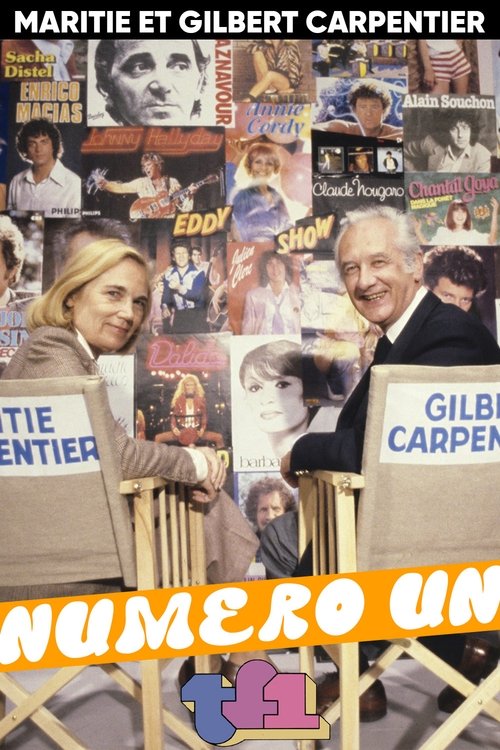
A French variety show.

Numéro un

1975
Le Grand Échiquier
8.0

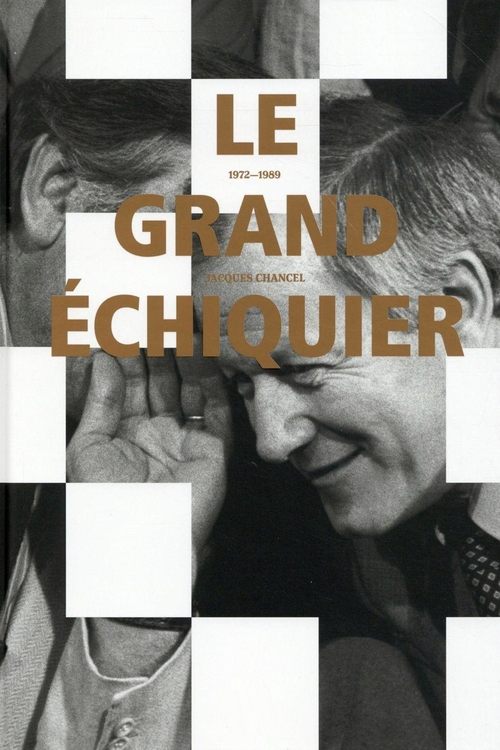
Le Grand Échiquier is a French variety television program created and presented by Jacques Chancel. It aired at 8:30 pm on the first channel of the ORTF from January 12, 1972 to July 12, 1972, then on the second color channel of the ORTF from September 1972 to December 1974, and finally on Antenne 2 from January 1975 to December 21, 1989. The program returned to France 2 on December 20, 2018 and is hosted by Anne-Sophie Lapix.

Le Grand Échiquier

1972
Discorama
8.0

No description available.

Discorama

1959
No image
6.0

No description available.

Samedi soir

1971
30 millions d'amis
6.2

No description available.

30 millions d'amis

1976
The Longest Day
7.6

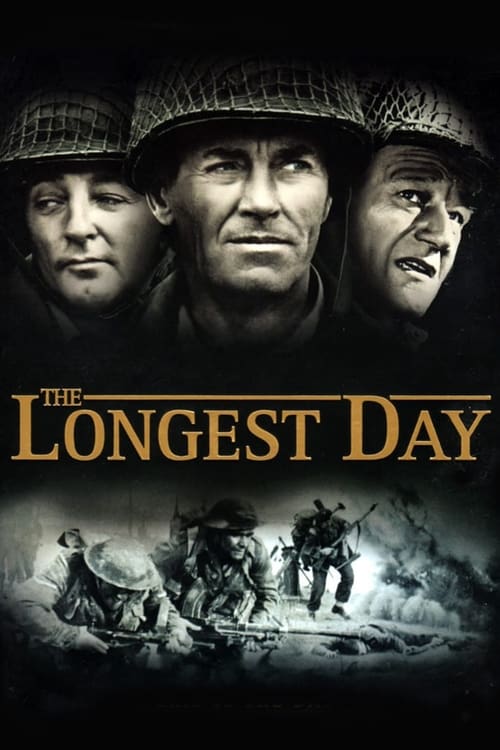
The retelling of June 6, 1944, from the perspectives of the Germans, US, British, Canadians, and the Free French. Marshall Erwin Rommel, touring the defenses being established as part of the Reich's Atlantic Wall, notes to his officers that when the Allied invasion comes they must be stopped on the beach. "For the Allies as well as the Germans, it will be the longest day"

The Longest Day

1962
Cérémonie des César
4.6

The César Awards are cinematographic awards created in 1976 and presented annually in Paris to professionals of the 7th art in various categories to recognize the best French productions. They are often cited as the French equivalent of the Oscars in the United States.

Cérémonie des César

1976
À bout portant
8.0

No description available.

À bout portant

1968
No image
9.0

Produced for television by Claude-Jean Philippe, the « Encyclopédie audiovisuelle du cinéma », recounts the history of French cinema from its birth to the beginning of the 1960s. With commentary read by Jean Rochefort.

Encyclopédie audiovisuelle du cinéma

1978
Children of Paradise
8.0

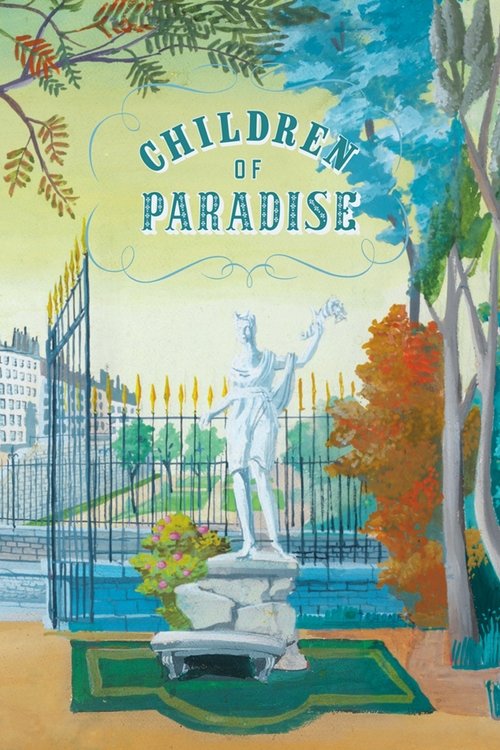
In a chaotic 19th-century Paris teeming with aristocrats, thieves, psychics, and courtesans, theater mime Baptiste is in love with the mysterious actress Garance. But Garance, in turn, is loved by three other men: pretentious actor Frederick, conniving thief Lacenaire, and Count Edouard of Montray.

Children of Paradise

1945
Venom and Eternity
6.9

In this experimental film, Isidore Isou, the leader of the lettrist movement, lashes out at conventional cinema and offers a revolutionary form of movie-making: through scratching and bleaching the film, through desynchronizing the soundtrack and the visual track, through deconstructing the story, he aims to renew the seventh art the same way he tried to revolutionize the literary world.

Venom and Eternity

1952
Royal Affairs in Versailles
6.7

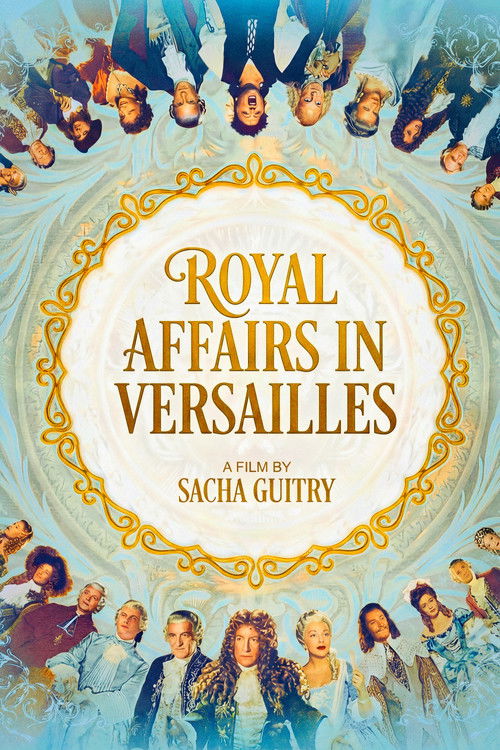
Witty narration follows the history of Versailles Palace; founded by Louis XIII, enlarged by autocratic Louis XIV, whose personal affairs and amours, and those of his two successors, are followed in more detail to the start of the Revolution, after which the story is brought rapidly up to date. A huge cast plays mainly historical persons who appear briefly.

Royal Affairs in Versailles

1953
That Night of Varennes
6.9

During the French Revolution, a surprising company shares a coach, trying to catch up something - the time itself, perhaps.

That Night of Varennes

1982
La Ronde
7.3

An all-knowing interlocutor guides us through a series of affairs in Vienna, 1900. A soldier meets an eager young lady of the evening. Later he has an affair with a young lady, who becomes a maid and does similarly with the young man of the house. The young man seduces a married woman. On and on, spinning on the gay carousel of life.

La Ronde

1950
Jenny
6.1

When her fiancé breaks off their engagement, Danielle leaves London and returns to her mother, Jenny, in Paris. With her business partner Benoît, Jenny runs what appears to be a respectable nightclub – it is in fact a place where wealthy men can buy the favours of attractive young women. Oblivious to her mother's professional and personal life, Danielle meets a handsome young man named Lucien, and falls in love with him – not realising that he is Jenny's lover...

Jenny

1936
The Dialogue of the Carmelites
7.4

This drama about the Carmelite order of nuns is set during the French Revolution. A young woman seeks refuge with the Carmelites because she is terrified of dying during the upheaval. The longer she associates with the nuns the more she is transformed by their faith and devotion. 

The Dialogue of the Carmelites

1960
Morceaux de Cannes
2.0

We thought we'd seen, read, and heard everything there was to see about the Cannes Film Festival, from the glitz and gossip to the scandals and censorship. And yet, Emmanuel Barnault's "Morceaux de Cannes" (Pieces of Cannes), by this leading expert on Italian and French cinema, convinces us otherwise. The third largest event in the world (after the Olympic Games and the FIFA World Cup) reveals its secrets only sparingly, as this film attests. The result of passionate research in the INA archives, these 52 minutes, without interviews or voice-over narration, string together rare and sometimes previously unseen footage. Taken together, they tell a surprising, original, and heartwarming story of the Festival. On the beach, on a street corner, in a restaurant, or in the privacy of a hotel room, these forgotten archives summon the greatest filmmakers, actors, and actresses of the last seventy years, from Jean Cocteau to David Lynch, for an anthology of the Festival's history.

Morceaux de Cannes

2021
Blood on His Sword
5.9

Charles le Temeraire asks in marriage Jeanne de Beauvais, daughter of King Louis XI, wishing to get her valuable lands in dowry. The King is wise to this, and since his daughter does not feel inclined to accept, he refuses. Charles sets up a plan to abduct the prince, in a way that the suspicions will fall upon Robert de Neuville, a noble enamoured of the princess. Robert manages to free her from the castle where she was being kept. Charles keeps setting traps, and managing people to perjure against Jeanne, and the King himself. Finally, Jeanne escapes alive from a pack of wolves, who set watching the lady alone in the snow covered woods, instead of attacking her. Charles does yet accuse her of being a witch - wishing to have her dead rather than being the wife of Robert... Robert will be her champion in a Judgement of God. Will the 'miracle of the wolfs' repeat itself, or fearless Charles defeat Robert in the sword duel?

Blood on His Sword

1961