Walter Brun
Directing
Known For
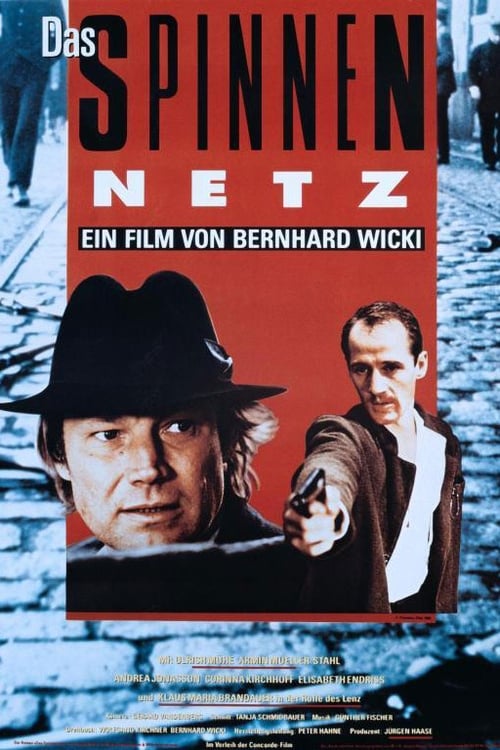
Ulrich Mühe plays a German businessman who was born completely without scruples. This makes him an eminently suitable candidate for success in the chaotic years after World War I. The shameless man's story is contrasted with that of his polar opposite, a Jewish anarchist.
Spider's Web
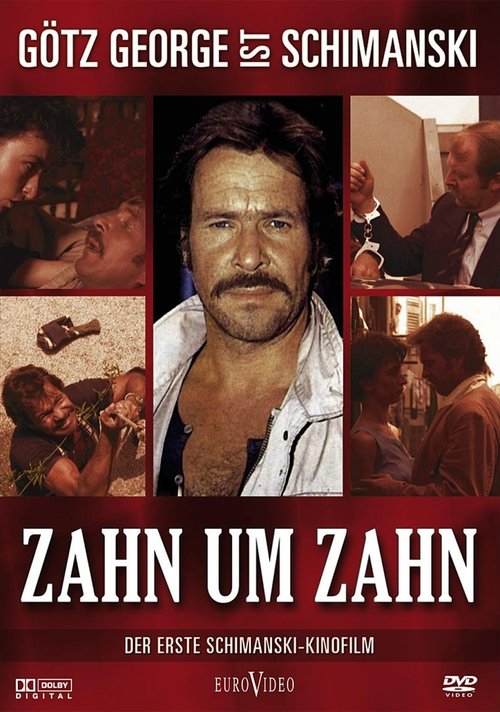
A man who has just become unemployed kills his closest relatives before he judges himself.
On the Killer's Track
A somewhat impressionist, at times even slightly surreal miniature about a student (Werner Stocker in a splendid performance) who, out of financial difficulties, starts out as pool attendant at an open air swimming pool in Berlin's district of Neukölln. Escaping from his unpleasant landlord and his lover Patrizia (a very young Martina Gedeck), he soon starts to live at the baths, and as swimmers disappear and the baths are closed for the winter, he turns the grounds into his own, perfect refuge from civilisation and social pressure, becoming increasingly detached from reality. What may sound like an annoyingly gimmicky premise is executed here playfully, yet with admirable simplicity and a subtle, unpretentious poetic sensibility that one would wish for more often in contemporary German cinema.
Aquaplaning
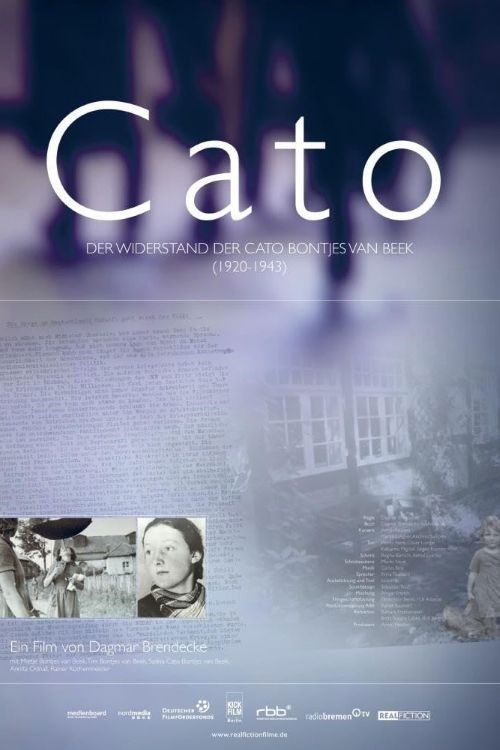
Documentary about Cato Bontjes van Beek, who was active as a resistance fighter against the Nazi regime.
Cato
Through anonymous letters, a woman receives a series of images that pertain to her personally; they confuse and frighten her, but increasingly fascinate her as well…
Parachute

A black paste that made our world louder and happier: when inventor Emil Berliner began using shellac as a sound carrier in 1896, this was the initial spark for a media revolution that has continued right up to the present day. It had already begun ten years earlier with Emil Berliner's invention of the gramophone. Together, the record and the record player changed people's everyday lives. It was a revolution - technically and culturally - because shellac records, unlike wax cylinders, could be reproduced and distributed on a mass scale. 78 revolutions per minute became the standard playback speed and shellac - the resinous paste made from slate flour, cotton, soot and the resin of the lacquer louse - gave the record its name and became synonymous with an era.