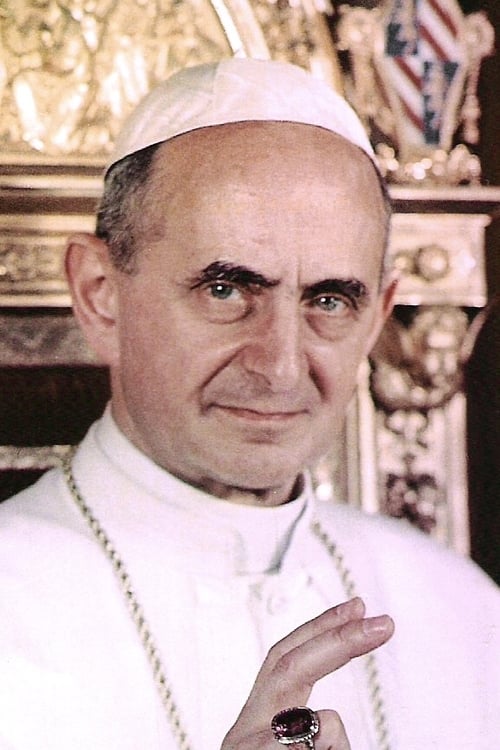
Paul VI
Acting
Biography
Pope Paul VI (born Giovanni Battista Enrico Antonio Maria Montini; 26 September 1897 – 6 August 1978) was head of the Catholic Church and sovereign of the Vatican City State from 21 June 1963 until his death on 6 August 1978. Succeeding John XXIII, he continued the Second Vatican Council, which he closed in 1965, implementing its numerous reforms. He fostered improved ecumenical relations with Eastern Orthodox and Protestant churches, which resulted in many historic meetings and agreements. In January 1964, he flew to Jordan, the first time a reigning pontiff had left Italy in more than a century. Montini served in the Holy See's Secretariat of State from 1922 to 1954, and along with Domenico Tardini was considered the closest and most influential advisor of Pope Pius XII. In 1954, Pius named Montini Archbishop of Milan, the largest Italian diocese. Montini later became the Secretary of the Italian Bishops' Conference. John XXIII elevated Montini to the College of Cardinals in 1958, and after his death, Montini was, with little to no opposition, elected his successor, taking the name Paul VI. He reconvened the Second Vatican Council, which had been suspended during the interregnum. After its conclusion, Paul VI took charge of the interpretation and implementation of its mandates, finely balancing the conflicting expectations of various Catholic groups. The resulting reforms were among the widest and deepest in the Church's history. Paul VI spoke repeatedly to Marian conventions and Mariological meetings, visited Marian shrines and issued three Marian encyclicals. Following Ambrose of Milan, he named Mary as the Mother of the Church during the Second Vatican Council. He described himself as a humble servant of a suffering humanity and demanded significant changes from the rich in North America and Europe in favour of the poor in the Third World. His opposition to birth control was published in the 1968 encyclical Humanae vitae. Pope Benedict XVI, citing his heroic virtue, proclaimed him venerable on 20 December 2012. Pope Francis beatified Paul VI on 19 October 2014, after the recognition of a miracle attributed to his intercession. His liturgical feast was celebrated on the date of his birth, 26 September, until 2019 when it was changed to the date of his priestly ordination, 29 May. Pope Francis canonised him on 14 October 2018. Paul VI is the most recent pope to take the pontifical name "Paul". Description above from the Wikipedia article Pope Paul VI, licensed under CC-BY-SA, full list of contributors on Wikipedia.

Known For

German daily news program, the oldest still existing program on German television.
Tagesschau

The true story of technical troubles that scuttle the Apollo 13 lunar mission in 1970, risking the lives of astronaut Jim Lovell and his crew, with the failed journey turning into a thrilling saga of heroism. Drifting more than 200,000 miles from Earth, the astronauts work furiously with the ground crew to avert tragedy.
Apollo 13

Italy, March 16, 1978. Aldo Moro, president of Christian Democracy, the ruling party, is kidnapped by the extreme left-wing terrorist gang Red Brigades. While the criminals put him on trial and condemn him, the Italian government and Pope Paul VI pull their twisted strings to save his life.
Exterior Night

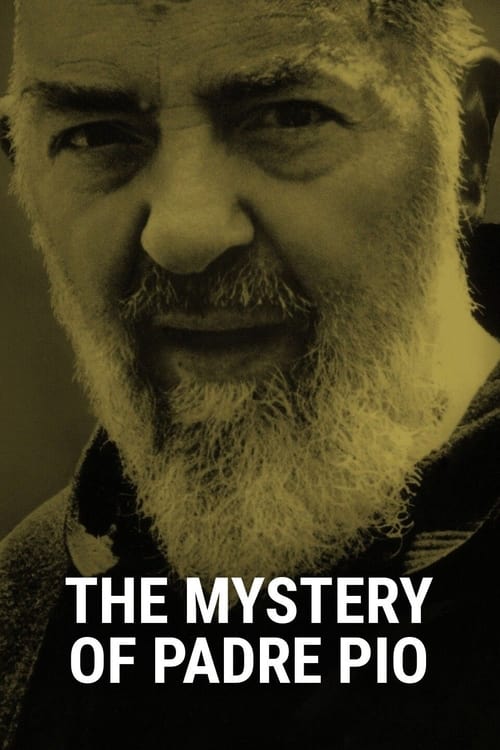
The documentary offers testimonies and documents never disclosed about the plot against its protagonist, who had the stigmata of Jesus Christ in his hands, feet and side for 50 consecutive years.
The Mystery of Padre Pio

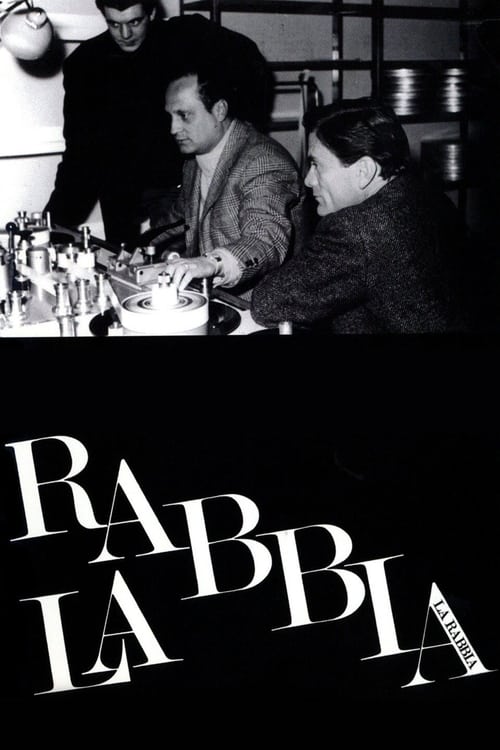
Documentary footage (from the 1950s) and accompanying commentary to attempt to answer the existential question, Why are our lives characterized by discontent, anguish, and fear? The film is in two completely separate parts, and the directors of these respective sections, left-wing Pier Paolo Pasolini and conservative Giovanni Guareschi, offer the viewer contrasting analyses of and prescriptions for modern society. Part I, by Pasolini, is a denunciation of the offenses of Western culture, particularly those against colonized Africa. It is at the same time a chronicle of the liberation and independence of the former African colonies, portraying these peoples as the new protagonists of the world stage, holding up Marxism as their "salvation", and suggesting that their "innocent ferocity" will be the new religion of the era. Guareschi's part, by contrast, constitutes a defense of Western civilization and a word of hope, couched in traditional Christian terms, for man's future.
La Rabbia

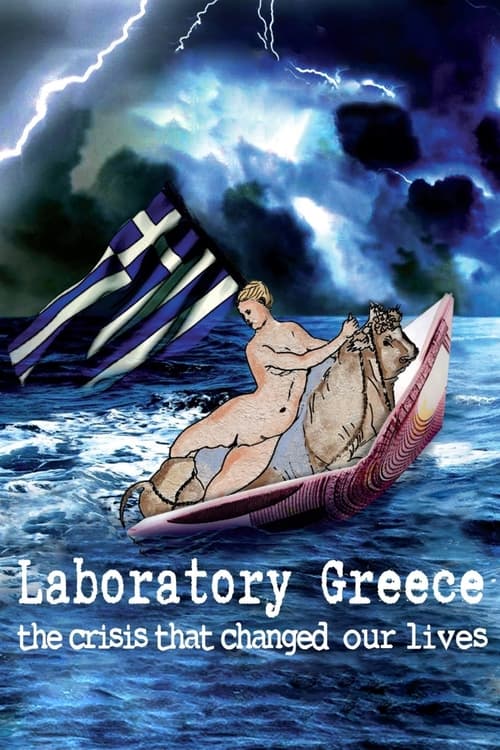
A journey through Greece and Europe’s past and recent history: from the Second World War to the current crisis. It is a historical documentary, a look into many stories. «If Democracy can be destroyed in Greece, it can be destroyed throughout Europe» Paul Craig Roberts
Laboratory Greece

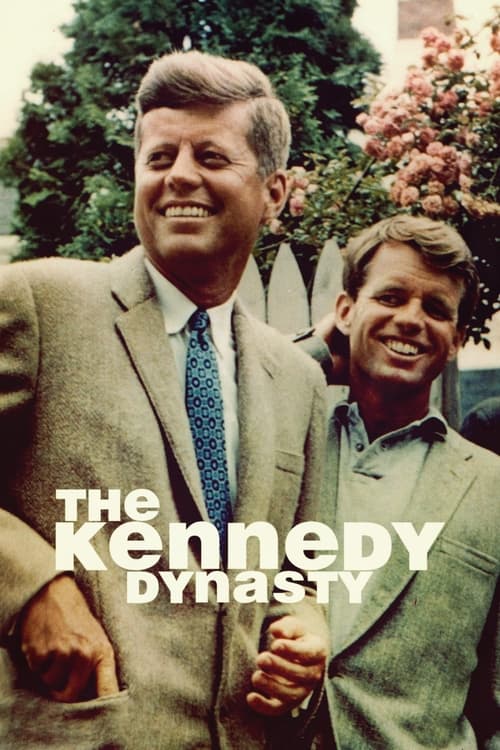
The story of a powerful political and economic dynasty, fundamental to understanding the turbulent destiny of the United States of America throughout the 20th century; of nine brothers who had truly extraordinary lives, marked by both greatness and tragedy: the story of the Kennedy family.
The Kennedy Dynasty

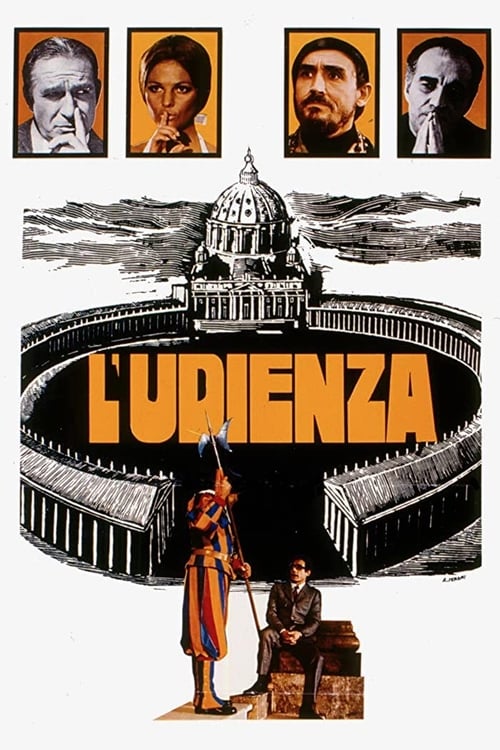
Caustic satire on bureaucracy of the Vatican authority and a simple Italian who wants to achieve the audience with the Pope.
The Audience

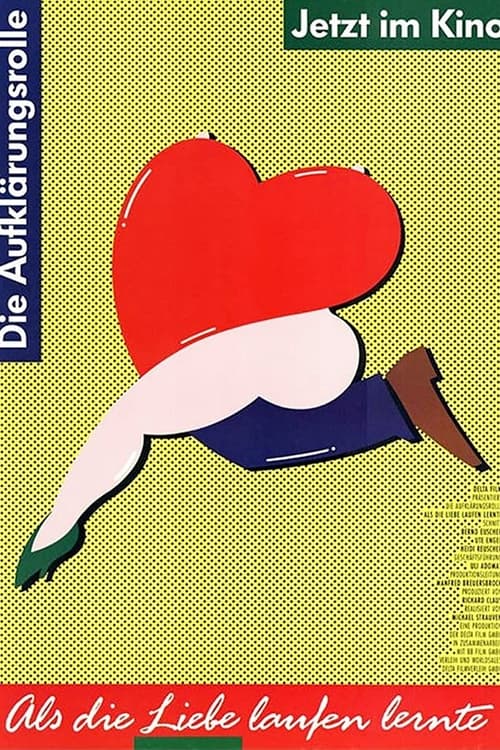
Compilation film with material from German sex education films of the 60s and 70s. A flood of such films started in cinemas at that time and the makers wanted to educate about sexuality and its possible dangers.
Die Aufklärungsrolle - Als die Liebe laufen lernte

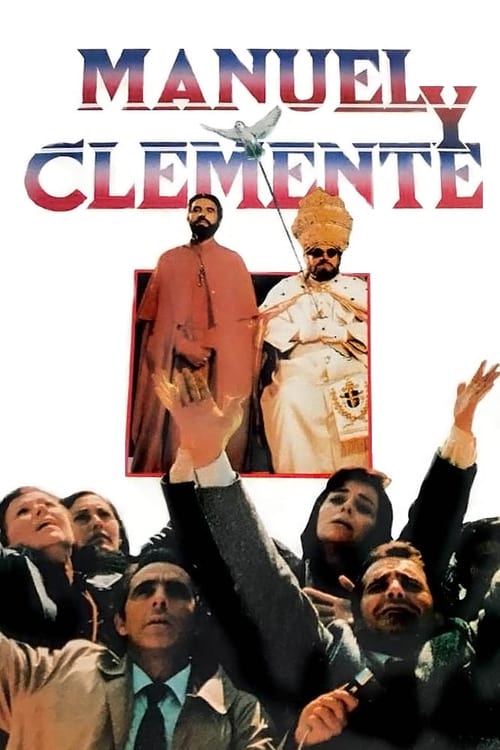
Manuel and Clemente, couple in the shower and in various scheming, try to do business with miraculous apparitions. Near the Sevillian town of El Palmar de Troya, in 1968, people begin to say that the Virgin appears and the two friends take advantage of the situation. Soon a network of economic interests and credulity is created that makes it easier for Manuel and Clemente to achieve their goal: a monumental basilica, a religious order of nuns, priests and bishops of their own, and even a pope, Gregory XVII. Satire on the curious origin of the Palmarian Catholic Church and its unique founders.
Manuel and Clemente

Editing and reworking of television, film, and photographic archive material relating to Paul VI's pilgrimage to the Holy Land in 1964, carried out by Olmi when he was already planning to make E venne un uomo (And a Man Came), the film about Pope John XIII.