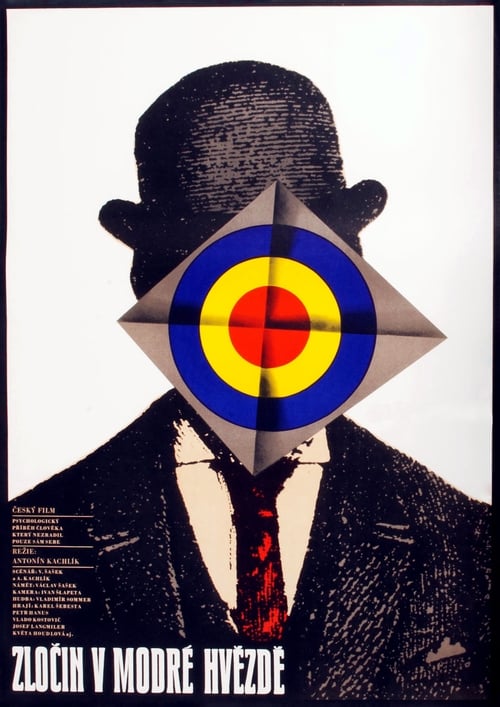
Crew
No description available.
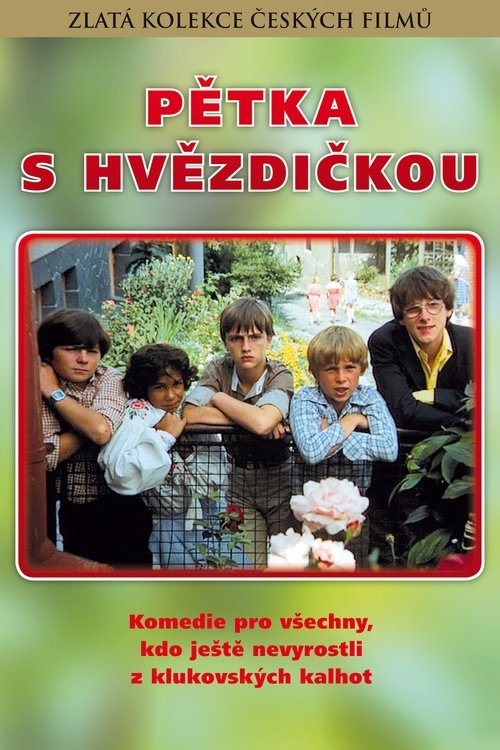
The film about curious children who discover a sunken statue of Masaryk in a disused well was interfered with by the events of November and the filmmakers tried to incorporate their echoes into the flow of the narrative. However, the result is at times confusing, as the originally childish adventure has thus grown into a naive social poster child.
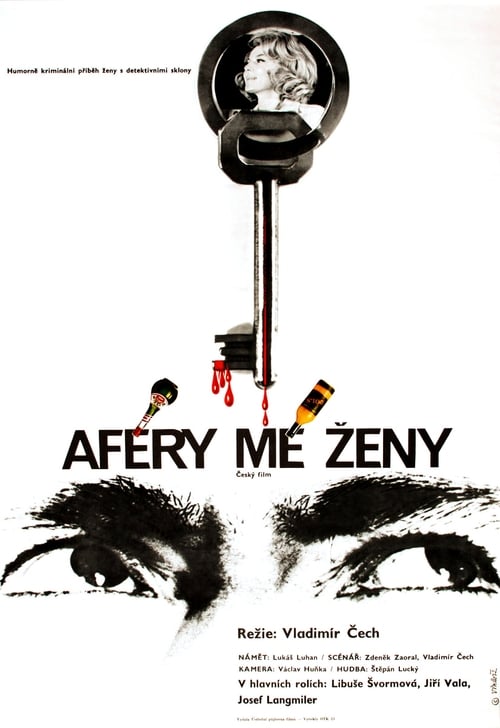
Doctor Adéla Neradová, a medical doctor, has succumbed to the desire to uncover a criminal and become a kind of Sherlock Holmes in skirts. The thankless role of her Dr. Watson has fallen to her husband Peter, a professional photographer who helps her with the cases she gets involved in, but usually gets everything mixed up.
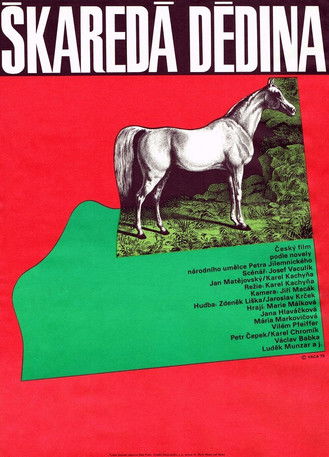
The economic crisis in the early 1930s also affected the inhabitants of the distinctive Moravian-Slovak countryside. The protagonist and his family returned to their native cottage from the city because he could not find work anywhere. But his younger brother does not welcome him with open arms...
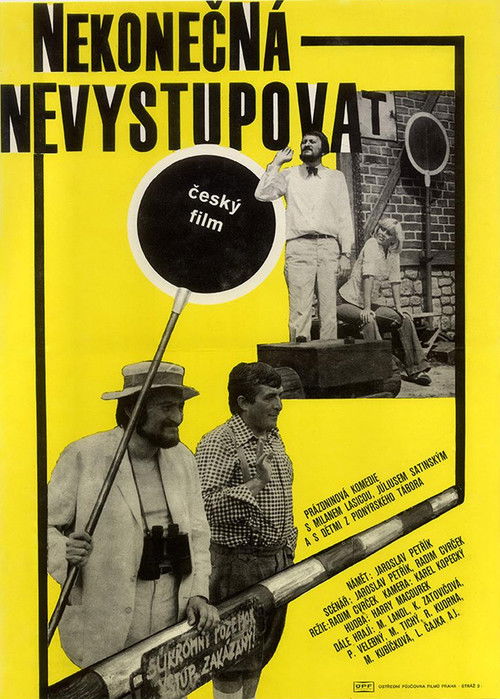
Two somewhat crazy friends Milan (Milan Lasica) and Julo (Július Satinský) resolve to have a peaceful holiday in an old guard house that Julo has bought from his uncle. But in the early hours of the very first morning they are woken up by the loud sound of a trumpet. It is the severe supervisor of a nearby recreation center forcing the children out of their beds and out to exercise drill. To protect themselves from the children, Milan and Julo put up signs saying "private property". The first to disturb their privacy is the supervisor's little granddaughter Miluska, who uses their shed as her gingerbread house. The children in the camp are disgruntled, the supervisor's program bores them, and so they make up all sorts of other things to do.
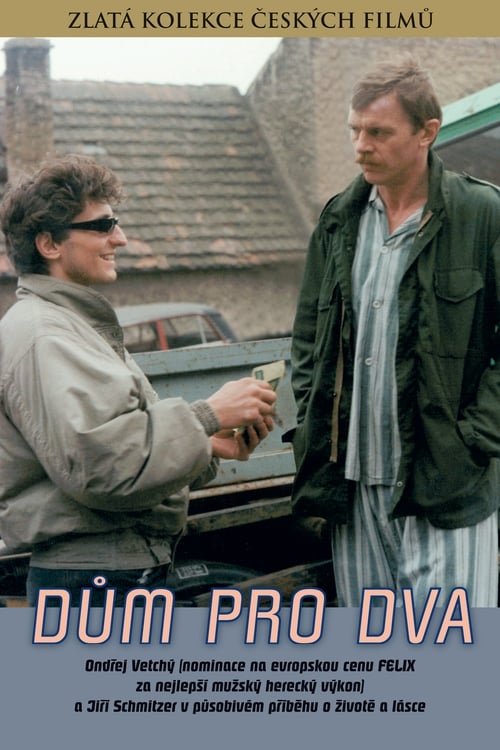
Two brothers live with their mother in an old house on the outskirts of town. They both work in a printing house. Elder Bóža is a quiet, responsible person with views determined by the Christian faith. Dan is a dude who revels in pub fun. Only after the tragic death of a person, he begins to understand that something is missing in his life.
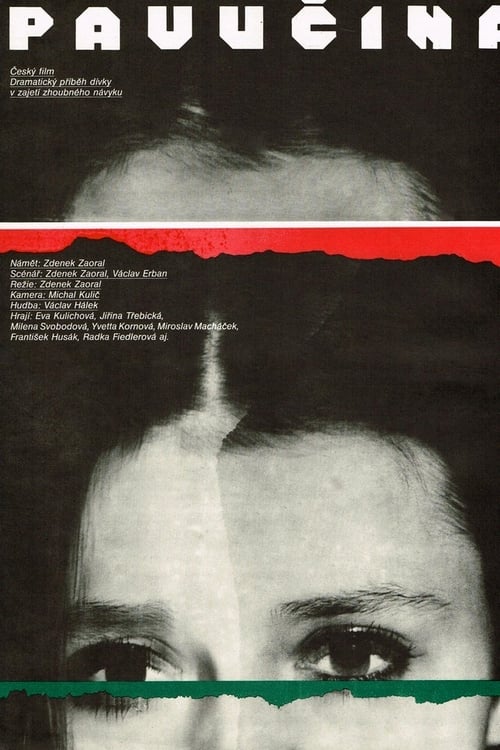
Zdeněk Zaoral began filming this film in semi-amateur conditions, but it was eventually completed in a Zlín studio and released in cinemas. At its time, in the second half of the 1980s, it was the first completely open and also unusually raw statement about the course and consequences of drug addiction. The story of an eighteen-year-old girl who tries to escape her habit shows documentary values - both in the staging and in the speech of the individual characters, in the authenticity of the drug-addicted environment.
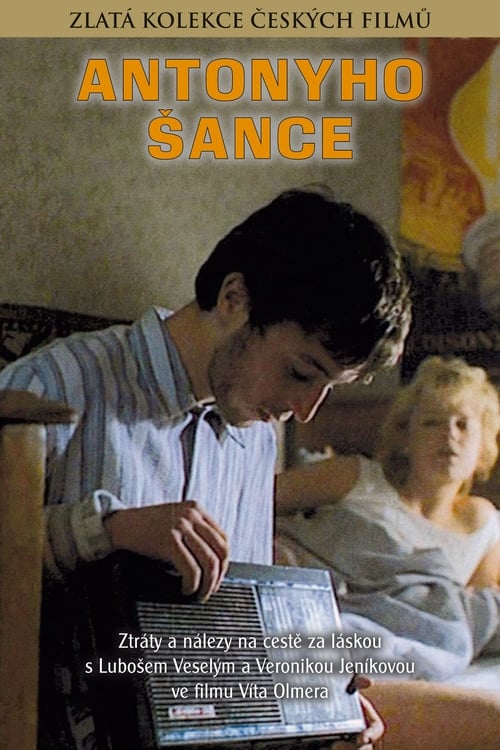
Antony is obsessed with the idea of a happy family life, but his young daughter has to be cared for by the parents of his wife, who died in a car accident. Unfortunately, Martha, whom Antony has somewhat recklessly married, has a fundamentally different vision of her future than he does.
Young knight John travels the world in search of fame and fortune, but also to help others and prove himself. However, things go dire fast and he becomes burdened with life's hardships. But then he meets a pretty water nymph, Mary.
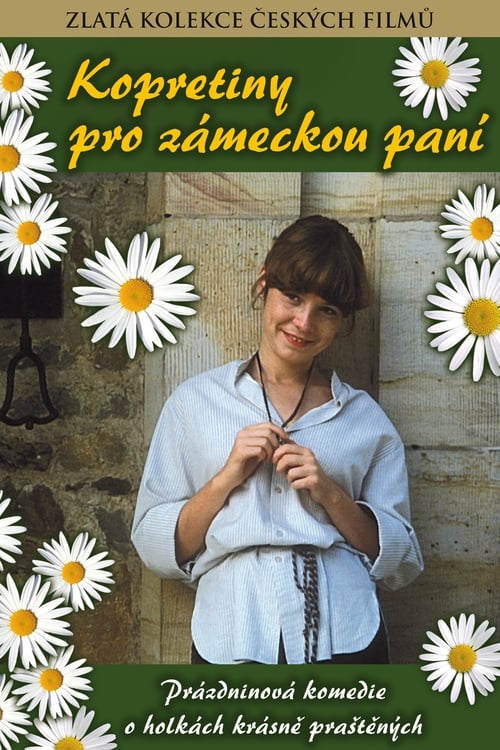
Fifteen-year-old Kateřina will once again spend the holidays at the Castle Krabonoš, where her parents are both wardens. She finds it dull because she's got to sit at the castle's ticket office and sell tickets. That is, until the arrival of the new tour guide, Petr, a young history student. She falls in love at first sight. But for Petr she's just a young crazy girl. Katka tries to get Petr's attention in various ways, but all in vain. She makes a last ditch effort by pretending to steal some rare castle steins from the castle's collection. It's only after some detectives arrive that Katka realizes that she may have overdone it, but she finally manages to get Petr to notice her.
In the second half of the 1980s, so-called critical films began to emerge, but they were afraid to make a sharper statement, moving on the basis of an engaged morality that wanted to improve the existing conditions cosmetically at best. The theme of the search for a new anchor in life becomes a central element: the protagonist, after returning from the war, does not want to devote himself to the constraints of elite sports, he rejects the dubious business of a friend. Most of all, he would be attracted to a perfectly ordinary job in a bakery. The dance clip inserts, however, make it difficult to navigate the already rather confusing narrative.
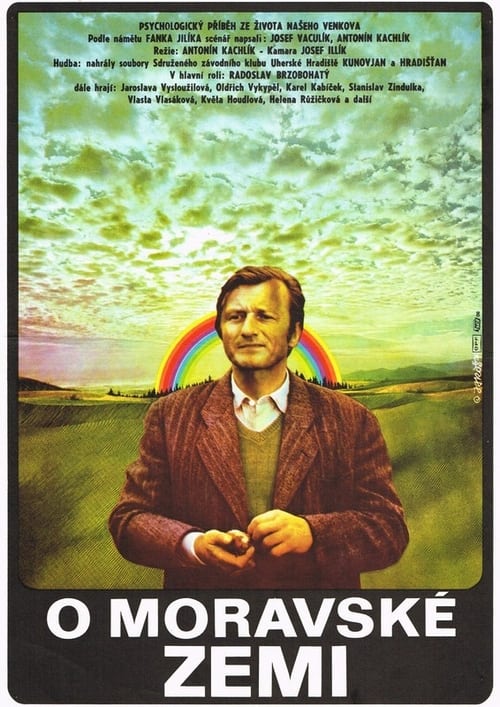
The reason for making this film is clear: it was to cover up Vojtěch Jasný's famous chronicle "All the Good Natives", an account of the tragic consequences of forced collectivisation. The pro-regime director Antonín Kachlík also focuses on the socialisation of the Moravian village, accompanied by mistakes and coercion, but in his optimistic view he emphasises the hopeful prospects leading to a happy future. Although the united village lands were born in pain, they will serve for the benefit of all the working people... As with Jasný, Radek Brzobohatý embodies the stubborn peasant, who is only slowly acknowledging the benefits of communal farming. However, unlike the poetic exuberance and pithiness of Jasný's chronicle, here we encounter a vicious posturing.
A funny movie about life and adventures of the five inseparable friends from little town in south Czech republic.
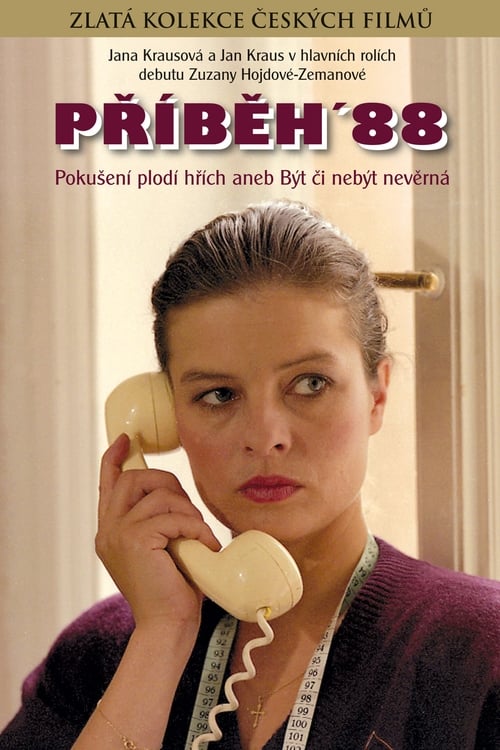
The lead character is a young woman who becomes close with a colleague of her husband. She finds herself at an important crossroad in life and considers whether to take a decisive step.
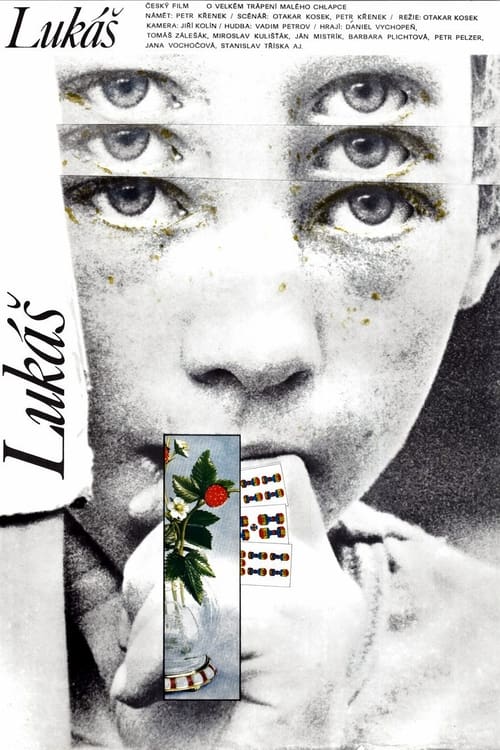
A children's film about an internally confused boy who has difficulty forming an emotional relationship with his father, a forest worker. He admires his skill and hard work, but at the same time is troubled by his drunkenness.
The story of an old gentleman who had spent his life restoring antiques. As an art connoisseur, he planned to surround himself with old paintings, which he collected deliberately. But his passion for painting was not well understood by his petty bourgeois family, who saw his collection of paintings as nothing more than money uselessly invested. And they are looking forward to selling off their inheritance...
It is 1920, political unrest is growing in Prague and the Social Democrats are about to betray their historic mission by prioritising their own selfish interests instead of those of the working class. An extortionist scandal falls on the Social Democratic deputy Jandák, forcing him to renounce his convictions. Under these circumstances, the seriously ill Hungarian revolutionary Kerekes, who had to flee his homeland, is hiding in Prague...