Pavel Kopta
Writing
Known For
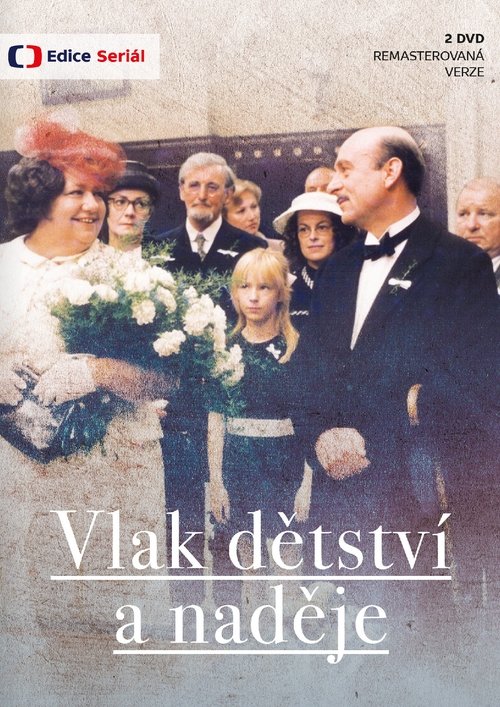
A story of a little girl Verka and her life during the beginning of WWII. Based on Vera Sládková novels.
The Train of Childhood and Expectation
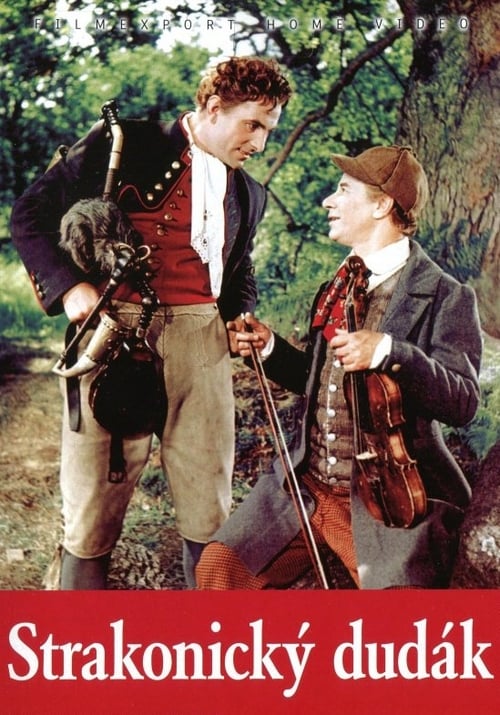
The story of the piper Švanda, who went abroad for money and fame, but whose love for his homeland ultimately wins.
Strakonický dudák
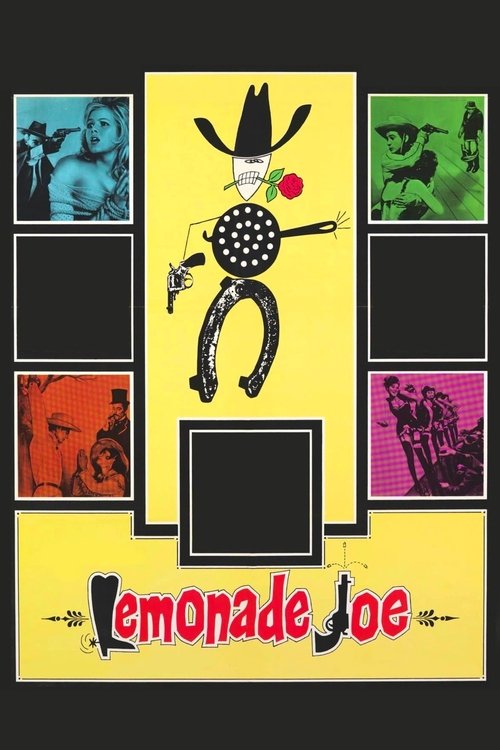
A satire of the Great American Way, with Lemonade Joe a "clean living" gunfighter who drinks only Kola-Loca Lemonade and convinces everyone else in town (with his gun skills) that all "real men" drink ONLY lemonade!
Lemonade Joe
No description available.
Dobrodružství Huckleberryho Finna
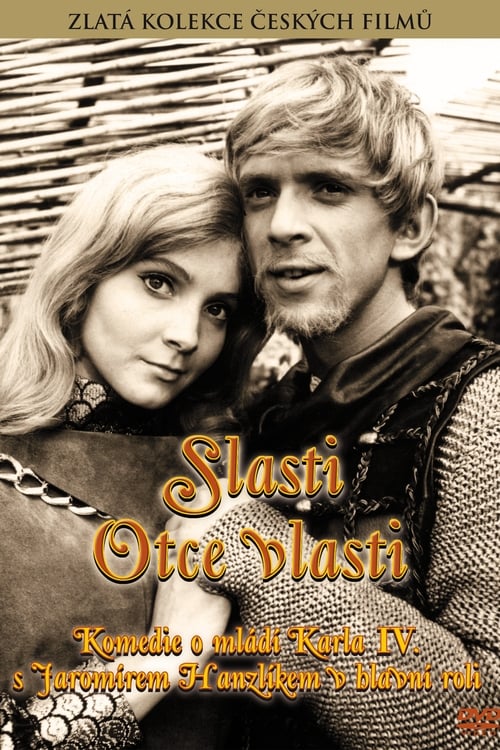
The young Prince Charles (Jaromír Hanzlík), the future King of his country Charles IV, is being educated at the French court in the company of his fiancée Blanche (Daniela Kolárová). One day he receives a summons from his father John of Luxembourg (Milos Kopecký) in Italy. He leaves for Italy accompanied by a deputation from Bohemia. On the way the prince's company fights a battle with armed Milanese against heavy odds. Thanks to Charles's perspicacity, the prince's almost naked soldiers win through. In Lucca in Italy Charles joins his father, and here he experiences an amorous adventure and escapes from the traps laid by the Italian rebels.
Slasti Otce vlasti

A teenage witch, frozen in time as a punishment for 300 years, finds herself in a modern world.
The Girl on the Broomstick
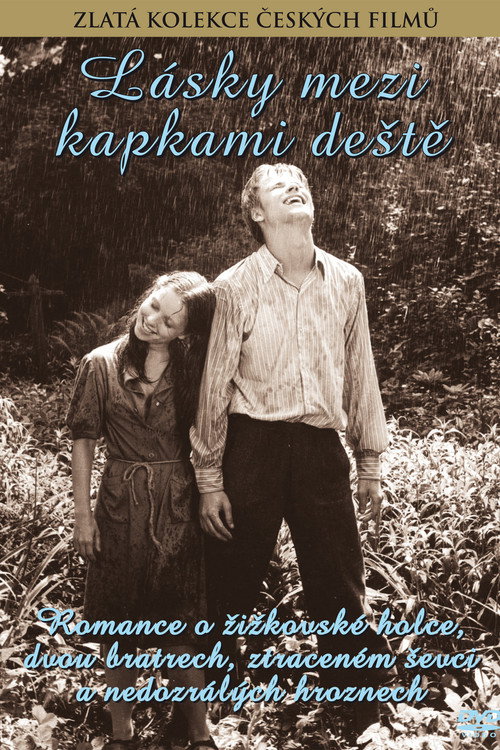
Set in Prague during the years leading up to World War II, this family saga tells the story of a cobbler named Vincenc Bursik (Vladimir Mensik), who uproots his clan from the country to the city, only to suffer the loss of his wife and the failure of his shoe business within months. When his daughter moves away to go live with a wealthy businessman as his mistress, Vincenc is left to take care of his two sons, who spend their days in a secret garden vying for the affections of a teenage girl.
Love Between the Raindrops
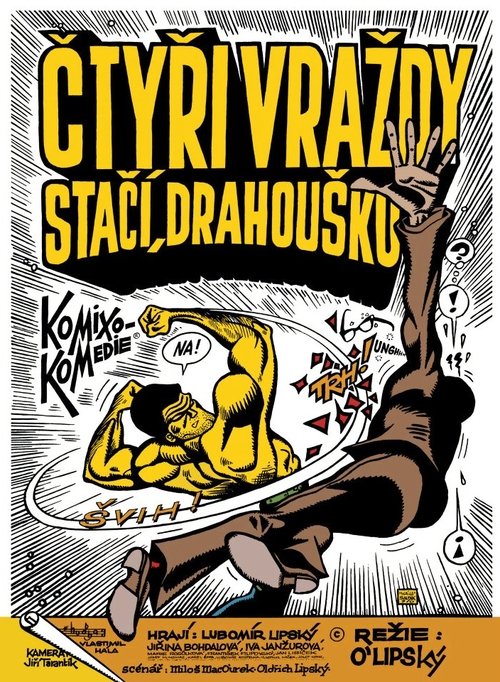
Two criminal gangs are ruthlessly fighting for a 1-million dollar check that, purely by chance, got into the flat of shy high school teacher George Camel. As the number of victims sharply increases, Camel is mistakenly regarded as a mass murderer and cunningly uses his horrifying reputation to get the respect and heart of his beloved Sabrina, a journalist from a local newspaper. But this game turns out to be risky and in the end, both gangs don't hesitate to seize the check at all costs, including an improvised operation
Four Murders Are Enough, Darling

A selfish self-centered widowed ruler, barely tolerated by his subjects and called appropriately enough, 'King Myself, First' asks his three daughters to name the measure of their love for him. When one of them says, "more than salt", he banishes her from the kingdom. Not understanding what she meant the King assumes love can only be measured by precious metals or one's own talent, the 'correct' answers from his other two daughters. The arrogance of the King leads him to gather all the salt in the kingdom and destroy it. Of course, this backfires as he slowly learns the universal value of the substance, and of course, the essence of his daughter's reply. With the help of the wise and magical old 'herb woman', the King also learns what it means to be a true and wise ruler.
Once Upon a Time, There Was a King...
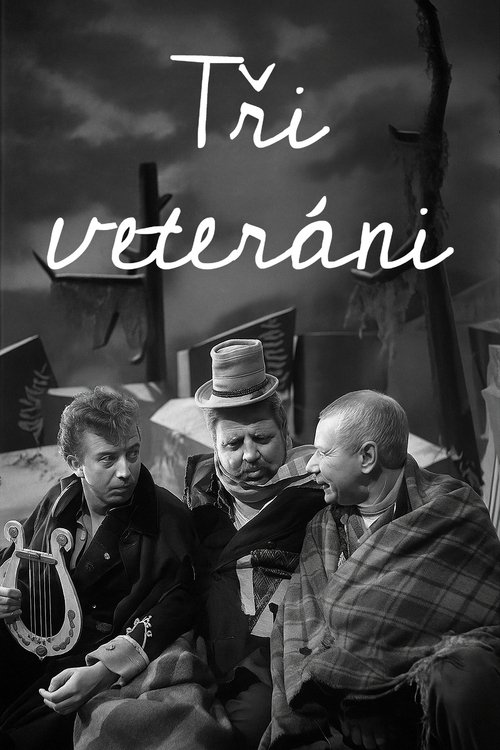
Three retired soldiers - veterans who wander the world - receive magical gifts from elves - a bottomless bag of gold coins, a hat for any wish, and a harp for conjuring giants. The soldiers, thus gifted, set off for a kingdom that is a bit strange. King Pikola lives there with his daughter Bosana, with whom Bimbác falls in love. Bosana is not only beautiful, but also treacherous and gradually deprives the soldiers of all their gifts and has them banished...
Three veterans
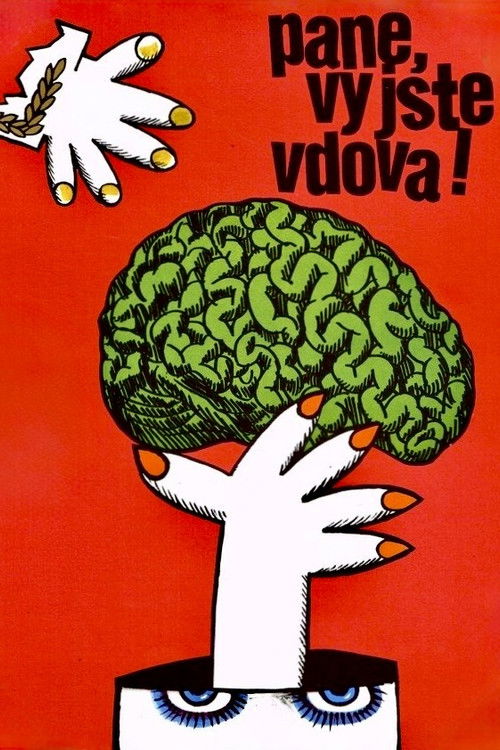
After a soldier cuts off the arm of king's cousin, king decides to deactivate the army. Of course, generals don't like it at all and they try to kill the king. The assassin should be artificial body in the shape of actress Evelina Keleti and with brain of psychotic serial killer Fany Stubová. They also manage to kill king's astrologer Stuart Hampl, who warns the king. Accidentally, Hampl's brain is implanted into assassin's body, actress Keleti is killed and chaos begins.
You Are a Widow, Sir
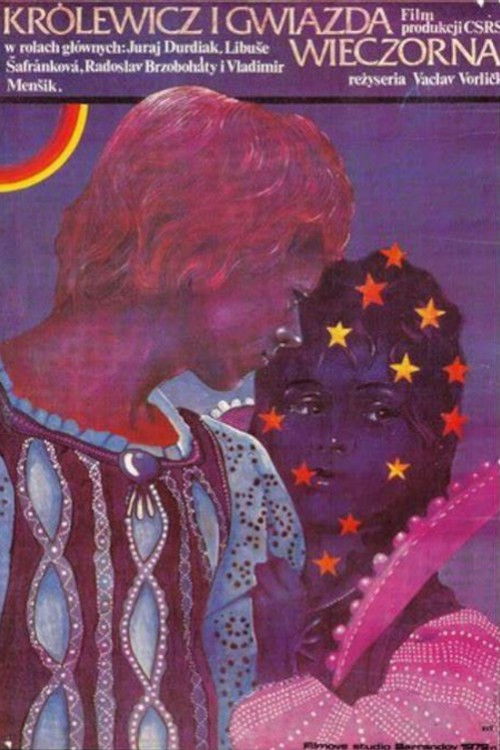
A wonderful fairytale about looking for love, defeating evil and learning some valuable moral lessons on the way. The story begins with the young Prince Velen, who is left in charge of the castle and his three sisters. During the night he has a visitation and before he knows it, all his sisters are married off and gone away, and himself falls in love with beautiful Večernice. Now he is faced with the King's wraths and charged with a quest. The journey, however, hides obstacles and danger; not only treacherous merchants and robbers, but also a evil wizard Mrakomor...
Prince and the Evening Star
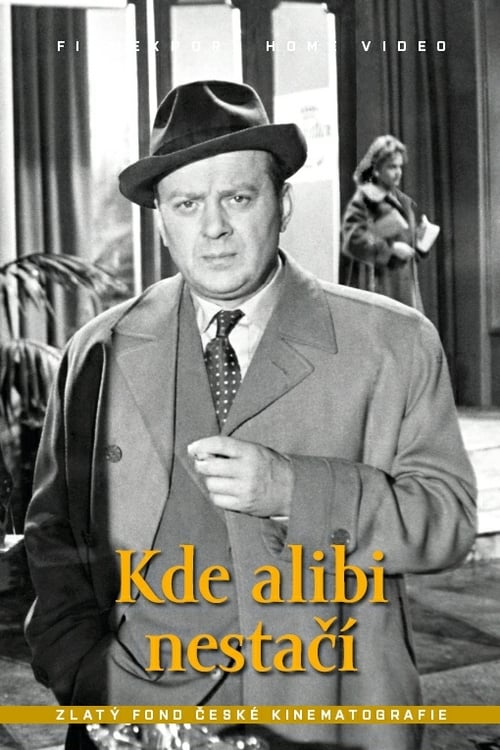
“A bored housewife, a husband who married her for show, and a stupid boy who is full of himself because he is dating a Swiss woman.” The words of Inspector Tůma sound like they’re from a European melodrama, but in fact they come from a Czechoslovak crime story. A pair of detectives, counterfeit medicine, the high-society setting of a Karlovy Vary hotel, and Oldřich Nový as the aging hotel manager Kraus.
Where an Alibi Is Not Everything
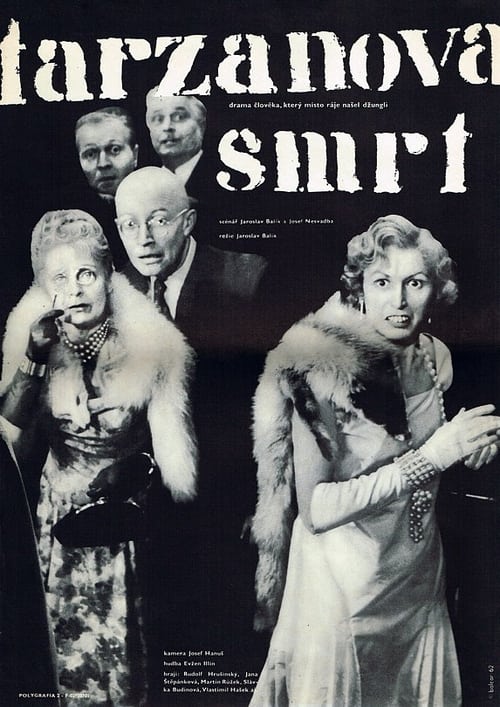
In the era of the rise of Nazism in Germany, a strange man, exhibited in a circus for the amusement of the audience, is found to be the heir to a large fortune. The new owner must learn social behaviour and resist the advances of those who would like to seize his fortune themselves.
Tarzanova smrt
No description available.
Rodeo
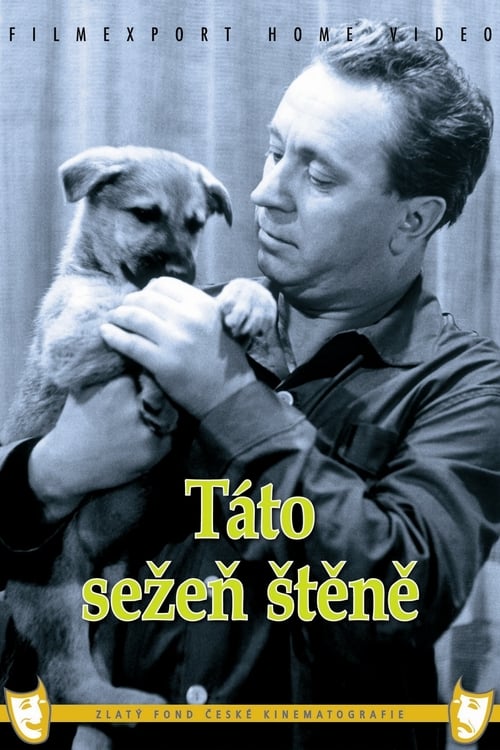
The holiday story revolves around the children of editor Hlavsa and their desire to get a dog. Dad bravely faces his children's wish and all he cares about is the dreamed summer peace. However, the editor's unexpectedly requested regular feature stories from the children's lives change everything. The uproar in the pages of the newspaper and the children's determination not to give up on their dream leads to the hope that something four-legged might eventually turn up at the Hlavs' after all.
Táto sežeň štěně
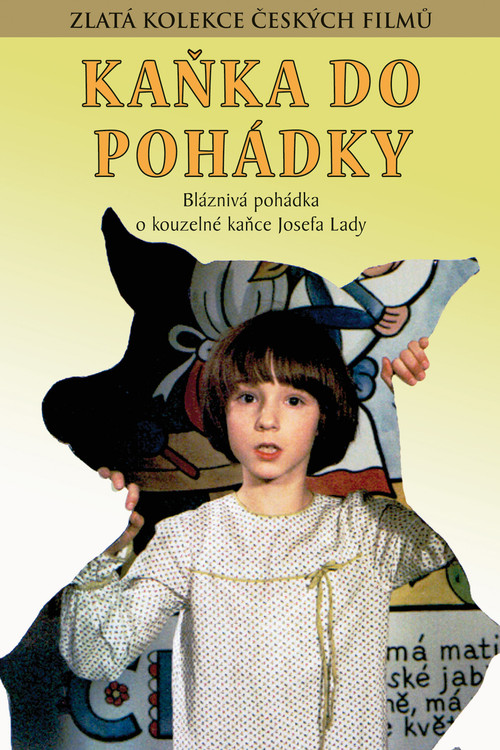
Little Vendulka receives a birthday gift of a seemingly innocuous children's book. Little she knows that the book is actually a portal into the surreal world of nursery rhymes and Josef Lada's paintings.
Blob to the Fairytale
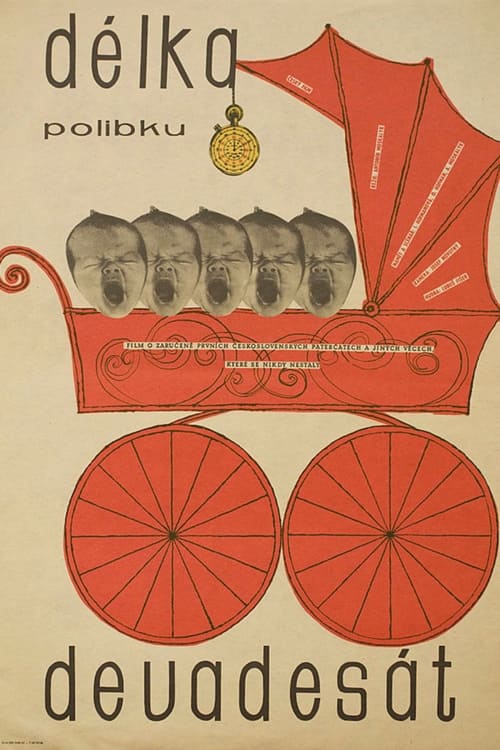
Young couple Eva and Jarda Tům face housing shortages just as Eva miraculously gives birth to quintuplets, drawing intense media and state attention. Authorities install them in a high-tech villa monitored by a commission led by Drahoslav Svitáček. As intrusive experiments, constant scrutiny, and malfunctioning gadgets strain their family life, a planned railway project momentarily frees them. Eva conceives again, but when only one baby arrives amid fading public interest, the state and the spotlight move on.
Délka polibku devadesát
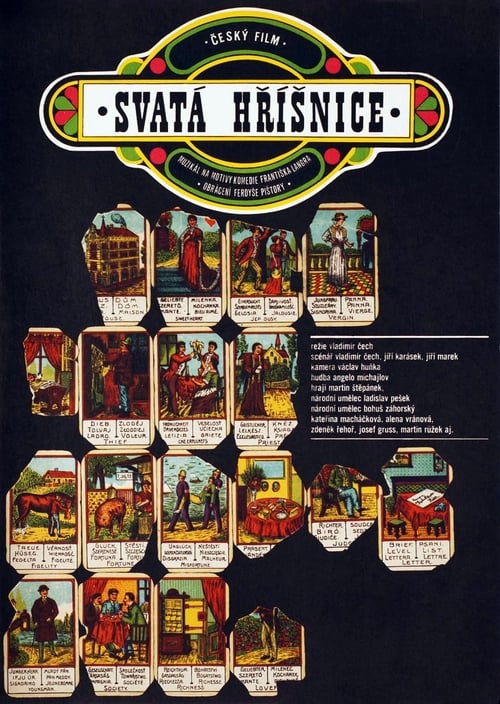
In the Prague Old Town and the adjoining streets there is always plenty of life. Housewives shop, beggars arouse sympathy, the Salvation Army tries to put the godless on the road to salvation by hymns and sermons, and Ferdys Pistora hunts in the pockets of his fellow men and isn't even put off by the presence of an officer of the law. Ferdys sets off to burgle villa of the banker Rosenstok, but a fire breaks out in the house and Ferdys ends up saving the banker's two small children. For this he is celebrated as a hero and gets a place as an errand boy with the Rosenstoks. At home he is visited by representatives of the Salvation Army, Captain Kosterka and Terezka, with whom Ferdys instantly falls in love.
Svatá hříšnice
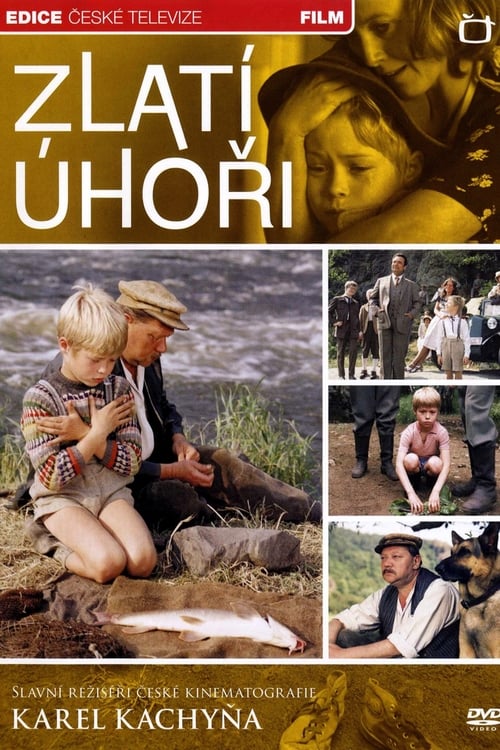
A little boy, named Prdelka, traveled with his father from Prague to the country during the Second World War. There, the boy became friends with a local fisherman and learned to catch the golden eels. Eventually, his father and mother were arrested by the Nazis and the boy stayed with the fisherman.