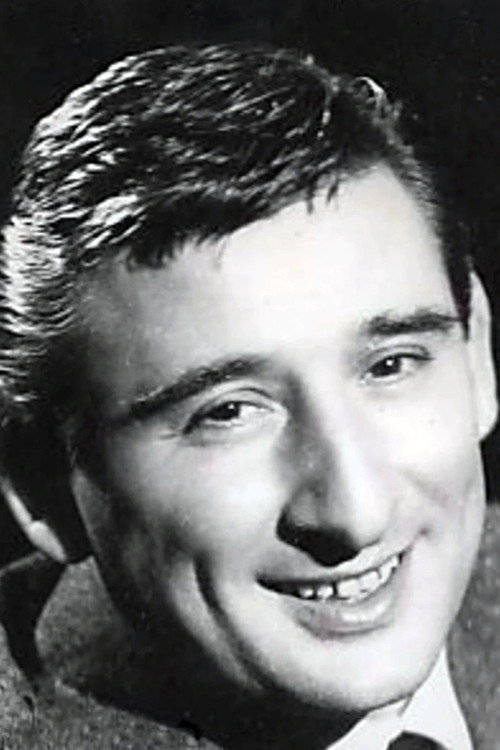
Renato Rascel
Acting
Biography
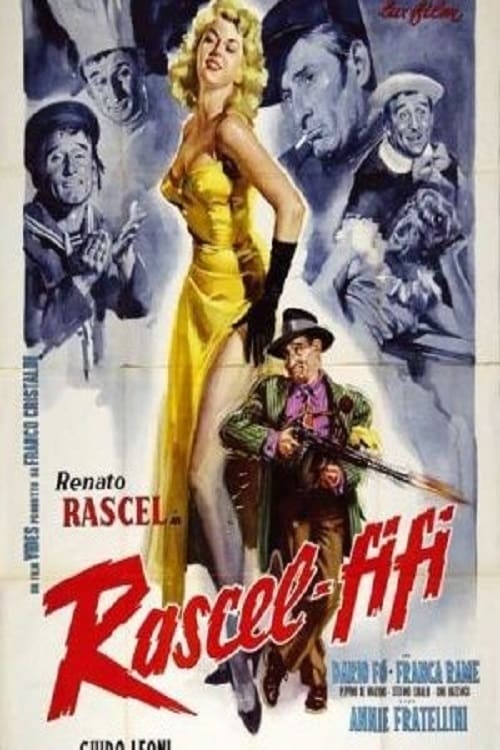
Renato Rascel (stage name of Renato Ranucci; 27 April 1912 – 2 January 1991), was an Italian film actor and singer. He appeared in 50 films between 1942 and 1972. He represented Italy in the Eurovision Song Contest in 1960 with the song "Romantica" which was placed equal eighth out of thirteen entries. He was born to Cesare and Paola Ranucci in Turin. It was in Turin where his parents, who were opera singers, were performing a show at the time Renato could really say that he was born in the back stage of the theater and that's where he spent all of his life. His father tried to make it up to him by having him baptized at Saint Peter's in Rome and apparently it worked because growing up in that neighborhood he ended up singing for the "white voices choir" of Saint Peter with the leadership of composer-conductor Lorenzo Perosi. At the age of 14 Renato started to play drums in ballrooms around Rome. Soon after, he joined the Di Fiorenza Sisters as an actor, dancer and clown and in 1934 he was hired for his first big role by the Schwarts Brothers in the operetta "Al Cavallino bianco". In 1935, he joined Elena Gray for his first foreign tour in Africa. In 1941 he created his own theater company and he began to develop his distinctive kind of humor that in the following years will crown him as the inventor of the "non-sense" with phrases like "two friends that didn't know each other". He decided to make his small size work for him, being only 5'2" tall, one of his major assets becoming known as the "Tiny Italian" (il piccoletto nazionale) and in his show he accentuated his stature by wearing huge extravagant coats, his most famous one had a large pocket on the back. In this time he created some of his most famous characters such as "Napoleon" and "Il Corazziere" (a parody on his size since the Corazziere is a military division that employs only soldiers over 6 feet tall) that brought him to an extraordinary popularity in Italy. In 1942 he shot the first of a long series of films, Pazzo d'amore (Crazy For Love) developing and establishing his very peculiar kind of humor. Among the sixty plus films he worked in, one of the most relevant was Il Cappotto (The Overcoat) by Gogol, winner of the Golden Palm in Cannes. He also had a leading role in The Secret of Santa Vittoria with Anthony Quinn and Anna Magnani, Seven Hills of Rome with Mario Lanza, Questi fantasmi with Eduardo De Filippo and Figaro qua Figaro là with Totò. In 1977, he appeared in the Zeffirelli film Jesus of Nazareth as the blind man. His post second World War success is due mainly to his leading roles in the musicals by Pietro Garinei and Sandro Giovannini. The artistic trio is responsible for the existence of the "musical" in Italy with Attanasio cavallo vanesio in 1952 (featuring the American trio Peters Sisters, Alvaro piuttosto corsaro (1953), Tobia la candida spia (1955), Un paio d'ali (1957), Rascelinaria (1958), Enrico '61 (1961), and also performed for an entire year in London at the Piccadilly Theatre in 1962, along with Il giorno della tartaruga (1965) and Alleluja, brava gente (1970). ... Source: Article "Renato Rascel" from Wikipedia in English, licensed under CC-BY-SA 3.0.
Known For

No description available.
Cinépanorama

Dramatizes the Birth, Life, Ministry, Crucifixion, and Resurrection of Jesus Christ, largely according to the Holy Bible's New Testament Gospels.
Jesus of Nazareth

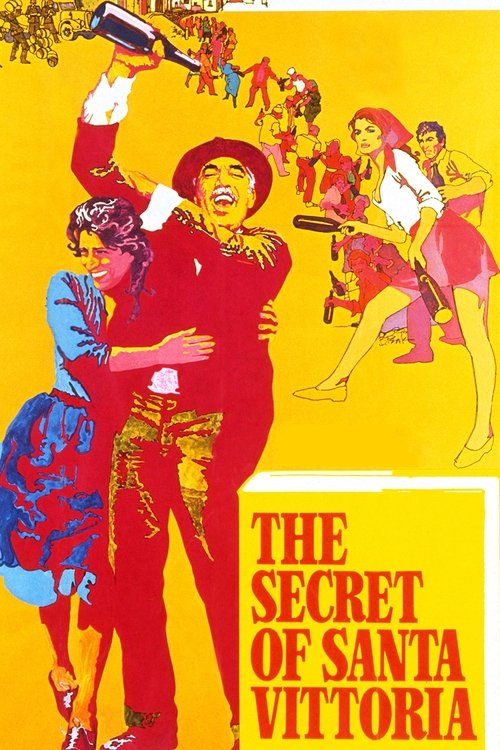
During World War II, Italian villagers hide their wine from the German army.
The Secret of Santa Vittoria

Raffaele, a Neapolitan student, get the news that his beloved grandmother Sabella is dying. He immediately goes to Pollena to be beside her.
Oh! Sabella

To satisfy his wife, an elderly man has to have a penis transplant and is willing to pay a lot to do so. Three men are selected, who, for different reasons, are forced to accept; but giving up one's manhood can be more complicated than expected.
Transplant

An Italian historical comedy film consisting of three segments, based on three stage plays by Anton Chekhov.
Il matrimonio

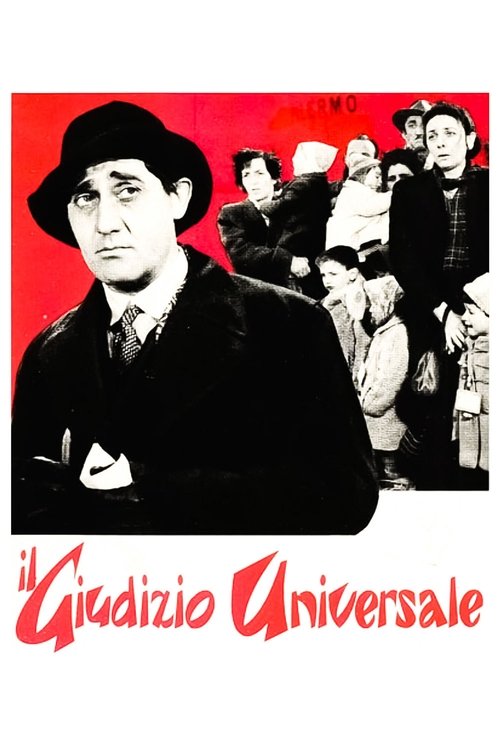
In Naples, a voice from the skies announces one morning that the final judgment will be at 6 p.m. on that day. What follows is a series of vignettes depicting various people's reactions (or lack thereof) to the announcement.
The Last Judgment

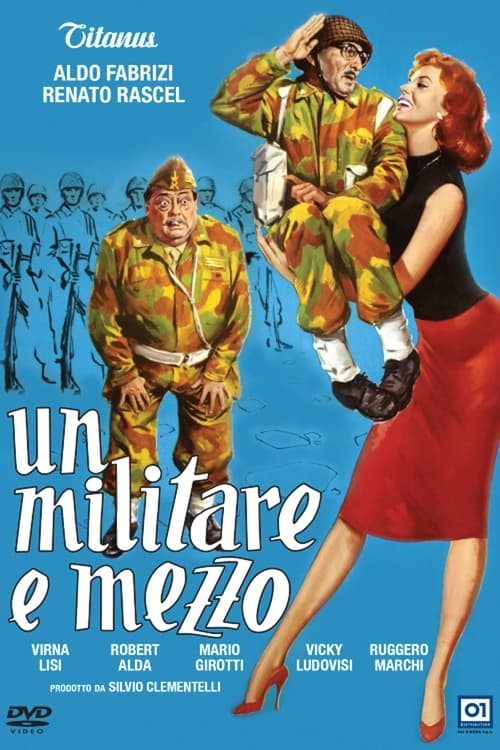
Nicola Carletti is a middle age 50-year old man who return to Italy with his family but he is drafted to go to the mandatory military service in Italy.
A Soldier and a Half

The film was directed by Giuliano Cenci with assistance from his brother Renzo. During production, Carlo Collodis grandchildren Mario and Antonio Lorenzini were consulted. The subtle movements made by fidgeting children whilst speaking or under scrutiny were incorporated into Pinocchios movements, particularly when he lies to the Fairy with the Turquoise Hair over the fate of his gold coins. For the design of the Fairy, Italian portrayals of the Blessed Virgin Mary in art were used as starting points.
Pinocchio

A high school student falls in love with the provocative substitute, but she prefers the gym teacher.
Substitute Teacher

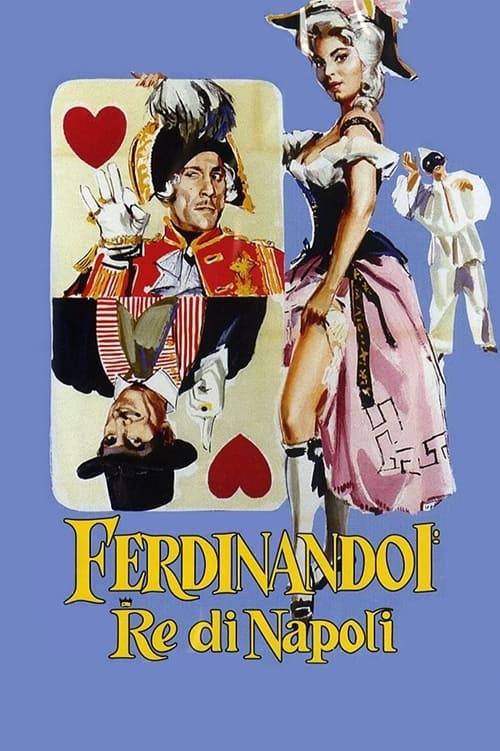
The story of "King Lazzarone" Ferdinand I of Bourbon whose pastime was to neglect the government and disguise himself as a poor man and turn to the infamous city premises in search of love adventures. With the De Filippo brothers to complete.
Ferdinand I King of Naples

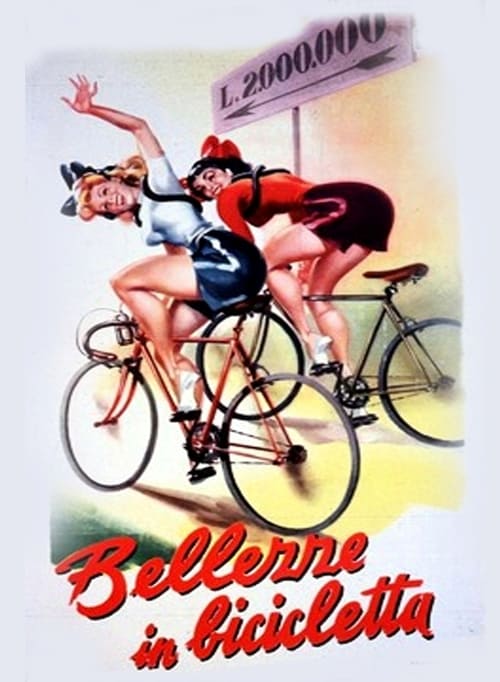
Two chorus girls leave Milan to get to the famous Totò's theatre company. Unfortunately the bus they are on breaks down and they ask for a lift, but the driver gets too fresh with them and they decide to continue the journey with any means of transport, including bicycles.
Beauties on bicycles

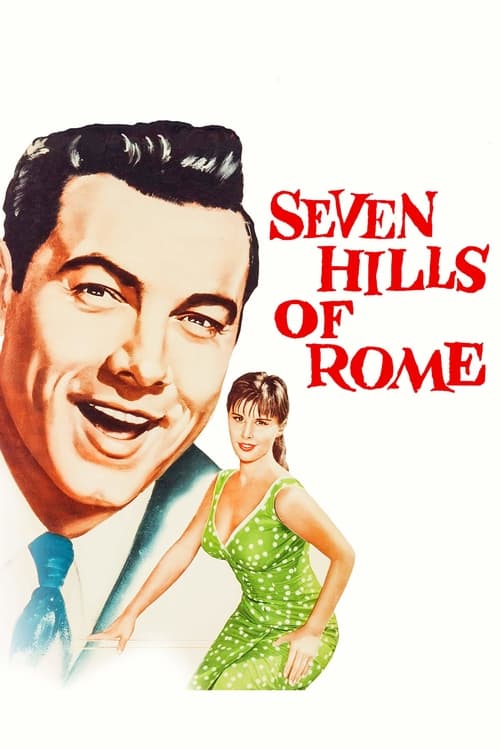
After having a fight with his girl friend, Marc follows her to Rome to try and win her back. On the train he meets a girl who is on her way to stay with her uncle. He gives her a lift to her uncle's, but they discover he has gone to South America. So as she has nowhere else to go, she stays with Marc and his cousin, which inevitably leads to romance.
Seven Hills of Rome

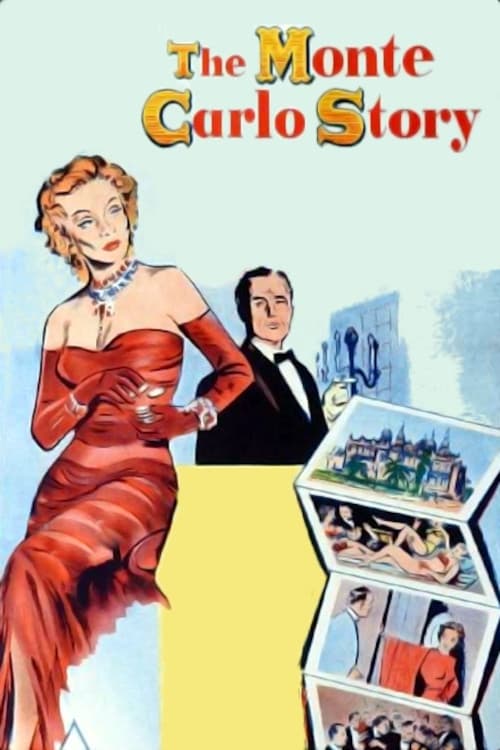
Stylish, sophisticated and absolutely broke, Dino and Maria pursue a romance until they realize neither of them has any money, which forces the gold diggers to turn their attention to a wealthy widower and his daughter. A compulsive gambler who owes several anxious investors a small fortune, Dino has trouble cutting his losses, no matter how bad the losing streak.
The Monte Carlo Story

Good-natured and devout, a French house painter takes the train to Rome, where he has decided to go on a pilgrimage. There he meets a scatterbrained dresser who has been assigned by a music hall star to bring her the gown she is to wear on stage. The two men get stolen by Cleo, a charming thief. Once in Rome, the painter finds himself penniless and the dresser without the gown...
I'm in the Revue

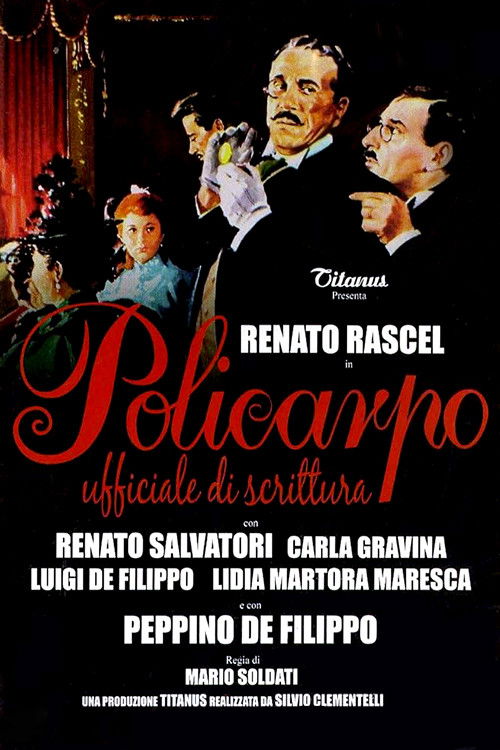
Policarpo De Tappetti is a calligrapher who works under the orders of Don César Pancarano de Rondò. For many years, Policarpo has been seeking a promotion and a raise that never comes, and, it seems, will never come. One day, Jerónimo, the son of Don César, meets Celeste, the daughter of Policarpo, and falls in love with her. Policarpo sees in that relationship the solution to his aspirations at work, and does everything in his power to make this relationship fruitful. Don César, who presumes to be a count, sees with very bad eyes that his son meets a girl from such a different social position, and does just the opposite. But the efforts made by both parties will be of no use, since Celeste has fallen in love with Mario Marquetti, a "specialized mechanic" (typist) who is giving private lessons in the offices of the businessman Franquinet .
Policarpo, ufficiale di scrittura

A meek and simple-minded boarding school teacher falls in love with a prostitute and gets the boot from school. He tries to have her change her way of living but she is very hard to convince. When she finally realizes he really loves her it is too late.
La passeggiata

No description available.
Rosso e nero

Renato Rascel dons the priest-detective's cassock and, with irony and wit, embodies the character of Father Brown in the six episodes that make up the series. Endowed with a great humanity that allows him to “read” hearts, the protagonist, assisted by the repentant thief Flambeau, solves the cases that arise by resorting to psychological insights that are every bit as good as those of Agatha Christie or Georges Simenon. The series, produced by Rai and broadcast on Rai Uno in prime time, was a huge success with critics and audiences alike and also marked Renato Rascel's personal breakthrough as a comedy actor. He also wrote the theme song, which topped the charts for many weeks.
I racconti di padre Brown

In the 18th century, Figaro the Sevillian barber is likely to be arrested because he operates his shop on Sundays, which is forbidden.