FEEL IT.STREAM
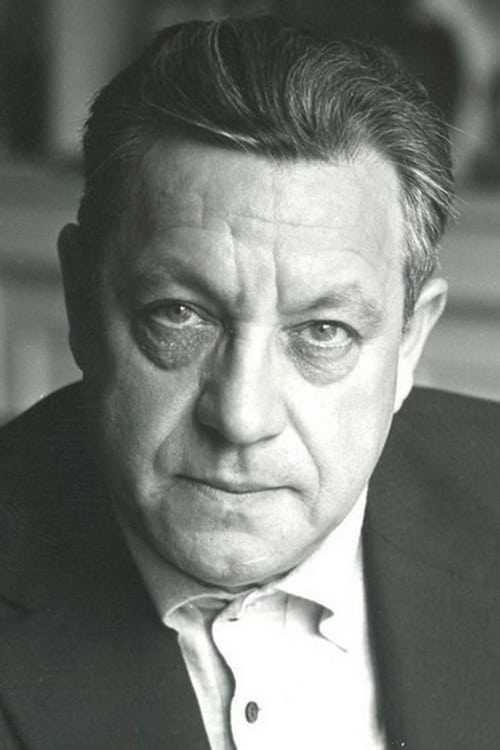
Paul Frankeur

Paul Frankeur

Acting

Biography

Paul Frankeur (29 June 1905 - 27 October 1974) was a French actor who appeared in films by Jacques Tati (Jour de fête) and Luis Buñuel (The Discreet Charm of the Bourgeoisie and The Phantom of Liberty). He was sometimes credited as Paul Francoeur. Description above from the Wikipedia article Paul Frankeur, licensed under CC-BY-SA, full list of contributors on Wikipedia

Known For

No image
6.0

No description available.

Samedi soir

1971
The Discreet Charm of the Bourgeoisie
7.5

In Luis Buñuel’s deliciously satiric masterpiece, an upper-class sextet sits down to dinner but never eats, their attempts continually thwarted by a vaudevillian mixture of events both actual and imagined.

The Discreet Charm of the Bourgeoisie

1972
Maigret and the St. Fiacre Case
7.0

Police Commissioner Jules Maigret returns to the small village where he spent his childhood at the request of the Countess of Saint-Fiacre, who has received a disturbing anonymous letter.

Maigret and the St. Fiacre Case

1959
Children of Paradise
8.0

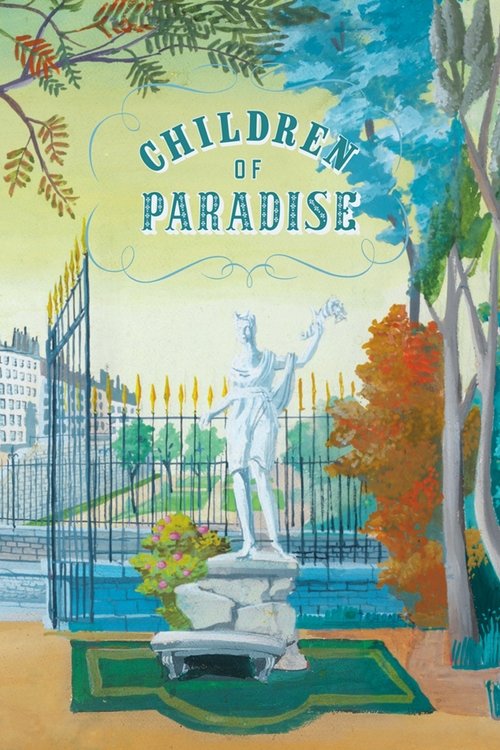
In a chaotic 19th-century Paris teeming with aristocrats, thieves, psychics, and courtesans, theater mime Baptiste is in love with the mysterious actress Garance. But Garance, in turn, is loved by three other men: pretentious actor Frederick, conniving thief Lacenaire, and Count Edouard of Montray.

Children of Paradise

1945
The Phantom of Liberty
7.5

This Surrealist film, with a title referencing the Communist Manifesto, strings together short incidents based on the life of director Luis Buñuel. Presented as chance encounters, these loosely related, intersecting situations, all without a consistent protagonist, reach from the 19th century to the 1970s. Touching briefly on subjects such as execution, pedophilia, incest, and sex, the film features an array of characters, including a sick father and incompetent police officers.

The Phantom of Liberty

1974
Justice Is Done
6.4

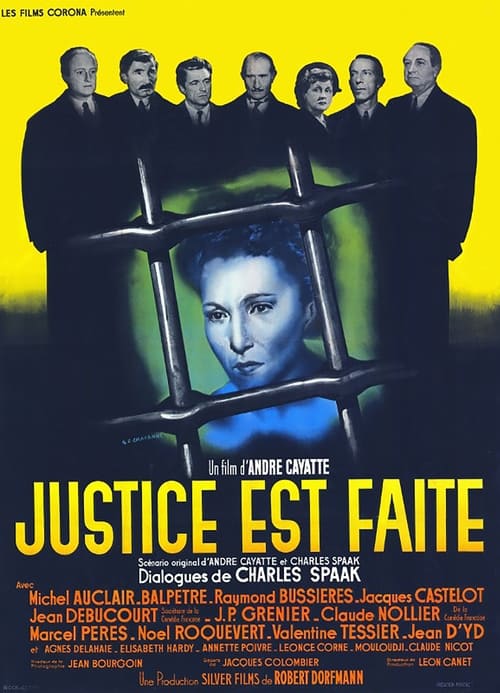
Elsa Lundenstein is accused of having murdered her lover. The jury discusses the case vividly. All members are somehow prejudiced because of personal life experience and subsequently each member reads something different into the presented facts.

Justice Is Done

1950
Razzia
6.7

Henri, the Man from Nantes, comes back to his country after a successful stay in the United States, where he was working for Liski, the drug dealer. With the fame of being a tough guy preceding him, he sets himself to the task of knowing why the French operations were not so profitable - and soon he is master of all links of the organization. He can now get it honed to perfection - or destroy it. Only... the Police are following his every step.

Razzia

1955
Touchez Pas au Grisbi
7.2

Gentleman gangster Max and his partner, Riton, pull off their last, most successful heist and find themselves comfortable enough to retire in the style they enjoy. However, Max confides the details of the theft to his younger mistress, Josey -- who has secretly taken up with ambitious young rival gangster Angelo. Angelo then has Riton kidnapped and demands the stash of gold as ransom, which threatens Max's dreams of the perfect retirement.

Touchez Pas au Grisbi

1954
Marie-Octobre
7.3

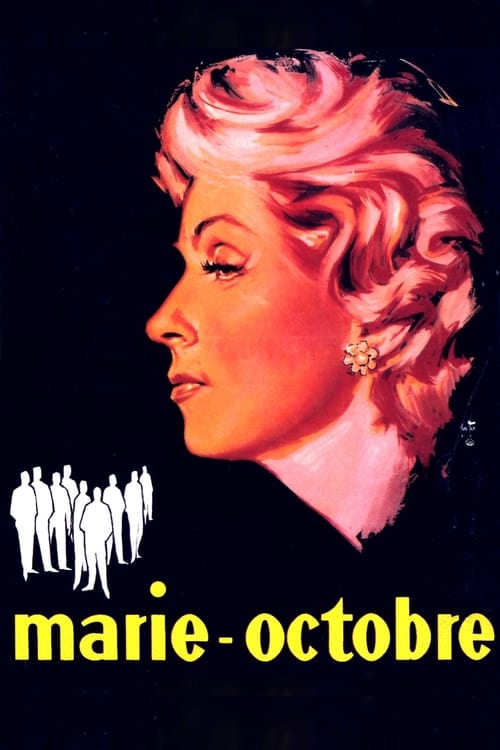
A group of ex-resistance fighters are brought together by Marie-Octobre, the code name of Marie-Helene Dumoulin. The former members of the network have carried on with their lives after the war, but this evening they are going to have to live again a fateful night – the night their leader was killed. He had been betrayed, his name given to the Germans. The search for the traitor puts each personality in the spotlight – and also that of the killed leader, Castille.

Marie-Octobre

1959
Thérèse Raquin
6.7

Star-crossed lovers Thérèse and Laurent think they've gotten away with murder after Thérèse's weakling husband "falls" from a speeding train. But when forced to contend with a blackmailer's demands and the mute accusations of Thérèse's mother-in-law, it's only a matter of time before the law, their passion or blind chance trips them up.

Thérèse Raquin

1953
Come Dance with Me!
6.1

The wife of an accused murderer embarks on a dangerous masquerade to find the real culprit behind a dancer's death.

Come Dance with Me!

1959
The Lovemakers
6.3

The death of a wealthy patriarch in 1885 sets off an interfamily power struggle. Son Ferdinando buys out his other relatives in order to gain full control over the dead man's property. But Ferdinando's nephew Amerigo holds out. Amerigo's stance is weakened when he heads for Florence and meets prostitute Bianca.

The Lovemakers

1961
The Milky Way
7.1

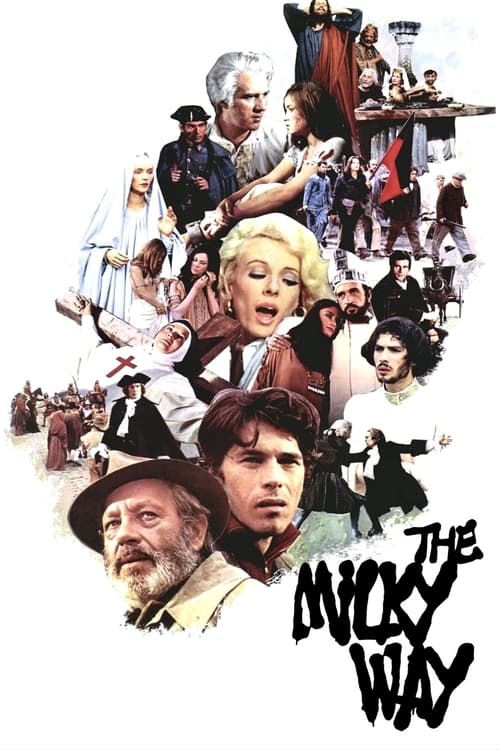
Two men, part tramp, part pilgrim, are on their way from France to Santiago de Compostela in Spain. On their way, they meet a vast assortment of characters—some truculent, some violent, and some bizarre; they experience many adventures—some mysterious, some erotic, some even supernatural.

The Milky Way

1969
We Are All Murderers
6.7

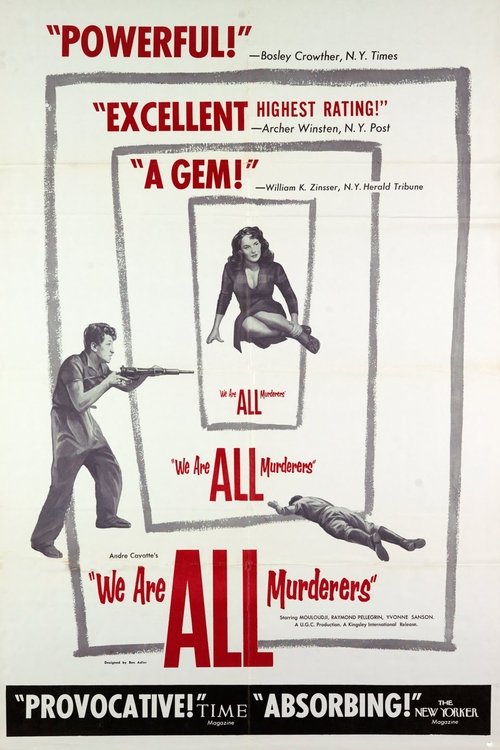
Originally titled Nous Sommes Tout des Assassins, We Are All Murderers was directed by Andre Cayette, a former lawyer who detested France's execution system. Charles Spaak's screenplay makes no attempt to launder the four principal characters (Marcel Mouloudji, Raymond Pellegrin, Antoinine Balpetre, Julien Verdeir): never mind the motivations, these are all hardened murderers. Still, the film condemns the sadistic ritual through which these four men are brought to the guillotine. In France, the policy is to never tell the condemned man when the execution will occur--and then to show up without warning and drag the victim kicking and screaming to his doom, without any opportunity to make peace with himself or his Maker. By the end of this harrowing film, the audience feels as dehumanized as the four "protagonists." We Are All Murderers was roundly roasted by the French law enforcement establishment, but it won a special jury prize at the 1952 Cannes Film Festival.

We Are All Murderers

1952
Jour de Fête
7.1

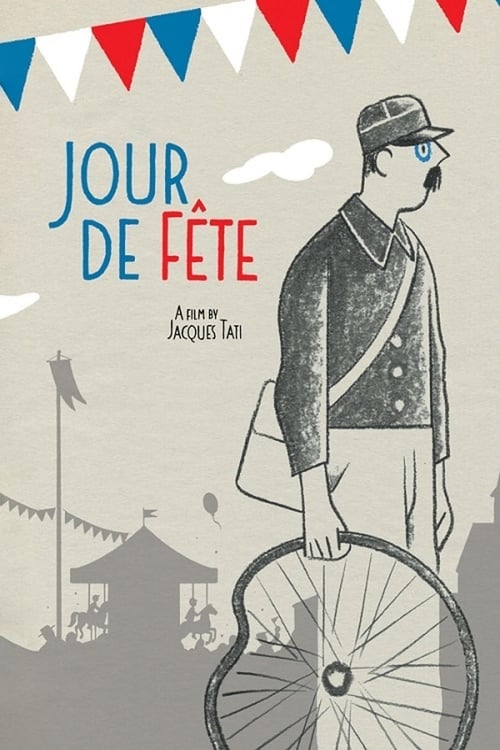
Jour de Fête tells the story of an inept and easily-distracted French mailman who frequently interrupts his duties to converse with the local inhabitants, as well as inspect the traveling fair that has come to his small community. Influenced by too much wine and a newsreel account of rapid transportation methods used by the United States postal system, he goes to hilarious lengths to speed the delivery of mail while aboard his bicycle.

Jour de Fête

1949
Le Deuxième Souffle
7.7

A gangster escapes jail and quickly makes plans to continue his criminal ways elsewhere, but a determined inspector is closing in.

Le Deuxième Souffle

1966
A Monkey in Winter
7.6

During World War II, an innkeeper vows to abstain from alcohol for the sake of his family. Years later, as they thrive in Normandy, his resolve is tested by a charming advertising professional who loves to drink.

A Monkey in Winter

1962
The Spice of Life
5.8

A series of vignettes, in which Noel-Noel appears as the moderator, lecturer, commentator and leading actor, that examine the bores and pests of everyday life much like Pete Smith and Robert Benchley had done for years in American short subjects. Among those are the Practical Joker who will do anything for a laugh; the Party Entertainer who never stops singing; the Talkative Neigbor who forgets the time; the noisy neighbors who dance the tango all night; and women drivers, people who telephone at meal time, the friend you never saw before and amatuer medical experts. Much use of trick photography, montages, puppets and animation along with some adult Gallic wit and gentle satire.

The Spice of Life

1948
Speaking of Murder
6.4

Louis Bertain is the owner of a Paris garage which is the front for a robbery gang. He and his accomplices are careful to keep up a civic veneer by day, indulging in criminal activities only when "the red light is on" at night. This status quo is upset when one of the gang members becomes convinced that Louis' younger brother is a police informer.

Speaking of Murder

1957
Unusual Tales
7.2

A group of policemen look over three murder cases including a cutthroat that prays on young women, a madman that hid his deformed landlord's corpse in the floor, and a wine aficionado who buries his friend alive.

Unusual Tales

1949