Directing
Experimental fiction film about young people taking on different creative tasks.
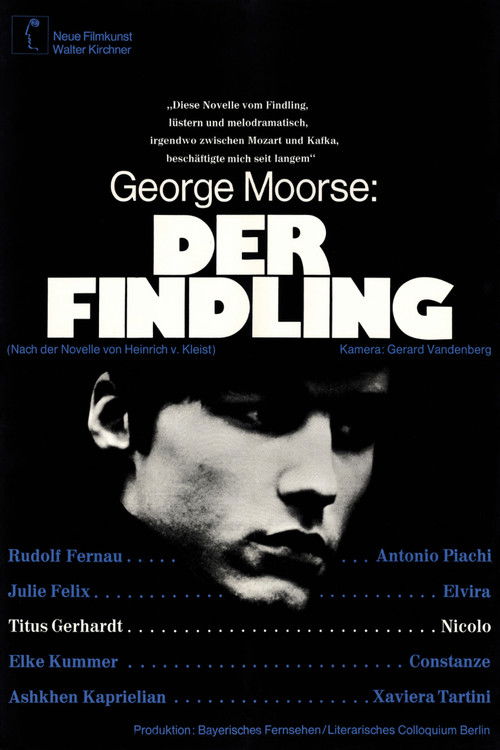
The story centers on the Roman merchant Piacchi, who raises the foundling Nicolo after the death of his son and bequeaths all his possessions to the young man. However, the adopted son turns against Piacchi and his wife.
Detective Peter Flowers has to deal with Nola, the "most beautiful and corrupt woman in the world"...
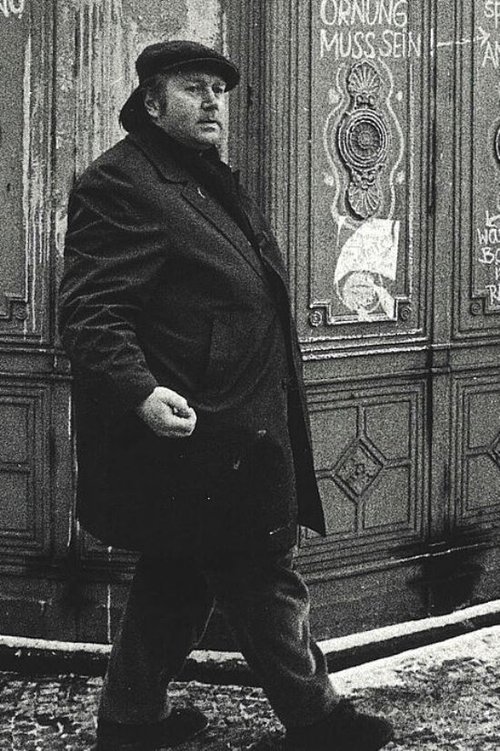
In this essayistic piece, the only finalized installment of the television series "Fiction - Non Fiction", commissioned by Literarisches Colloquium Berlin (LCB), Günter Bruno Fuchs is— among other things— raising money for the demolition of the Siegessäule, while quoting Walter Benjamin's Berliner Kindheit um Neunzehnhundert.
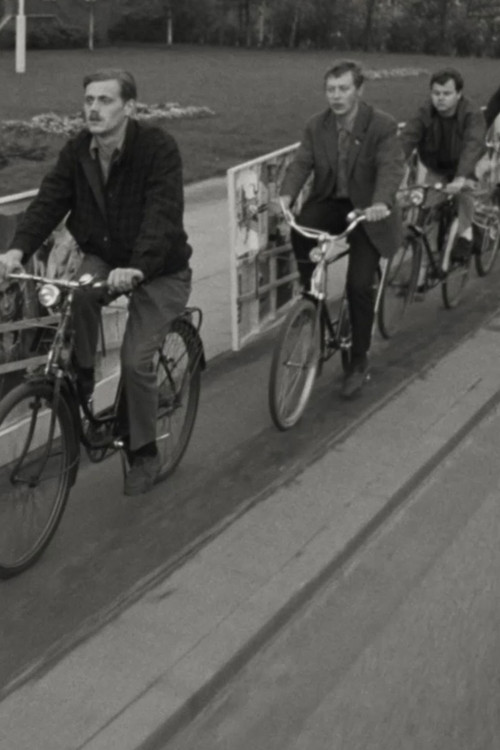
Five young men ride their bicycles through the city, each of them having a piece of a huge movie advertisement attached to his bike.
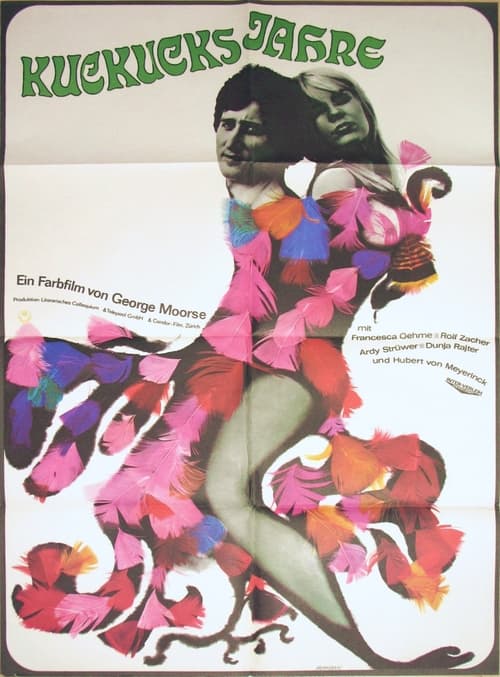
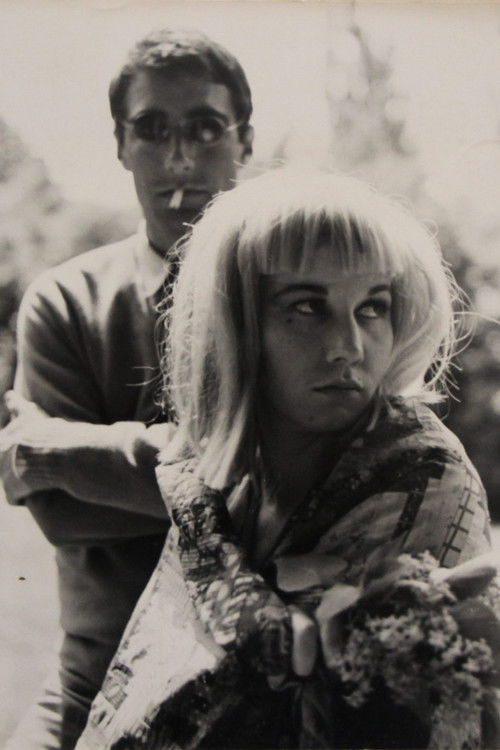
“In-Side-Out” is the debut film by US beat poet George Moorse, a wildly colorful pop poem. The film critic Enno Patalas described “In-Side-Out” as a “fantastic abracadabra and erotic delirium” and considered it the best West German film at the 1965 Oberhausen festival. “In-Side-Out” was also the LCB's first film production: the cheerful and colorful kaleidoscope of romantic love, told as an associatively swirling sequence of images.
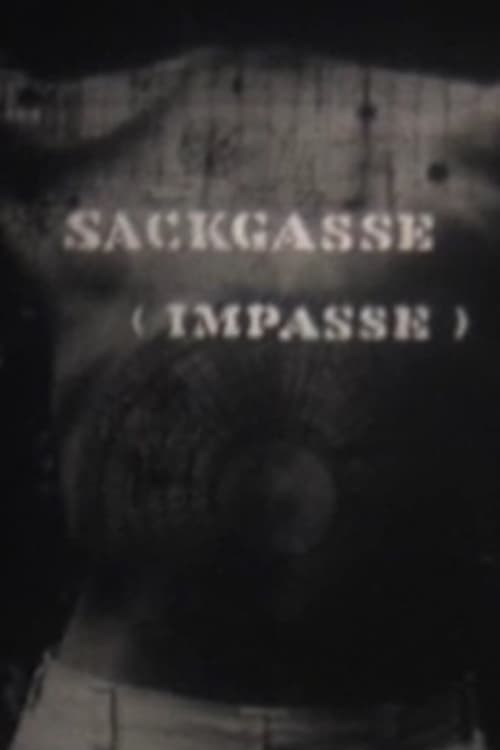
A dancer glides through industrial landscapes accompanied by groovy jazz rhythms.
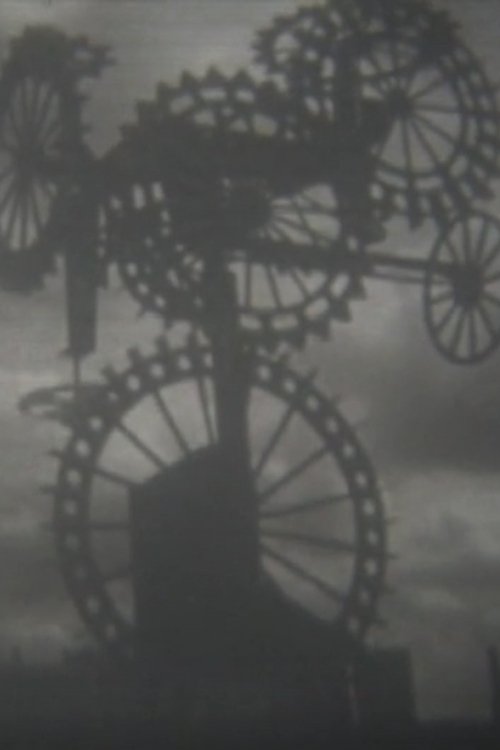
In the film, ramshackle automobile-puppets - strange kinetic sculptures built from found objects - wander and stumble through abandoned courtyards, shattered walls, and sun-scorched ruins, their blind mechanical motions echoing humanity’s lost laws and deserted dreams.
The grotesque portrayal of an attempt at communication, graphically and rigorously depicted: In the LCB's second production, Peter Rühmkorf and Helmut Herbst bitingly trace a relationship story that is already over before it has begun.
Sky and walls, a liana of water pipes, dilapidated backyards, cracks in walls, cracked walls full of lost, enigmatic children's signs, rusty railway station grounds, deserts, within them the figures, not conformed to the environment in their sightlessness and obsessive deformation to themselves. clinging to legalities of mechanisms that had become senseless and fused with them, that had perhaps once served them, hovering as if in a dream of condensed emptiness, without moving from the spot, they stumbled and rolled with the machines through sun-hardened, burnt-down landscapes, deflected only by objects, by congealed meteorites.
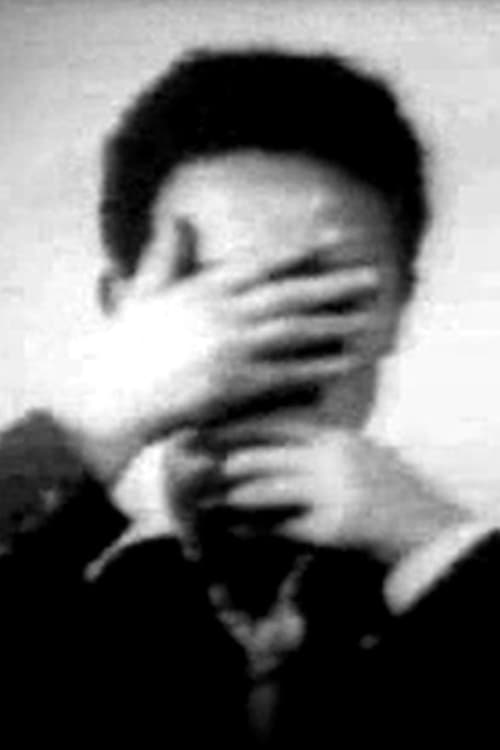
Short film about performance, realized when Nam June Paik participated in Karlheinz Stockhausen's piece "Originale" in Cologne in 1961.
Like "Sackgasse", a brilliantly filmed and edited impression of a big city, underpinned by groovy jazz rhythms.
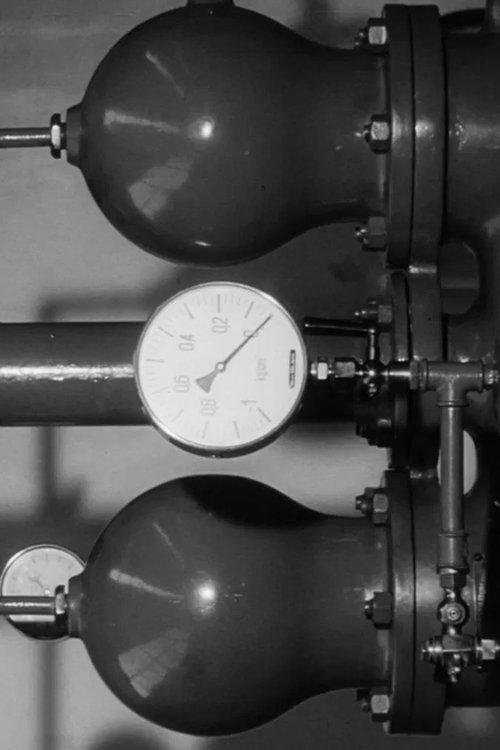
Wolfgang Ramsbott's first film for the Literary Colloquium Berlin (LCB): "Technische Universität Berlin" is a kind of image film for the Technical University of Berlin, where Walter Höllerer, director of the LCB, taught as professor of literary studies. But the experimental filmmaker Ramsbotts was hardly interested in the institution itself: his camera rather feasted on the rattling, flashing and hissing machines. As head of the film department, Ramsbott realised mainly experimental documentaries on literary themes in the following years.
Short film directed by Wolfgang Ramsbott
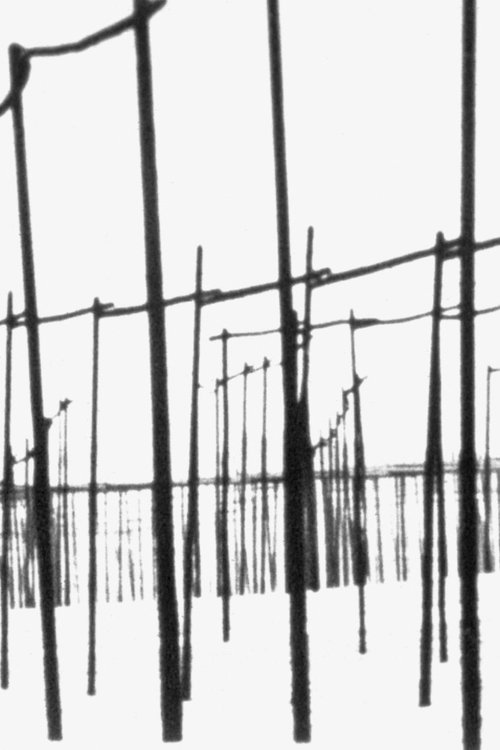
High-contrast, abstract black-and-white photographs by Renate von Mangoldt illustrate a three-part poem cycle by Walter Höllerer about hop gardens in winter. "White is the garden / empty the poles / cleared / the season / made visible / the skeleton / before the white / ceiling." The frames form a graphic pattern, "a curiosity of lines" and a "grey hatch work / over the snow".
The film, which features objects based on found items, shows surreal, deserted landscapes in which the objects seem to observe and follow each other. The images, composed like a dream with breaks and illogical repetitions, are reminiscent of surveillance scenarios, while the rough sound collages by English composer and Stockhausen student Cornelius Cardew reinforce the impression of menace and coldness.