Georges Simenon
Writing
Biography
Georges Joseph Christian Simenon (13 February 1903 – 4 September 1989) was a Belgian writer. A prolific author who published nearly 500 novels and numerous short works, Simenon is best known as the creator of the fictional detective Jules Maigret. Simenon was born at 26 rue Léopold (now number 24) in Liège to Désiré Simenon and his wife Henriette Brüll. Désiré Simenon worked in an accounting office at an insurance company and had married Henriette in April 1902. Although Simenon was born on Friday 13 February 1903, superstition resulted in his birth being registered as having been on the 12th. This story of his birth is recounted at the beginning of his novel Pedigree. The Simenon family traces its origins back to Belgian Limburg. Simenon could trace his line back to peasants living in the area since as early as 1580. His mother had origins from Limburg, the Netherlands and Germany while his father was of Walloon origin. One of his mother's most notorious ancestors was Gabriel Brühl, a criminal who preyed on Limburg from the 1720s until he was hanged in 1743. Later, Simenon would use Brühl as one of his many pen names. In April 1905, two years after Simenon's birth, the family moved to 3 rue Pasteur (now 25 rue Georges Simenon) in Liège's Outremeuse neighbourhood. Simenon's brother Christian was born in September 1906 and eventually became their mother's favourite child, much to Simenon's chagrin. Later, in February 1911, the Simenons moved to 53 rue de la Loi, also in the Outremeuse. In this larger home, the Simenons were able to take in lodgers. Typical among them were apprentices and students of various nationalities, giving the young Simenon an important introduction to the wider world; this marked his novels, notably Pedigree and Le Locataire. At the age of three, Simenon learned to read at the Saint-Julienne nursery school. Then, between 1908 and 1914, he attended the Institut Saint-André. In September 1914, shortly after the beginning of the First World War, he began his studies at the Collège Saint-Louis, a Jesuit high school. In February 1917, the Simenon family moved to a former post office building in the Amercoeur neighbourhood. June 1919 saw another move, this time to the rue de l'Enseignement, again back in the Outremeuse neighbourhood. Using his father's heart condition as a pretext, Simenon decided to put an end to his studies in June 1918, not even taking the Collège Saint-Louis' year-end exams. He subsequently worked a number of very short-term odd jobs. In January 1919, the 15-year-old Simenon took a job at the Gazette de Liège, a newspaper edited by Joseph Demarteau. While Simenon's own beat only covered unimportant human interest stories, it afforded him an opportunity to explore the seamier side of the city, including politics, bars, and cheap hotels but also crime, police investigations and lectures on police technique by the criminologist Edmond Locard. Simenon's experience at the Gazette also taught him the art of quick editing. He wrote more than 150 articles under the pen name "G. Sim." He began submitting stories to Le Matin in the early 1920s. ... Source: Article "Georges Simenon" from Wikipedia in English, licensed under CC-BY-SA 3.0.
Known For

A BBC television anthology series featuring productions of classic and contemporary stage plays usually broadcast on BBC1. Each production featured a different work, often using prominent British stage actors in the leading roles. The series was transmitted from October 1965 to September 1983.
BBC Play of the Month

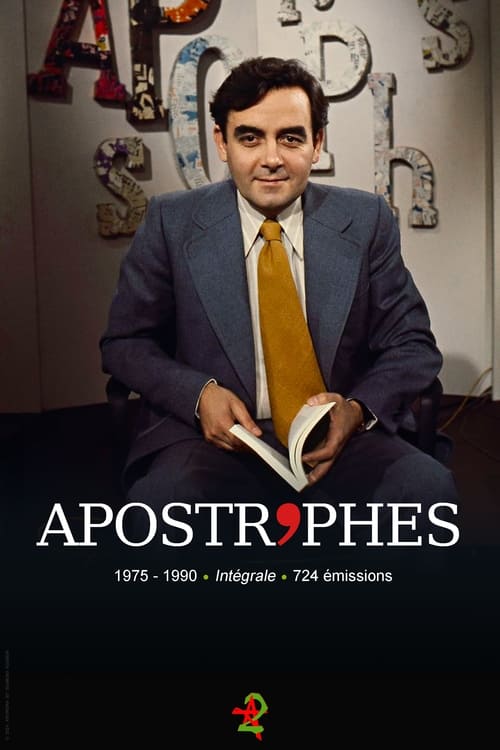
Apostrophes was a live, weekly, literary, prime-time, talk show on French television created and hosted by Bernard Pivot. It ran for fifteen years (724 episodes) from January 10, 1975, to June 22, 1990, and was one of the most watched shows on French television (around 6 million regular viewers). It was broadcast on Friday nights on the channel France 2 (which was called "Antenne 2" from 1975 to 1992). The hourlong show was devoted to books, authors and literature. The format varied between one-on-one interviews with a single author and open discussions between four or five authors.
Apostrophes

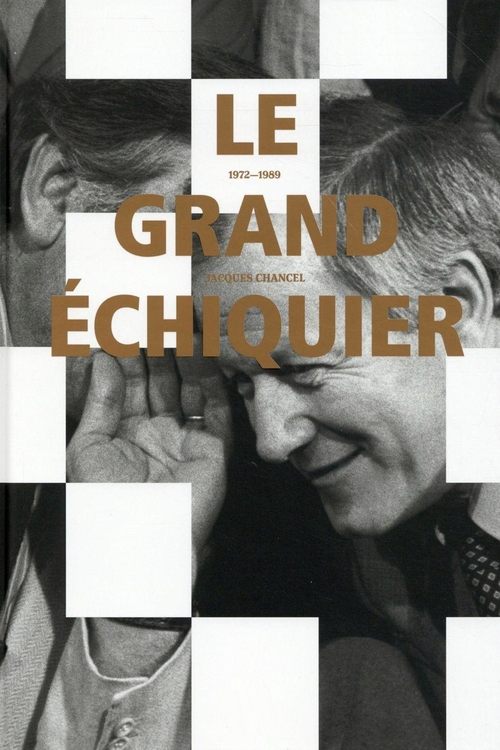
Le Grand Échiquier is a French variety television program created and presented by Jacques Chancel. It aired at 8:30 pm on the first channel of the ORTF from January 12, 1972 to July 12, 1972, then on the second color channel of the ORTF from September 1972 to December 1974, and finally on Antenne 2 from January 1975 to December 21, 1989. The program returned to France 2 on December 20, 2018 and is hosted by Anne-Sophie Lapix.
Le Grand Échiquier

In 1987 Madrid, the unexpected encounter between a seasoned journalist and a young student leads to a profound exploration of love, desire, politics, power, and discovery of each other.
Madrid, 1987

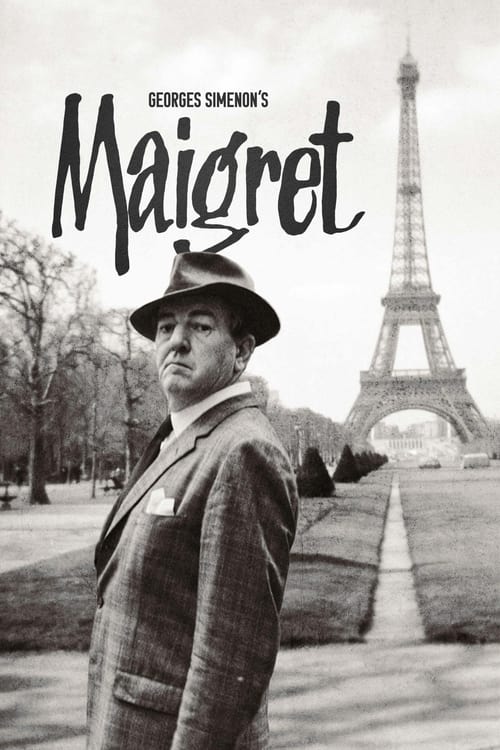
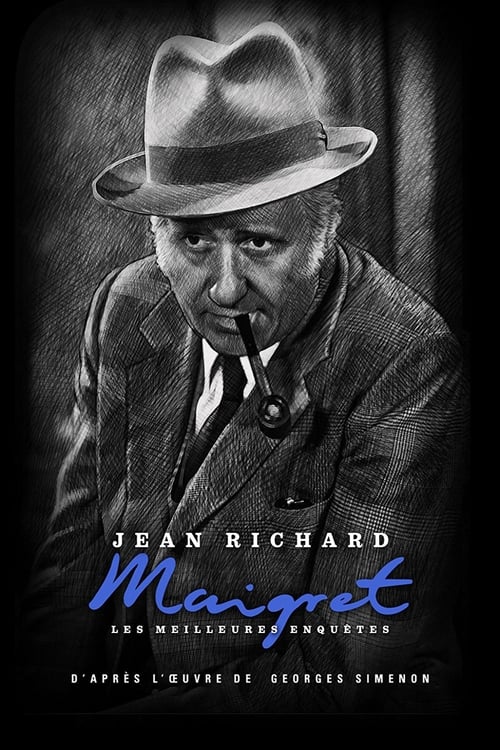
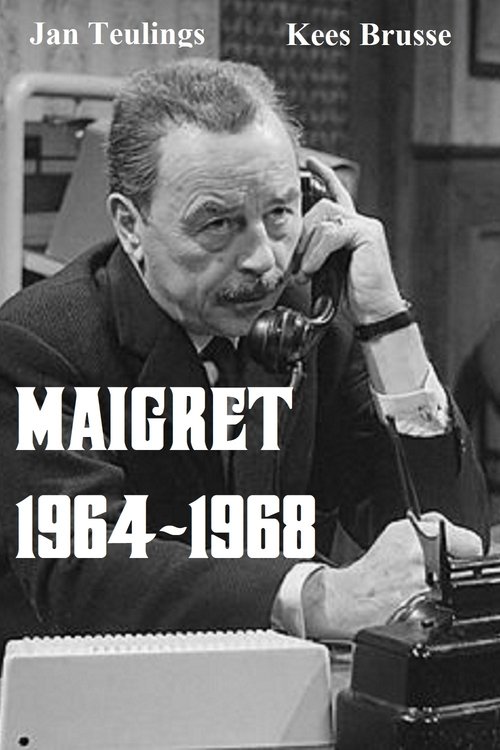
BBC series based on the novels by Georges Simenon which starred Rupert Davies as Inspector Maigret, a French police detective who preferred to watch and listen in order to solve crimes. The series ran from 1960-63 on British television.
Maigret

No description available.
Cinépanorama

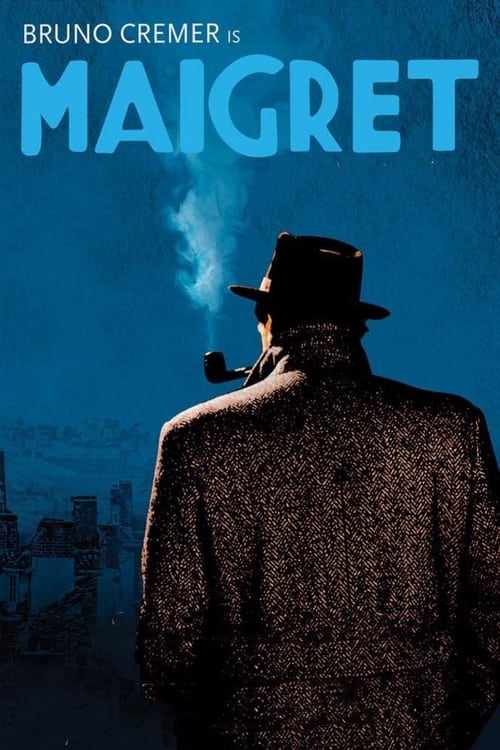
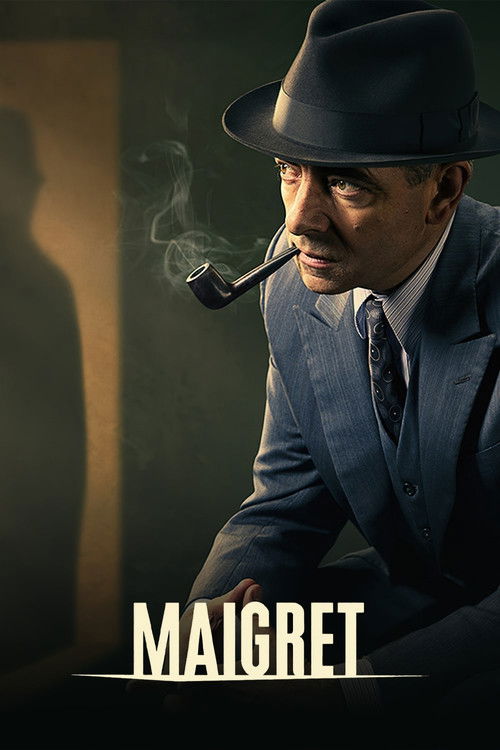
The pragmatic, reserved and refined Maigret investigates murders in his singular unhurried manner and inevitably discovers the truth.
Maigret

Based on the novels by Georges Simenon, Michael Gambon plays the eponymous detective from the Sûreté in this 1992 revival of the 1960s BBC drama series. Maigret is an intuitutive detective, who investigates his cases by watching and listening, getting to know everyone on his list of suspects until someone makes a slip or breaks down and confesses.
Maigret

Adaptation of the novels written by Georges Simenon featuring his fictional French police commissioner Jules Maigret.
Maigret

No description available.
The Investigations of Commissioner Maigret

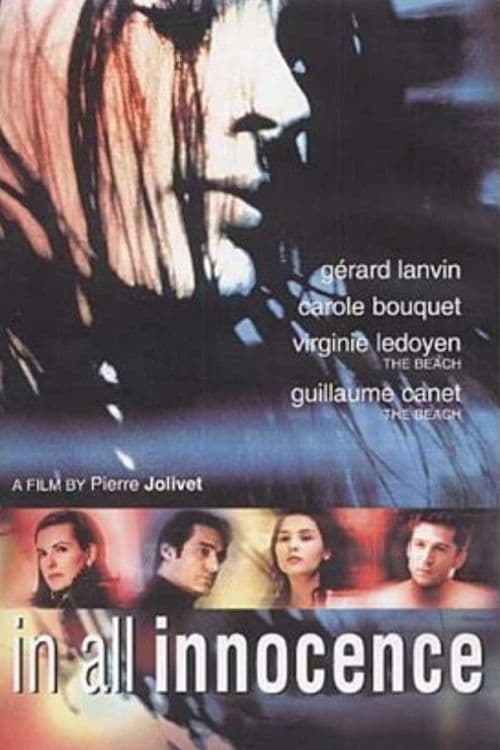
High-profile lawyer Michel takes on the defence of a young and pretty small-time thief, Cécile, after the botched hold-up of a jewellery shop. As predicted by his elegant art-dealer and sculptress wife Viviane, Michel goes well beyond his brief, jeopardising his career and ruining his marriage of 18 years.
In All Innocence

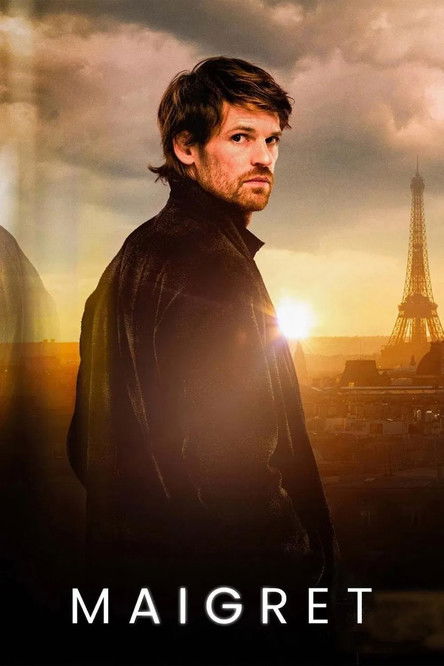
Jules Maigret is a rising star in the Police Judiciaire, relentless in his investigations, with an uncanny ability to get under the skin of the criminals he is chasing and a matchless knowledge of Paris and its inhabitants
Maigret
No description available.
Treffpunkte

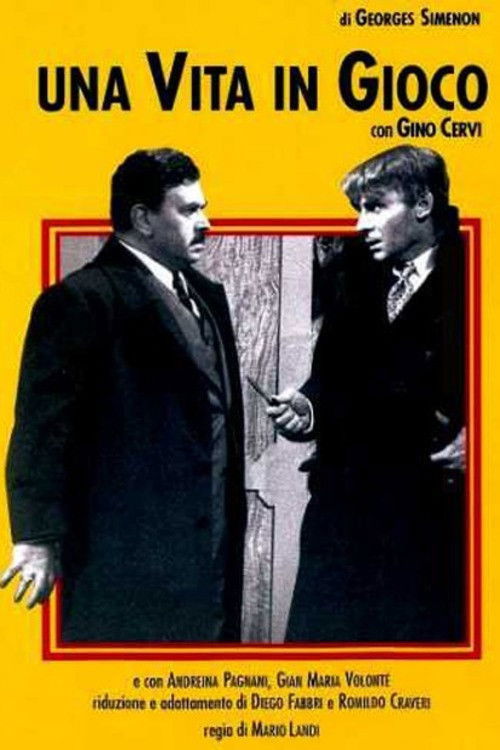
Italian TV series based on the Maigret detective novels.
Le inchieste del commissario Maigret

Police Commissioner Jules Maigret returns to the small village where he spent his childhood at the request of the Countess of Saint-Fiacre, who has received a disturbing anonymous letter.
Maigret and the St. Fiacre Case

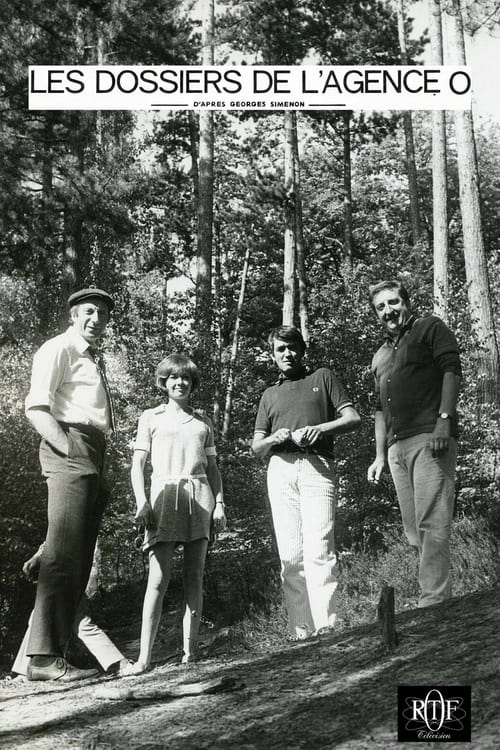
L’Agence O is a famous Parisian private detective firm. Its premises are located in the Passage Choiseul. In front, Torrence leads the shop. In fact, the agency's team is complemented by Émilie le Roux, Mademoiselle Berthe and Barbet, who scrutinize clients through a one-way mirror located behind the desk. Getting hold of a man disguised as an old lady, solving the mystery of the Prisoner of Lagny or discovering who is blackmailing the painter Tigrane Alban does not worry the experts at the O Agency. Les Dossiers de l’Agence O is a French-Canadian television series in thirteen episodes of approximately 55 minutes created by Marc Simenon and broadcast first in Quebec from December 14, 1967 to March 13, 1968 on Télévision de Radio-Canada, then in France from March 11 to June 3, 1968 on the first channel of the ORTF.
Les Dossiers de l'Agence O

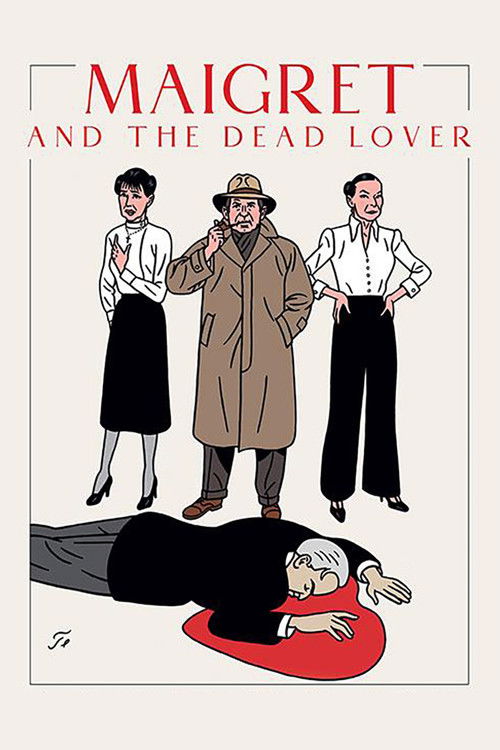
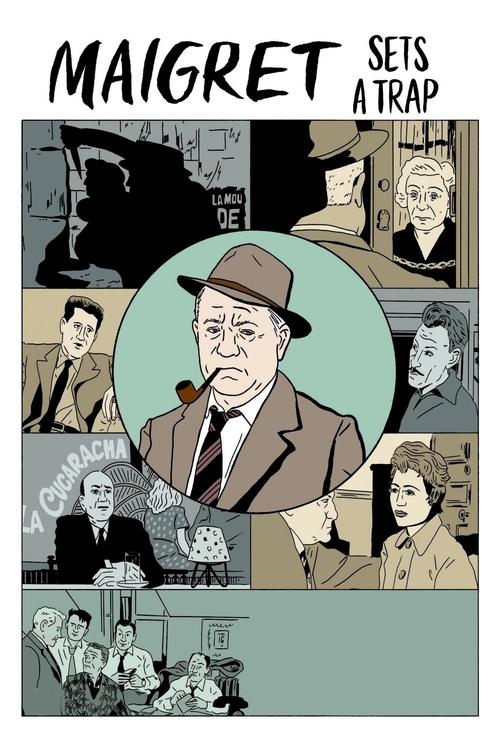
Commissioner Maigret rushes to the Quai d’Orsay with Lieutenant Janvier. There, they find Mademoiselle Larrieu in a state of shock. That very morning, she discovered the bullet-riddled body of Mr. Berthier-Lagès, a renowned former ambassador whom she had served as a housekeeper for 46 years. While searching the victim's apartment, Maigret and Janvier uncover hundreds of letters. The diplomat had maintained a fifty-year-long love correspondence with a certain Princess of Vuynes, whose husband - by a strange coincidence - had died just a few days earlier. As he confronts the various members of the two families and the suspicious silence of Mademoiselle Larrieu, Maigret finds himself faced with surprise after surprise, watching his certainties crumble - until the solution to the mystery finally hits him in the face at the very last moment...
Maigret and the Dead Lover

A couple meet each other often in a motel room.
The Blue Room
Der kleine Doktor is a German television series.
Der kleine Doktor

The relationship between a middle-aged French widow and a young drifter takes a turn when her young niece pays a visit.