Acting
No description available.
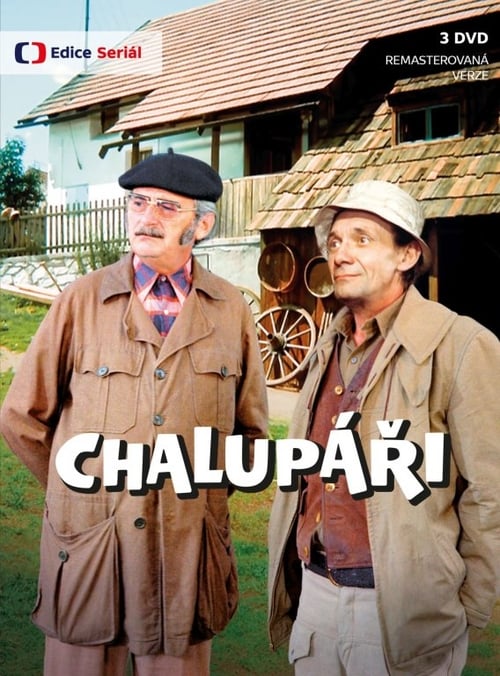
Chalupáři is a Czechoslovak comedy TV series filmed in 1974 and 1975 by František Filip.
The miner Dařbuján has a lot of children that he cannot support and another one has just been born. He needs to find a godfather and three are offered: God, the Devil and Death. Dařbuján chooses Death because he is the only one who is fair, he treats the poor and the rich equally. When Dařbuján is considering what to do to provide for his family, Death advises him to get a doctorate and immediately offers him help in his new trade. If Death stands at the feet of a sick person, Dařbuján will heal him within three days. However, if he stands at the head, the sick person is finished and Dařbuján must not interfere in his trade...
The family is connected with Prague's "Kolbenka", the ČKD locomotive factory. Grandfather Antonín, already retired, son Rudolf, a master in the locomotive assembly section and grandson Antonín, a promising football player. The film also tells the story of Rudolf's daughter Vera - each generation has its own ideas about life and cannot identify with the others. The film is linked by retrospective sequences from the lives of Antonín the Elder and Rudolf, especially from the war years. It is a realistic take on working-class life, unencumbered by ideology (despite the opening dedication), featuring well-known and time-tested actors in mainly male roles.
A lyrical fairy tale of romantic mood tells of a girl who freed the Wind Young Man from the curse that punished him for his arrogance and violence. The fairy tale highlights the ennobling impulse and power of love, which can positively influence all human actions.
Approaches to important life values can vary: while the top athlete who has made it in cycling tries to monetise his talent, his brother cannot devote himself to his beloved sculpture because of his disabled arm and seeks alternative self-fulfilment. Moreover, the two are united - and at the same time divided - by a love affair with the same woman.
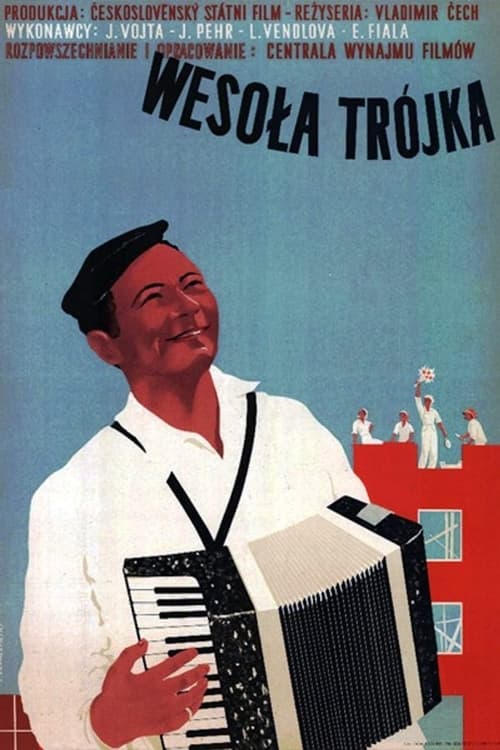
Two families live in a weaver's cottage - the Menecs and the Hroms. The women are pretty from the start. Musicians come, inviting fellow weavers who play in Menec's band to the May Day festival. Wanderers wander through the region, encountering a procession on their way. The police disperse it, so the men, who have various professions, join the wanderers. They wander around the world until they reach a tavern, where they get food and a bed. An old spinning wheeler composes a song at the request of one wanderer, inviting everyone to a "wanderer's convention". And so they get together and play together...
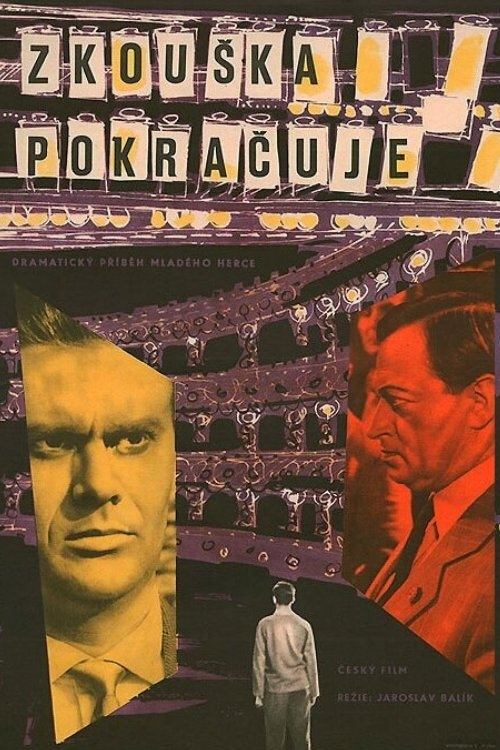
As a young actor František Lukávec and his teacher Vladimir Tuma became enemies. František insisted that Tuma was dismissed from the school as a reactionary and hostile to the new government. Many years passed, and here they met again on the stage of a theater. František is assigned the role of Julius Fucik, Tuma plays the role of a Gestapo man in the same play. In the course of the action, the Gestapo man beats Fucik. Taking advantage of this opportunity, Tuma beats up his old enemy during the dress rehearsal. Frantisek's face is bleeding, but he will still play. The rehearsal continues...
The cheerful farce tells the story of the charming wife of an Andalusian shoemaker, a charming beauty who attracts the eyes of a crowd of cavaliers. The beautiful woman is more than thirty years younger than her husband, but she is quarrelsome, argumentative and, above all, dissatisfied. Despite this, she remains faithful to her good-natured husband, many years older. However, he mainly desires peace, and, carried away by gossip, one day leaves his wife. He returns as a principal with a puppet theater to find that his wife has remained faithful to him, both spouses are convinced that they were wrong and return to each other...
People in Czechoslovakia perceive the events of February 1948 differently. This movie tells how they behave depending on their views, beliefs and character.