Laurent Terzieff
Acting
Biography
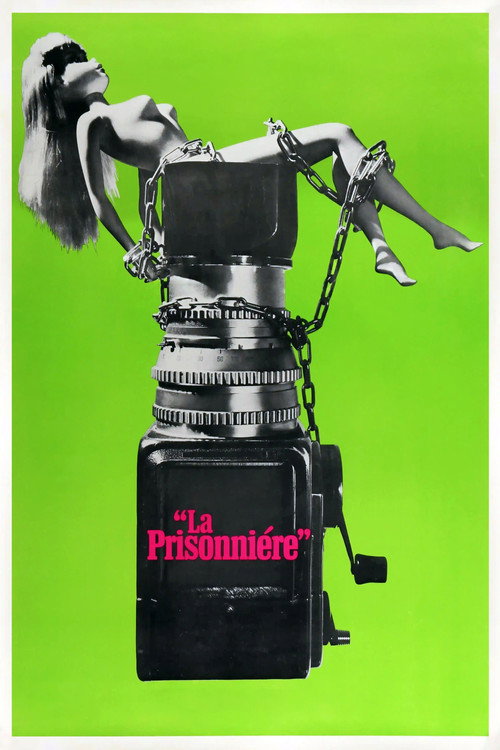
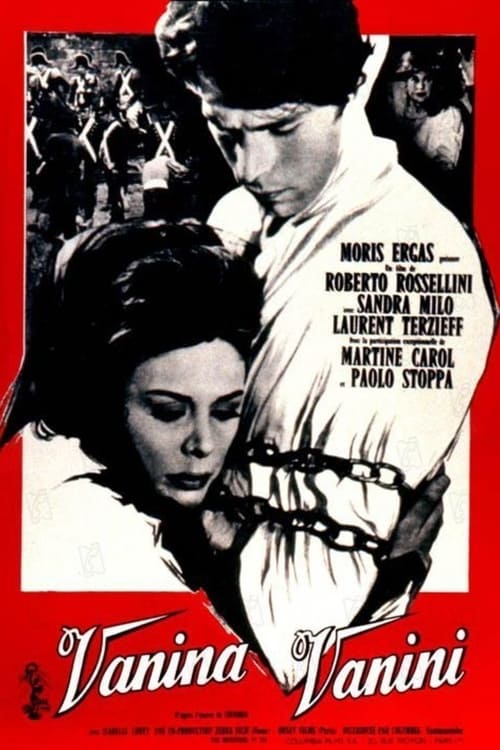
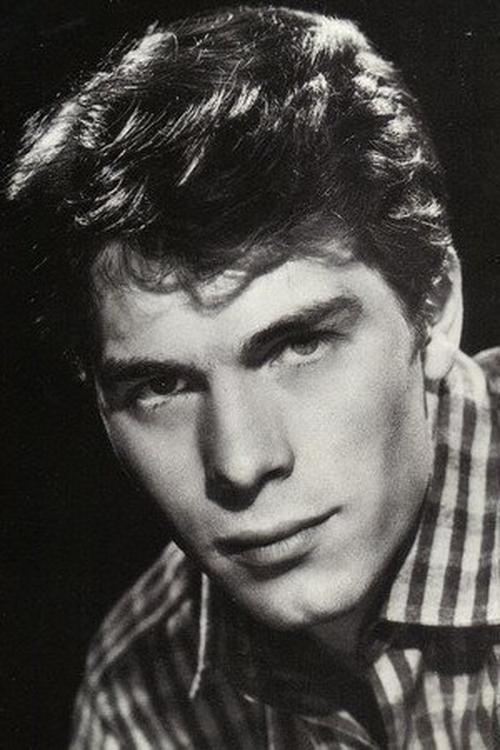
Laurent Terzieff (27 June 1935, in Toulouse – 2 July 2010, in Paris) was a French actor. Terzieff was the son of French ceramist Marina and her husband Jean Terzieff, a Romanian-born sculptor of Russian and Romanian descent who came to France from Bucharest during the First World War. The original surname of his family was Chemerzin. As an adolescent, he was fascinated with philosophy and poetry. He assisted with a representation of the La Sonate des spectres by Strindberg, directed by Roger Blin; while involved in the theater he decided he wanted to become an actor. Terzieff made his debut in 1953 at the Parisian Théâtre de Babylone of Jean-Marie Serreau in Tous contre tous of Adamov. After several more roles, Marcel Carné offered him a lead role in 1958's Tricheurs, a tale about existentialist youth. He then appeared in the late works of French scenario writers such as Claude Autant-Lara, with whom he appeared in three films including Tu ne tueras point in 1961. Other collaborators included Henri-Georges Clouzot with La prisonnière, in which he interprets an artist manipulator. In 1975 Terzieff played the leading role as the priest in the Irish artist Reginald Gray's production and direction of Jeu. His partner Pascale de Boysson, Dirk Kinnane and Bibi Hure were also in the cast. Other film appearances include Les Garcons by Mauro Bolognini in 1959, Vanina Vanini (1961), Two Weeks in September (1967), in which he appeared with Brigitte Bardot, The Milky Way (1969), Medea (1969), The Desert of the Tartars (1976), and the TV miniseries Moses the Lawgiver (1974), starring Burt Lancaster. In the 1980s, he primarily acted on stage. Appearances during this era include Rouge Baiser, Germinal in 1993, and The Raft of the Medusa in 1998. In 2005, he appeared in Mon petit doigt m'a dit. Terzieff died on July 2, 2010, due to lung complications. Source: Article "Laurent Terzieff" from Wikipedia in English, licensed under CC-BY-SA 3.0.

Known For

No description available.
Vivement dimanche

A talk show presented by Michel Drucker
Les Rendez-vous du dimanche
No description available.
Midi trente

No description available.
Cinépanorama

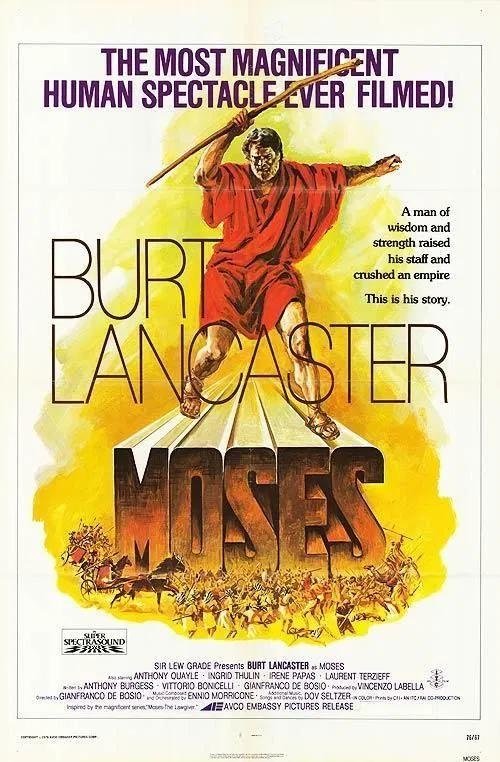
Moses the Lawgiver (Italian: Mosè) is a six-part 1975 television miniseries directed by Gianfranco De Bosio and starring Burt Lancaster as Moses. Produced by ITC and RAI, the Italian-British co-production was filmed in Rome and on location in Israel and Morocco. Inspired by the Ten Commandments, Moses embarks on an arduous journey to freedom, determined to escape slavery and spread the Word of the Lord.
Moses the Lawgiver

Based on the plot of Euripides' Medea. Medea centers on the barbarian protagonist as she finds her position in the Greek world threatened, and the revenge she takes against her husband Jason who has betrayed her for another woman.
Medea

Lieutenant Giovanni Drogo is assigned to the old Bastiani border fortress where he expects an imminent attack by nomadic fearsome Tartars.
The Desert of the Tartars

Determined to survive at any price, Edith, a young Jewish woman deported to an extermination camp, manages to survive by accepting the role of kapo, a privileged prisoner whose mission is to ruthlessly guard other prisoners.
Kapo

Propelled to the head of the W Group after the death of his adoptive father, Largo Winch decides, to everyone's surprise, to sell it, and use the proceeds to create an ambitious humanitarian foundation. But on the very same day, he finds himself accused of crimes against humanity by a mysterious witness. To prove his innocence, Largo will have to retrace the steps of his past life, in the heart of the Burmese jungle.
Largo Winch II

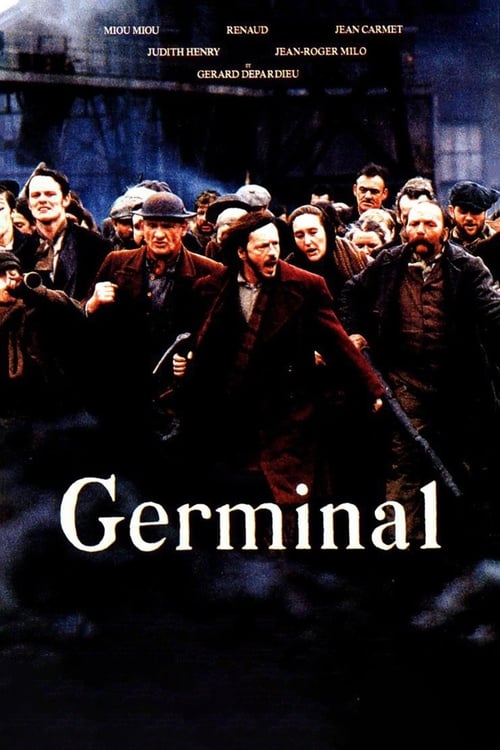
It's mid 19th century, north of France. The story of a coal miner's town. They are exploited by the mine's owner. One day the decide to go on strike, and then the authorities repress them.
Germinal

Seven directors each dramatize one of the seven deadly sins in a short film. In "Anger," a domestic argument over a fly in the Sunday soup escalates into nuclear war. In "Sloth," a movie star would rather pay someone to tie his shoe than bend over to do it himself, and he can't be bothered to accept a starlet's sexual favors. In "Gluttony," a peasant family on its way to the funeral of a relative who died from indigestion stops regularly to eat and drink en route, arriving in time to eat some more. In "Greed," a high-class prostitute refunds the price of a cadet's lottery ticket. In "Pride," an unfaithful wife finds reason to reform. And so on through lust and envy.
The Seven Deadly Sins

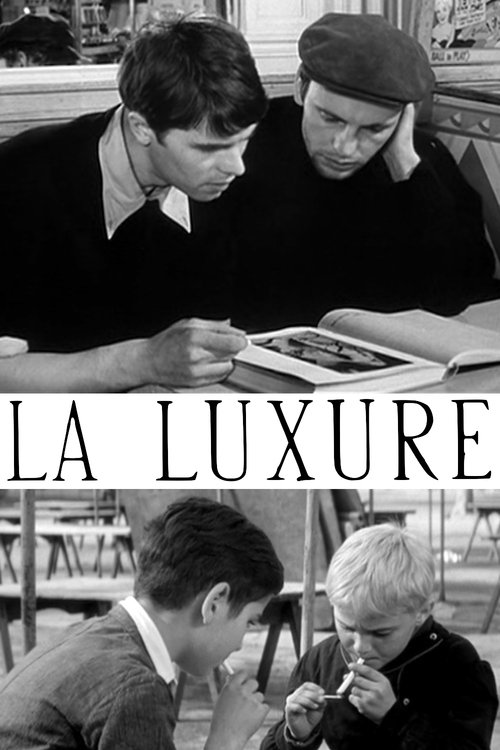
A biographical feature on the Italian literary giant, Gabriele D'Annunzio. Set in late 19th century Italy and France when the artistic style, Decadentismo, was beginning to take shape, the film focuses on D'Annunzio's life when he was already an established poet and journalist in Rome. A staunch opponent of democracy and commoners, he searches for passion and pleasure among the wealthy and noble. One such noblewoman Elvira Fraternali Leoni, serves as the muse for his first novel - The Pleasure (Il Piacere).
Love Sins

An American ballerina arrives in Hungary to enroll in a ballet school and it soon becomes apparent that things are not what they seem.
Etoile

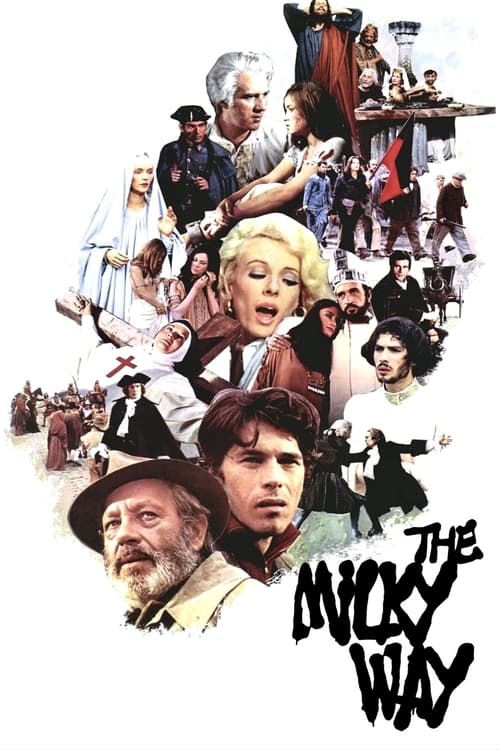
Two men, part tramp, part pilgrim, are on their way from France to Santiago de Compostela in Spain. On their way, they meet a vast assortment of characters—some truculent, some violent, and some bizarre; they experience many adventures—some mysterious, some erotic, some even supernatural.
The Milky Way

No description available.
Les Grands Détectives

This film depicts the life of Saint John Bosco, who dedicated his life to rescuing abandoned and exploited street children in Turin.
Don Bosco

A solitary, disappointed, proud and educated old man meets and becomes the teacher of an intelligent, clumsy, middle-class, young would-be writer.
The Prince's Manuscript

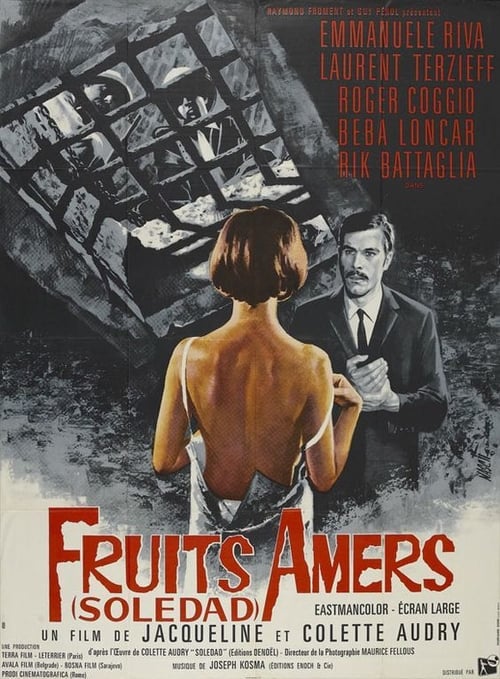
Antoine Rossi, a recidivist prisoner of war in Germany, manages to escape with the cowardly Fendard. Fendard does everything in his power to help him even though he is wounded, but Antoine tries to get rid of him as he boards the train to freedom.
Les Culottes rouges

Vincent Vivant agrees to Stephan the spy's proposal: he is to cross the border with a mysterious suitcase.
Ballad for a Hoodlum

Two anarchistic brothers live by petty thievery and try to recover from their Catholic upbringing. Bandiera and Rabbino were children when they pushed their drunk of a father out of a window for killing their pet sheep. When a girl is raped by her father, she is brought by young "rescuers" to the home of the two brothers who then watch their friends take advantage of her sexually. The brothers take her in, and the three live happy and celibate if not uneventful lives until the brother's are sent to jail for stealing.