FEEL IT.STREAM
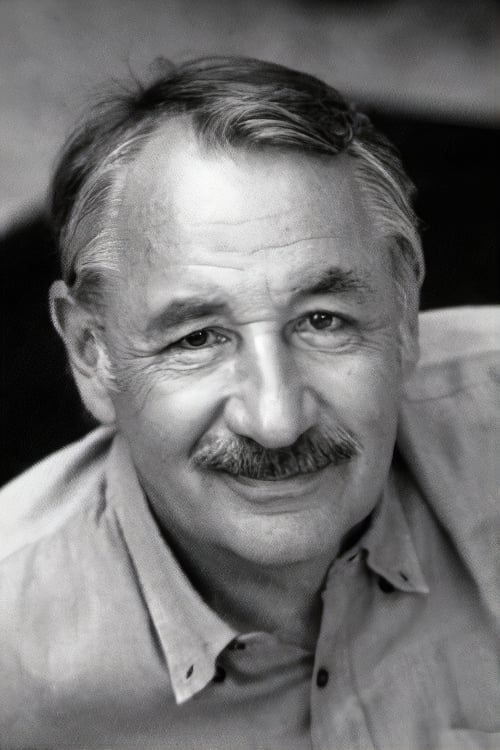
Philippe Noiret

Philippe Noiret

Acting

Biography

Philippe Noiret (1 October 1930 – 23 November 2006) was a French film actor. Noiret was born in Lille, France, the son of Lucy (Heirman) and Pierre Noiret, a clothing company representative. He was an indifferent student and attended several prestigious Paris schools, including the Lycée Janson de Sailly. He failed several times to pass his baccalauréat exams, so he decided to study theater. He trained at the Centre Dramatique de l'Ouest and toured with the Théâtre National Populaire for seven years, where he met Monique Chaumette, whom he married in 1962. During that time he developed a career as a nightclub comedian in a duo act with Jean-Pierre Darras, in which he played Louis XIV in an extravagant wig opposite Darras as the dramatist Jean Racine. In these roles they satirized the politics of Charles de Gaulle, Michel Debré and André Malraux. Noiret's screen debut (1949) was an uncredited role in Gigi. In 1955 he appeared in La Pointe Courte directed by Agnès Varda. She said later, "I discovered in him a breadth of talent rare in a young actor." Sporting a pudding-basin haircut, Noiret played a lovelorn youth in the southern fishing port of Sète. He later admitted: "I was scared stiff, and fumbled my way through the part—I am totally absent in the film." He was not cast again until 1960 in Zazie dans le Métro. After playing second leads in Georges Franju's Thérèse Desqueyroux in 1962, and in Le Capitaine Fracasse, from Théophile Gautier's romantic adventure, he became a regular on the French screen, without being cast in major roles until A Matter of Resistance directed by Jean-Paul Rappeneau in 1966. He became a star in France with Yves Robert's Alexandre le Bienheureux. "When I began to have success in the movies," Noiret told film critic Joe Leydon at the Cannes Film Festival in 1989, "it was a big surprise for me. For actors of my generation—all the men of 50 or 60 now in French movies—all of us were thinking of being stage actors. Even people like Jean-Paul Belmondo, all of us, we never thought we'd become movie stars. So, at the beginning, I was just doing it for the money, and because they asked me to do it. But after two or three years of working on movies, I started to enjoy it, and to be very interested in it. And I'm still very interested in it, because I've never really understood how it works. I mean, what is acting for the movies? I've never really understood." Noiret was cast primarily as the Everyman character, although he did not hesitate to accept controversial roles, such as in La Grande Bouffe, a film about suicide by overeating, which caused a scandal at Cannes in 1973, and in 1991 André Téchiné cast Noiret in J'embrasse pas (I Don't Kiss), as a melancholy old homosexual obsessed with young male flesh. And in 1987, in The Gold Rimmed Glasses based on Giorgio Bassani's novel about the cramped social life of post-war Ferrara in Italy, he played an elderly and respectable doctor who is gradually suspected of being a covert homosexual with a passion for a beautiful young man (Rupert Everett). Noiret won his first César Award for his role in Vieux Fusil in 1976. His second César came in 1990 for his role in Life and Nothing But. ... Source: Article "Philippe Noiret" from Wikipedia in English, licensed under CC-BY-SA.

Known For

Champs-Elysées
6.8

No description available.

Champs-Elysées

1982
Sacrée soirée
5.7

No description available.

Sacrée soirée

1987
Vivement dimanche
3.6

No description available.

Vivement dimanche

1998
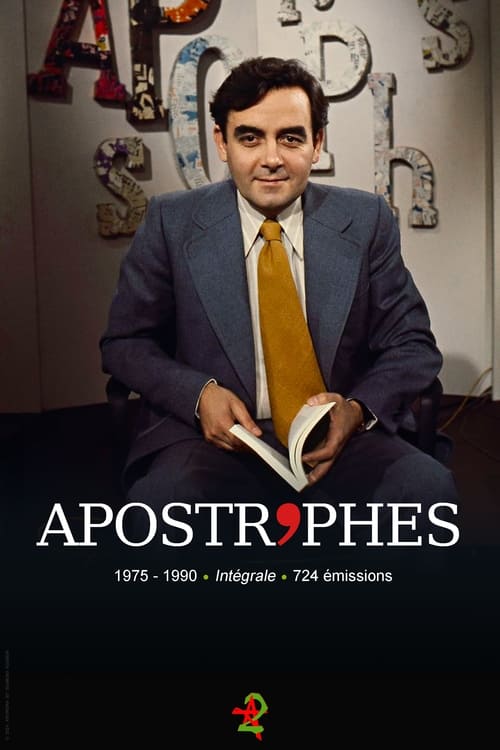
Apostrophes
8.5

Apostrophes was a live, weekly, literary, prime-time, talk show on French television created and hosted by Bernard Pivot. It ran for fifteen years (724 episodes) from January 10, 1975, to June 22, 1990, and was one of the most watched shows on French television (around 6 million regular viewers). It was broadcast on Friday nights on the channel France 2 (which was called "Antenne 2" from 1975 to 1992). The hourlong show was devoted to books, authors and literature. The format varied between one-on-one interviews with a single author and open discussions between four or five authors.

Apostrophes

1975
Les Rendez-vous du dimanche
6.0

A talk show presented by Michel Drucker

Les Rendez-vous du dimanche

1975
Spécial cinéma
9.5

Marcello Mastroianni, Isabelle Adjani, Alain Delon, Martin Scorsese, Woody Allen... the biggest stars in cinema were welcomed by Christian Defaye on his show Spécial cinéma. Between intimate confessions from actors and immersion in the world of the greatest filmmakers, Christian Defaye took viewers on a journey into the fascinating world of cinema for nearly thirty years.

Spécial cinéma

1974
Cinema Paradiso
8.4

A filmmaker recalls his childhood, when he fell in love with the movies at his village's theater and formed a deep friendship with the theater's projectionist.

Cinema Paradiso

1988
No image
6.0

No description available.

Midi trente

1972
Discorama
8.0

No description available.

Discorama

1959
Nulle part ailleurs
6.1

No description available.

Nulle part ailleurs

1987
Cérémonie des César
4.6

The César Awards are cinematographic awards created in 1976 and presented annually in Paris to professionals of the 7th art in various categories to recognize the best French productions. They are often cited as the French equivalent of the Oscars in the United States.

Cérémonie des César

1976
Stars 90
6.2

No description available.

Stars 90

1990
30 millions d'amis
6.2

No description available.

30 millions d'amis

1976
Il était une fois Champs-Élysées
6.6

No description available.

Il était une fois Champs-Élysées

2022
The Sparrow's Fluttering
4.2

A woman, who has been the mistress of a man who has just died, thinks about leaving the little Italian village where they lived and moving to another place. An old and rich man offers her a place in his house, however, she will have to listen to him telling his past love stories.

The Sparrow's Fluttering

1988
The Old Gun
7.5

In Montauban in 1944, Julien Dandieu is a surgeon in the local hospital. Frightened by the German army entering Montauban, he asks his friend Francois to drive his wife and his daughter in the back country village where Julien has an old castle. One week later, Julien decides to meet them for the week end, but the Germans are already occupying the village.

The Old Gun

1975
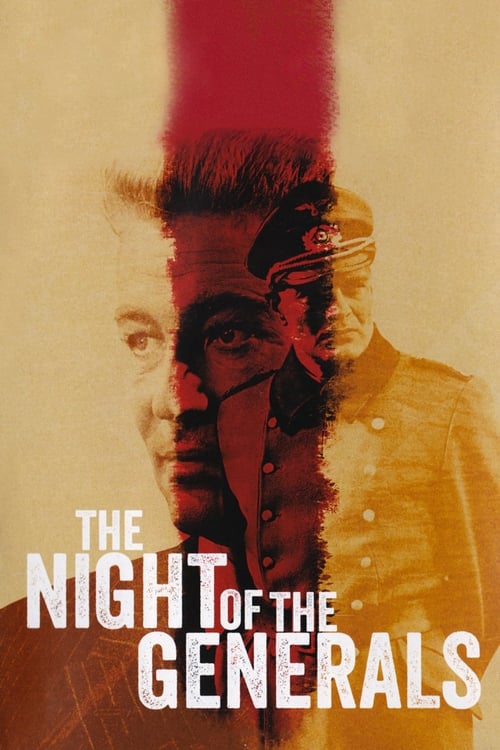
The Night of the Generals
6.8

A German intelligence officer investigates a prostitute's killing in Warsaw during World War II. He lands on three major Nazi generals as suspects, two of whom are also involved in a plot to kill Adolf Hitler.

The Night of the Generals

1967
Dear Inspector
5.9

When Lise's car bumps Antoine's bike, they recognize each other from a brief fling 20 years before while at the Sorbonne. He's now a professor of Greek; she's loathe to tell him she's a police inspector. A call interrupts their first dinner date: a Deputy of the National Assembly has been murdered. She has a suspect, another Deputy, and must track him while deflecting Antoine's eye from her vocation. All roads in the inquiry lead to Christine Vallier, the dead Deputy's mistress, a beguiling 22-year-old whose mother ran the Assembly's snack bar. When more deputies die and Antoine learns Lise's identity, she must act quickly solve the crime and save her future.

Dear Inspector

1978
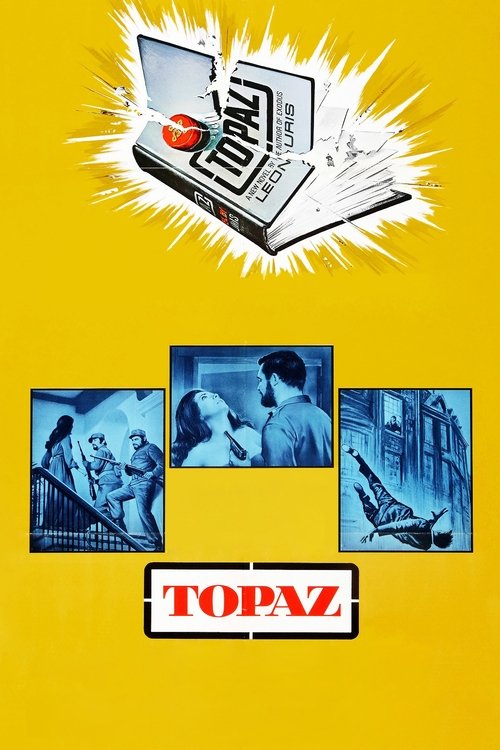
Topaz
6.0

Copenhagen, Denmark, 1962. When a high-ranking Soviet official decides to change sides, a French intelligence agent is caught up in a cold, silent and bloody spy war in which his own family will play a decisive role.

Topaz

1969
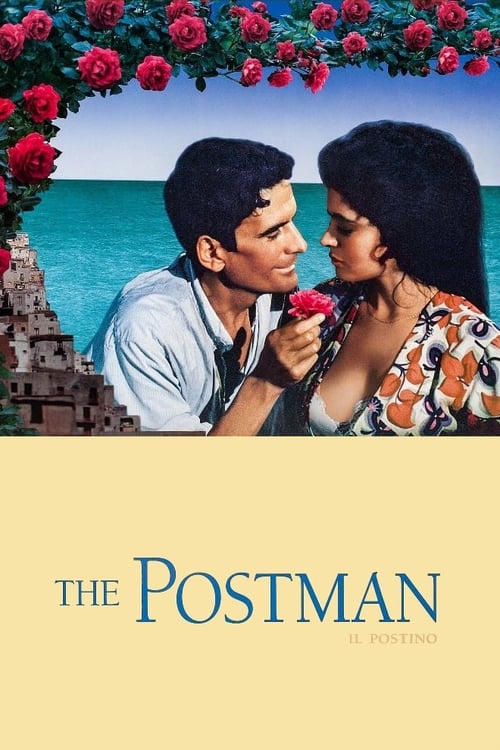
The Postman
7.9

Simple Italian postman learns to love poetry while delivering mail to a famous poet; he uses this to woo local beauty Beatrice.

The Postman

1994