FEEL IT.STREAM
Abbott Meader

Abbott Meader

Directing

Biography

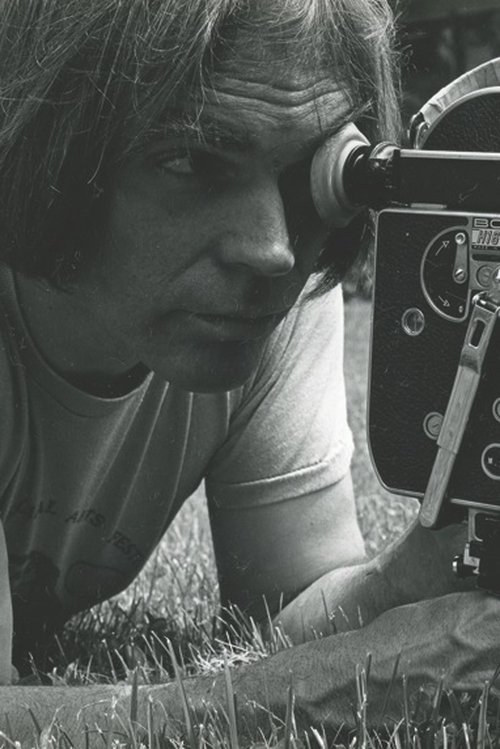
Abbott Meader is an American painter, filmmaker and retired Professor of art. Born In the Brooklyn area of New York City, his roots and many generations of ancestors are to be found in the northern, rural state of Maine, where he and his wife Nancy have lived since the 1960s. He is a Phi Beta Kappa graduate of Dartmouth College, and while in graduate school at the University of Colorado he became a friend of noted filmmaker Stan Brakhage, who encouraged him to explore film as well as painting and drawing. Meader’s early films reveal the influence of Brakhage, while clearly moving toward a distinctive personal vision. His work has been shown frequently in film festivals – in Brussels, Rome, Rapallo, Ann Arbor, Chicago, Boston, and at many schools and colleges over the years. From the early 1960s into the 1990s he produced a large body of personal film work while continuing to paint, teach, and help raise a family along with his wife Nancy, who had become a noted potter. Around the year 2000 it seemed to him that 16 mm was being essentially eliminated as he saw film stocks and labs disappear and costs go up substantially, and he reached an impasse. Always active as a painter as well as a filmmaker, the tangible “thingness” of film, with its individual frame as an actual surface to work on by hand, to be carefully picked up and held to the light, then physically cut and spliced — these physical characteristics had been essential. He therefore reluctantly decided to leave the world of personal film making and return primarily to painting. He nevertheless continued to collaborate with other filmmakers on a variety of projects as he had done over many years. His existing body of 16mm film work numbers well over fifty titles, and now, with the help of Bruce Williams, his friend and fellow filmmaker, Meader’s films are getting new life in a pristine digital form that makes them accessible to an expanded audience.
Known For

For Life, Against the War
6.0

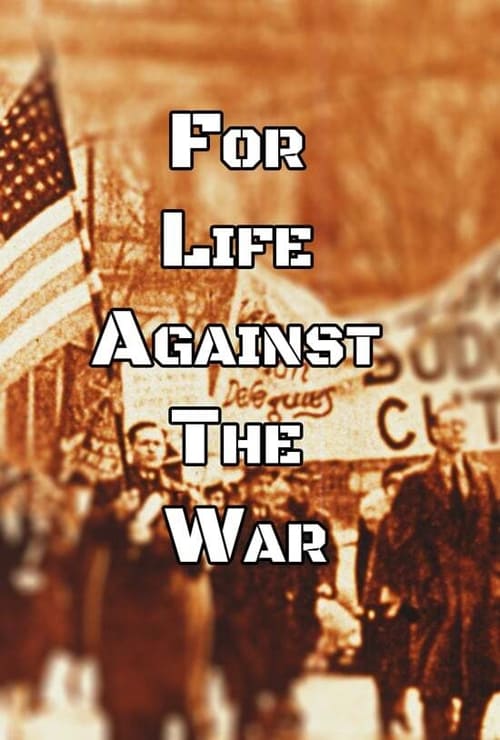
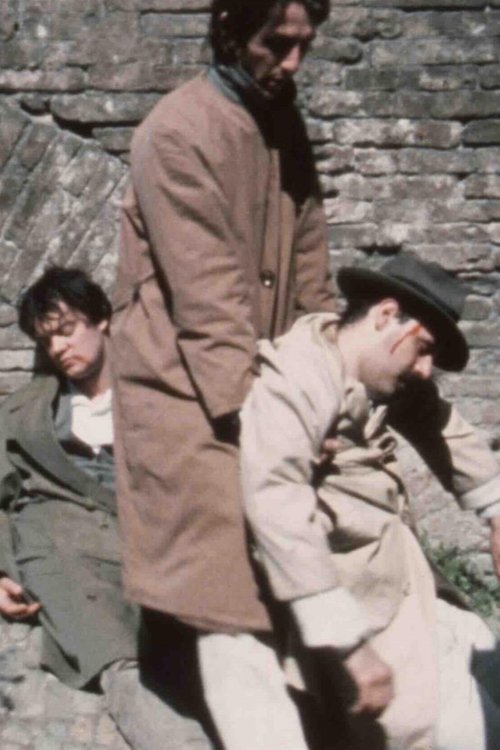
First shown on January 30, 1967, FOR LIFE AGAINST THE WAR was an open-call, collective statement from American independent filmmakers disparate in style and sensibility but united by their opposition to the Vietnam War. Part of the protest festival Week of the Angry Arts, the epic compilation film incorporated minute-long segments which were sent from many corners of the country, spliced together and projected. The original presentation of the works was more of an open forum with no curation or selection, and in 2000 Anthology Film Archives preserved a print featuring around 40 films from over 60 submissions.

For Life, Against the War

1967
South Slope: What Love Tells Me
N/A

South Slope: What Love Tells Me is a 16mm film made in 1978-1980 by the artist Abbott Meader. It is a dramatic portrait of a piece of land in Maine as seen through the seasons filmed over a period of two years. It is both a documentary and a film poem structured to respond to the 6th Movement of Gustav Mahler's 3rd Symphony as performed by the Portland (Maine) Symphony Orchestra, which kindly donated the performance recording for use in this film. Mahler's subtitle for the 6th Movement is "What Love Tells Me."

South Slope: What Love Tells Me

1980
Tutto, tutto nello stesso istante
N/A

Collective manifesto by the members of C.C.I. It is a collective film, the result of an operation devoid of any aesthetic purpose: to verify the existence of any harmony between a fairly large group (twelve people) of members of the independent Cooperative. Someone, who had the idea, turned 60 meters of Ektachrome according to the moods –or discontent – of the moment and gave them to others to see. The others reacted, each with their own piece. It was then thought to call the film “circular letter”. It was not so simple and so quick: the operation, which started in June of ’68, ended in March of ’69.

Tutto, tutto nello stesso istante

1969
In the Mountains
N/A

"This is the fifth and final section of the 1977 film WEST BY NORTH. I feel it can stand by itself as a complete, if enigmatic statement. A casual browser is therefore afforded a look at a component of WXN, and may become interested in viewing the complete 25 minute film [...] The title is the conclusion of a dreamed phrase: "Flying low, out of creation, they met some rough spots in the mountains" -Abbott Meader

In the Mountains

1977
No image
N/A

No description available.

Vigil

1966
No image
N/A

No description available.

Departure

1966
Isolation
6.0

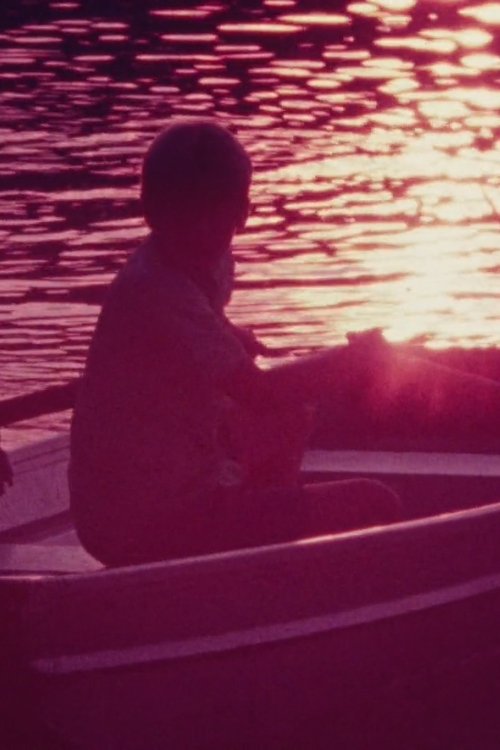
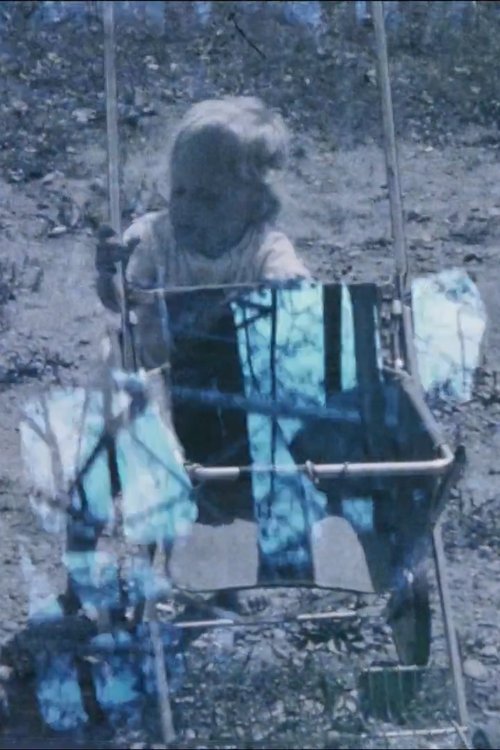
"I feel that some of the silent pieces might be seen as visual music. Perhaps a bit pretentious to say that, but such pieces as ISOLATION are something of the sort. This is a film that every time I see it I want to re-edit it, just for fun. Its like a jazz improv, and could be different during the next set – the rhythms, the pauses, perhaps with longer passages and variations in visual tonality, theme and variation, recapitulations – all sorts of musical terms might be applied. There is no real narrative development here. The film suggests that a boy in a rowboat sees glimpses of the world around him. The boy whose image you see is our son, Darmon, and long ago I was a similar boy as well." –Abbott Meader

Isolation

1974
Nogarok
N/A

"Glimpses into a day in the life of three children. The three are busy with their lives. We see them, but what are they thinking? My camera screws up, but the effect seems appropriate and so I use the footage anyway. Birds are also busy with their own lives out there. Everybody is eating something. What kind of thinking do birds do? Oh, there’s a cat!. And a squirrel shows up. What a busy day! And soon it will be time for bed. Must not forget to brush your teeth." –Abbott Meader

Nogarok

1972
Destroying Angel
N/A

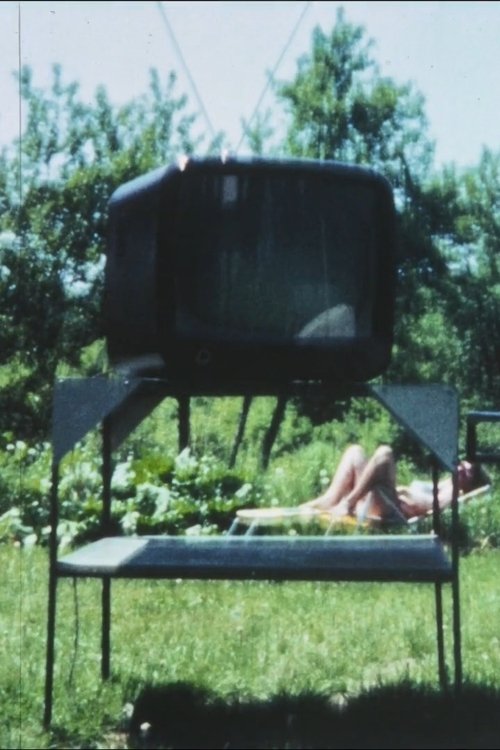
"This short film documents a day in our backyard while also standing in as a mini- creation myth. The film begins with word fragments written on the leader. There is sound, and the leader then lets there be light. Soon animal life appears on the earth, followed by people – and at some point, civilization and culture appear by way of a cast off TV set. Life continues as other events occur, and Time continually presses onward toward night. Throughout the film, we hear cryptic voices whose messages are unclear, and, as darkness descends and the TV set dominates, one voice from the ether constantly repeats a phrase. The sound is blurry, and as with a Rorschach test image, you will make of it what your inner life hears. I, of course, know exactly what the voice says, because I am the creator. But you will believe your own ears. (Spoiler alert. It’s in English). That’s the way of the world, and there’s no way out of it as far as I know." –Abbott Meader

Destroying Angel

1969
No image
N/A

No description available.

Wilderness

1967
Wind in the Web
N/A

A 16mm film by Abbott Meader, made as a visual response to the poem "Standing Here," by Karen Andersen Woodard.

Wind in the Web

1978
Winter Li
6.0

"A black one-eyed cat -does he dream of summer and having two eyes? A faceless snowman thrives in winter's starkness. There is frost and winter light. A glass light-catcher radiates color. Passing trains. Flame and smoke rise from a barrel. Fragments of music. Somewhere someone is picking out phrases from Randall Thompson's 'Alleluia'. A lot goes on, but not much happens. It is winter. Finally the snowman announces the coming of spring, and the piano plays its closing chords." —Abbott Meader

Winter Li

1981
Winter Fence
N/A

"A fence to contend with winter storms. Auld Lang Syne. Memories of green. 'Benigne fac, Domine, in bona voluntate'. The organ at Fenway park on Yaz' last day. Saturn, bringer of old age, and a meditation on that long, unrelenting road and enduring the weight of the journey." —Abbott Meader

Winter Fence

1984
West By North
N/A

"The direction of Western Culture's advance has been WXN, and now no further planetary geography remains into which to penetrate. Today there is talk of heading to Mars - a benighted concept. The geography that remains lies within, but our extroverted society seems largely determined not to explore it. So in a dream I heard the words, 'Flying low, out of creation, they met some rough spots in the mountains.' The film, in five short sections, explores and expands upon this statement. Beyond that, I would need to write pages. Better to just say, 'Take a look.'" —Abbott Meader

West By North

1977
Snake Dance Teacher Dance
N/A

"Snake Dance was shown in United States Embassies in Africa in the late 1970s and early 1980s to show the American culture was not all Jim Crow and race riots. Arthur Hall came to Maine as a movement specialist for the National Endowment for the Arts, and the Maine Arts Commission was so impressed they called in filmmakers. We looked in on a Wednesday and filmed all day the next Friday, using all the film we had - color and both negative and reversal black and white." —Bruce Williams

Snake Dance Teacher Dance

1978
No image
N/A

"Thematically, it echoes the nature of the first film, but is ultimately quite different and more tightly constructed. I try to select some perhaps archetypal situations and things and present them as part of, and/or in relationship to physical interiors and exteriors and to abstract images in such a way that they all merge into complex 'inscape' that treats on man's bonding to his environment — with the very nature of the formal structure lifting the whole business out of time. The key to locking up the whole shebang comes individually to the viewer when he contemplates his own idea of Summer. If the film reminded people of, among other things, man's power to live both past and future in a moment, I'd feel that that was a great deal of what it was about." -A. M.

A Looking for Summer

1963
Summer Storm Passage
N/A

"This film, which dates from 1964, has always satisfied me. I believe the footage was completed before the assassination of Kennedy – an event that changed many things. I had made only silent films until I made THE ELMS, which followed upon this one. SSP is a film whose form I had in mind from the outset. It was to be a visual piece structured in a 'musical' manner. It would have three movements in differing visual 'tempi'. Rhythms, counterpoint, theme and variation, and so on were to be in mind as I filmed and edited. The thematic material would develop slowly, and there would be recapitulations and so on. The three sections are entitled 'Barn', 'Summer Storm', and 'Bird'. A sense of place, shelter, and fertility. A welcoming of the necessary summer storm of birthing. A child’s wonder and excitement at experiencing the vast unfolding world." –Abbott Meader

Summer Storm Passage

1965
No image
N/A

16mm film by Abbott Meader

Flipping Out

1976
Gallery
N/A

"This short, silent film, a gallery of shots put together like a jazz improv, uses many devices to affect the image that comes from the camera. I play with superimpositions, with drawing and scratching on the film, and layering over the camera images with texture and color. The result is a rather rhythmic, physical, playful event intended simply to happen as you watch it. The actual imagery of objects in a museum gallery, seen frequently throughout, was footage shot in the Colby College Museum of art in the 1960s." —Abbott Meader

Gallery

1968
No image
N/A

"Here is the print of the film that I built up during last spring and summer. You all and others may find it able to speak something to you." — A. M., from a letter to the Cooperative.

An Interior

1964