
Katrin Seybold
Directing
Biography
Katrin Seybold, born on July 14, 1943, in Bromberg (now Bydgoszcz), Poland, grew up in Stuttgart and studied art history in Tübingen from 1964. She gained her first practical film experience through the experimental film circle at Stuttgart University. In 1968, she dropped out of college and moved to Berlin, where she became politically active: she lived in the women's commune on Türkenstraße and participated in student protests, squatting actions, and the founding of an anti-authoritarian kindergarten. In 1970, she co-directed her first short documentary film, Die wilden Tiere – Rote Knastwoche (The Wild Animals – Red Prison Week), with Gerd Conradt, one of the 18 students expelled from the dffb, for Rechtshilfe München (Legal Aid Munich). The following year, she applied unsuccessfully to the dffb. In the following years, Seybold worked for the Deutsche Kinemathek foundation and TU Berlin, and gained further film experience as an actress and assistant director on films by Thomas Mauch, Hans Rolf Strobel, and Edgar Reitz. After breaking with her former employer firm Eikon in 1979 for political reasons, Seybold founded her own production company and, together with Peter Krieg, launched the filmmakers' distribution cooperative. During her first production, “Schimpft uns nicht Zi.” (Don't Call Us Gypsies, 1980; for the TV youth magazine “Direkt”), about discrimination against young Sinti, she met Sinteza Melanie Splita. By 1987, the two women had made three more documentaries about the Sinti, with Splita mostly acting as a consultant, mediator, and author: “Wir sind Sintikinder und keine Zi.r” (We Are Sinti Children and Not Gypsies, 1981), “Es ging Tag und Nacht, liebes Kind. Zi. (Sinti) in Auschwitz” (It Went Day and Night, Dear Child. Gypsies (Sinti) in Auschwitz, 1982) and “Das falsche Wort. Wiedergutmachung an Zi. (Sinte) in Deutschland?” (The Wrong Word. Reparations for Gypsies (Sinti) in Germany?, 1987). At the same time, Seybold became involved in the AG Dokumentarfilm (Documentary Film Working Group) in 1981 and was appointed as its representative on the selection committee for state film funding. But after she publicly denounced massive political influence by the CSU in funding decisions, she was excluded from the committee. According to her own statement, she received no film funding for almost 20 years as a result. With her options so limited, Seybold worked primarily for television. She shot critical reports for the program “Kontakte” and revealing treatises on the relationship of Germans to Luther (“Ein wild, roh, tobend Volk,” 1983) and Frederick the Great (“Gefahr für den König,” 1986).
Known For
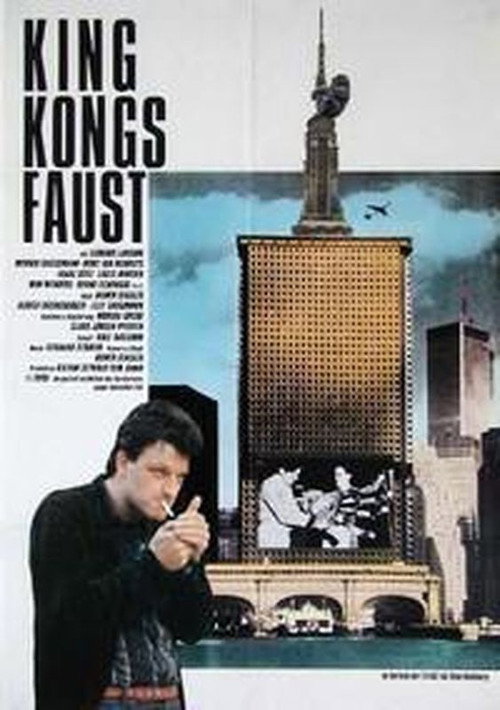
Berlin Film Fest 1984. The best place for every cinema fan. Everyone wants to be in on the festival, but that may be really difficult, if one has no accreditation. Also Journalist Matthies gets to know the rules of being in or out when he wants to see a screening and is not welcome. Thus he watches an old German silent flick which he is barely interested in. The next day the newspapers are full of reports about a newly discovered German masterpiece from the silent era. It seems that Matthies had luck. He just saw *the* film everybody is talking about now. Also everybody is speculating about its director, who remains unknown. When Matthies talks to Ackrewa, an old befriended projectionist, about the film, the latter seems to recall the name of the director. Matthies decides to research the case. An odyssey into film-history begins and if it is successful Matthies will come up with a top story.
King Kongs Faust
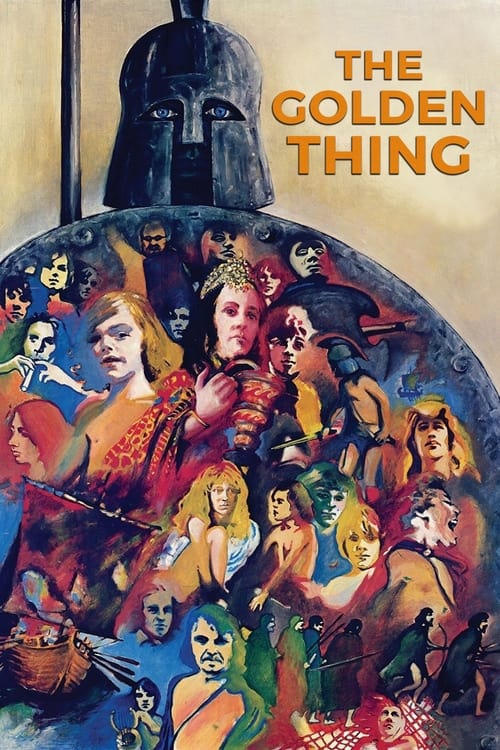
Eleven-year old Jason and his companions, including Hercules and Orpheus, go with the ship "Argo" in the search for the Golden Fleece. With wit and cunning to overcome various obstacles until they reach the destination of their fantastic journey. The experiment is not only due to the popularization or naive glorification of a myth, but the search space occupied by fact that the heroes of antiquity were actually very young.
The Golden Thing
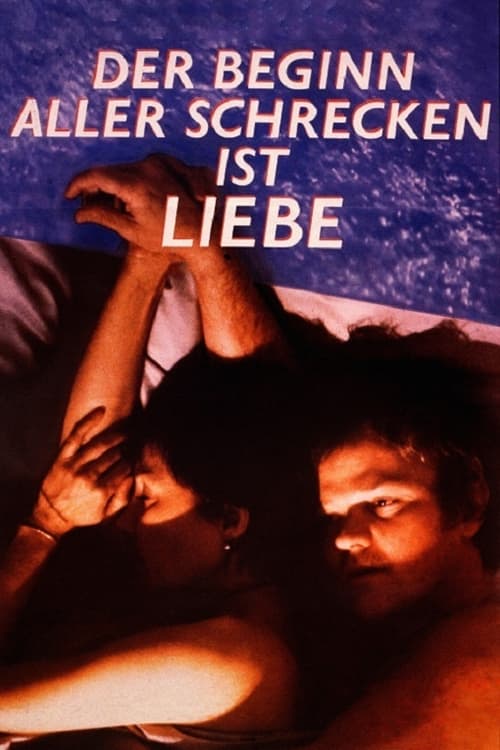
Story concerns two friends, Freya and Irmtraut and their relationships with the same man, Traugott, who finds it impossible to choose between the two women.
Love Is the Beginning of All Terror
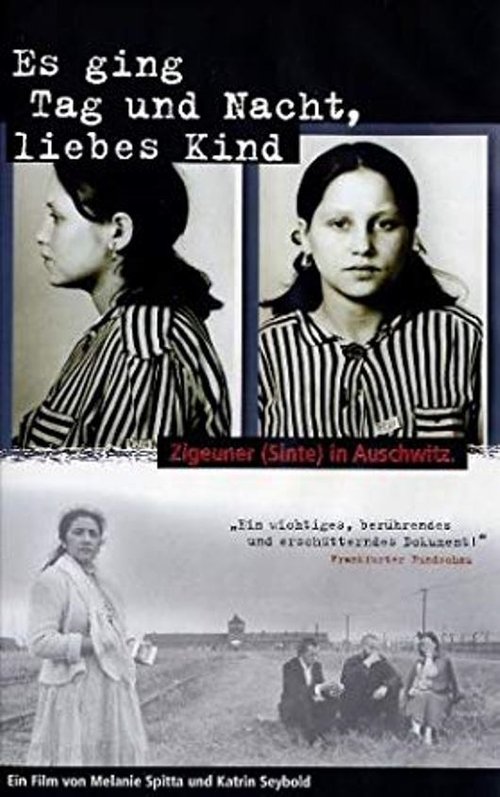
In the documentary, Melanie Spitta accompanies survivors and their children to Auschwitz. The film powerfully illustrates how the horrors of the concentration camps have shaped the survivors and their descendants across decades and generations—and why the victims’ trust in the Gadjé remains broken to this day.
Es ging Tag und Nacht, liebes Kind.
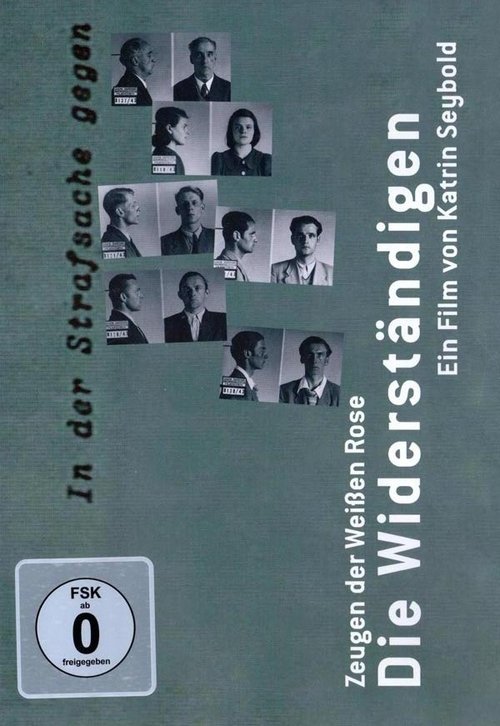
This is the first comprehensive documentary portrayal of the White Rose, the movement led by Munich students and their spirit of resistance to the Nazi regime. Companions, girlfriends, brothers and sisters tell the story of how they supported the distribution of tracts, how they survived Gestapo interrogation and courtroom trials in the Nazis’ Volksgerichtshof.
Die Widerständigen - Zeugen der Weißen Rose
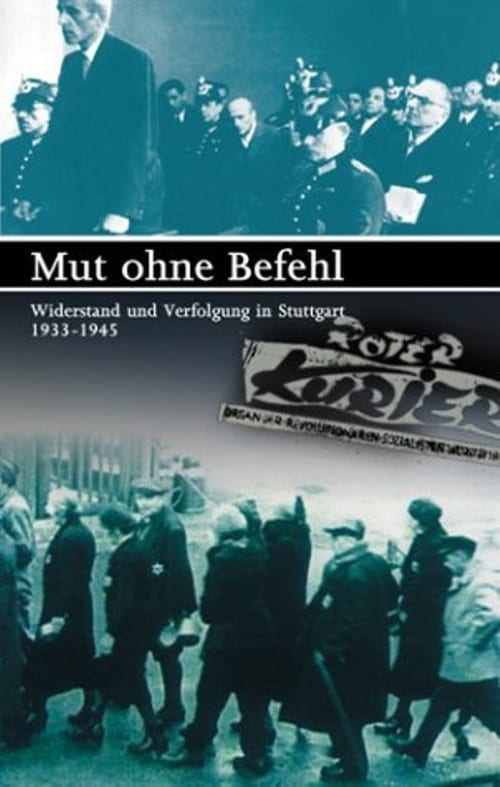
Documentary film.
Mut ohne Befehl - Widerstand und Verfolgung in Stuttgart 1933-1945
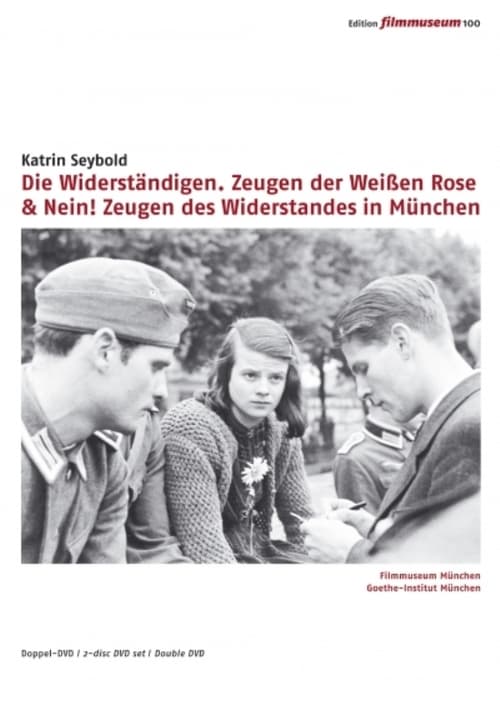
Documentary film.
Ludwig Koch - Der mutige Weg eines politischen Menschen
No description available.
Strafprotokoll aller und jeder...
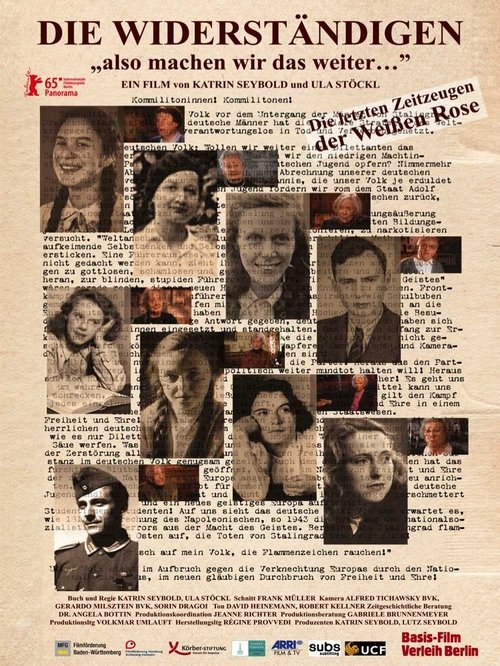
‘The films I make have to get made, because when these people are dead they’re dead and all we’ll have left are Gestapo records, the records of the perpetrators. We can’t accept that.’ This quote graces the beginning of Katrin Seybold’s last film which was finished by her long-standing friend and colleague Ula Stöckl following Seybold’s death on 27 June, 2012.
Die Widerständigen "also machen wir das weiter"
An insight into a girls' group in a mining community in the Ruhr region.
Wir sind stark und zärtlich - Bericht aus einer Mädchengruppe

The film accompanies Linda and Gallier in their everyday lives and gives them space for self-representation: at school, at the family table, at the disco, or in conversations with friends. The racism of the majority society, the pressure to assimilate, and the counterarguments of the two young people and their community members are omnipresent. The parents and grandparents are survivors. Linda summarizes that experiences of persecution and oppression have shaped the strong sense of belonging among the Sinti.
Schimpft uns nicht Zigeuner!
Documentary film.
Nein! Zeugen des Widerstandes in München 1933-1945
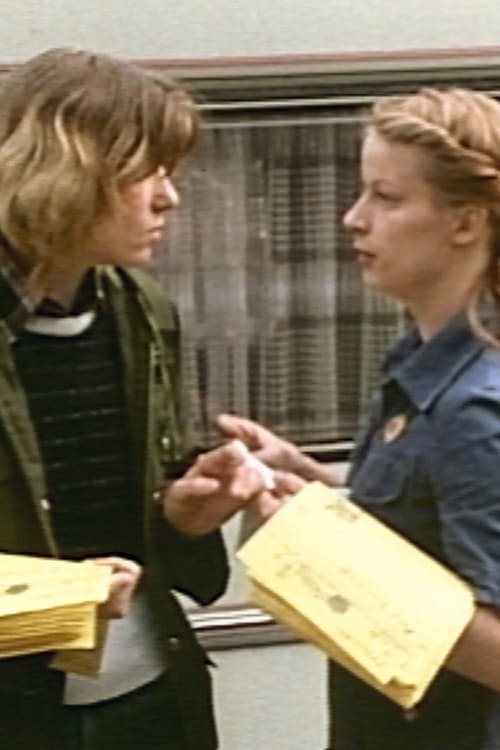
Women counselling women. Five thousand renters live in the satellite settlement of Scharnhorst near Dortmund. More than thousand of them are women living alone or with their children. A large percentage of them are on welfare. They need help in asserting their rights vis-à-vis the social welfare authorities. This documentary uses the point of view of a 26-year-old single mother of two to document the commitment of the women’s initiative. “In the group, I realised that I am not the isolated case I always thought I was.”
Scharnhorst Women’s Initiative

Documents a one-week meeting of radical leftist activists known as "Knastkamp" (Prison battle), which took place in July 1969 in Ebrach, Bamberg.
Die wilden Tiere
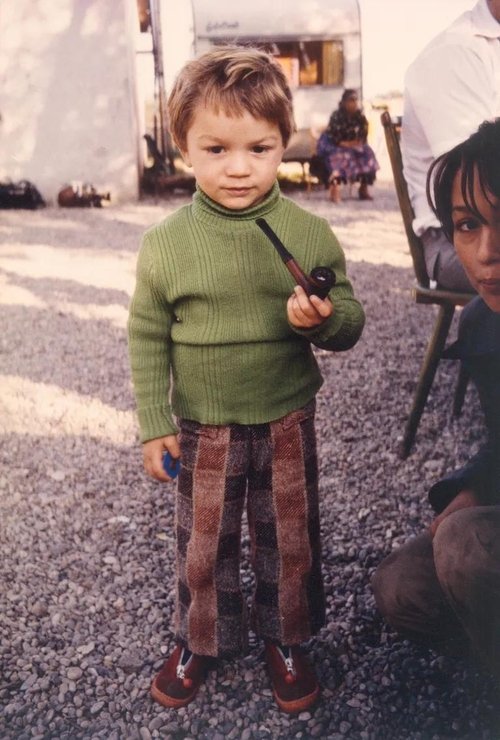
The nine-year-old Sinti girl Brigitta shows us her world. She lives with her family in a caravan site on the outskirts of a small Bavarian town. Everybody still speaks Romani and continues to live by the customs handed down. That means that the children take part in adult life and that the very highly respected parents describe how it used to be. In this community, all age groups live together naturally. For these Sinti, `gypsy' is an insult. At school they are taught there are two cultures, two languages and two realities: that of the Sinti and that of the Germans. While German is spoken at school, the only pupils are Sinti children. Brigitta animatedly describes the material deprivations, which are mollified by the life as `one big family'. Brigitta knows all too well where she belongs.
Wir sind Sintikinder und keine Zigeuner
A short film about the Hamburg witnesses of the Weiße Rose resistance group.
Hamburger Zeugen der Weißen Rose
A Marxist-Leninist space opera.
Elitetruppe Fleur De Marie
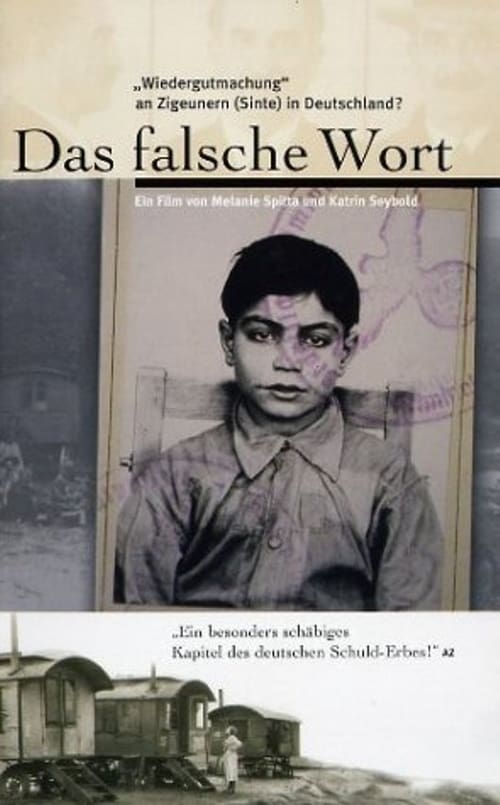
The child of survivors of the Sinti persecution by Nazis, Melanie Spitta confronts the truth about unpaid reparations as she exposes shocking evidence and issues a warning against believing perpetrators over victims.