Johannes Hempel
Directing
Known For
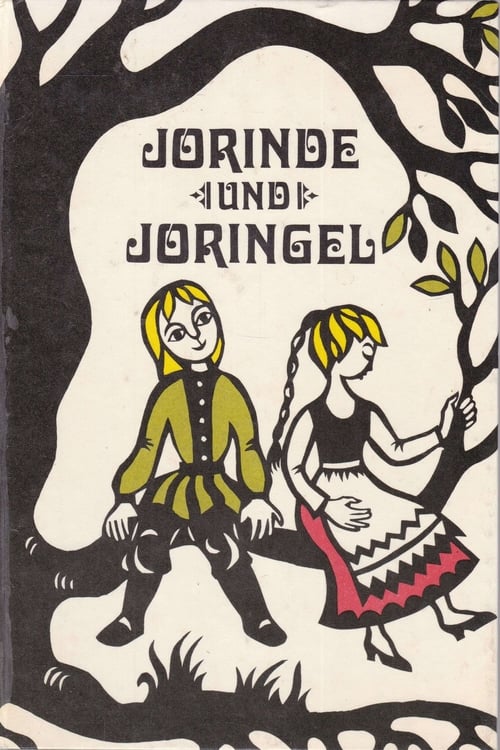
In ancient times, an old sorceress lived in a mysterious castle who turned any girl who approached a man into a bird. One day, Jorine falls under the spell, is turned into a nightingale and locked in a cage. Her friend Joringel dreams that he can free her with the help of a miracle flower. After much trouble and danger, he finds the flower and frees Jorine and the other enchanted girls.
Jorinde und Joringel
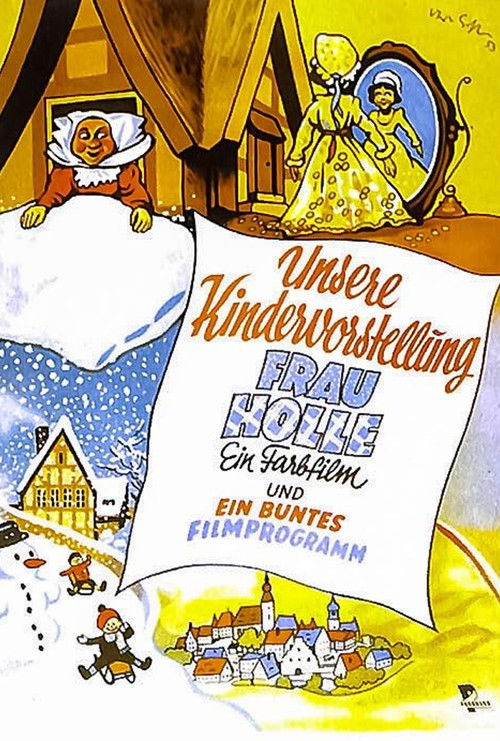
Two sisters enter the fairy tale realm of Frau Holle and must prove their diligence and helpfulness. The good and hardworking girl receives a golden dress. The lazy sister is given a dress made of pitch for her bad services. The pitch will only come off her when she has overcome her laziness.
Frau Holle
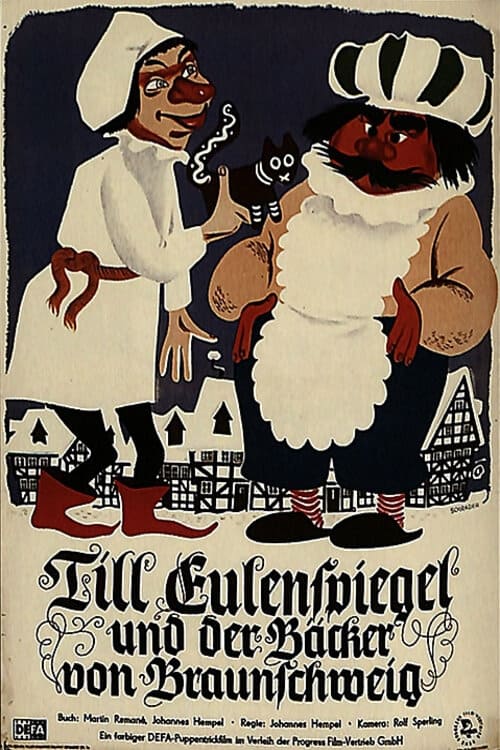
Till Eulenspiegel works as a journeyman for a baker in Braunschweig who is not very kind to his staff or his customers. Now the master gets his comeuppance, because Till follows his employer's instructions all too literally, and instead of bread and rolls, there are only baked owls and guenons for sale in the morning.
Till Eulenspiegel und der Bäcker von Braunschweig
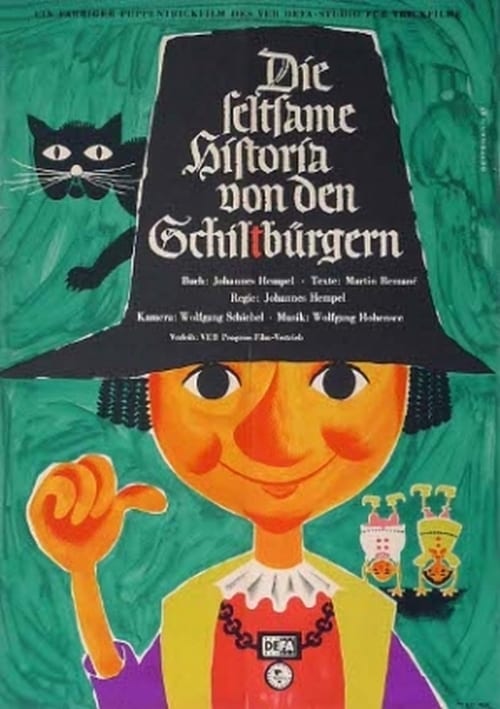
The first animated feature film made in East Germany. The people of Shilda were once welcome at the courts of princes all over the world, but back at the Shilda castle work remained and had to be carried out by the women of the town. The women grew tired of this and called their men back. After many foolish decisions, the townspeople were victims of their own devices, and eventually set fire to their own city. The fire destroyed everything, and the citizens of Shilda fled out into the world.
The Strange History of the Citizens of Shilda
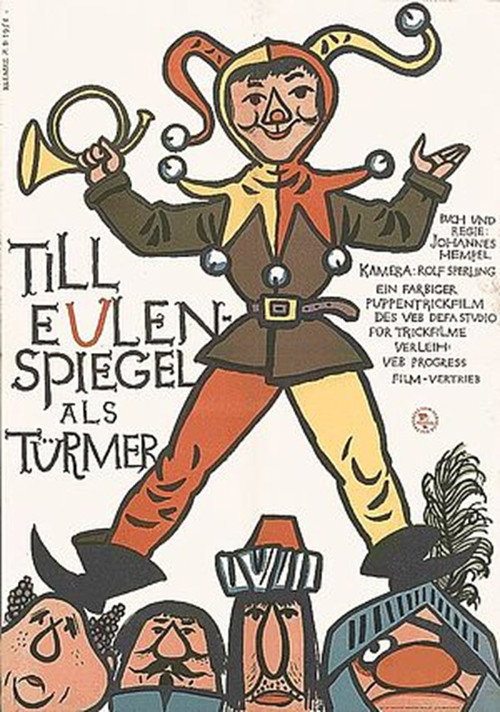
The count, an evil robber baron, appropriates the last of his peasants' cows. Till Eulenspiegel hires himself out as a tower blower to the wild journeyman and causes the count and his cronies to blindly leave the castle by raising a false alarm.
Till Eulenspiegel als Türmer
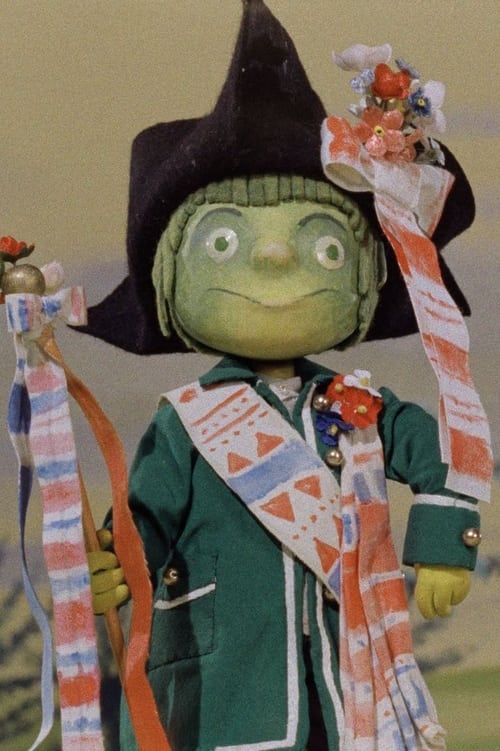
A film using the famous stop-motion technique well known from the Sandmännchen. It's based on a Sorbic tale of young Hanka who lives in a village. She is very beautiful and does not work. Secretly in love with Jan, she turns down all other men trying to marry her. Jan, however, is poor, so she turns him down. Jan asks the Water Spirit for help. The spirit proposes to Jana but then shows her that Jan is the right guy for her.
Als es noch Wassermänner gab...
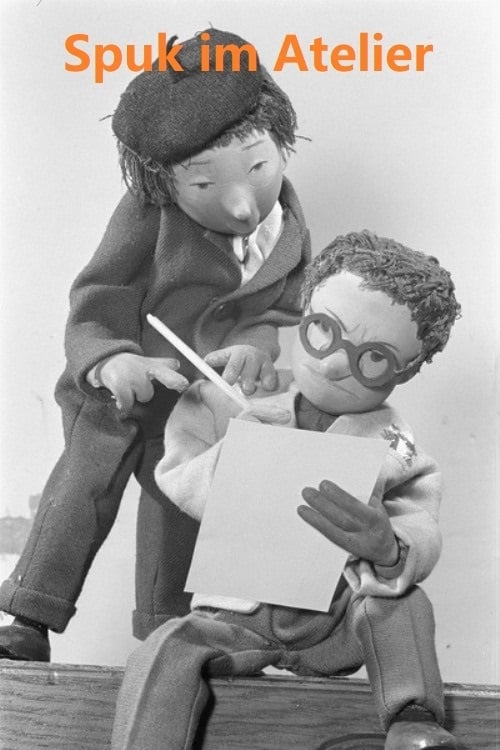
Real part: A puppet animation film studio. The director, cameraman, animators and lighting technicians set up a scene in which a streetcar car with passengers appears. The recording begins, the animator moves the puppets phase by phase. Trick part: An old woman gets on the streetcar at a stop and can't find a seat. Fritzchen deliberately looks away so that he doesn't have to get up. All the puppets look at him indignantly. Real part: The scene is over. It's closing time and the dolls are put in a cupboard. The staff leave the studio. Trick part: The puppet cupboard comes to life. Fritzchen apologizes to the old woman and blames the animator and director for his behaviour. He calls on the puppets to shoot the scene again. This happens, and now he does offer his seat to the little mother. Real part : The doorman notices a glow of light in the studio, opens the door, but sees nothing unusual. The dolls have returned to their cupboard. Shaking his head, the doorman returns to his box.
Spuk im Atelier

The first puppet animation film in the GDR shows the fairy tale about the quarrels of an unequal pair of animals, which is well-known in both German and Sorbian.
Wjelk a Liška
In a children's room, dolls and animals are looking at a picture book. Fips the monkey wants to have it all to himself. The dolls look for another toy. Fips takes it away from them. Now the dolls are busy playing skittles and won't let the troublemaker join in. But they soon feel sorry for him. As he promises to mend his ways, he is allowed to play again.
Fips der Störenfried
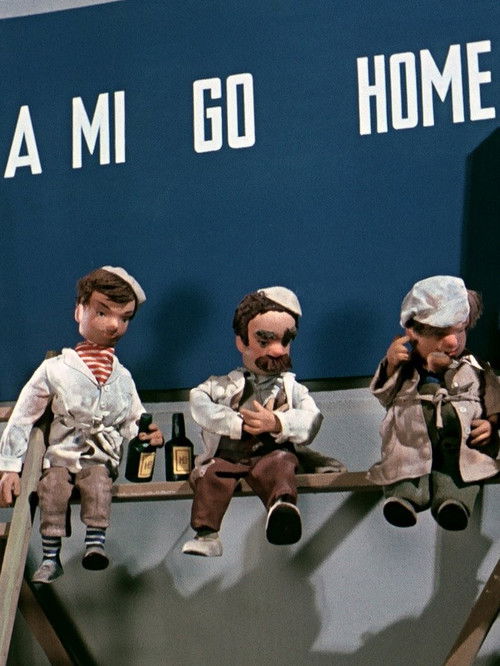
To an attentive passer-by, the activities of some painters seem very suspicious. As a result of their artistic efforts, the anti-occupier slogan AMI GO HOME appears to have appeared on the wall. The outraged citizen does not succeed in persuading the craftsmen to remove the writing - he only receives amusement. The police, who were finally alerted, and the representatives of the occupying power were unable to find anything offensive about the lettering, as the full company name "Armin Gotzschomer" had developed from the letters in the meantime. In the evening, however, the lettering does convey the presumed message AMI GO HOME, as the painters have highlighted some of the letters with fluorescent paint.
Blinder Alarm
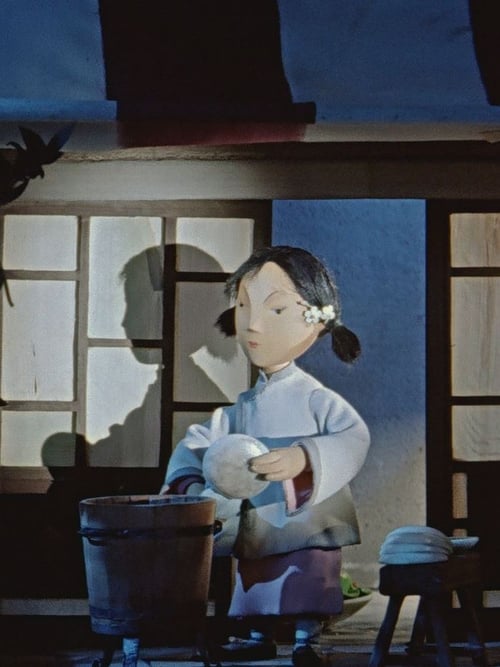
In ancient China, there is a poet named Lo who lives in the emperor’s palace. While the hardworking people long for peace and happiness, Lo writes hymns in honor of the militant emperor, who is perpetually hungry for conquest. The monarch is pleased by the poet’s words, but the people do not want to hear the hymns praising him anymore. Lo is completely unaware of this and is surprised when the kitchen maid Hsi-Hua refuses to sing his hymns. With her help, Lo learns what the people really want and is able to see how cruel the emperor is.
Zwei Lieder
The people, among them an astonishing number of workers, react with visible anger to the sudden lack of matches – and threaten to go to the barricades. The problem is solved, of course. But does it mean the population’s anger is placated? Puppet animation director Johannes Hempel created this satire based on a draft by Wolfgang Kohlhaase – at the same time as the uprising of 17 June 1953.