FEEL IT.STREAM
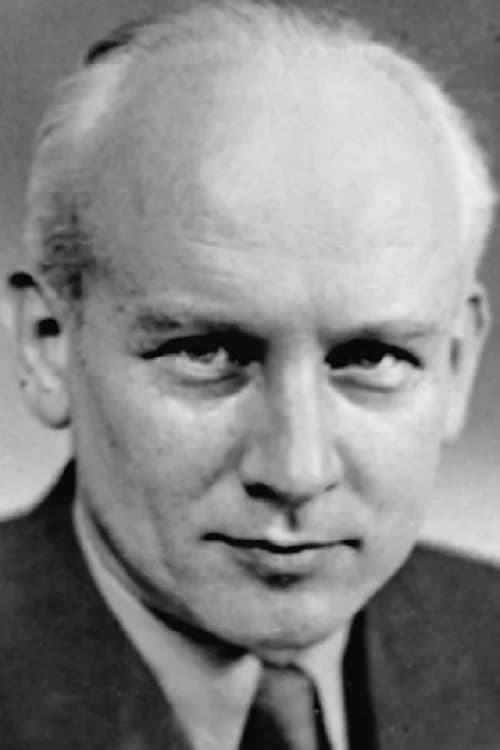
Pavel Klushantsev

Pavel Klushantsev

Directing

Biography

Pavel Klushantsev (1910–1999) was a Soviet filmmaker, screenwriter, and cinematographer, widely regarded as a pioneer of science fiction cinema. Known for blending scientific accuracy with imaginative storytelling, he directed influential films such as Road to the Stars (1957), which inspired generations of filmmakers, including Stanley Kubrick in the making of 2001: A Space Odyssey. Klushantsev’s innovative use of special effects and visual techniques helped shape the language of modern science fiction on screen. Throughout his career, he focused on bringing space exploration and futuristic visions to a wide audience, earning him recognition as one of the most significant visionaries of Soviet cinema.
Known For

Planet of Storms
5.6

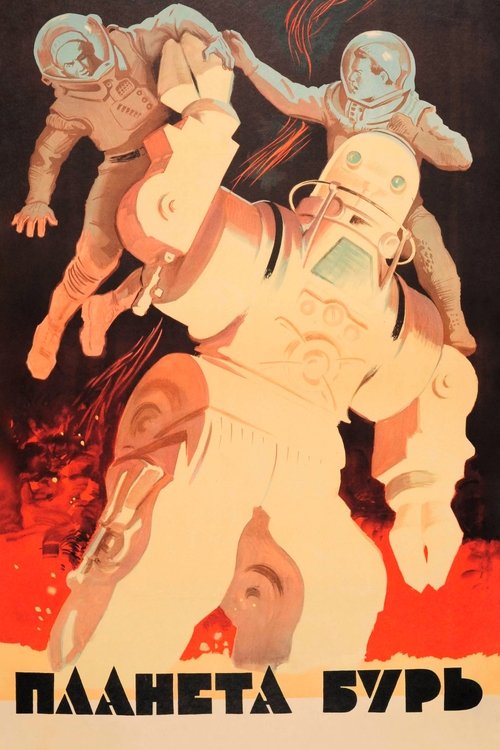
Soviet cosmonauts land on the planet Venus and find it teeming with life, some of it dangerous.

Planet of Storms

1962
The Universe
7.0

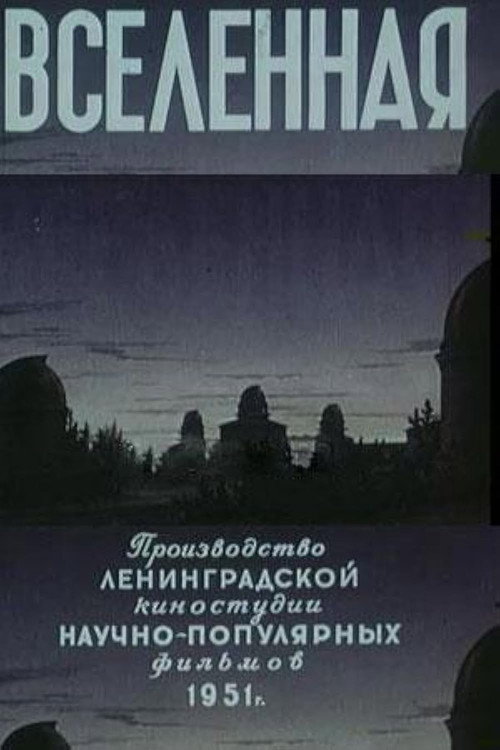
A rare Soviet documentary film from 1951, directed by Pavel Klushantsev. It explores the history of humanity’s study of the universe, from ancient astronomy to modern understandings of the solar system, examining the structure of the cosmos, the planets, and advances in scientific space research.

The Universe

1951
Road to the Stars
5.9

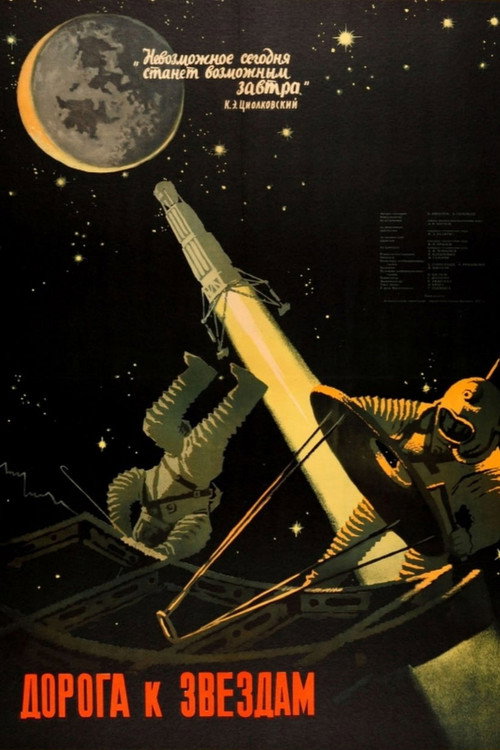
This film consists of three parts. The first dramatizes the life of the founder of Soviet astronautics, Konstantin Tsiolkovsky; the second describes the development of rocket technology; and the third visualizes the future with enactments of the first manned spaceflight, spacewalk, space station construction and humans on the moon.

Road to the Stars

1957
The Basics of Colour in Film
N/A

Documentary film introduces the principles of color cinema, from the spectrum of light sources to the structure of multilayer film, and traces the entire process of how color is reproduced on screen.

The Basics of Colour in Film

1953
Meteors
5.1

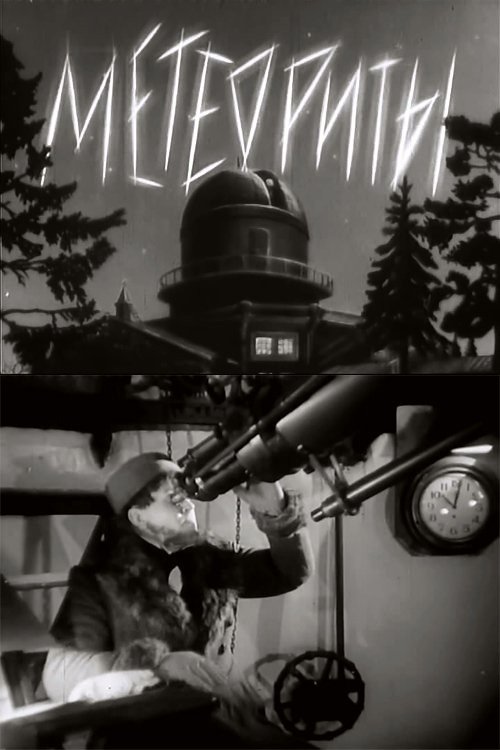
Stones from the sky - tangible pieces of other worlds. After millions of years of wandering in the darkness and the cold expanses of space, meteorites find shelter in the windows of museums. By studying meteorites, scientists know their origins, how they get to the Earth, and from which substances they are comprised. This film also explores the attitude towards this phenomenon in different nations through different times in history.

Meteors

1947
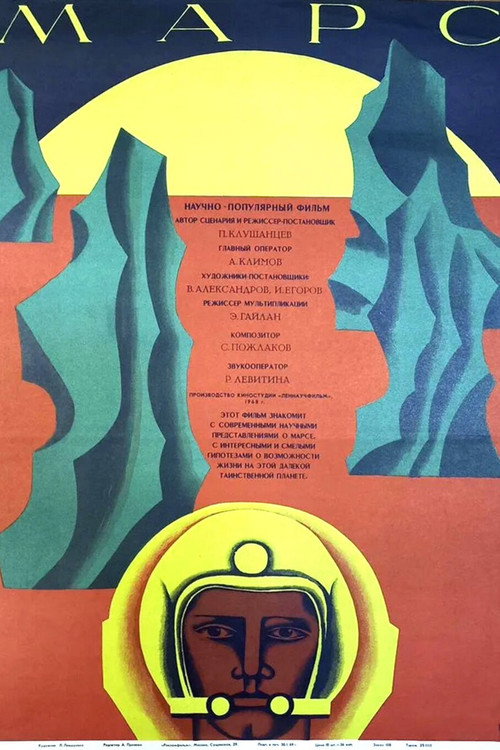
Mars
5.3

Like the previous film Luna produced by Klushantsev, the film Mars was created at the intersection of educational science films and science-fiction. It consists of seven pieces, which tell (based on scientific understanding of the 1960s) of the physical conditions on planet Mars, the possibility of life on Mars and what forms it might take, of Martian canals and "seas" of the Red Planet. In addition, the film includes the director's fantasy hypothetical forms of life on mars, and of the exploration and colonization of Mars in the near future.

Mars

1968
No image
N/A

A popular science film on the physical properties of matter and nuclear physics, which simply and clearly presents complex phenomena. From Democritus and alchemists to the first nuclear power plant, and dreams of nuclear ships and spacecrafts.

The Mystery of Matter

1956
The Moon
5.7

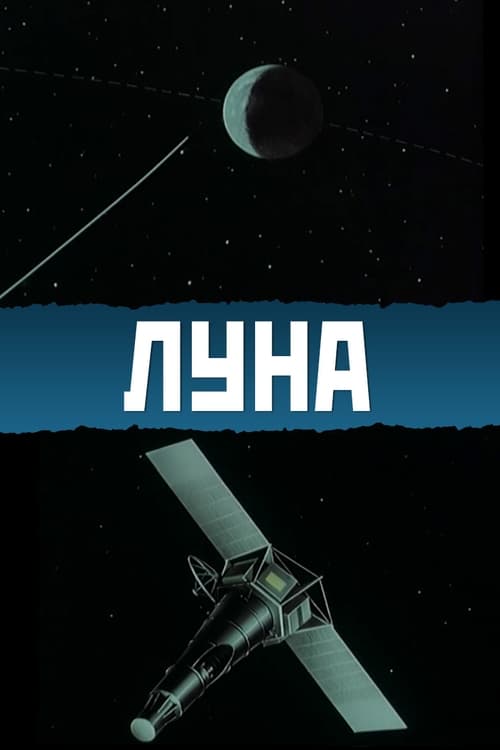
Science fiction/documentary film about man's voyages to the moon.

The Moon

1965
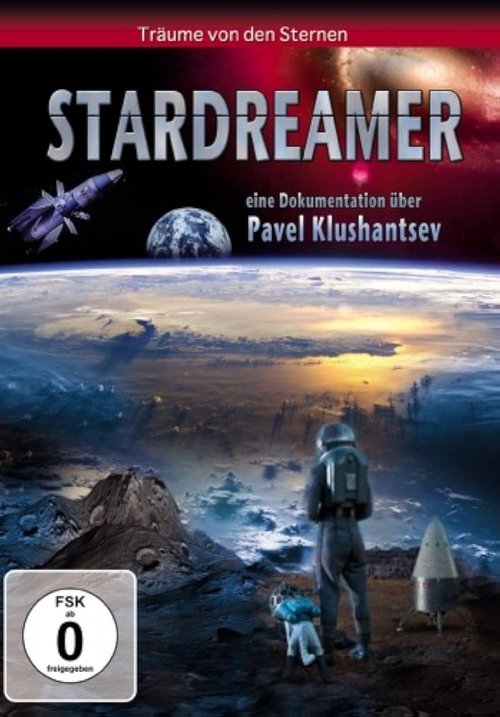
The Star Dreamer
5.6

The Russian filmmaker, Pavel Klusjantsev, has had an extraordinary influence on an entire genre of films. Throughout his career at the film studio in St. Petersburg, Klushantsev pioneered and invented legendary techniques for filming the planets, stars and weightnessless - long before anyone else. He went on to redefine the science fiction genre and influence the way Hollywood made their science fiction films, including the Academy Award-winning Visual Effects Master, Robert Skotak, a man who spent years trying to track Klushantsev down

The Star Dreamer

2002
The Great Combinators
N/A

Documentary about the Soviet masters of combined composite filming, their inventions, cinematic tricks and the rivalry with Hollywood craftsmen. Through archival footage and interviews, the film shows how practical effects created in the USSR in the 1940s to 1960s anticipated or influenced later Western techniques.

The Great Combinators

2009
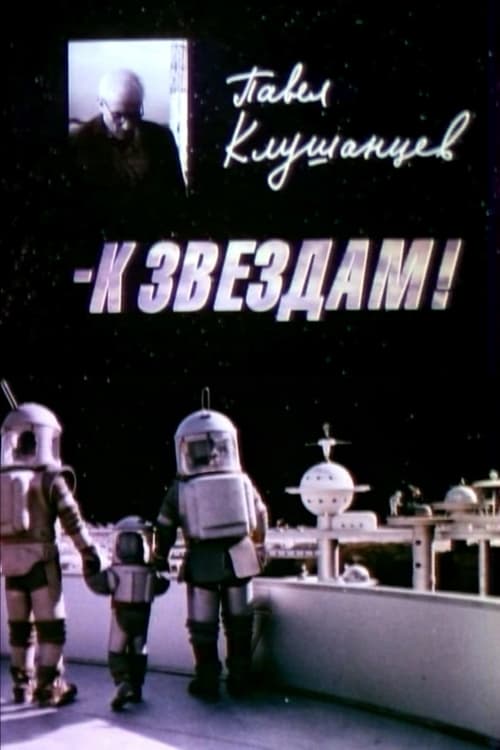
Pavel Klushantsev - To the Stars!
N/A

Documentary on russian science fiction director Pavel Klushantsev.

Pavel Klushantsev - To the Stars!

2000
Once Upon a Time in Leningrad
N/A

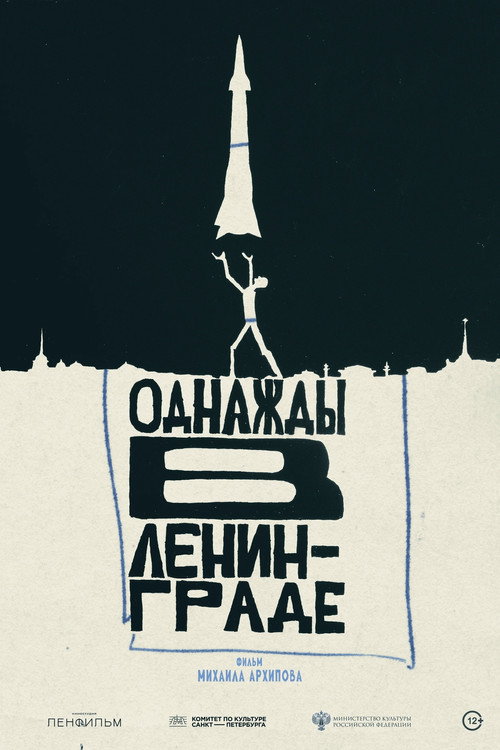
A film about Pavel Klushantsev (1910–1999), an outstanding Soviet director at the Lennauchfilm studio and creator of popular science films about space, who foresaw advancements in space exploration decades ahead. Drawing on unique documentary footage, the film traces Klushantsev’s life story. He endured revolutions, wars, professional triumphs, and dismissal from his beloved work, yet never lost faith in humanity’s boundless potential to build a better world.

Once Upon a Time in Leningrad

2025
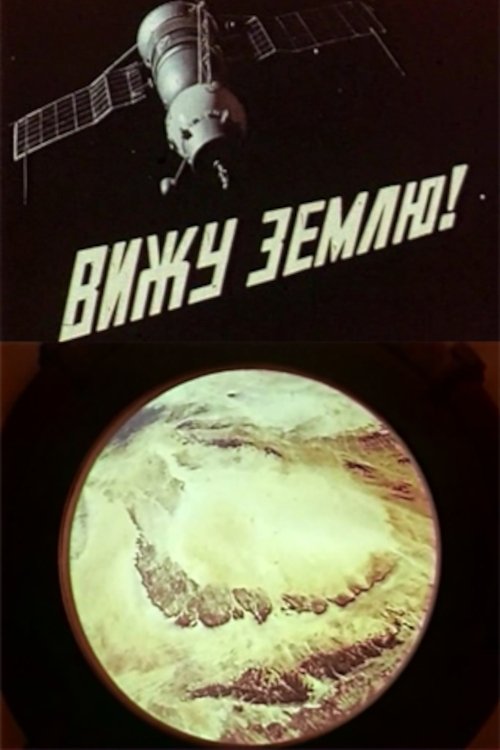
I See the Earth!
N/A

A popular science film dedicated to research of the Earth from spacecraft, instilling a sense of empathy for protection of the Earth's natural resources.

I See the Earth!

1970