Maurice Baquet
Acting
Biography
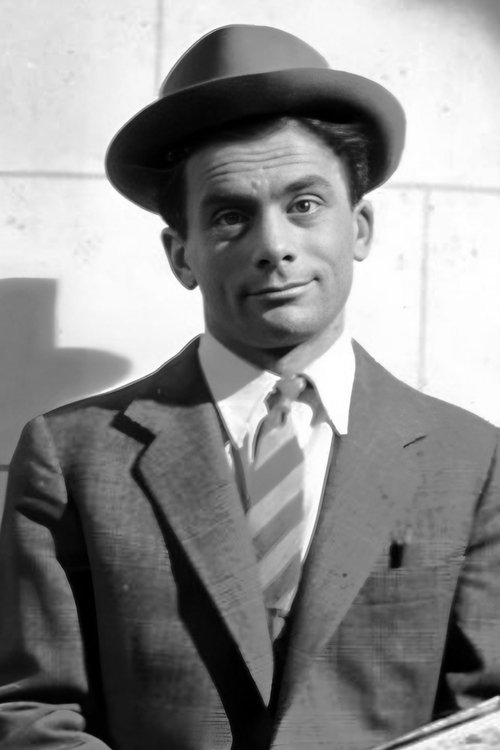
Maurice Baquet is a cellist, actor, sportsman and French entertainer, born May 26, 1911 in Villefranche-sur-Saône and died July 8, 2005 in Noisy-le-Grand. Maurice Baquet was married twice: with Jacqueline Figus (1920-2011) from October 31, 1944 to June 20, 1959, with whom they had a daughter, Sophie, and with Maria Yakimova from February 20, 1964 until her death. The couple had four children: Anne, Gregori. All of them, as well as Sophie, born from her first marriage, are actors and singers — Stéphane, light designer and Dimitri, show producer. ... A native of Beaujolais, he took cello lessons at the Lyon conservatory and then those in Paris where he was in the same class as Henri Betti, Paul Bonneau, Léo Chauliac, Henri Dutilleux, Louiguy, Pierre Spiers and Raymond Trouard and where he won first prize. This did not prevent him from failing the entrance examination for the orchestra of the Paris Opera, which motivated him to give up a classical career. However, he does not leave his cello behind. On the contrary, the instrument accompanies him throughout his life and we remember the wink that Joseph Losey allowed him during a short but moving sequence in Monsieur Klein. In the early 1930s, he rubbed shoulders with Pierre and Jacques Prévert, Roger Blin and joined the famous October Group, an agitprop group, closely linked to the French Communist Party. He set up his career as an actor there and devoted himself to beautiful texts, in particular the poems of Aragon and Paul Éluard. In 1935, he made his first feature film under the direction of Marc Allégret, Les Beaux Jours. A filmography of more than 80 titles follows. His head as a resourceful and facetious kid also earned him the role of Bibi Fricotin, then that of Ribouldingue in two films by Marcel Aboulker. At the theater, he plays in the operettas Andalousie and Gipsy by Francis Lopez. He also performed at the cabaret, sometimes accompanied on tap dance by Jacqueline Figus, his wife since 1944. He also participated in ski mountaineering competitions, as well as more humorous performances, such as his ski descent from the stairs of the Butte Montmartre in 1946. In the same vein, he also skied down the stairs from the Maison de la Radio, following a bet. In 1947, he presented with the whimsical Saint-Granier a bicycle-ski allowing to go down the slopes. Friend of Roger Frison-Roche, we find him in the credits of Premier de cordée (1944). In 1955, he co-directed Stars and Tempests with Gaston Rébuffat and Georges Tairraz, which won the Grand Prix at the Trente Festival. On July 13, 1956, he made the first ascent of the south-east face of the Aiguille du Midi in Chamonix with Gaston Rébuffat, sequences of which can be seen in Entre terre et ciel. He was also a friend of Robert Doisneau, who photographed him extensively6 and with whom he produced a work entitled Ballade pour violoncelle et chambre noire, which testifies to their friendship. He died at the age of 94 and is buried in the cemetery of Beauregard (Ain).

Known For

No description available.
Champs-Elysées

In the summer of 1939, 13-year-old Marie goes with her parents to visit her grandparents in a small town near Avignon. Marie discovers her femininity and falls for a young Jewish doctor, but he prefers Eva, Marie's mother.
The Adolescent

No description available.
Sacrée soirée

Midi Première is a French variety show presented by Danièle Gilbert, directed by Jacques Pierre and broadcast from January 6, 1975 until January 1, 1982 on TF1. The program was generally broadcast between 12:15 p.m. and 12:55 p.m., then giving way to the 1:00 p.m. TV news. However, the broadcast schedule could change, depending on the guests, and the setting where the recording of the program was shot. Certain performances by artists who have become cult like the one where Ringo jostles with a demonstrator in interpretation (1977), that of Dalida with the title There is always a song with the soundtrack that does not start, twice, at the right speed (1978), Claude François and his Clodettes, who, in the provinces, are unable to join "the set" in order to interpret his song, the latter being taken by the crowd of delirious fans (summer 1977) . The group Supertramp performed there with the title "Dreamer" on March 8, 1975.
Midi Première

A talk show presented by Michel Drucker
Les Rendez-vous du dimanche

Le Grand Échiquier is a French variety television program created and presented by Jacques Chancel. It aired at 8:30 pm on the first channel of the ORTF from January 12, 1972 to July 12, 1972, then on the second color channel of the ORTF from September 1972 to December 1974, and finally on Antenne 2 from January 1975 to December 21, 1989. The program returned to France 2 on December 20, 2018 and is hosted by Anne-Sophie Lapix.
Le Grand Échiquier

No description available.
Discorama
No description available.
Samedi soir

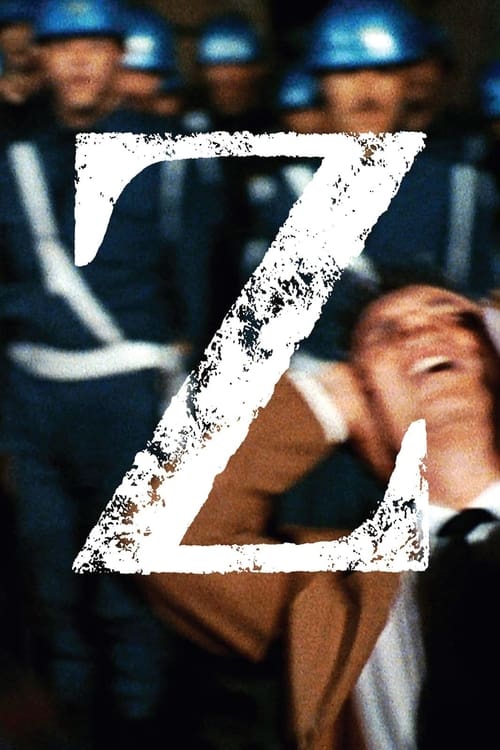
A prominent politician is murdered during a demonstration. The government and army are trying to suppress the truth, but a tenacious magistrate is determined to not to let them get away with it.
Z

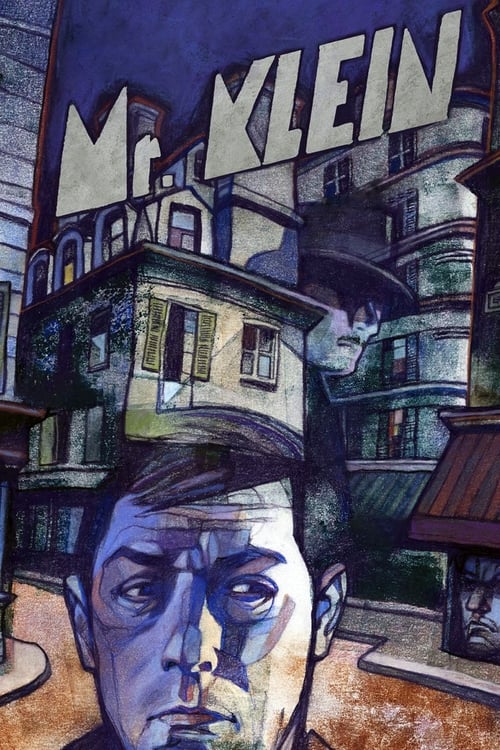
Paris, France, 1942, during the Nazi occupation. Robert Klein, a successful art dealer who benefits from the misfortunes of those who are ruthlessly persecuted, discovers by chance that there is another Robert Klein, apparently a Jewish man; someone with whom he could be mistakenly identified, something dangerous in such harsh times.
Mr. Klein

Mild-mannered novelist of Western fiction, Amédée Lange, and his colleagues take over a publishing house after their exploitative boss disappears, only for the superior to return and try to reclaim the profits from their successful cooperative.
The Crime of Monsieur Lange

No description available.
Dieu seul me voit (Versailles-Chantiers) - version interminable

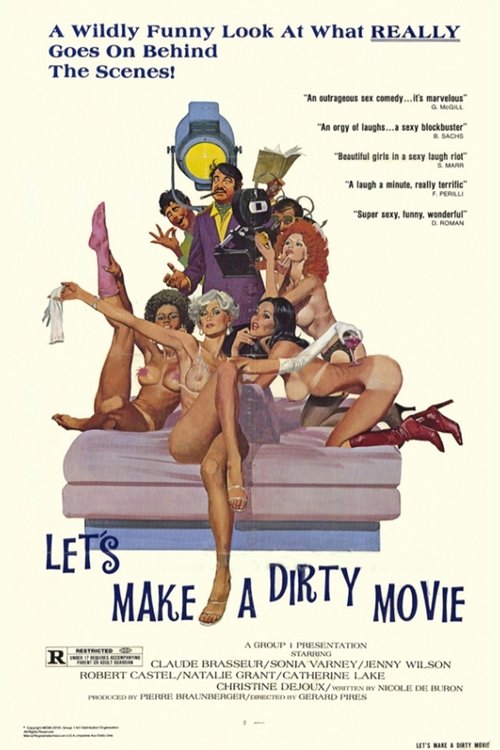
A bumbling film crew attempts to make a porno movie.
Let's Make a Dirty Movie

Inhabitants of a flophouse struggle to survive under the harsh treatment imposed by the landlord, Kostyleva. One resident, young thief Wasska Pepel, ends his affair with the landlord's wife, Vassilissa, and takes up with her sister, Natacha. Pepel also befriends the baron, a former nobleman fallen on hard times, but Pepel's attempts at happiness are complicated when he's accused of murder by a spiteful Vassilissa.
The Lower Depths

Helene is based on Helene Wilfur, a novel by Vicki (Grand Hotel) Baum. Madeleine Renaud essays the title role, a young medical student in love with aspiring musician Pierre Regnier (Jean-Lous Barrault). Pierre's father, a noted surgeon, puts pressure on his son to give up music in favor of medicine. Unable to withstand his father's remonstrations, Pierre kills himself, prompting the grieving Madeleine to forget all about romance and dedicate her life to the cause of healing others. Wilfur avoids the usual soap-opera goo by offering realistic performances and credible dialogue (the English-language subtitles were composed by erudite film critic Herman G. Weinberg).
Hélène

The climbing of an immense staircase made up of the most varied stairs. Symbolic scenes occur on different levels where characters seem to be prisoners of their deeds and of their own folly. The steep staircase leads little by little towards the zones of great light where human beings and nonhuman beings meet.
The Angel

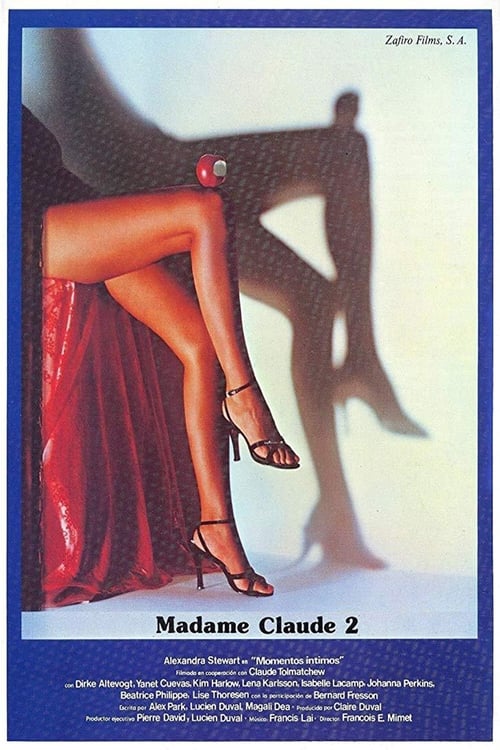
A notorious French madam, whose business serves many of the nation's most powerful individuals, plans to go international until she becomes the focus of media scrutiny.
Madame Claude 2

As its title indicates, La Mort du Cygne is set in the special world of the ballet. Young dance student Rose Souris idolizes her teacher-role-model Mademoiselle Beaupré, and will do anything to help Mademoiselle Beaupré further herself. Thus, when rival ballerina Nathalie Karine lands a much-coveted role, Rose arranges an accident causing Nathalie to break her leg. The girl comes to regret her rash behavior when it appears as though Nathalie will never dance again.
Ballerina

We thought we'd seen, read, and heard everything there was to see about the Cannes Film Festival, from the glitz and gossip to the scandals and censorship. And yet, Emmanuel Barnault's "Morceaux de Cannes" (Pieces of Cannes), by this leading expert on Italian and French cinema, convinces us otherwise. The third largest event in the world (after the Olympic Games and the FIFA World Cup) reveals its secrets only sparingly, as this film attests. The result of passionate research in the INA archives, these 52 minutes, without interviews or voice-over narration, string together rare and sometimes previously unseen footage. Taken together, they tell a surprising, original, and heartwarming story of the Festival. On the beach, on a street corner, in a restaurant, or in the privacy of a hotel room, these forgotten archives summon the greatest filmmakers, actors, and actresses of the last seventy years, from Jean Cocteau to David Lynch, for an anthology of the Festival's history.
Morceaux de Cannes

Having fallen out with his girlfriend Dolorès, Juanito leaves for Mexico, where he becomes a famous matador.There he meets a Viennese singer, Fanny Miller, who falls for him so much so that she intercepts the letters Dolorès keeps on sending him. In desperation, Dolorès devotes all her time and efforts to dance and she becomes the celebrated dancer Estrellita. After a series of misunderstandings and ups and downs, the sun of Andalusia will finally reunite the two lovebirds.