Camera
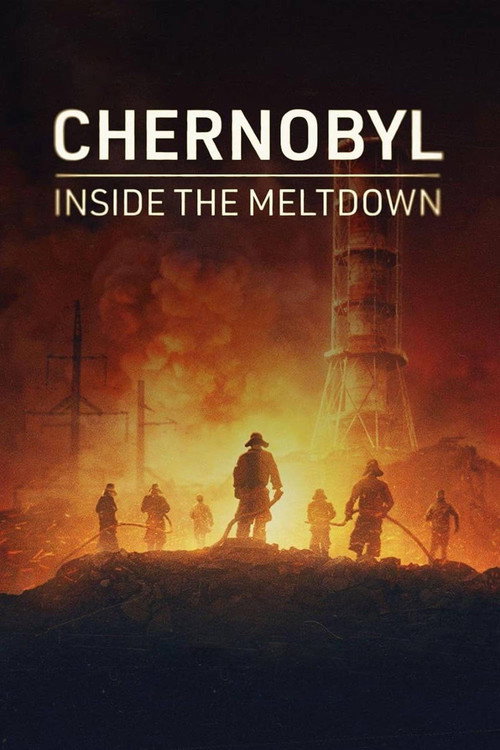
Featuring revealing interviews with survivors speaking publicly for the first time, alongside rare insight into the CIA and Soviet responses, this series exposes a web of secrecy, miscalculation, and human cost. Astonishing new footage from inside the nuclear exclusion zone reveals how this scarred landscape is once again under siege as war encroaches on one of the most dangerous places on Earth.
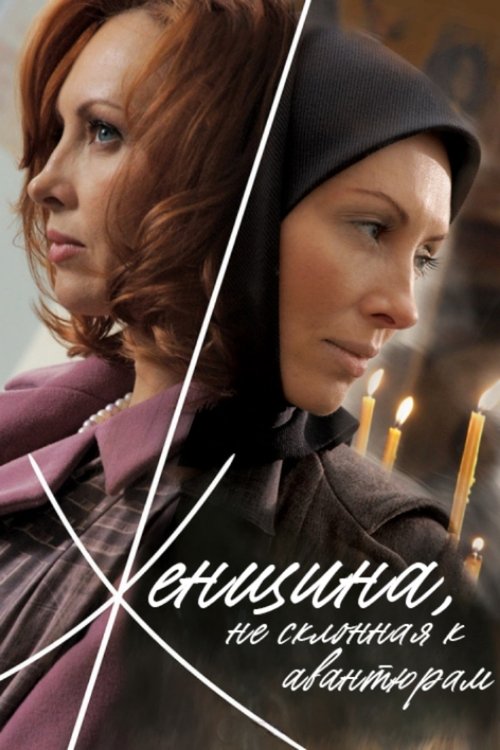
Irina seems to be a happy woman: she has a loving husband, two children, and a good job. But one day, Irina falls head over heels in love with Anatoly. The feeling is so strong that Irina decides to leave her family. She has no idea what consequences this will have... Her husband dies of a heart attack. Her children reject her, and she goes to a convent in a state of confusion. Meanwhile, her lover takes on the responsibility of raising her children...
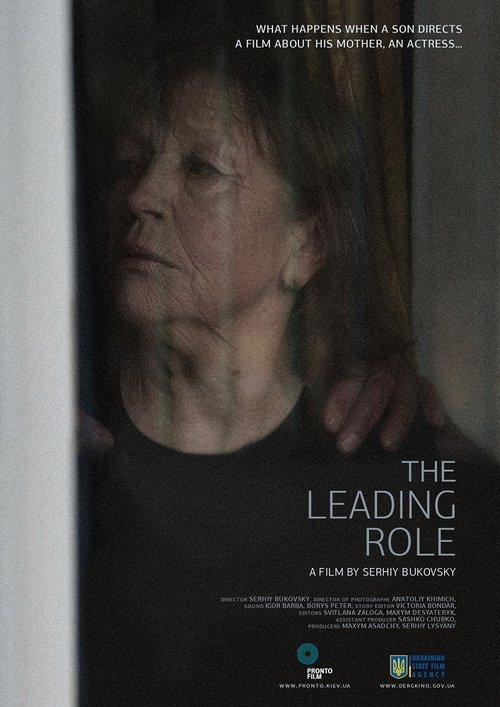
The film is about the director’s mother, the movie actress Nina Antonova. Now she is 80. She has had hundreds of roles – big and small. It is a personal story about an honest and sad life, about self-sacrifice and freedom. Real fame as an actress came to her only once in her life. It was the leading role in the first Soviet colour TV series Varka’s Land. That was 45 years ago…
About love and loyalty, which helps to withstand the trials of fate in the most difficult times. The film features Svitlana Knyazeva and Leonid Osyka, Kateryna and Boryslav Brondukov', Kostyantyn Stepankov and Ada Rogovtseva.
A documentary assembled from footage shot in the weeks following the 1986 Chernobyl nuclear disaster, documenting the immediate response, evacuation efforts, and the work of firefighters, doctors, and workers involved in containing the damaged reactor.
A movie shot in almost one single take. The parable should not be interpreted in words.
Love, Oleksandr Dovzhenko's cinema, the 20th century... These concepts make up the formula of life for two people. Heavenly love is all that is left for Maria Volkhovska, the widow of the prominent Ukrainian film actor Petro Masokha, who played the leading roles in Dovzhenko's films "Ivan" and "Earth".
The subjective-personal context is perceived as an objective document of the era, a true testimony of the time when it was created and experienced. The author reflects on events of different historical scale, but equally significant for a person. The film is built on the principle of montage of free associations: from memories of the grandmother and reflections on "the time of our grandmothers" to the image of Vira Kholodnaya as the embodiment of femininity, and then - at a sharp turn - to the problems of inter-ethnic conflicts.
A propaganda film about V. Hrabovenko who fought in Afghanistan. The hero of the film talks to passengers on the train while in his native village. The film shows a military hospital in Dushanbe (Tajik SSR), where the wounded V. Grabovenko was treated. Surgeon Y. Vorobiev gives an interview.
About the world champion and record holder in pole vaulting, Honored Master of Sports of the USSR Serhii Bubka, who set four world records in one season. His family and coach, Honored Coach of the USSR V.O. Petrov tell about the athlete.
The residents of a remote village decided to stage a play based on Kotlyarevsky's "Aeneid" on their own. The initiator of this unusual undertaking was Kolot, an energetic and creative young man from the village. He had previously been dismissed from the police force, but now he had plenty of free time. Having gathered a group of like-minded friends and colorful villagers, he saw the project through to completion, and on the eve of the premiere, he decided to show the play to his former colleagues in the police force. Who could have imagined the strange events that would follow!
About the life and work of the documentary film director, Honored Artist of the Ukrainian SSR V.M. Shevchenko. The film shows the congress-festival of the International Association of Scientific Cinema in Pardubice (Czechoslovakia). Archival film and photo documents are used.
Shot at a children’s cemetery seven years after Chornobyl. The author is delicately showing human grief from the point of view of not an outside observer trying to shoot reportage but a parent like his heroes. The death of an adult is a tragedy, while child’s death is a catastrophe. As long as such cemeteries exist, this pain will exist, too.
The film is about the service of border guards at one of the outposts of the Western Border District: soldiers on guard duty, during their leisure time, see off demobilized soldiers.
No description available.
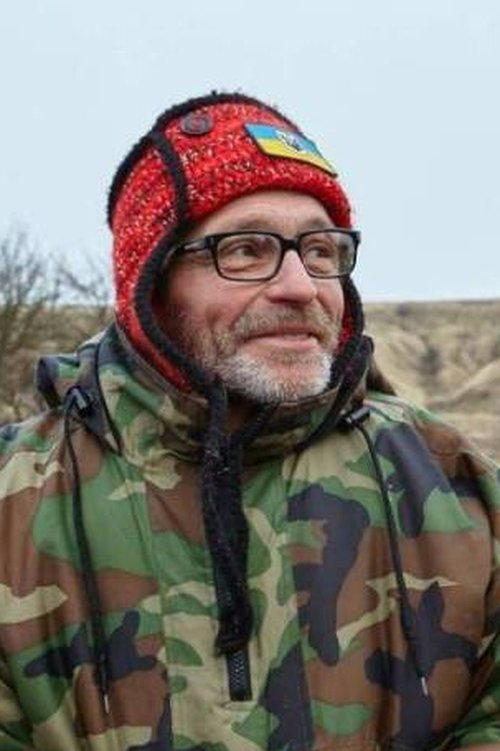
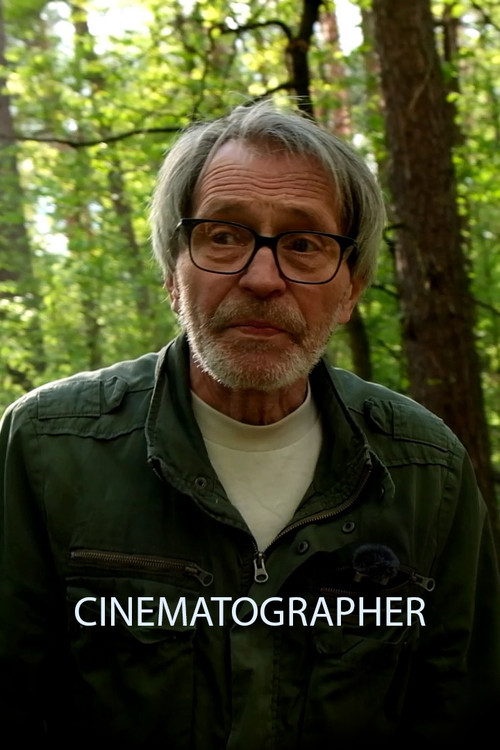
Ukrainian cinematographer Anatoliy Khymych raises three dogs, one of which he saved from death, and the shadows of the films he has shot — about Chornobyl, in particular — are recalled.
About a young poet, a 6th grade student of Makiivka Secondary School No. 30 (Donetsk Oblast), Oleksandr Kachur, who won the main UNESCO Golden Pegasus prize in 1991 at the International Contest of Beginning Poets.
The film is in the first person, from a girl. Ordinary people on a train are shown, each talking about their painful experiences... some crying, some singing, some reciting poetry. And everyone has their own story, their own pain, their own burden. The film is about an ordinary Ukrainian, and there are many of them, and everyone wants to be heard...
About the teacher of Cherkasy Music School No. 1, the head of the Ecology Society, S. Silkin, giving an interview at an environmental rally during a lesson.