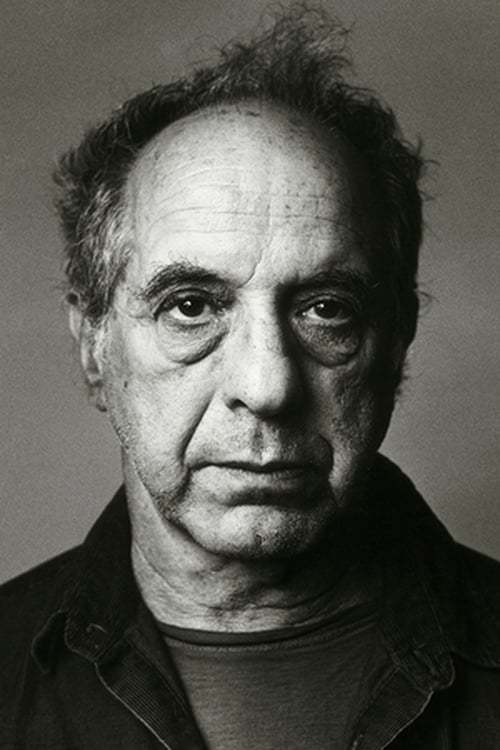
Robert Frank
Directing
Biography
Robert Frank is one of the most acclaimed photographers of the 20th century. He is best known for his seminal book "The Americans", featuring photographs taken by the artist in the mid-1950s as he traveled across the U.S. on a Guggenheim fellowship. Robert Frank is also known as a filmmaker.
Known For

A mediocre musician goes on the road in search of the world's greatest guitar maker.
Candy Mountain

Hit videos.
Hit Parade

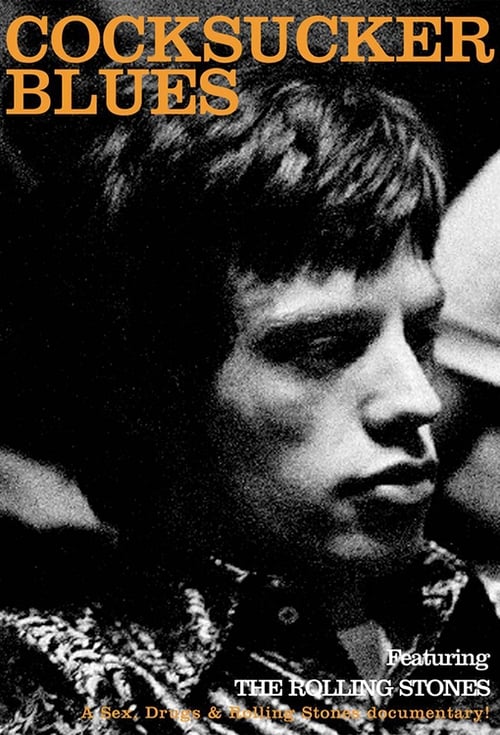
This fly-on-the-wall documentary follows the Rolling Stones on their 1972 North American Tour, their first return to the States since the tragedy at Altamont.
Cocksucker Blues
Filmed in Wendover, Nevada, in early 1981, Energy and How to Get It combines documentary and fictional ideas. What began as a documentary film about Robert Golka, an engineer who was experimenting with ball lightning and the development of fusion as an energy force, was turned into a spoof on the documentary form, inserting fictional characters into the story such as the Energy Czar (William Burroughs), and a Hollywood agent (filmmaker Robert Downey). (mfah.org)
Energy and How to Get It
No description available.
Live

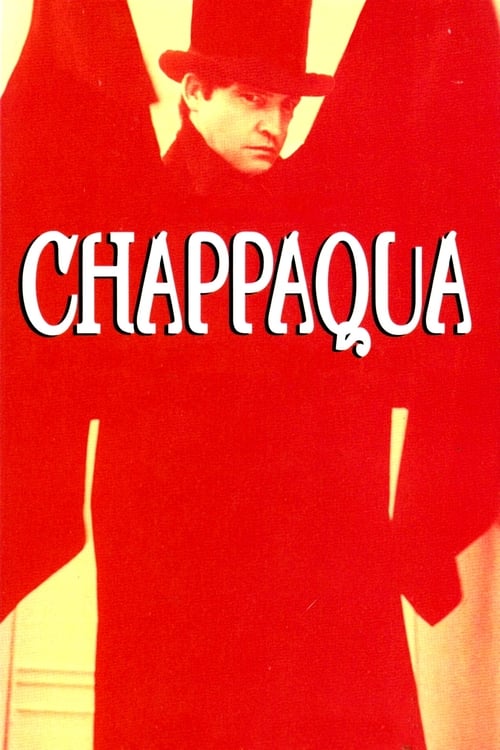
Semi-autobiographical story of Conrad Rooks, who travels to France to undergo a drug-withdrawal cure. Flashbacks to the beginings of psychedelia in San Fran. Though initially confusing, as Rooks blends drug-illusion with reality, and cuts color with black-and-white and monochrome tinted shots, "Chappaqua" is conventionally constructed with a beginning, middle, and end.
Chappaqua
This documentary explores the growing American interest in the 1970s in Eastern religions and philosophy. The teachings and lifestyles of ten spiritual teachers and their followers are presented without voice-over narration.
Sunseed

The life and work of Robert Frank—as a photographer and a filmmaker—are so intertwined that they're one in the same, and the vast amount of territory he's covered, from The Americans in 1958 up to the present, is intimately registered in his now-formidable body of artistic gestures. From the early '90s on, Frank has been making his films and videos with the brilliant editor Laura Israel, who has helped him to keep things homemade and preserve the illuminating spark of first contact between camera and people/places. Don't Blink is Israel's like-minded portrait of her friend and collaborator, a lively rummage sale of images and sounds and recollected passages and unfathomable losses and friendships that leaves us a fast and fleeting imprint of the life of the Swiss-born man who reinvented himself the American way, and is still standing on ground of his own making at the age of 90.
Don't Blink - Robert Frank
Full Blossom: The Life Of Poet/Actor Roberts Blossom takes a look at Blossom's work onscreen, as well as the man behind the camera, examining his political and spiritual convictions, his belief in reincarnation (Blossom is certain his son was Michelangelo in a previous life), his career as a poet, and his relationship with his family.
Full Blossom: The Life of Poet/Actor Roberts Blossom

Drawn from footage shot between 1949 and 1963, Jonas Mekas’s autobiographical diary film chronicles his early years in exile, capturing the struggle to build a new life in New York and his gradual discovery of a vibrant artistic community.
Lost, Lost, Lost

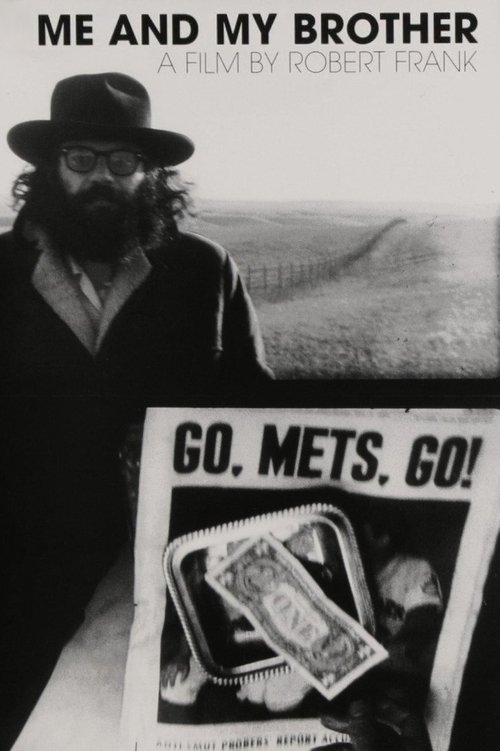
Julius Orlovsky, after spending years in a New York mental hospital, emerges catatonic and must rely on his brother Peter, who lives with poet Allen Ginsberg. When Julius wanders off in the middle of filming, Frank hires and actor (Joseph Chaikin) to play the character and begins a fictional version of his psychological portrait. Then, as suddenly as he vanished, Julius turns up in an institution where he and Peter must face their relationship.
Me and My Brother

Based on an incident in the life of Beat icon Neal Cassady and his wife, the painter Carolyn, the film tells the story of a railway brakeman whose wife invites a respected bishop over for dinner. However, the brakeman's Bohemian friends crash the party, with comic results. Pull My Daisy is a film that typifies the Beat Generation. Directed by Robert Frank and Alfred Leslie, Daisy was adapted by Jack Kerouac from the third act of his play, Beat Generation; Kerouac also provided improvised narration.
Pull My Daisy
An egg-sorting woman shrugs off even the appearance of Christ. From Isaak Babel story.
The Sin of Jesus

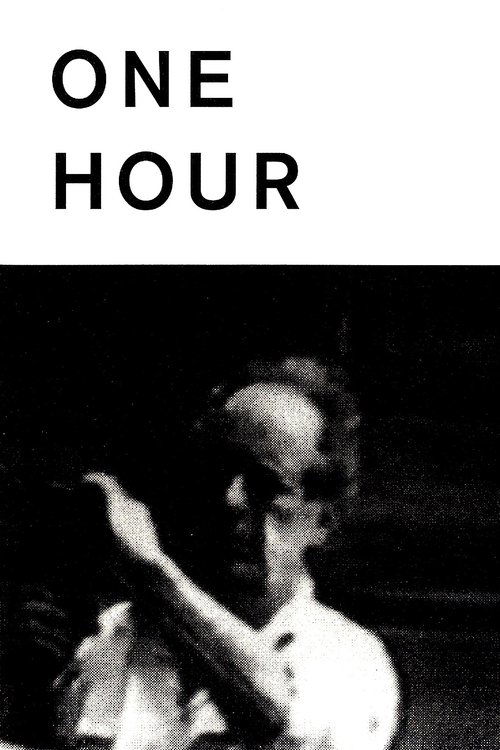
One of the longest handheld tracking shots in film history, It’s Real documents an hour in the street life of downtown Manhattan. Not only is it a unique record of a particular time and place—July 26, 1990, from 3:45 to 4:45 p.m. in the Lower East Side near Robert Frank’s studio (we note in a Daily News headline that after some 20 years the Zodiac killer still hasn’t been identified)—it’s also an experiment in fragmentary language, gesture, and life caught unawares. Snippets of dialogue captured in passing at phone booths and crosswalks, in alleyways, subways, and diners—chance encounters, only presumably, with people going about their day—have something of the aleatory cut-up technique of the Dadaists in the 1920s and William Burroughs and Byron Gysin in the 1950s, an effort to divine new and deeper meanings in ordinary life. — Museum of Modern Art
One Hour
Alfred Leslie is a pivotal American artist-painter-filmmaker whose work spans the past fifty years. A contemporary of the Abstract Expressionists and a key figure in the extraordinary social milieu of downtown New York from the 1950s and 60s to the present, his own canvases were amongst the most revered of his peers. In 1964 he made 'Pull My Daisy' with the photographer Robert Frank and in 1966 collaborated with the inimitable poet Frank O'Hara on 'The Last Clean Shirt'. Leslie dramatically moved away from abstraction to make giant almost hyper-real portraits, the majority of which were destroyed in the now infamous fire that ripped through his studio and its neighboring blocks on October 17, 1966. This devastating event, that completely destroyed paintings, films and manuscripts, continues to inform his work today.
Alfred Leslie: Cool Man In A Golden Age

In an empty lot in Harlem, an elite group of New Yorkers prepares for a book-signing party given in honor of a writer who never shows up. Local residents, dealing with the practicality of life, look on as the guests obsess about identity, status, and success.
Last Supper

Home Improvements, Robert Frank’s first video project, is a simple and poignant diary of consequential events. It is about the relationship between Frank’s life as an artist and his personal life, and how the two are inevitably intertwined. It was made cheaply with a half-inch video porta-pak. Home Improvements takes place in New York and Nova Scotia and in the mental space between these two opposing worlds
Home Improvements

A small film crew goes through several locations including Europe, New York and Mexico.
Second Century
This rarely screened film was used to raise funds for the making of Energy and How to Get It. High-energy physicist Robert Golka was granted a lease on an airplane hangar once used to build B-29 bombers to further his experiments on ball lightning and free energy distribution. By the time Robert Frank and his crew arrived, Golka, his frisky older love interest Agnes Moon, and his dogs Nitro and Proton were facing eviction. — Museum of Modern Art
Project Tesla

An artist in his own right, Clark Winter captured the intimacy of his longtime friendships with Robert Frank and June Leaf in a series of videos shot over nearly 30 years in New York and Nova Scotia. These are a precious record of the married couple’s seemingly inseparable—yet resolutely independent—home and work lives. Today, Winter serves as one of only three board members of the June Leaf and Robert Frank Foundation. — Museum of Modern Art