Gerda Lampalzer
Directing
Known For
No description available.
Asuma
No description available.
Transformation

Oral witnesses tell about their work in the Austrian underground movement against the national socialist regime. Agnes Primoschitz, Johanna Sadolschek-Zala, Rosl Grossmann-Breuer and Anni Haider talk about helping concenreation camp prisoners escape, fighting with the partisans and imprisonment, and about various experiences which bring back happy and sad memories. Many of their friends and relatives did not survive the terrible time. Some of the oral witnesses hadn't counted on surviving the prisons and concentration camps.
Küchengespräche mit Rebellinnen

The filmmakers seek out experts and amateurs in the field of the supernatural and ask them to explain the methods by which they make contact with the "cosmic information web". In their search for "units of sense" in the chaos, the researchers use, interestingly enough, those techniques which are presently central to popular culture - de-construction, sampling and scratching.
Paranormal
No description available.
Es
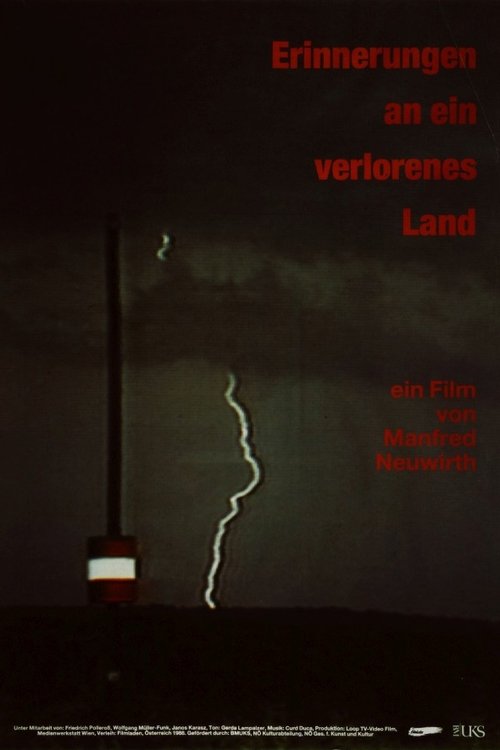
Restricted area in the middle of Lower Austria's Waldviertel region: Allensteig military training area: on the map, a patch mostly shaded in red. The little-known history of this landscape of ruins begins in 1938, when, in the wake of the annexation by Hitler's Germany, the area was declared a military training ground. As a result, more than 40 villages were resettled between 1938 and 1942.
Erinnerungen an ein verlorenes Land
Based on the idea of the "Cadavre Exquit", a literary game of the surrealists, video image and sound pieces were sent on the repeated (postal) journey between Hamburg and Vienna. A bond grew, which was composed of the associations of the artists and the respective ideas of the others, and a story was created that increasingly fell into the line of the absence of others.
Cadavre Exquisit
A documentary film on the taboo subject of Aids. In the foreground stand five people whose lives have been taken many different directions because of Aids. They tell of the experiences which they or others have had with the disease. The "topic" is not the important thing, rather the situation in which the environment confronts one with resistance - often enough in the form of negative experiences - rather than mysteries. These experiences do not require definition or inclusion in a discussion which demands distance between the way of considering and the concept of the disease.