Directing
A vagabond arrives in a village where he works for a rich landowner, Master Pierre; he seduces one of the girls, gets her pregnant and hits the road again.
Comedy. A father whose looking for a suitable candidate for his daughter ends up having a mistress and tigers prowling all around him.
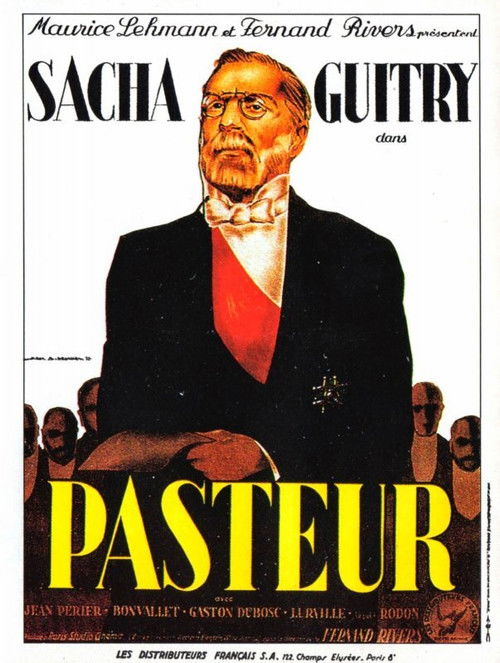
Guitry reprises his role as Pasteur which he played successfully at the Vaudeville Theatre in 1919.
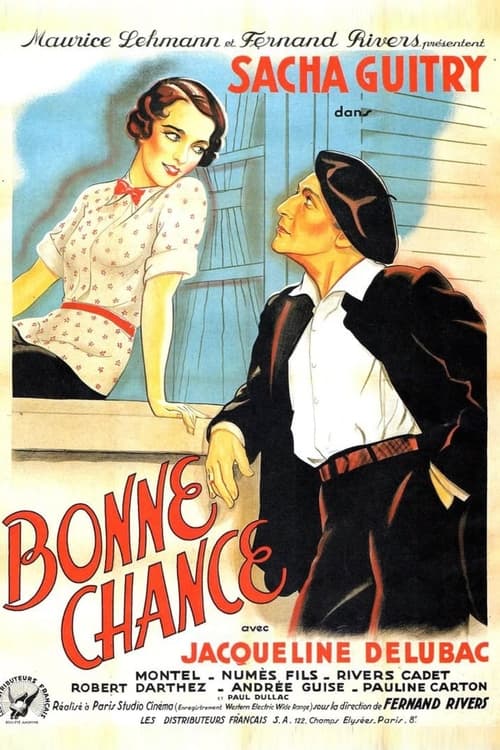
A girl, Marie, who got engaged to a boy who is leaving for military training (thirteen days) wins two million on the raffle, thanks to an older man, Claude, whom she calls her good luck …
A young man is hired by an industrialist, while a secret hangs over his birth. His boss's wife turns out to be his mother, who hides the truth from him.
François Cardinaud is one of the richest shipowners in the region. But this success arouses resentment and jealousy. When Marthe, his wife, leaves the home without warning, Cardinaud sees her life cracking little by little.
A musician named Jacques Christens, is given a proposition by an old man. For ten million Francs he is asked to impersonate a certain Paul de Baer – a man who is supposedly exiled in the Amazone. Christens is told this scheme will save Mr. Baer from ruin. An adaptation of Boileau and Narcejac's "D'entre les Morts".
Patterning himself after the American gangster John Dillinger, the criminal (Robert Hossein) is tracked by the inspector (Charles Aznavour), a former childhood friend. Plenty of gunplay and psychology is used to trap the killer. His only tender moments are spent with his girlfriend Stella (Virna Lisi). Dillinger is cornered by the police and kills several innocent victims in a crowd during the shootout. The mob decides to take things into their own hands as they approach the doomed man with a noose when he runs out of bullets.
In 1914, during the First World War, the rich chatelaine de Boissière, with a sulphurous past, took in Jean le Barois, a young soldier lost in territory occupied by the Germans, who was none other than the son of the man she loved, then ruined. The young man, after having despised her, falls madly in love with the woman who pushed his father to suicide.
Around a baby whose paternity is disputed, the members of a bourgeois family are agitated: the irascible father, the whining mother, the modern young girl, the good-for-nothing son, a secretary in love with the young girl, an associate and the importunate old aunt who smooths things over.
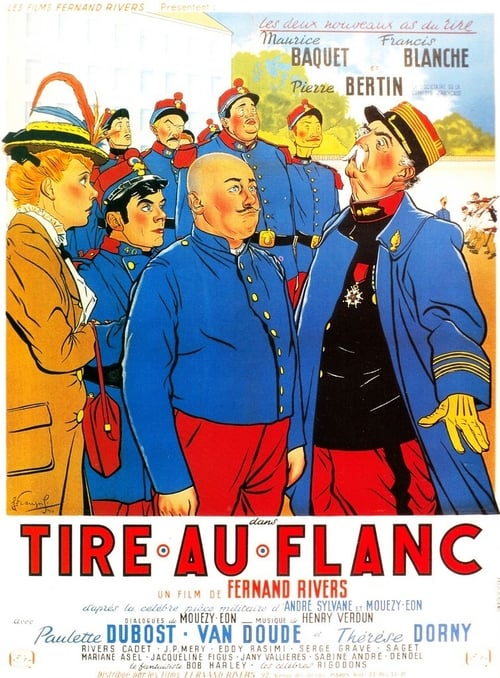
Thanks to a bit of string-pulling by his aunt, Jean du Bois d'Ombelles, a young recruit who has blue blood in his veins, hopes to go through a nice and comfortable military service. Unfortunately he becomes Corporal Bourrache's pet aversion. Nevertheless, against all expectations, Jean ends up taking a liking for military life.
Because the shiner Titin has fallen in love with a singer, he braves the latter's protector, the baron, and passes himself off as an insurer in connection with a pearl necklace that is circulating. Bitters get involved, Titin kidnaps the beauty and leaves the pearls to the baron.
François and Victor sell hard candy at the fun fair. They also bring up Gisèle, a one-year-old child they found by the side of the road. Although the two men are often at each other's throats they are the best friends, getting on well with the other fairground people. But when they defend Lisa, the fortune teller's daughter against Dédé, a thug who pesters her, they provoke his anger. Dédé sets fire to the two friends' stand and they are forced to take the road.
France, the beginning of the XIV century. Every night, Queen Margaret of Burgundy and her two sisters arrange orgies, to which beautiful nobles are invited. The young men were brought blindfolded, and after a night of love they were killed and their corpses thrown into the river, because the queen was afraid that her husband would learn about her adventures. One of her lovers managed to escape death. He knows the secrets of the queen, knows that she once gave birth to a son from him, claims that he has evidence that Margarita wanted to kill her father and blackmails her.
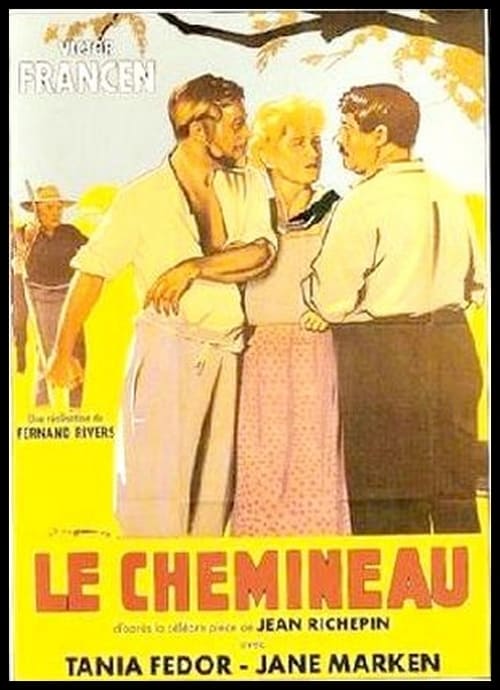
A young noblewoman regrets having to marry the village ironmaster for money reasons, but later comes to appreciate her new husband.
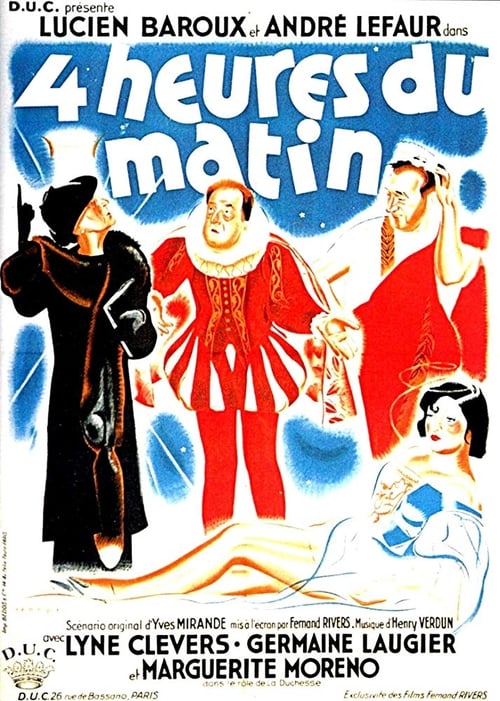
Monsieur Durand-Bidon's mother-in-law is decidedly cantankerous. She never ceases - she who is a duchess - to reproach the latter for his low origins. One morning, at dawn, while he comes home "well watered", he is surprised with a comrade at the bottom of a bathtub. Taken for a homosexual, overwhelmed by Step-Mom, he will never stop trying to escape her and will end up, after many adventures, by learning a somewhat embarrassing secret about the pseudo-nobility of his step-family.
Vérotchka, a vivacious theater actress touring in a provincial town, is turned out of her hotel by orders of Monsieur Tricointe, the stern president of the local law court. In a rage, the actress knocks at Tricointe's door with a view to protesting against the treatment she is given. She goes about it so well that she ends up being accommodated by the president himself. This is the moment Jean-Pierre Gaudet, the Minister of Justice, chooses to pay an unannounced visit to his friend Tricointe. There he mistakes Vérotchka for Madame Tricointe and the president does not dare to contradict Gaudet. A lot of absurd situations ensue.
A young intellectual, Hugo, joins the Communist Party out of a sense of idealism, only to see his principles manipulated by party leaders. He is given the assignment of killing Professor Hoederer, a party deviationist. However, he grows to admire the man and begins to have doubts about morals and revolutionary politics. But jealousy - Hugo thinks Hoederer has made love to his wife, Jessica - takes matters out of the political realm.
Arlette and her brother are penniless orphans; as the man is to leave for Africa to work for a long time, the young girl is forced to live with her cousins, four spinsters, who place virtue over everything.
The Count of Kerlor, to chastise his wife whom he believes to be unfaithful, entrusts his son to a couple of scoundrels. When he repents and wants to find the child, the carnies make their nephew sick. But the other little boy, in search of his comrade, is recognized by his reconciled parents.