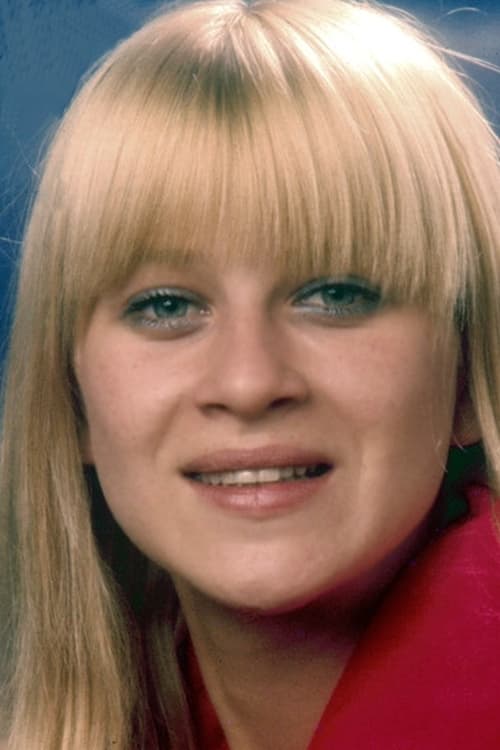
Catherine Ferry
Acting
Biography
Catherine Ferry (born 1 July 1953) is a French singer. In 1976, at the Eurovision Song Contest, Catherine Ferry represented France with the song "Un, deux, trois" (Tony Rallo/Jean Paul Cara). She ranked second in the contest. Among the backing vocalists was Daniel Balavoine, who wrote the B side "Petit Jean". She worked and was produced mainly by Daniel Balavoine a famous French singer who wrote nearly 30 songs for her. In 1977, she took part in the Yamaha Festival in Japan. In 1982, she released at WEA the song "Bonjour, Bonjour" (Linda Lecomte/Balavoine). In 1983, she participated in the musical fairy tale "Abbacadabra" by Alain Boublil based on ABBA's songs. In 1984, the album "Vivre avec la musique" was released, produced by Andy Scott, with music by Daniel Balavoine, Joe Hammer and Michel Rorive, lyrics of Daniel Balavoine, Linda Lecomte, Patrick Dulphy, Bernard Balavoine and Francis Wauthers. Balavoine died in 1986, having failed to finish the French lyrics of a song originally written for Frida of Abba. Jean-Jacques Goldman wrote the lyrics of "Quelqu'un Quelque part". Ferry then took time off to have a family. In the spring of 2010, things came full circle, with Catherine Ferry returning to Geneva in order to record her new single "Petit Jean" with John Woolloff, the guitar player of the late Daniel Balavoine. As her songs became "cult" favourites, one of them, "1, 2, 3", was selected to appear in the movie "Potiche", by French director François Ozon, starring Catherine Deneuve and Gérard Depardieu. Source: Article "Catherine Ferry (singer)" from Wikipedia in English, licensed under CC-BY-SA 3.0.

Known For

No description available.
Champs-Elysées

The Eurovision Song Contest is an international song competition, organised annually by the European Broadcasting Union (EBU) and featuring participants representing primarily European countries. Each participating country submits an original song to be performed on live television and radio, transmitted to national broadcasters via the EBU's Eurovision and Euroradio networks, with competing countries then casting votes for the other countries' songs to determine the winner.
Eurovision Song Contest

Midi Première is a French variety show presented by Danièle Gilbert, directed by Jacques Pierre and broadcast from January 6, 1975 until January 1, 1982 on TF1. The program was generally broadcast between 12:15 p.m. and 12:55 p.m., then giving way to the 1:00 p.m. TV news. However, the broadcast schedule could change, depending on the guests, and the setting where the recording of the program was shot. Certain performances by artists who have become cult like the one where Ringo jostles with a demonstrator in interpretation (1977), that of Dalida with the title There is always a song with the soundtrack that does not start, twice, at the right speed (1978), Claude François and his Clodettes, who, in the provinces, are unable to join "the set" in order to interpret his song, the latter being taken by the crowd of delirious fans (summer 1977) . The group Supertramp performed there with the title "Dreamer" on March 8, 1975.
Midi Première

A talk show presented by Michel Drucker
Les Rendez-vous du dimanche
No description available.
Système 2

No description available.
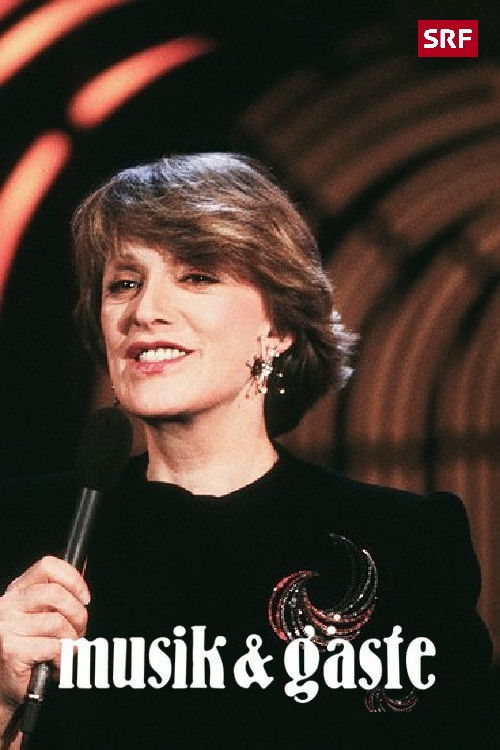
Music & Guests

No description available.
Je m'présente, je m'appelle Daniel

No description available.