FEEL IT.STREAM
Madeleine Renaud

Madeleine Renaud

Acting

Biography

Lucie Madeleine Renaud (French: [ʁəno]; 21 February 1900 – 23 September 1994) was a French actress best remembered for her work in the theatre. She did though appear in several films directed by Jean Grémillon including Remorques (Stormy Waters, 1941) and Lumière d'été (Summer Light, 1943).

Known For

Les Rendez-vous du dimanche
6.0

A talk show presented by Michel Drucker

Les Rendez-vous du dimanche

1975
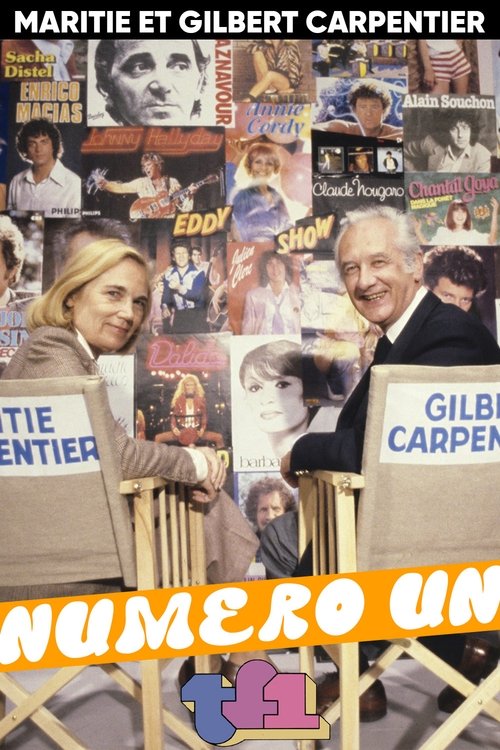
Numéro un
7.5

A French variety show.

Numéro un

1975
Le Grand Échiquier
8.0

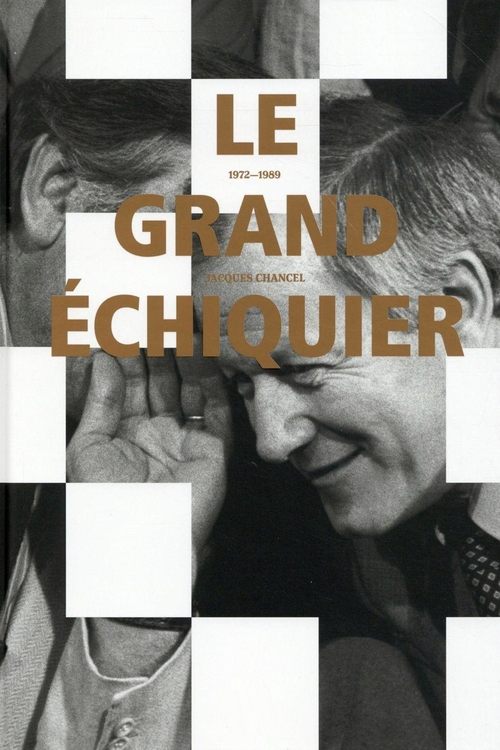
Le Grand Échiquier is a French variety television program created and presented by Jacques Chancel. It aired at 8:30 pm on the first channel of the ORTF from January 12, 1972 to July 12, 1972, then on the second color channel of the ORTF from September 1972 to December 1974, and finally on Antenne 2 from January 1975 to December 21, 1989. The program returned to France 2 on December 20, 2018 and is hosted by Anne-Sophie Lapix.

Le Grand Échiquier

1972
Discorama
8.0

No description available.

Discorama

1959
30 millions d'amis
6.2

No description available.

30 millions d'amis

1976
The Longest Day
7.6

The retelling of June 6, 1944, from the perspectives of the Germans, US, British, Canadians, and the Free French. Marshall Erwin Rommel, touring the defenses being established as part of the Reich's Atlantic Wall, notes to his officers that when the Allied invasion comes they must be stopped on the beach. "For the Allies as well as the Germans, it will be the longest day"

The Longest Day

1962
Cérémonie des César
4.6

The César Awards are cinematographic awards created in 1976 and presented annually in Paris to professionals of the 7th art in various categories to recognize the best French productions. They are often cited as the French equivalent of the Oscars in the United States.

Cérémonie des César

1976
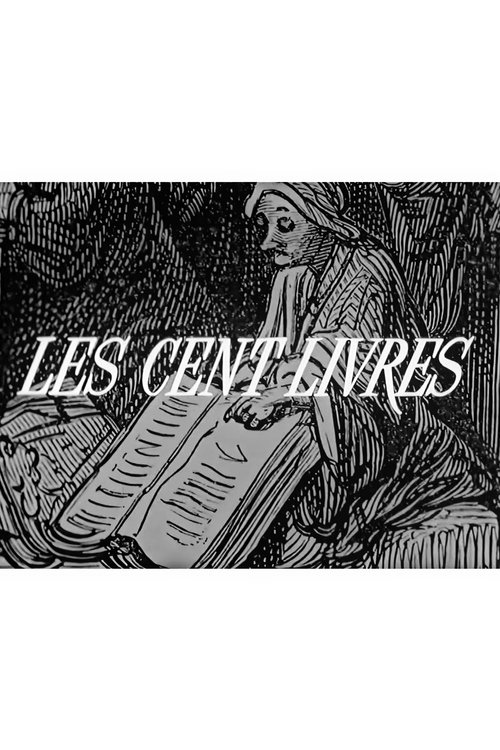
Les Cent Livres des Hommes
10.0

Les Cent Livres des Hommes (ORTF, 1969-1973) was a series of literary programs created by Claude Santelli and Françoise Verny, and produced notably by Santelli, Jean Archimbaud, and Serge Moati. Planned for one hundred episodes but completed at thirty-nine, the series aimed to introduce great literary works, 'chefs-d’œuvre', to a younger audience through a mix of dramatization, reading, and documentary techniques. It marked a transfer of cultural legitimacy from writers and critics to a generation of television producers, offering a new model of educational and creative literary broadcasting - 'télévision d’auteur'.

Les Cent Livres des Hommes

1970
Stormy Waters
6.8

A married tugboat captain falls for a woman he rescues from a sinking ship.

Stormy Waters

1941
La Mandarine
4.7

Paris, seventies. In a hotel in the glittering Rue de Rivoli an English boy falls in love with the two young grandchildren of the owner. Based on the novel "La Mandarine" by Christine de Rivoyre.

La Mandarine

1972
Le Plaisir
7.5

Three stories about the pleasure. The first one is about a man hiding his age behind a mask to keep going to balls and fancying women - pleasure and youth. Then comes the long tale of Mme Tellier taking her girls (whores) to the country for attending her niece's communion - pleasure and purity. And lastly, Jean the painter falling in love with his model - pleasure and death.

Le Plaisir

1952
The Dialogue of the Carmelites
7.4

This drama about the Carmelite order of nuns is set during the French Revolution. A young woman seeks refuge with the Carmelites because she is terrified of dying during the upheaval. The longer she associates with the nuns the more she is transformed by their faith and devotion. 

The Dialogue of the Carmelites

1960
The Strange Monsieur Victor
6.9

Outwardly, Monsieur Victor would appear to be the model citizen. A respectable Toulon shopkeeper, he has a devoted wife and is courteous and considerate to all who know him. However, beneath this veneer of respectability hides a notorious receiver of stolen goods, who trades with hardened criminals. Victor manages to keep up his double life without any difficulty until the fateful day when one of his partners in crime threatens to expose him. Fearing a scandal, Victor kills the crook in a moment of panic, using a shoemaker's tool. Naturally, the murder is blamed on a local shoemaker, who is sentenced to ten years' hard labour. Seven years later, the former shoemaker reappears in Toulon, having escaped from prison. The first person to recognise him is Monsieur Victor...

The Strange Monsieur Victor

1938
Le Tunnel
6.3

An engineer is hired to plan and oversee the construction of a undersea tunnel between Europe and the US. However, certain interests don't want to see the tunnel built and use every means at their disposal, including sabotage and murder, to stop its construction. French-language version of the 1933 German DER TUNNEL, q.v.

Le Tunnel

1933
The Devil by the Tail
6.1

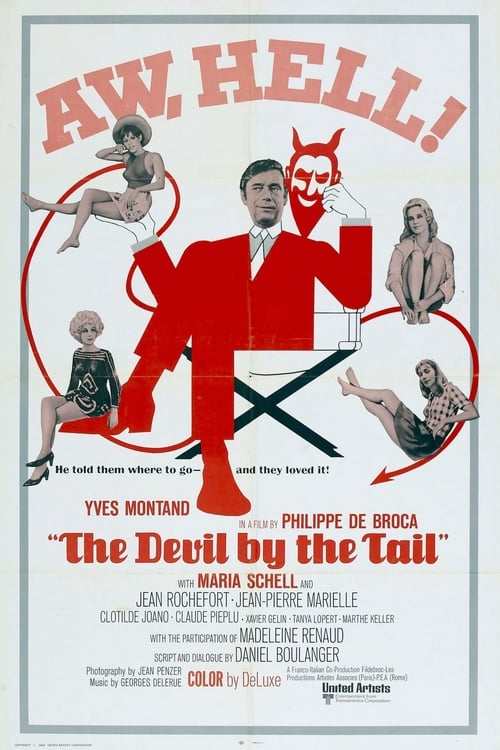
In this comedy, a run-down hotel drums up customers by sabotaging passing cars. The stuck motorists are then obliged to stay. Unfortunately, one of the sabotaged cars belongs to a bank robber. The hotel staff wants the robber out, but they also want to keep his ill-gotten money.

The Devil by the Tail

1969
Hélène
5.5

Helene is based on Helene Wilfur, a novel by Vicki (Grand Hotel) Baum. Madeleine Renaud essays the title role, a young medical student in love with aspiring musician Pierre Regnier (Jean-Lous Barrault). Pierre's father, a noted surgeon, puts pressure on his son to give up music in favor of medicine. Unable to withstand his father's remonstrations, Pierre kills himself, prompting the grieving Madeleine to forget all about romance and dedicate her life to the cause of healing others. Wilfur avoids the usual soap-opera goo by offering realistic performances and credible dialogue (the English-language subtitles were composed by erudite film critic Herman G. Weinberg).

Hélène

1936
From Joan of Arc to Philippe Pétain
9.0

Sitting at his desk, Guitry gives us a lecture on French history from Joan of Arc to the Occupation, with some focus on a number of its great writers and musicians.

From Joan of Arc to Philippe Pétain

1944
Children of Montmartre
6.7

When her father files bankruptcy and then dies, Rose's fiancé jilts her; she takes a job as a maid in a Montmartre kindergarten with 150 poor children. Rose gives each child loving attention, and soon she's their favorite. An especially needy child is Marie, a prostitute's daughter. Rose and she bond, and Marie is jealous of all attentions paid Rose, especially those of Dr. Libois, the school's physician. When Rose inadvertently guides the children through the educational experiment of a visiting scholar, and then discloses she has a college degree and is working beneath her station, the principal wants to fire her. Is there any way she can stay? And what will happen to Marie?

Children of Montmartre

1933
Summer Light
7.0

A shimmering glass hotel at the top of a remote Provençal mountain provides the setting for a tragicomic tapestry about an obsessive love pentangle, whose principals range from an artist to a hotel manager to a dam worker.

Summer Light

1943
Les Petites Alliées
10.0

A young girl has left her family and lives as best she can on the generosity of her lovers. A naval officer introduces her to Toulon in a special environment which provides companions to sailors on leave. After some setbacks, she finds love and protection with a doctor who marries her.

Les Petites Alliées

1936