FEEL IT.STREAM
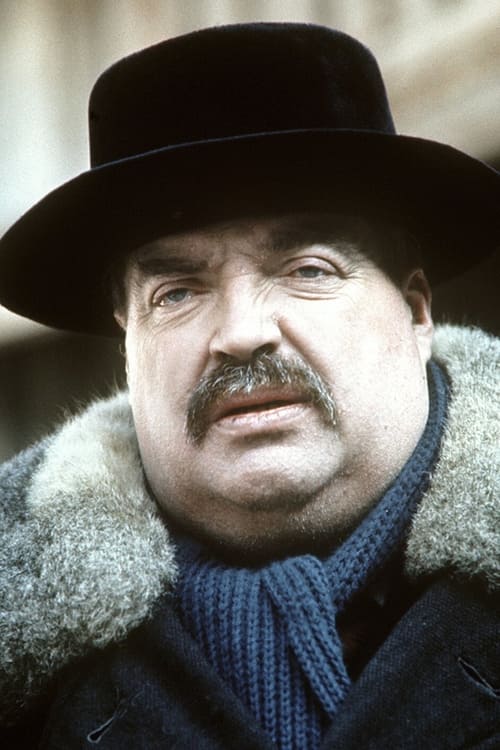
Helmut Qualtinger

Helmut Qualtinger

Acting

Biography

Helmut Qualtinger was born in Vienna, Austria. He initially studied medicine, but quit university to become a newspaper reporter and film critic for local press, while beginning to write texts for cabaret performances and theater plays. Qualtinger debuted as an actor at a student theater and attended the Max Reinhardt Seminar as a guest student. Beginning in 1947, he appeared in cabaret performances. In 1949, Qualtinger's first theatrical play, Jugend vor den Schranken, was staged in Graz. Up to 1960, Qualtinger collaborated on various cabaret programmes with the Namenlosen Ensemble made up of Gerhard Bronner, Carl Merz, Louise Martini, Peter Wehle, Georg Kreisler, and Michael Kehlmann. Qualtinger was famous for his practical jokes. In 1951, he managed to launch a false report in several newspapers announcing a visit to Vienna of a (fictional) famous Inuit poet named Kobuk (author of "The Burning Igloo"). The reporters who assembled at the railway station however were to witness Qualtinger, in fur coat and cap, stepping from the train. Asked about his "first impressions of Vienna", the "Inuit poet" commented in broad Viennese dialect, "Haaaßis'sdo - [It's hot here]". The short one-man play Der Herr Karl, written by Qualtinger and Carl Merz and performed by Qualtinger in 1961, made the author known across German-speaking countries. "Herr Karl", a grocery store clerk, tells the story of his life to an imaginary colleague - from the days of the Habsburg empire, the First Austrian Republic, the Austrofascist regime leading up to the Anschluss (annexation) by Nazi Germany, World War II and finally military occupation by Allied forces in the 1950s, seen from the perspective of a one who is a prototypical opportunist. Qualtinger's portrayal of the petit-bourgeois Nazi collaborator came at a time when "normality" had just been restored and Austrians' involvement in the Nazi movement was being downplayed and "forgotten", making many enemies for the author, who even received anonymous threats of murder. Beginning in the 1970s, Qualtinger frequently performed recitals of his own and other texts, including excerpts from Adolf Hitler's Mein Kampf and Karl Kraus' Die letzten Tage der Menschheit (The Last Days of Mankind). These recitals were highly popular and resulted in several records being published. Qualtinger played countless theater, TV and film parts, making his final appearance in The Name of the Rose in 1986, along with Sean Connery. Qualtinger died in Vienna on 29 September 1986, of a liver condition. From Wikipedia, the free encyclopedia
Known For

No image
7.2

No description available.

3 nach 9

1974
No image
6.0

No description available.

German Film Award

1951
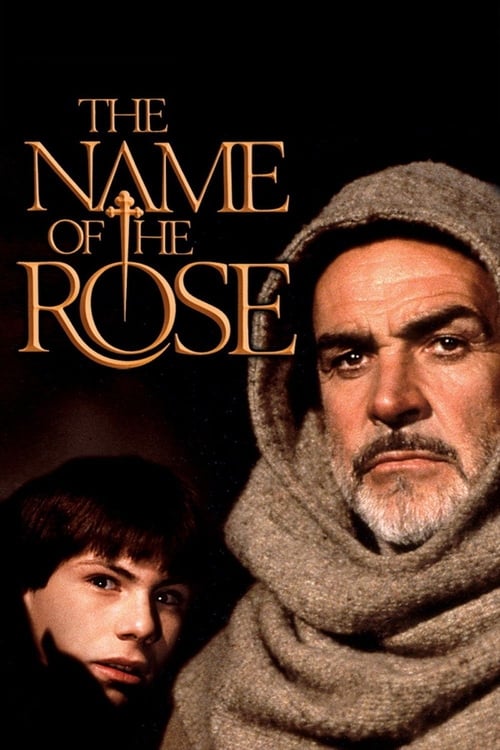
The Name of the Rose
7.5

14th-century Franciscan monk William of Baskerville and his young novice arrive at a conference to find that several monks have been murdered under mysterious circumstances. To solve the crimes, William must rise up against the Church's authority and fight the shadowy conspiracy of monastery monks using only his intelligence; which is considerable.

The Name of the Rose

1986
No image
9.0

No description available.

Krimistunde

1982
No image
N/A

No description available.

Das Profil

1962
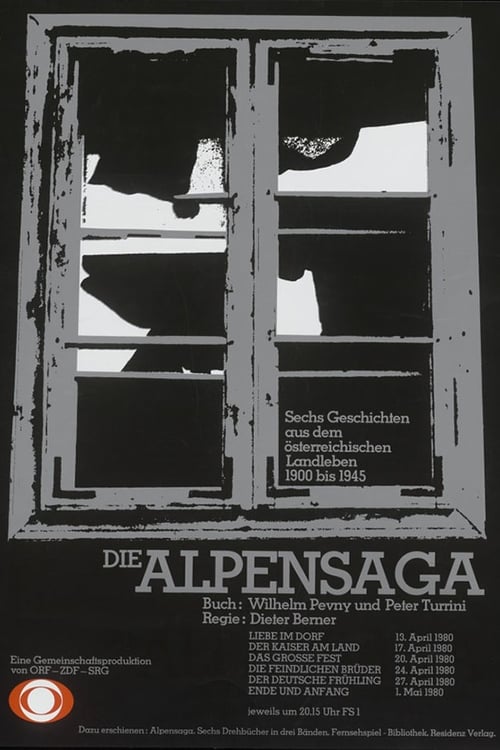
Die Alpensaga
N/A

A six-part film series addressing the problems of rural Austria from 1900 to 1945. Contrary to the traditional "Heimatfilm", the Alpensaga detaches itself from typical clichés and tries to depict a critical view of societal structures of the time. World history is shown from the view of a peasant family living in a small village in Upper Austria.

Die Alpensaga

1976
No image
7.5

A German TV documentary that chronicles the daily rehearsals, the filming and all the behind the scenes of Jean-Jacques Annaud's classic "The Name of the Rose". From actors perspectives to the ideas used by the director to produce an impeccable international epic adaptation of Umberto Eco's best selling novel, the film presents the obstacles behind the creation of a production of such large scale and also the making of the many difficult scenes, most of the ones presented here are the characters' murders inside the mysterious abbey.

The Abbey of Crime: Umberto Eco's 'The Name of the Rose'

1986
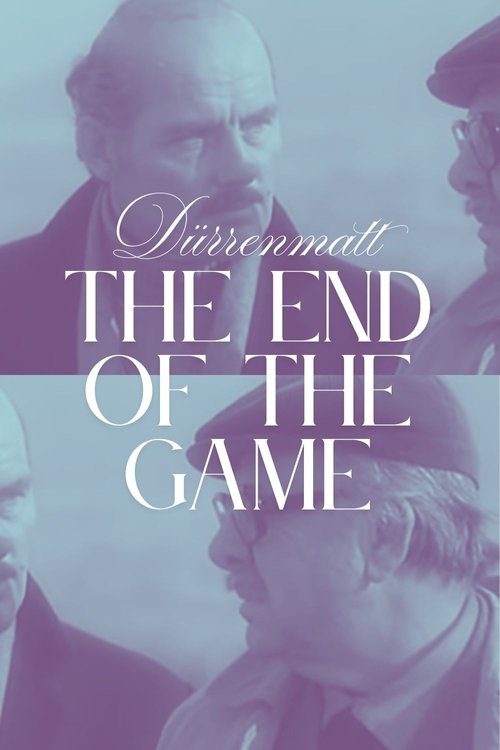
End of the Game
5.0

Hans Baerlach is a Swiss police detective who has dedicated much of his career to pursuing powerful and allegedly murderous businessman Richard Gastmann. Though Baerlach's partner meets his demise while investigating Gastmann, his replacement, Walter Tschanz, is undaunted. Meanwhile, the lovely Anna Crawley becomes involved in the case, which proceeds to take many twists and turns.

End of the Game

1978
April 1, 2000
6.7

It is the year 2000 and the World Global Union is in charge, although other countries are allowed to elect their own government leaders, as long as they support the Union. When Austria's newly-elected president, played by Josef Meinrad, makes his inauguration speech he declares Austria independence and issues an edict ending Austria's financial support for the Global Union.

April 1, 2000

1952
No image
N/A

No description available.

Ikonen Österreichs

2019
Hanussen
8.0

In Germany during World War II, a well-known psychic decides to collaborate with the Nazis.

Hanussen

1955
Grandison
7.0

The case of stagecoach robber Carl Grandison, who lived in Heidelberg as a respected merchant and committed suicide in prison in 1814, as material for an expensive (DM 5.1 million), over-aestheticized flashback film: the decorations, props and costumes are right, otherwise everything seems fake.

Grandison

1978
Mikosch of the Secret Service
6.3

Bad Ischl is in a state of great excitement: the Emperor of Austria-Hungary, the Prussian Emperor, and the Russian Tsar are expected. But then plans to assassinate the heads of state become known. The Austro-Hungarian secret service deploys its "special unit": Mikosch and his helpers are to secretly neutralize the assassin...

Mikosch of the Secret Service

1959
Kurzer Prozeß
6.7

District Inspector Pokorny was transferred some time ago from Vienna to the fictional Upper Austrian town of Mühlstadt after assaulting a suspect while on duty. There, as he says, he has to deal with "idiotic scoundrels who steal each other's chickens." Police officer Janisch was given a quick trial and sentenced to seven years in prison for robbing the post office in Litzelsdorf. His colleagues do not believe he is capable of such a crime and try to catch the real perpetrators. At the same time, they have to deal with a multitude of other cases.

Kurzer Prozeß

1967
Radetzkymarsch
8.4

The story of the Trotta family during the rise and fall of the Austrian-Hungary empire. Based upon the novel by Joseph Roth.

Radetzkymarsch

1965
The Castle
6.6

A man comes to a small village to begin his new job as an attendant at the nearby castle. But everybody in the village claims that he surely must be mistaken, there is no need for an attendant at the castle.

The Castle

1968
Tales from the Vienna Woods
6.1

Based on a popular 1931 play, the film tells the fate of a naive young woman named Marianne, who breaks off her reluctant engagement with Oskar the butcher after falling in love with a fop named Alfred who, however, has no serious interest in returning her love. For this error, she must pay bitterly.

Tales from the Vienna Woods

1979
Mann im Schatten
6.7

Crime Thriller with Helmut Qualtinger as Chief Inspector who investigates a Murder in 1961 Vienna. The murder is based on a real murder, the "bathub murder", which gained quite some media attraction in austria in the 1940's.

Mann im Schatten

1961
No image
7.0

Erzsi, living alone in Budapest, keeps up phone and letter contact with her sister Gisa in Germany. Both elderly, they’ve long grown apart in how they face aging: Gisa accepts it, while Erzsi tries to hold on to youth, encouraged by her friend Paula and by Viktor, an aging opera singer and former lover.

Cat's Game

1985
Der große Zauberer - Max Reinhardt
9.0

"The Great Magician" - Max Reinhardt (1873-1943) was an Austrian theater and film director, director, theater producer and theater founder. With his Jedermann production on August 22, 1920, he founded the Salzburg Festival.

Der große Zauberer - Max Reinhardt

1973